
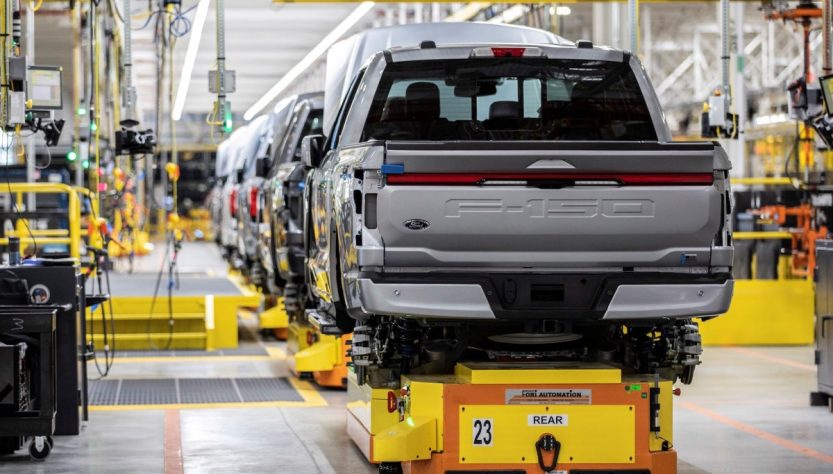
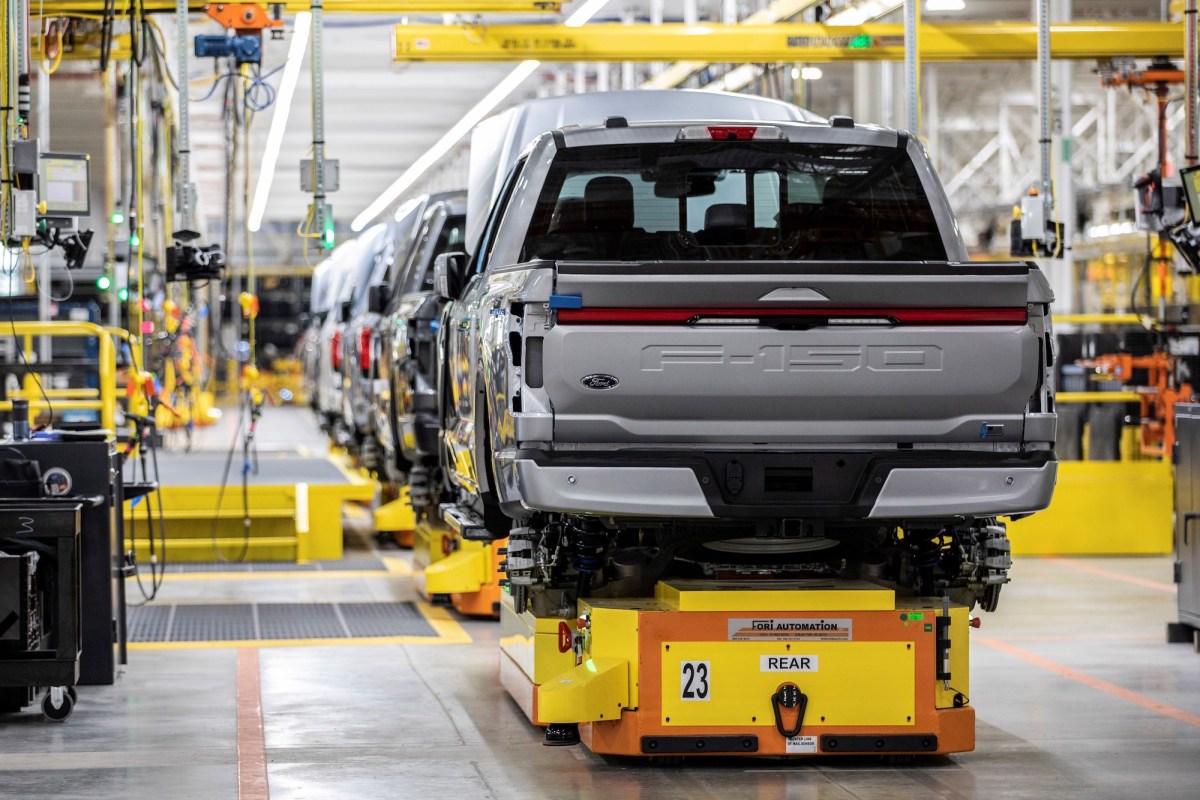
Ford is halting the manufacturing of the fully-electric F-150 Lightning as part of a wider corporate reorganization of its electric vehicle strategy, the company disclosed Monday. Instead, Ford will offer an “extended range electric vehicle” version of the truck, which includes a gas generator that can recharge the battery pack to enable the motors to run for over 700 miles.
The company did not specify when the updated F-150 Lightning will be available for purchase, or its pricing details.
This strategic shift will come with a significant financial impact for Ford. The firm expects to incur a $19.5 billion loss as it reconfigures its EV business approach. Most of these costs, including an $8.5 billion write-down of EV assets, will be accounted for in the fourth quarter. Ford indicated that $5.5 billion in cash charges are anticipated through 2027.
The reorganization will influence numerous factories and employees. It also signifies that Ford’s next-generation all-electric truck — internally referred to as “T3” — is now off the table. The T3 was intended to be a completely new design, unlike the Lightning, which integrated electric vehicle technology into a gas vehicle framework. Ford confirmed to TechCrunch that it will also scrap plans for a next-generation commercial van, while the current E-Transit model will continue production.
“Ford has decided against producing certain larger electric vehicles where the business case has weakened due to lower-than-anticipated demand, elevated costs, and regulatory shifts,” the company stated.
The company remains committed to launching a mid-sized all-electric pickup truck in 2027, as confirmed Monday. The platform for this truck — developed from a skunkworks initiative led by former Tesla officials Doug Field and Alan Clarke — will also serve as the foundation for future Ford models. Ford stated it is still on track to start producing cost-effective lithium iron phosphate batteries in 2026. These LFP batteries, to be manufactured at the BlueOval Battery Park Michigan in Marshall and utilizing technology licensed from China’s CATL, will be incorporated into the mid-sized truck.
“Instead of investing billions more into large EVs that currently lack a path to profitability, we are redirecting that investment into higher-return sectors, more hybrid trucks and vans, extended-range electric vehicles, affordable EVs, and completely new ventures like energy storage,” Ford president Andrew Frick mentioned during a press call.
Techcrunch event
San Francisco
|
October 13-15, 2026
Ford unveiled the F-150 Lightning in 2021, two years following its announcement of an all-electric Mustang, the Mach-E. Ford hinted at a $40,000 price for the Lightning, which was intended to be a flagship model in the company’s $22 billion initiative focused on electric vehicles.
However, like many large electric trucks, the F-150 Lightning faced challenges in the U.S. market. A contributing factor was that the anticipated $40,000 price was largely inaccessible for most consumers, as that base model was specifically aimed at fleet clients. Over the past two years, Ford managed to sell approximately 7,000 Lightnings each quarter, peaking at nearly 11,000 in the fourth quarter of 2024.
Electric vehicles have encountered significant obstacles since the launch of the F-150 Lightning. Tesla initiated an aggressive price war to mitigate declining sales, thereby impacting the slim (or negative) margins of traditional automakers. The reelection of Donald Trump, along with the Republican takeover of Congress, has resulted in a reversal of numerous Biden-era policies intended to promote electric vehicle sales.