
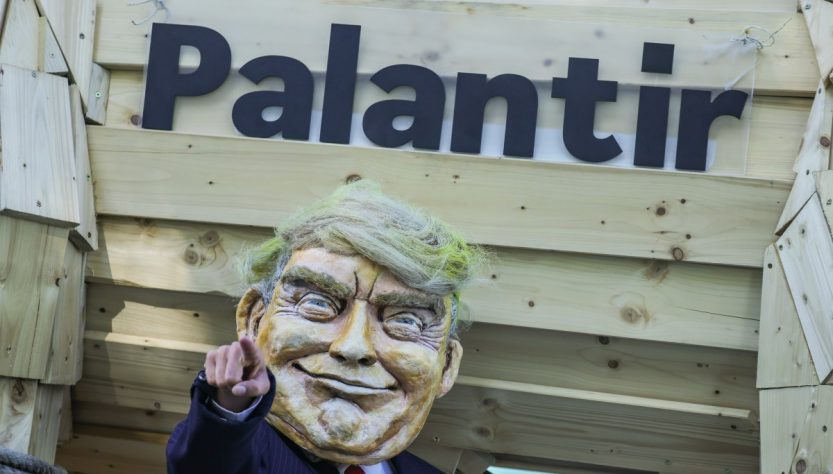
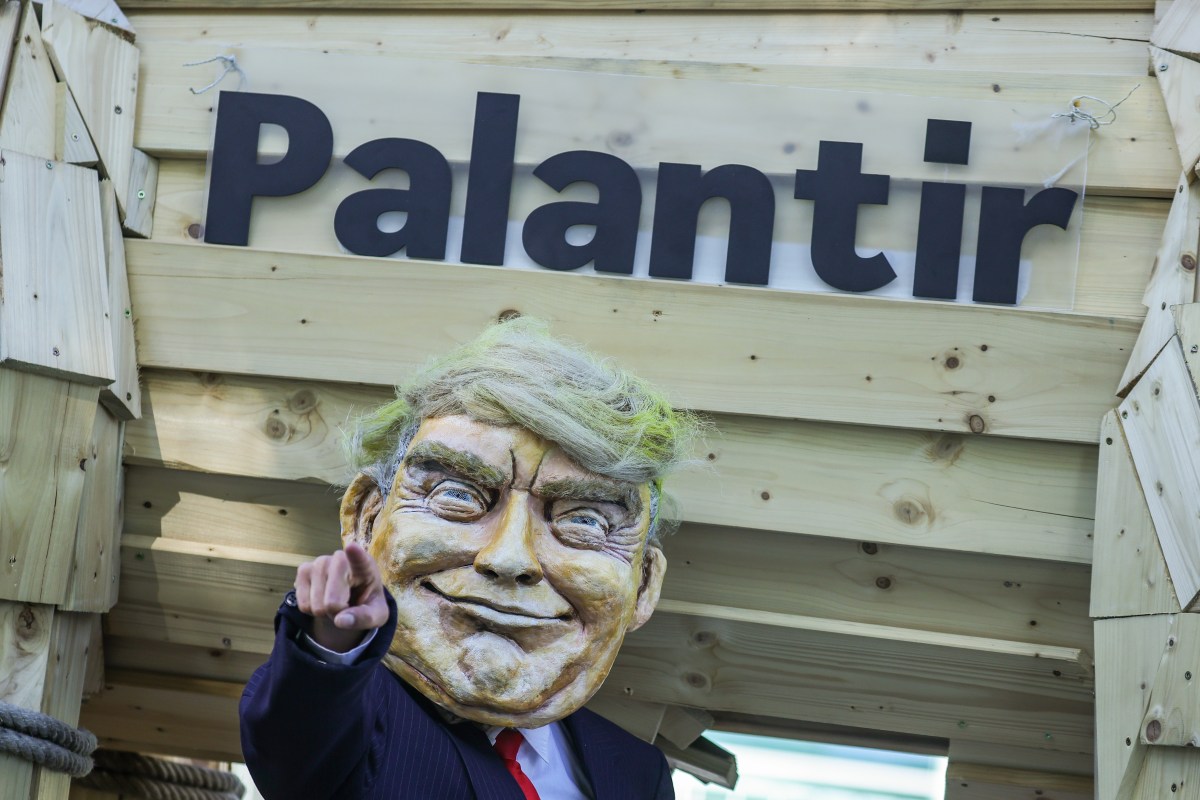
Microsoft’s CEO Satya Nadella does not express his beliefs as openly as Alex Karp from Palantir. Meanwhile, France is making moves to lessen its dependency on Windows, while its national intelligence agency has recently renewed its agreement with the increasingly controversial data analytics firm.
This contradiction illustrates Europe’s complicated separation from U.S. technology. After realizing the complications involved, governments across the continent are aiming to decrease their reliance on American companies. However, the actions taken until now have been inconsistent and often prompted by immediate needs.
The CLOUD Act changed the landscape
One significant response from Europe traces back to the initial Trump administration. Instated in 2018, the CLOUD Act compels U.S.-based technology firms to heed law enforcement demands for data, even if the data is kept abroad. This indicates that servers situated in Europe now provide insufficient security concerning crucial information.
Among the various data that governments possess, health-related information is often seen as the most delicate. Nevertheless, the CLOUD Act’s international reach did not prevent the U.K. from engaging with companies like Google, Microsoft, and Palantir regarding data from its National Health Service (NHS) during the pandemic. If detractors have their way, it might eventually emulate France’s approach.
A year ago, the French government disclosed that its Health Data Hub would transition from Microsoft Azure to a “sovereign cloud.” This contract has now been handed to Scaleway, a French cloud provider that is quickly expanding its network of data centers throughout Europe.
A subsidiary of the French group iliad, Scaleway was one of four firms that secured a €180 million sovereign cloud contract from the European Commission (approximately $211 million). The AWS European Sovereign Cloud, launched by Amazon to alleviate Europe’s apprehensions, did not make the final list. Nonetheless, some express concerns that the U.S. might still have a backdoor through one of the winners utilizing S3NS, a “trusted cloud” collaboration between Thales and Google Cloud.
Europe’s alternatives continue to face significant challenges
It isn’t the first instance where alternatives marketed as substitutes to Big Tech encounter obstacles stemming from their underlying dependencies. Qwant, for example, was once suggested as the default search engine for public officials in France while depending on Microsoft’s Bing — a collaboration that soured when the French entity accused the U.S. giant of exploiting its dominance. The responsible regulatory body declined to act, but Qwant had already initiated its own strategy.
Techcrunch event
San Francisco, CA
|
October 13-15, 2026
In collaboration with the German nonprofit Ecosia, Qwant introduced Staan, a Europe-oriented and privacy-centric search index that could assist search engines like theirs in decreasing their reliance on Google and Bing. However, both allies still fall significantly short of their U.S. counterparts in visibility and reach — even the somewhat more popular Ecosia boasts only around 20 million users, not billions.
Acquiring market share is arguably the primary challenge for firms competing against U.S. behemoths — but public contracts could provide them with an advantage. For instance, the European Commission’s tender will also benefit French cloud providers Clever Cloud and OVHCloud, as well as STACKIT, which was established by Lidl’s parent company Schwarz Group but is now being commercialized.
Winning substantial contracts from European institutions may motivate other contenders to follow in the footsteps of Germany’s retail titan, or at least, that’s the aspiration. According to its supporters, “an additional goal of the tender was to inspire the market to provide sovereign digital solutions that align with EU laws and values.”
Nevertheless, the Commission’s strategy to minimize dependency on a single provider could have unintended consequences. On one hand, diversification may enhance resilience and alleviate concerns about dependence. However, it won’t necessarily be the most effective shortcut to nurturing Europe’s next trillion-dollar enterprise.
For skeptics and pragmatists, sovereign technology may appear commercially driven — a method to keep euros domestically. Yet, Europe’s intentional distancing from U.S. tech has not always resulted in contracts for its emerging companies. For instance, France is moving away from Windows towards the open-source operating system Linux. Institutions in Austria, Denmark, Italy, and Germany are similarly seeking to substitute Microsoft’s suite with open-source options like LibreOffice.
This transition often coincides with a “build, don’t buy” mindset that has faced criticism. France’s Court of Auditors has raised questions regarding expenditures on in-house solutions such as Visio, an alleged alternative to Zoom and Microsoft Teams. Financial publication Les Echos has also covered the backlash heard within the tech ecosystem, including this rhetorical inquiry: “If the government doesn’t set a precedent, how can you expect large private enterprises to follow?”
Private buyers may influence the outcome
Indeed, large private corporations have not followed the trend much. The German airline Lufthansa opted for Elon Musk-supported Starlink for its Wi-Fi service. Air France made a similar choice, as did France’s partially state-controlled airline — and it’s possible that the state-owned French railway company SNCF will follow suit.
Whether major corporations select alternatives to U.S. providers largely hinges on having technologically appealing European solutions. In a disagreement with Poland, Musk claimed that “there is no substitute for Starlink” — however, European authorities aim to refute this assertion. Public sentiment could also play a role, potentially influencing many European individuals and officials to move away from X.
Being non-American is becoming a selling point
After President Trump hinted at exerting control over Greenland, applications for boycotting American products surged to the top of the Danish App Store — illustrating that the desire to limit U.S. tech is broadening. Pressure on European governments to reevaluate their agreements is also growing, and Palantir’s recent mini-manifesto is unlikely to aid its position in the EU and the U.K.
Tech billionaires publicly defending positions that many Europeans oppose also indicates that the separation is mutual. When Meta opted to postpone the EU release of Threads due to concerns regarding European regulations, it served as a reminder that the region is merely a secondary market for tech giants, and they are able to disregard it.
Conversely, this opens a market opportunity for solutions designed for Europe, its diverse languages, and cultural nuances. This alone should naturally stimulate demand in local markets, with additional momentum if advocates of the EuroStack initiative succeed in mandating local purchasing for Europe’s public sector.
Europe may aspire to support European businesses, but there’s also hope that “sovereign tech” will find success internationally. Mistral AI reportedly witnessed a spike in revenues for being an alternative to OpenAI. At the same time, the Canadian and German administrations are backing Cohere’s merger with Aleph Alpha to establish a “transatlantic AI powerhouse” catering to enterprises and governments globally. By 2026, not being American — nor Chinese or Russian — is increasingly viewed as a competitive advantage.
When you purchase through links in our articles, we may earn a small commission. This doesn’t affect our editorial independence.