
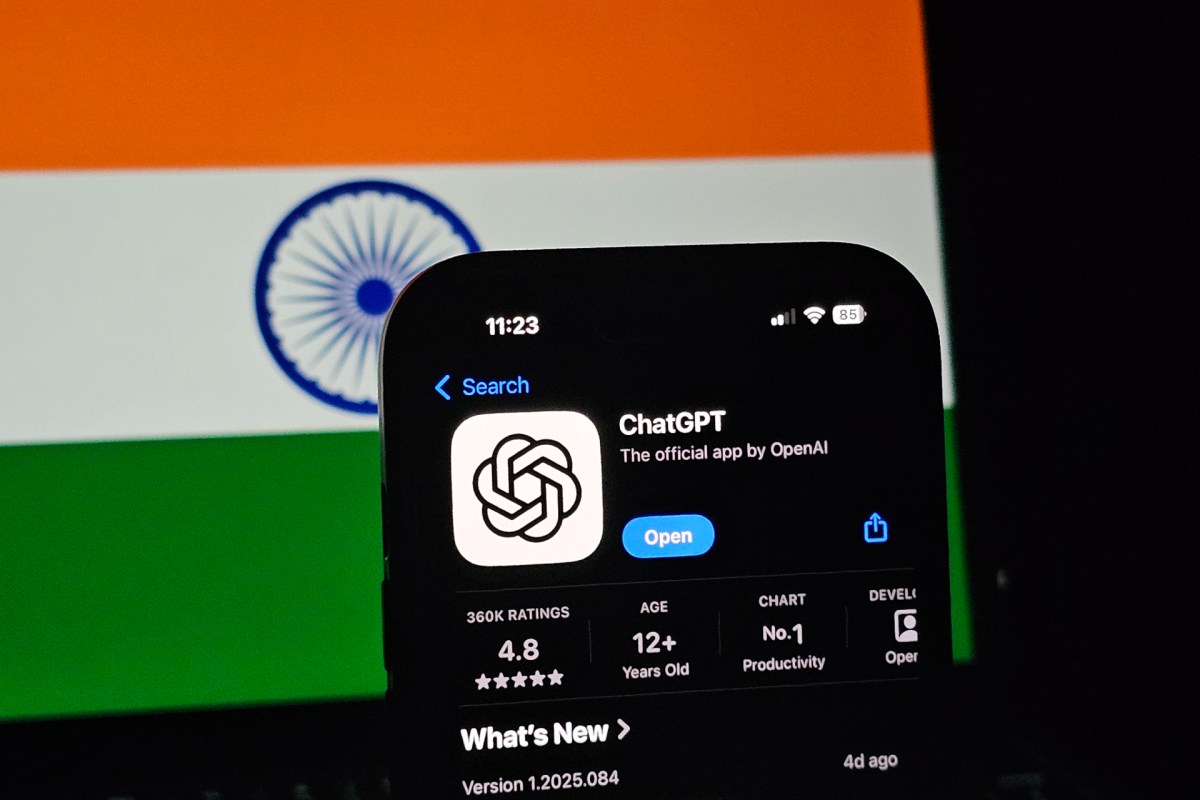
Since its launch last week, OpenAI reported that India has become the largest market for ChatGPT Images 2.0. Nevertheless, external data analyzed by TechCrunch indicates a more measured global reaction, with overall growth being limited, though notable surges are present in specific emerging markets.
ChatGPT Images 2.0, OpenAI’s most recent update in image generation, is built to accommodate more intricate prompts and create detailed visuals, inclusive of precise text across several languages. Initial trends from the company indicate that users — particularly in India, its most significant market — are employing it to generate personal visuals such as avatars, stylized portraits, and images inspired by fantasies.
Data provided by Sensor Tower and Similarweb to TechCrunch suggests that the global response to the rollout has been mixed. According to Sensor Tower, ChatGPT’s app downloads increased by 11% week-over-week after the launch, but gains in overall engagement were subdued, with daily active users and sessions rising by only about 1%. Similarweb’s data also reflects a minimal increase in global web traffic for ChatGPT, rising around 1.6% week-over-week during that same time.
Conversely, Sensor Tower’s data reveals that certain emerging markets — including Pakistan, Vietnam, and Indonesia — experienced more significant spikes in ChatGPT app downloads, with growth up to 79% week-over-week throughout the rollout phase.
In contrast, India continued to be a primary source of activity during the launch. Sensor Tower’s estimates indicate that ChatGPT was downloaded approximately 5 million times in India during its debut week, compared to nearly 2 million in the U.S., although week-over-week growth remained modest. Similarweb’s data also highlights a slight rise in engagement, with daily active users in India increasing around 3.4% week-over-week during the same timeframe.
In India, initial trends suggest ChatGPT Images 2.0 is primarily utilized as a means of self-expression. Instead of just functional outputs, users are crafting studio-quality portraits from everyday images, social media-friendly visuals, and imaginative representations that place them at the forefront, according to OpenAI.
The early data also underscores the varying adoption of AI image tools across different markets. While India’s extensive user base contributes to overall scale, pronounced increases in countries like Pakistan and Indonesia suggest a stronger demand for new users in emerging markets following the launch.
Techcrunch event
San Francisco, CA
|
October 13-15, 2026
The launch of OpenAI’s Images 2.0 arrives amidst escalating competition in AI image creation. Google’s previous image-centric model, the original Nano Banana, also gained considerable early momentum in India, signaling the nation’s significance as a market for image generation.
With the introduction of ChatGPT Images, OpenAI is advancing further with enhancements such as improved rendering of non-Latin scripts, including Hindi and Bengali, and new “thinking” features that enable it to refine outputs and create multiple variations from a singular prompt.
Beyond stylized portraits and avatars, OpenAI noted that initial users of Images 2.0 in India are exploring a broader array of formats — ranging from fantasy-themed newspaper covers to tarot-styled visuals and fashion moodboards. Users are also utilizing the AI tool to restore older photographs and create cinematic collage portraits, the company indicated, reflecting early trends of more personalized use.
When you purchase through links in our articles, we may earn a small commission. This doesn’t affect our editorial independence.