
Much of the discussion regarding AI in healthcare revolves around diagnosis and medication discovery or the interactions between doctors and patients. However, a less prominent aspect of the system influences whether patients actually receive care at all, and it relates less to the scarcity of doctors (which is indeed a problem) than to the overwhelming administrative tasks (which are excessively burdensome) that occur between a primary care physician sending a referral and a specialist’s office scheduling the patient. This gap is significant, persistently manual, and increasingly garnering genuine attention from venture capitalists.
Kaled Alhanafi, who previously held roles at Lyft and Cruise, and Chetan Patel, who devoted ten years to developing cardiac devices at Medtronic, established Basata after both confronted this issue firsthand.
For Patel, the problem became particularly poignant when his wife collapsed during a flight with their young children. Despite his extensive understanding of cardiology and the specific devices that could assist her, he notes that navigating the administrative framework to secure her appropriate treatment took far too long. “We have exceptional doctors and some of the best medications available, but the gap in care is enormous,” he remarked.
Alhanafi recounts a similar situation involving his father, who was referred to three cardiology clinics following a critical carotid artery diagnosis. According to Alhanafi, only one of the clinics returned the call within a couple of weeks. Another one responded only after the surgery had already occurred. The third has yet to make contact.
Such outcomes are not uncommon, as nearly anyone who has attempted to consult a specialist in recent years will confirm. Specialty practices that receive referrals often handle hundreds or even thousands of documents — the majority arriving via fax — with minimal administrative teams. These practices lose patients not out of disinterest, the company argues, but due to their inability to manage the intake backlog.
Basata, established two years ago in Phoenix, aims to resolve this issue. When a referral is received — still typically via fax, unfortunately — Basata’s system interprets and processes the document, extracts the necessary clinical data, and then an AI voice agent directly contacts the patient to arrange the appointment.
Patients can also reach the practice anytime and interact with an AI agent capable of addressing inquiries or managing standard administrative tasks such as prescription refills. Alhanafi mentions that the company has recorded instances of patients being pleasantly surprised by the swiftness of their contact following a referral. The aspiration, he states, is for a patient to secure an appointment by the time they return to their vehicle in the parking lot after visiting their primary care doctor.
Techcrunch event
San Francisco, CA
|
October 13-15, 2026
The company integrates with the electronic medical record systems utilized by specific specialties, which is why it claims to take a measured approach — starting with cardiology, then moving to urology — rather than attempting to cater to every niche of the market simultaneously. The founders indicate they recently declined a substantial deal in a specialty they have not yet explored thoroughly enough to proceed confidently.
The revenue model is based on usage: practices are charged for each document processed and each call managed, instead of per employee. The company asserts it has handled referrals for approximately 500,000 patients to date, with about 100,000 of those referrals occurring in just the past month.
Basata reports that it has raised a total of $24.5 million, including a recent $21 million Series A funding round led by Lan Xuezhao of Basis Set Ventures, who began her career modeling the human brain as a PhD researcher before transitioning to corporate strategy at McKinsey and Dropbox, later entering the investment sector. Cowboy Ventures, founded by Aileen Lee, also contributed, along with Victoria Treyger, a former general partner at Felicis Ventures, who has recently launched her own venture firm, Sofeon (this represents its first investment).
The competition is intensifying. Tennr, a startup based in New York that was established in 2021, has garnered over $160 million so far — with investments from Andreessen Horowitz, IVP, Lightspeed, and Google Ventures — and boasts a valuation of $605 million. Tennr places a strong emphasis on document intelligence and claims to have developed proprietary language models trained on tens of millions of medical documents. Assort Health, with backing from Lightspeed, focuses on automating patient communication for specialty practices and last year raised funds at a $750 million valuation.
Lee commented that the founders’ years of experience are advantageous in a landscape populated with well-financed rivals. “Many [VCs] are pursuing high school and college dropouts, but when dealing with medical practices, establishing trust is paramount,” she observed. “These physicians want to engage with you directly and be assured they can rely on you.”
Meanwhile, Basata’s founders believe their unique advantage lies in melding both functionalities into a comprehensive end-to-end workflow customized for specific specialties rather than merely constructing a tool addressing one facet of the process. This may become more challenging to maintain as better-funded rivals grow, but there is evidently a market indicator present.
Naturally, as with many AI companies tasked with automating roles currently performed by humans, Basata will eventually confront a more difficult dilemma regarding the boundary between enhancing worker capabilities and making their roles obsolete. For the time being, the founders assert that the administrative staff they collaborate with are not concerned about that; rather, they are anxious about being overwhelmed. Indeed, Alhanafi points out that the administrative personnel in specialty practices often have longstanding tenure and possess a deep understanding of the work; they are also inundated with workloads that no feasible number of additional hires could completely manage.
Whether AI simply broadens what these workers are capable of accomplishing or gradually renders many of their responsibilities redundant is a question that resonates far beyond the realm of healthcare. Currently, Basata’s proposition supports the former: that liberating administrators from the most monotonous components of their jobs enhances their performance in other areas. According to one statistic shared by Alhanafi — that 70% of the company’s new contracts now arise through referrals — it appears that those closest to the issue find this argument persuasive.
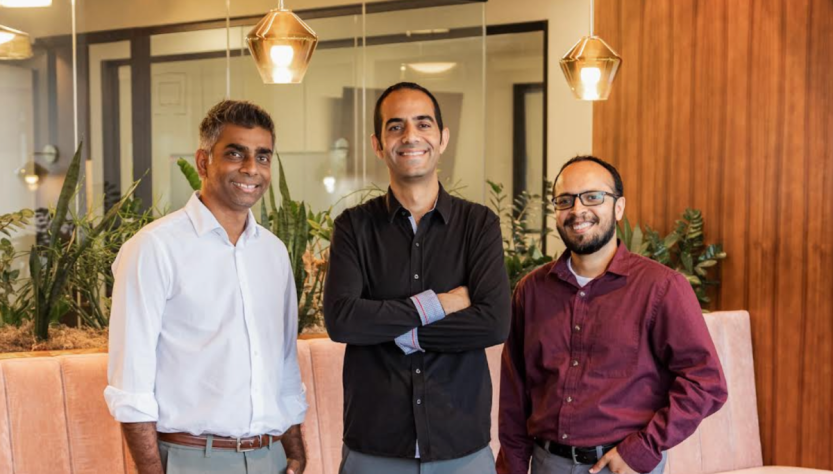
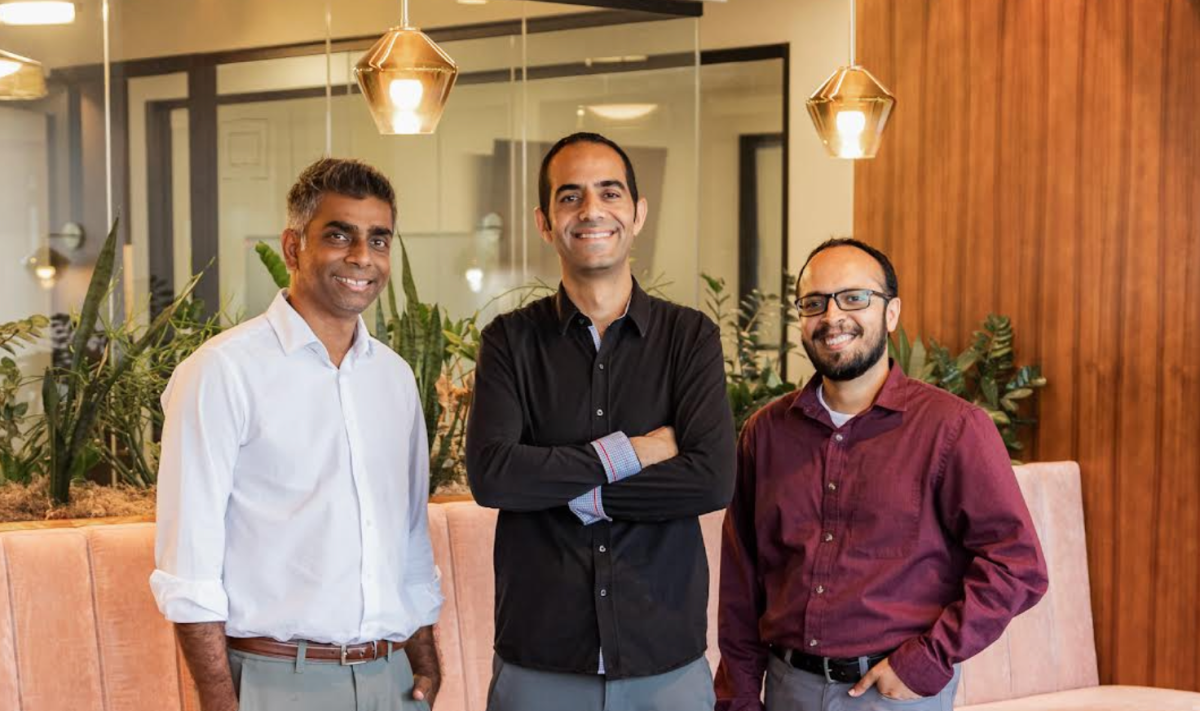
Featured above, from left to right: Chetan Patel, co-founder and president of Basata; Kaled Alhanafi, the company’s CEO; and Vivin Paliath, the company’s third co-founder and CTO.
When you make purchases through links in our articles, we may receive a small commission. This doesn’t impact our editorial impartiality.