
Telecommuting comes with its challenges. Pets can be needy, your back suffers from extended hours at a workstation, or you might just forget to stretch. There are several applications that prod you to get up or let you know when your seating posture is subpar, but they are often easy to ignore.
I have spent nearly ten years at a home workspace, refining my arrangement along the way — gaming chair, lumbar support, you name it. However, none of this ensures proper posture.
Then I discovered Isa, a desk device from the German startup Deep Care that employs a unique methodology. It monitors posture, hydration, illumination, noise, and mobility. Remarkably, it accomplishes all this without a camera or an internet connection, which is a significant advantage in an age of constant surveillance.
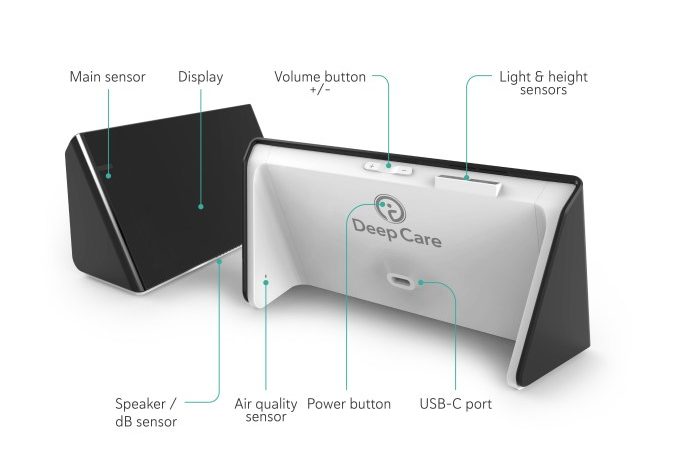
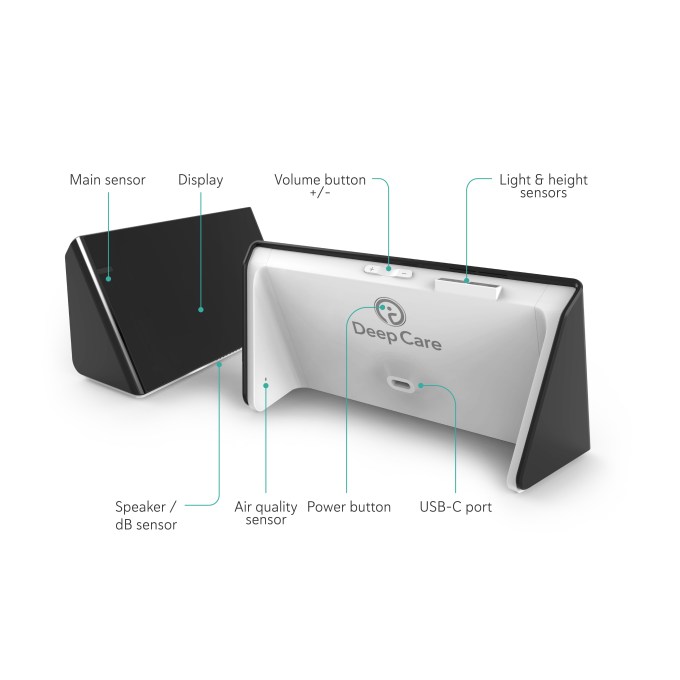
Here’s a breakdown of its functionality and specifications. Isa features a 5.5-inch IPS HD display and resembles a table clock. It operates via USB-C; while the manufacturer provides a power adapter, you can utilize any of your existing chargers since it has a power consumption rate of about 2.45W.
The main sensor of the device is a Time-of-Flight (ToF) 3D depth sensor located at the front — the same technology found in facial recognition systems and certain smartphone cameras — which tracks your posture and movements. It also enables features such as counting the number of beverages you have consumed. The company mentioned that the sensor functions at a range of 0.15 meters to 1.8 meters, allowing it to register your movements even when you’re standing up and moving around, as long as the device remains on your desk. Additionally, it contains various other sensors: a ToF 1D sensor, a gyroscope, a barometer, a light sensor, a sound level sensor, a CO₂/VoC sensor, and temperature and humidity sensors.
Getting started is simple — the device prompts you for some information about yourself and your working habits. I was surprised to find there was no option to adjust the device to Indian Standard Time (or any other Asian time zone). The company stated that Isa currently supports only time zones in the EU and US. That seems reasonable for the moment — however, more extensive time zone support or even a basic world clock appears to be an essential feature for such a device.
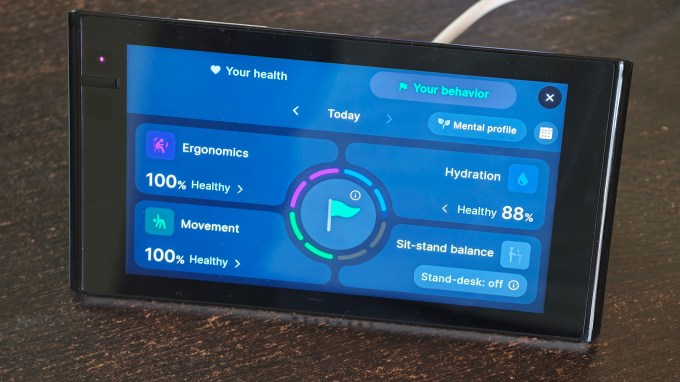
Isa’s screen showcases your posture with a squircle (a rounded square) indicator that fills or drains based on your sitting alignment, while a widget similar to a water tank measures your hydration. If your posture is not correct, the display changes to yellow. The Apple Watch-like ring serves as a surprisingly effective prompt — when I notice yellow or red, I respond by straightening up almost automatically.
The device will vibrate to notify you if you’ve been slouching for an extended period, and I appreciate this subtle form of encouragement. This alert also lets you know if you’re leaning excessively forward or backward, assisting you in adjusting your position.
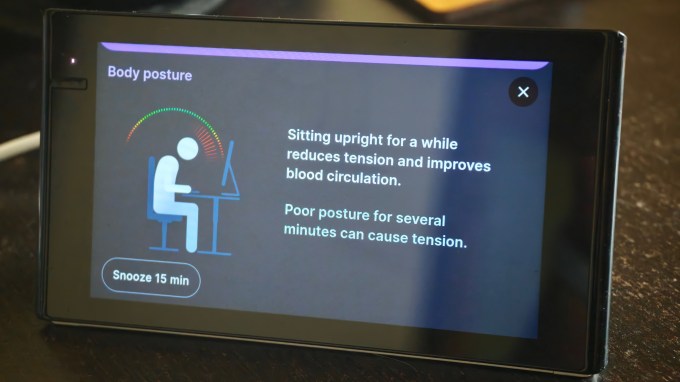
A similar widget monitors movement, and if you remain inactive for an extended period, Isa recommends standing up, offering on-device guided exercises to try. After your break, the movement tracker resets when you return to your desk.
Deep Care opted to exclude cameras, enhancing privacy, but this decision has certain drawbacks.
If an object—like a bottle—blocks the line between you and the sensor, it may misinterpret it as a person and mark you as stationary. Pets or housemates moving nearby can also activate the sensor. Isa generally recognizes when you’ve stepped away and displays a digital clock, but it would be beneficial to have a manual button to indicate when I am away from my desk so that it stops tracking.
Due to the exclusive use of sensors, the device sometimes indicated I had been inactive for too long even when I had been seated for less than thirty minutes. These are minor annoyances. Overall, the device prompted me to check my posture more frequently than I used to, and the exercise recommendations are genuinely helpful.
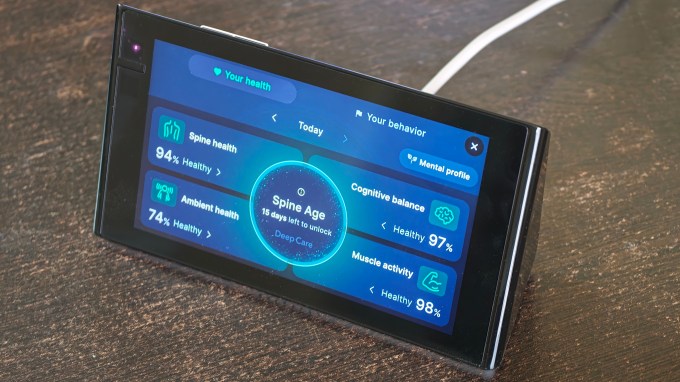
To manage all these functions, the device is equipped with a quad-core 2 GHz processor. It can connect to Wi-Fi for software updates but can be disabled any time you prefer.
Deep Care was launched by three former Bosch employees and initially marketed Isa exclusively to businesses. It has recently broadened its reach to consumers — a move that reflects confidence in the market for workplace wellness technology and tests whether a subscription model integrated with premium hardware can capture a mainstream audience.
Isa is offered at a price point of €299 ($354) with two subscription levels. The core plan (€4.99 per month) provides features like posture monitoring, healthy seating habit tracking, hydration tracking, and access to the exercise collection. The Pro plan (€7.99 per month) allows you to monitor environmental factors like light, noise, and CO2 concentrations to ensure a healthy workspace.
The company intends to leverage Isa’s sensor capabilities to delve into mental health-focused monitoring. They assert that by analyzing data such as posture, head movements, and chest movements, the device can monitor respiratory patterns. Furthermore, in conjunction with environmental inputs like noise, lighting, and CO2 levels, the company aspires to introduce a stress-related metric.
Even if you choose to forgo the mental health functionalities, Isa remains a robust device for anyone serious about improving their posture and movement. It is not budget-friendly, and the subscription adds to the long-term expenses. However, if you or someone you know works from home and needs to make adjustments to their desk habits, this offers one of the more considered choices available.
When you purchase through links in our articles, we may earn a small commission. This doesn’t affect our editorial independence.