
Box. Boho. Knotless. Most Black women know precisely what those terms allude to: braided hairstyles. This age-old tradition has become almost a rite of passage, with many Black women and girls still today perched in salon chairs for up to 12 hours at a time while a stylist intricately weaves patterns into their hair.
However, this is also part of the issue. For millennia, hair braiding has been a labor-intensive endeavor. That was until recently, however. Yinka Ogunbiyi recounted to TechCrunch how she found herself alone in her London apartment during the COVID-19 lockdown and attempted to braid her own hair: “It took me four days,” she stated.
Ogunbiyi, who holds an MS in engineering from Harvard and an MBA, had previously launched a smart cooking appliance brand, redirecting her focus to braiding as a technical challenge needing resolution.
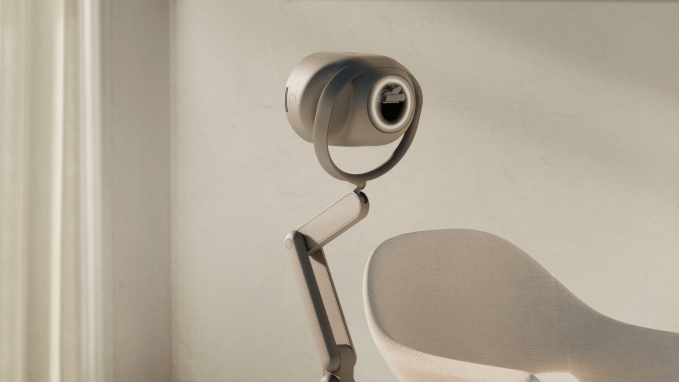
After extensive research, she introduced a robotics startup on Tuesday: HaloBraid aims to assist salons in accelerating the braiding process with its inaugural device, expected to launch later this year, acting as a braiding aide for professional stylists. The company has secured $7 million in a seed funding round led by Seven Seven Six, the venture firm of Reddit co-founder Alexis Ohanian.
Ogunbiyi provided limited details on the device, noting that patents are still pending, but did explain its functionality: A stylist initiates the braiding and then transfers the remainder of the process to HaloBraid, which can complete the braid in mere seconds. She emphasized that the product is designed to be gentle on hair and can assist with both knotless and box braids.
Ogunbiyi discovered in her research that individuals spend approximately 8 billion hours braiding hair annually. In her survey of 2,000 respondents, 95% indicated they would have their hair braided more frequently if it were quicker. Meanwhile, stylists endure long hours in their work, often resulting in health problems like carpal tunnel syndrome or arthritis.
Ohanian recognized that there is a substantial market and a likelihood for returns for a device designed to simplify the braiding process.
Ohanian, who is married to Serena Williams—known for her iconic braided hairstyles on the tennis court—also has two Black children who wear braided styles. “I’ve examined precisely how long these braiding sessions last,” he shared with TechCrunch, adding: “My eldest daughter enjoys the ritual for the first few hours, but by the ninth hour, everyone is prepared to call it a night.”
He pointed out how Dyson transformed tools for hairstyling (such as their well-known hair dryer) whereas technology for textured hair has yet to be fully explored “despite a dedicated audience ready to spend.”
“This is hardware’s moment,” he noted, referencing other investments he has made, like the rocket company Stoke and the asteroid mining enterprise AstroForge. “An automated braider seems entirely feasible. This product is truly distinct, with a clear strategy for entering the market.”
Additional investors in the seed funding round include AlleyCorp and Bling Capital. The startup will allocate the new funding towards product development, manufacturing, and establishing salon partnerships.
HaloBraid has few rivals in the hair-braiding-device landscape, the most notable competitor being Braidiant. Ogunbiyi stated that one reason for the challenges in innovating within this sector is the inherent difficulty of working with hair, particularly for a process as intricate as braiding. She remarked that hair is one of the “most challenging substrates in the world to manipulate,” and she needed to incorporate techniques from various sectors, from material science to inkjet printing, to create this device.
With fresh funding and validation in hand, the startup now faces the challenge of navigating through to launch day. However, Ogunbiyi stated she and her team of around 15 are already contemplating additional devices to develop, such as one capable of undoing braids (a task that can often take just as long as the braiding itself).
“HaloBraid is our initial product, but our broader vision is to develop groundbreaking technology that accelerates textured haircare, making it quicker, simpler, more comfortable, and more enjoyable,” she said.
When you purchase through links in our articles, we may earn a small commission. This doesn’t affect our editorial independence.