

Merely eight months post-launch of its commercial services, AI leaderboard provider Arena, which began as a research initiative at UC Berkeley in 2023, has achieved an annualized run-rate revenue of $100 million.
Arena is widely recognized for its renowned crowdsourced AI model performance leaderboard, created from more than 10 million user assessments. Its consumer site allows users to input a prompt that is directed to two models; subsequently, the user selects which model performed better.
Although Arena’s widely-used AI model leaderboard is available for free public access, the company started earning revenue from its platform in September with the launch of AI Evaluations, a service that provides model labs and enterprises with in-depth performance analytics sourced from its community.
Arena’s swift revenue increase indicates that its commercial products resonate with customers just as much as they do with its evaluator community, which is often attracted to the platform for early access to cutting-edge, frequently unreleased, AI models.
“Many people are unaware that our business is generating any revenue at all; they still perceive us as an open-source initiative,” stated Anastasios Angelopoulos, Arena’s co-founder and CEO, in an interview with TechCrunch.
While Arena refers to its revenue milestone as ARR—a term typically representing annualized recurring revenue—Angelopoulos explained that the company bills clients based on “consumption,” indicating that its revenue does not follow a recurring model.
Although Arena lacks direct rivals—Yupp, another crowdsourced AI model selection startup, ceased operations in March—Angelopoulos noted that the company competes “for the same dollar” with human labeling startups such as Mercor, Surge, and Scale AI, all of which aid model creators in enhancing their AI during post-training.
As AI providers seek to optimize model performance, their demand for post-training optimization services continues to grow. When Arena reported in January that it secured a $150 million Series A at a post-money valuation of $1.7 billion, its annualized revenue was $30 million.
In other news, Handshake’s gross annualized revenue from AI training has nearly doubled since January, rising from $550 million to almost $1 billion, according to a report by The Information in April. Mercor’s annualized revenue also surpassed $1 billion earlier this year, climbing from $500 million last September, as reported by The Information.
Arena evaluates models across various tasks including text, coding, vision, and image creation, as well as intricate, extended workflows through its newly launched Agent Mode.
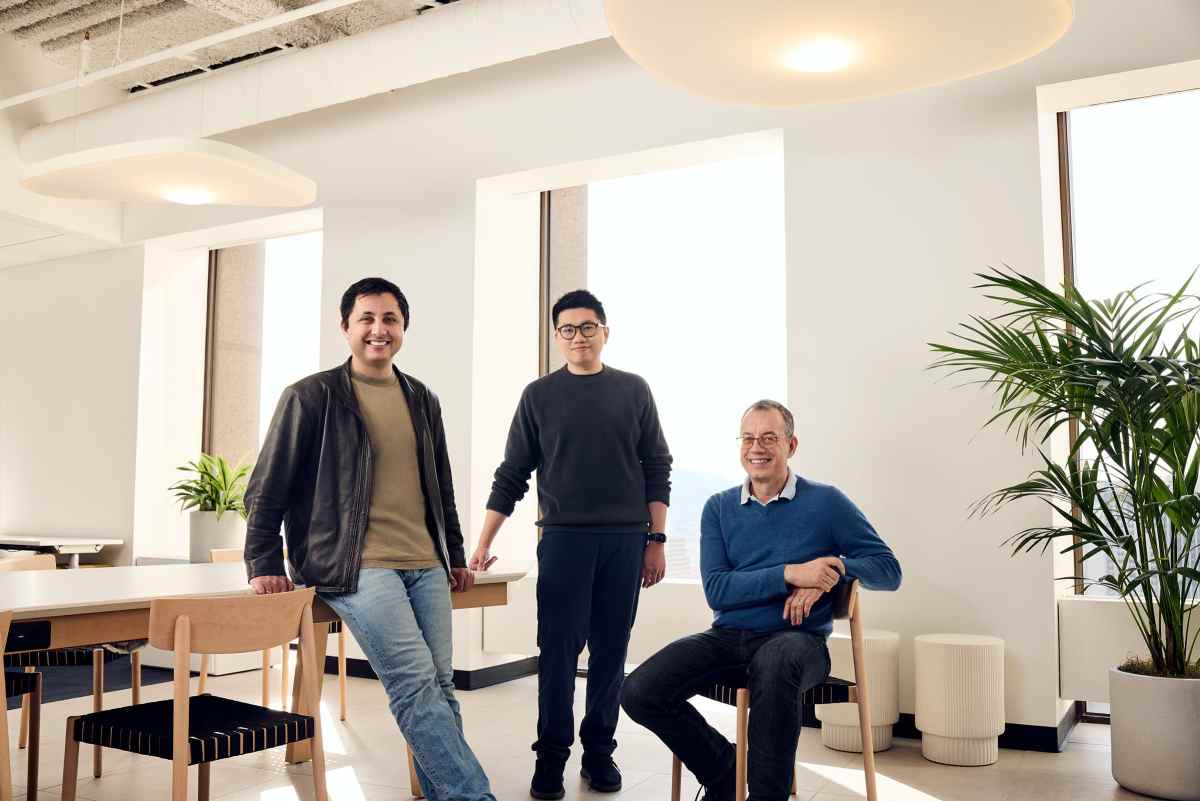
Along with Angelopoulos (shown left), Arena was co-founded by fellow UC Berkeley postdoctoral researcher Wei-Lin Chiang (shown center), who acts as the startup’s CTO. The startup was also co-founded by Ion Stoica (shown right), the distinguished UC Berkeley professor and co-founder of Databricks, who guided the project prior to its incorporation as a company in April 2025.
Arena has amassed a total of $250 million from investors such as Felicis, Andreessen Horowitz, The House Fund, LDVP, Kleiner Perkins, Lightspeed Venture Partners, Laude Ventures, and UC Investments.
When you buy through links in our articles, we may earn a small commission. This doesn’t impact our editorial autonomy.