
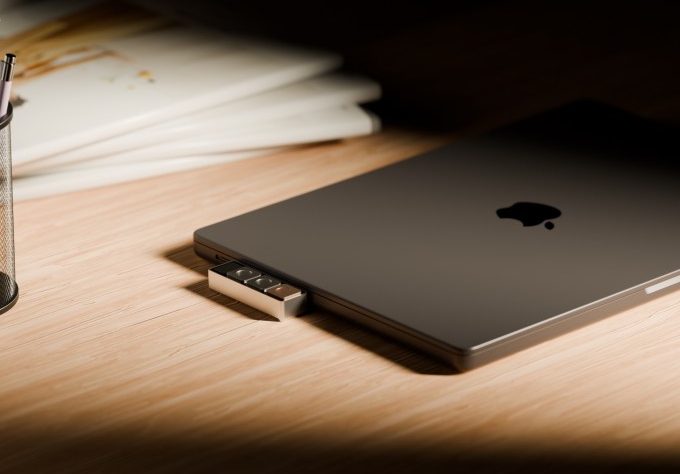
One of my main annoyances with meeting applications is that every single one has a unique shortcut for silencing your microphone or disabling your webcam. It becomes challenging to keep track of which keys perform which functions when you’re in the midst of a meeting trying to make a point or pose a query. I have always desired a physical, universal button for mute and camera control — something I could press without a second thought. Project Mirage’s Dune, a compact, three-key aluminum keypad — roughly the dimensions of a piece of gum — that connects to your MacBook’s USB-C port, accomplishes exactly that.
The $119 device features three buttons, and its functionality shifts depending on the application you are using. For example, in meeting apps and websites, it might function as toggle mic, toggle video, and bring window to the front. In Excel or Sheets, it could serve as copy, paste, and undo. For Chrome, it could be refresh, jump to URL bar, and paste. You understand the concept. Developers can also implement it with tools like VS Code or GitHub to merge, approve, or close a pull request.
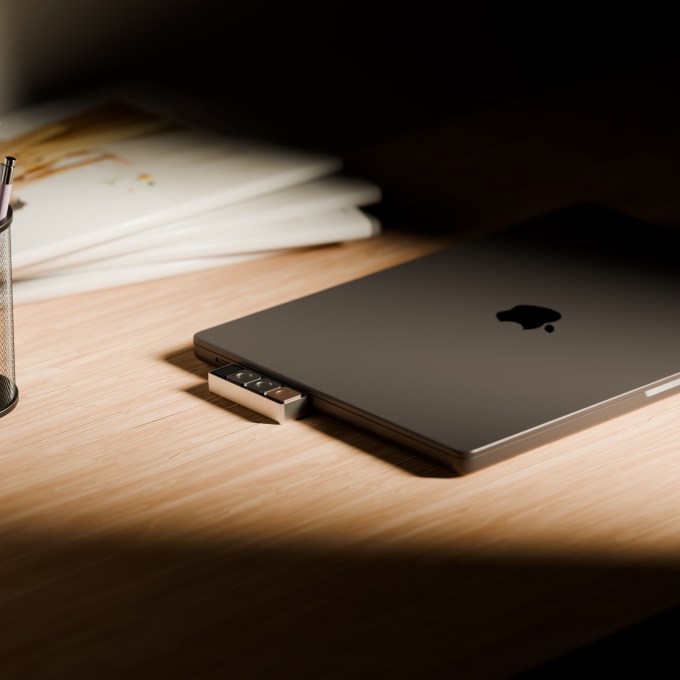
The startup customizes each unit to fit your particular Mac model, ensuring that it aligns perfectly against the laptop with no gap underneath. If your ports are occupied, you can connect it using a dongle instead. Dune operates without a battery and does not require an external charger — it draws power directly from the MacBook.
[embedded content]
Currently, the startup accommodates M2 Air or later and M1 Pro or later models of MacBook running macOS 15 Sequoia or subsequent versions.
The device has a pleasant appearance and feel, but I found that the keys lacked sufficient resistance. Presently, it is quite simple to accidentally press a key. On several occasions, I unintentionally unmuted myself or disabled my camera because my hand brushed against the device while reaching for a bottle of water or a coffee mug. It shouldn’t be this straightforward to trigger a key.
Dune comes with a companion app for setting up shortcuts, whether per-app or system-wide. Within a specific application, you can link a Dune key to a keyboard shortcut, a command, or a link that launches an app or URL.
Through the app, Dune also connects with your calendar and displays your upcoming meeting a few minutes prior to its start, allowing you to join, dismiss, or send an “I’m running late” message with a single tap.
For further customization, you can write and execute your own Python script. If coding isn’t your forte, Dune offers seamless integration with Claude Desktop: You articulate the shortcut you desire in simple language, and Claude generates it and assigns it to a key for that application — no manual setup needed.
I created a shortcut that, whenever I’m on a startup’s webpage, retrieves a brief overview of the company: its rivals, funders, and inquiries I might pose if I arranged a meeting with them. For anyone whose role involves quickly evaluating companies — investors, founders, operators — it’s a task perfectly suited for Dune. I also developed one that converts images to JPEG format so I can swiftly upload them to WordPress or social media. Both were straightforward to create and required no manual configuration, although getting a shortcut fully operational still involves some back-and-forth with Claude, including troubleshooting once you actually run it.
The app additionally features a marketplace, where users can discover skills created by other Dune owners. If the marketplace gains traction, it could become essential to Dune’s growth and retention strategy — hardware serving as a lightweight front end for a Claude-powered skills ecosystem, where each new skill provides owners with another incentive to remain engaged.
However, at this time, the selection of skills is limited. Furthermore, there is no option to test a skill without assigning it to the hardware button — ideally, the app would allow you to preview a skill before committing it to the hardware. The startup also needs to actively introduce more of its own recommended skills for different applications to its users.
Project Mirage’s device sells for $149 after its introductory price concludes, and it’s an excellent choice for anyone focused on productivity. MuteMe merely addresses mute/unmute, and Stream Deck offers business-oriented macros, but Dune is simpler to personalize on both hardware and software.
When you make a purchase through links in our articles, we may earn a small commission. This doesn’t impact our editorial independence.