
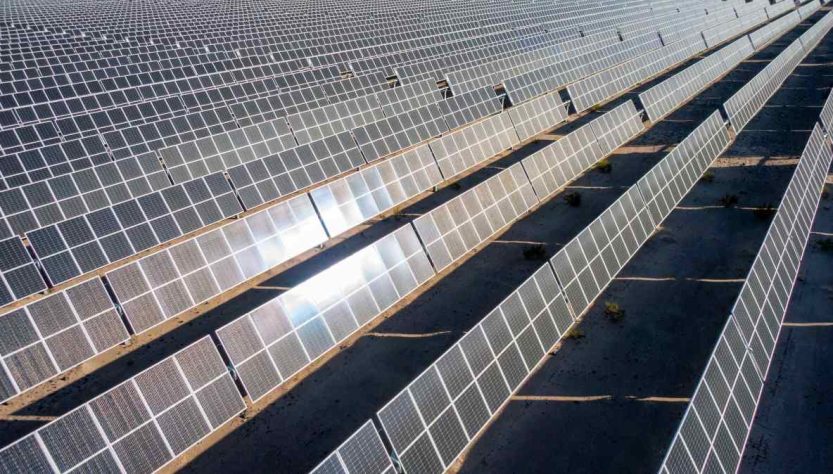
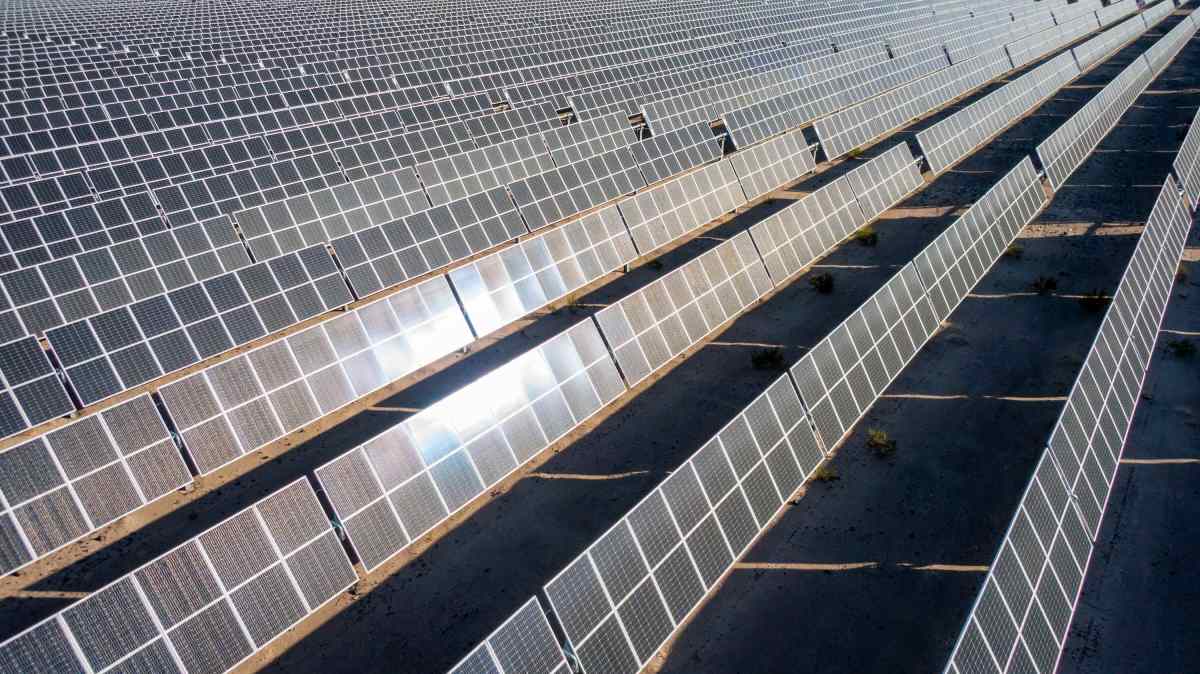
Google announced that it has executed its most significant solar energy and battery storage acquisition to date. The initial two phases of the initiative, situated in Arkansas, are expected to produce sufficient electricity to meet approximately 6% of the state’s peak demand, according to the company’s statement earlier this week.
Electricity generated from this project will be directed straight to the grid, alleviating the demand on Google’s data centers. Google is co-investing in the project with developer Cypress Creek Energy and is acquiring the complete output from the first two phases, adding 1 gigawatt of solar power and 1.9 gigawatt-hours of battery storage to its assets.
Once finished, the three-phase project will stand as the largest solar facility in the United States, the companies claim. The third and final phase is set to connect to the grid in 2029, increasing the plant’s overall capacity to about 1.8 gigawatts of solar energy and 2.9 gigawatt-hours of battery storage. Cypress Creek has acquired $3.5 billion in funding to facilitate the initial two phases.
The Steel River Energy Center, as this project is named, will be located approximately 30 miles north of Memphis, Tennessee. By combining solar panels with substantial battery systems, this power plant will be capable of supplying power to the grid continuously throughout the day. Additionally, it will aid Google in its objective to align its electricity consumption with clean energy hourly, a rigorous standard that should promote the introduction of more hybrid power facilities to the grid.
Google’s move to invest in a significant solar and battery installation contrasts sharply with xAI, which runs an unregulated natural gas power facility roughly 40 miles to the south.
Elon Musk has committed significant resources to natural gas for powering xAI’s Colossus data centers, despite leading Tesla, a company that produces solar panels and large-scale batteries. xAI is currently operating nearly 60 natural gas turbines without federal clean air permits, according to a report from Reuters. The pollution from xAI’s facility in Mississippi disproportionately impacts Black communities, as found by Reuters.
Changing his approach seems unlikely for Musk. He recently acquired APR Energy, a company that focuses on modular natural gas power plant development.
Google has also put money into natural gas, collaborating with Crusoe to construct a 933-megawatt power plant in West Texas, although this endeavor has been somewhat of an exception for the firm, which has predominantly depended on clean energy to grow its portfolio. Considering the rapid deployment potential of projects like Steel River — with nearly 2 gigawatts of solar capacity achievable in three years — it’s probable that Google will persist in investing in renewable energy and battery solutions.
When you purchase through links in our articles, we may earn a small commission. This doesn’t affect our editorial independence.