

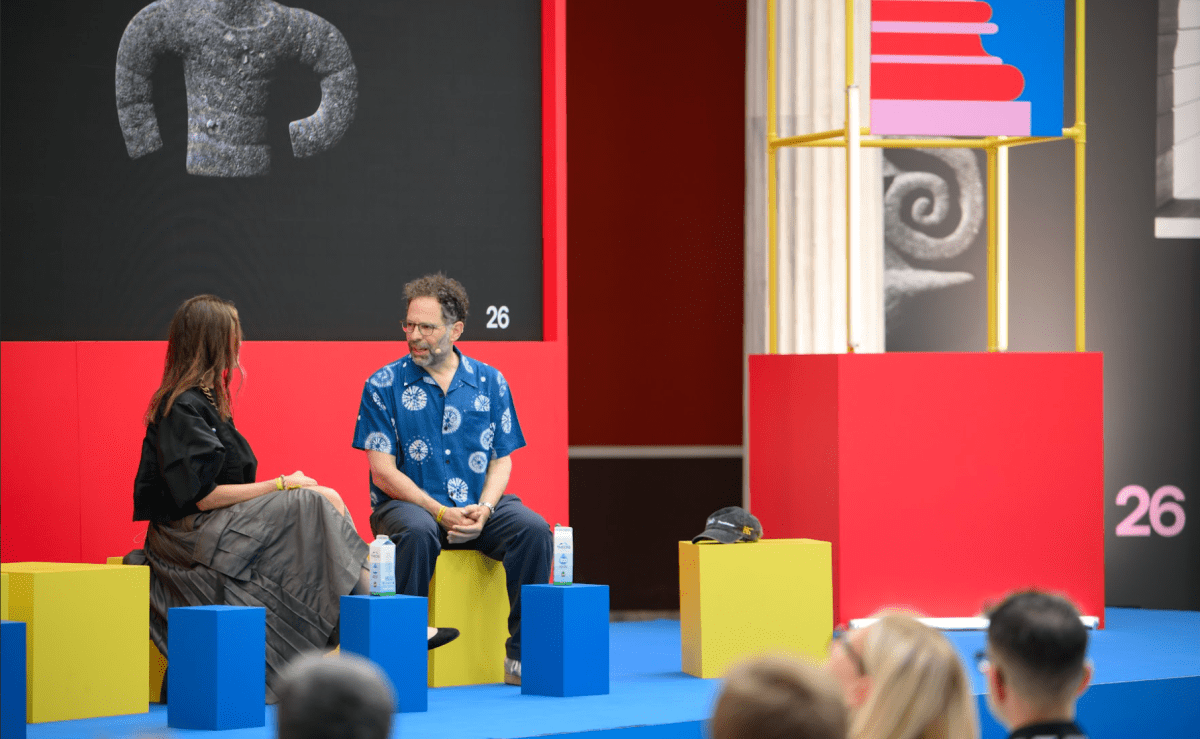
In late May, during a conversation I had with Neil Rimer in Athens, he shared a thought that I’ve been pondering ever since. At a lively new tech festival in the city, while discussing the growing wealth surrounding AI, he expressed “a strong belief that some form of redistribution will occur.” He elaborated. “It’ll be either voluntary or involuntary, but it will take place, and I hope it’s voluntary,” he mentioned, adding that he believes tech leaders “can take a significant part in realizing that.”
If said by most individuals, that might come off as typical populism. However, coming from Rimer, a co-founder of Index Ventures, one of the most successful venture capital firms in the last thirty years, it felt particularly notable to be said publicly.
Rimer stepped back from daily investing in 2021 and now spends considerable time in Athens, where his wife is from and his children cherish their Greek citizenship. He arrived for our interview dressed in a wrinkled button-down and jeans, quite different from the quarter-zips and upscale knitwear worn by many of his contemporaries. Nonetheless, Index’s financial returns in recent years have been remarkable: the company has raised approximately $15 billion from external investors since its inception, and last year’s exits, such as Figma’s IPO and Google’s acquisition of the cybersecurity firm Wiz, reportedly brought Index around $9 billion.
Rimer has discovered ways to give back. He serves on the board of Endeavor Greece, which supports entrepreneurs in emerging economies, and chaired the board of Human Rights Watch from 2019 to 2025. In late 2021, he, along with his father and two brothers, donated $13 million to McGill University for the renovation of a campus building, now named the Rimer Building, and established a new Institute for Indigenous Research and Knowledge.
Meanwhile, his remarks on redistribution come at a rather peculiar time, to be generous, for philanthropy. The Giving Pledge, initiated by Warren Buffett and Bill Gates in 2010 to encourage billionaires to allocate half their wealth to charitable causes, is becoming less relevant. In its initial five years, 113 families joined; that number dwindled to 72, then 43, and plummeted to just four in 2024, as reported by a New York Times article in March highlighting how philanthropy has lost its appeal among many of the wealthiest individuals in tech. (The article noted: “Elon Musk, the world’s wealthiest person, has claimed that his businesses ‘are philanthropy.’”)
The trend seems consistent beyond the Pledge. Total charitable donations in the U.S. reached a record $592.5 billion in 2024, yet the number of Americans actually contributing has decreased for five consecutive years, dropping 4.5% in 2024 alone, according to the Stanford Social Innovation Review. In 2000, two-thirds of households made donations; now, about half do, and data from Bank of America and the Lilly Family School indicates even donations from affluent households have fallen, from 90% in 2017 to 81% last year.
This trend is reflected in Index’s own investments, which include Anthropic. Business Insider recently sought insight from financial planner Alex Caswell regarding his new wealthy clients, many of whom are Anthropic employees associated with effective altruism, asking if they were pledging to donate a significant portion of their fortunes. Anthropic matches employee donations of up to 25% of their shares to charity, and Caswell mentioned some clients have utilized this, but the majority weren’t incorporating philanthropy into their plans at all; they were concentrating on angel investments or launching their own firms. “That’s more prevalent than a desire to engage in philanthropy,” he mentioned to the outlet.
Naturally, the lack of voluntary contributions is now clashing with efforts to legislate a resolution. California citizens will vote this year on a one-time 5% wealth tax targeted at the state’s billionaires. Some, including Google founders Sergey Brin and Larry Page, have already relocated their primary residences to South Florida as a precaution.
Reports suggest OpenAI is contemplating going public in 2027, and cynically, one factor among others may be that the tax, if enacted, will calculate net worth based on an individual’s global assets as of the end of this calendar year.
Predictably, there is significant opposition to any wealth-redistribution measure of this magnitude, including from Governor Gavin Newsom and economists who note that many developed nations have repealed similar wealth taxes since 1990 after observing their affluent residents flee.
Alternative proposals are also contentious. OpenAI has allegedly discussed giving the federal government a 5% equity stake, an idea pitched by CEO Sam Altman as a method of sharing AI’s benefits with the public, but detractors perceive it as a means to secure political support in Washington. Regardless, Silicon Valley has historically been hesitant to include the government in their ownership structure. Veteran investor Roelof Botha humorously remarked during a separate discussion with this editor last year: “[Some] of the most perilous words in the world are: ‘I’m from the government, and I’m here to assist.’”
It’s essential to contemplate the extent of wealth beyond these frameworks. Musk’s net worth just surpassed $1 trillion, following SpaceX’s IPO last month, making him the first individual to achieve that milestone. Forbes reported 45 new AI billionaires in its 2026 rankings, collectively worth approximately $2.9 trillion, and that’s before either Anthropic or OpenAI has gone public. In that same Business Insider story about Anthropic employees, it was noted that once Anthropic and OpenAI complete their IPOs, their combined workforce will possess enough wealth to acquire nearly a third of all homes in the San Francisco metropolitan area.
It seems unprecedented, but whether it constitutes a historic extreme is a topic of debate. The proportion of wealth held by the top 1% of U.S. households reached 31.7% in the third quarter of last year, a record since the Federal Reserve began monitoring the data in 1989, which is roughly equal to the total wealth held by the other 90% of households combined.
That remains beneath the 45% share maintained by the top 1% at the peak of the Gilded Age in 1916. However, if we zoom in on the very top, the situation shifts. Esteemed economist Gabriel Zucman has calculated that during the peak of the Gilded Age, circa 1910, the four largest fortunes in America represented a combined 4% of U.S. GDP. Presently, that same narrow segment of the population — now 19 households instead of four — accounts for 14%.
Rimer’s two avenues, voluntary or compelled, mirror historical precedents from when the concentration of wealth in America hit similar heights. In 1889, at the zenith of the first Gilded Age, Andrew Carnegie published an essay asserting that a rich individual should regard their wealth as a trust to be used for the greater good within their lifetime, labeling it a disgrace to die wealthy. This essay, “The Gospel of Wealth,” became the foundational document of modern philanthropy and the intellectual precursor to the Giving Pledge.
However, this didn’t stave off the alternative route for long. By the mid-1930s, Louisiana Senator Huey Long had garnered a national following supporting a program called Share Our Wealth, advocating high taxes on the affluent to finance a guaranteed income for every American. Concerned about losing working-class allegiance to Long, Franklin Roosevelt pushed through what was dubbed the “soak-the-rich tax,” raising the highest marginal income tax rate to as high as 79%. It redistributed less than Long desired, yet remains the clearest example in American history of politically enforced redistribution occurring when voluntary efforts failed to sufficiently mitigate the mounting pressure.
This is not new information to Rimer, who has spent his career in the tech arena. He is more intrigued by “the moral compass of tech companies,” a curiosity he attributes to his time as a Stanford undergraduate in 1984, when Apple offered student discounts on the first Macintosh, and Steve Jobs and Apple’s other founders were, in his view, “heroes” for creating something he believed genuinely benefited society.
What worries him currently, he stated, is hearing his own children discuss certain tech companies similarly to how an earlier generation referred to defense contractors or tobacco manufacturers.
Critics may point out that Rimer — as an investor in Anthropic and other tech entities — directly benefits from the fortune he suggests should ultimately be shared. Nonetheless, he prefers that his fellow beneficiaries opt to return some of the profits rather than having them forcibly taken. There exists an easy route and a difficult route to accomplish this, and Rimer is optimistic that individuals will choose the straightforward option before history determines it for them.
When you purchase through links in our articles, we may earn a small commission. This doesn’t affect our editorial independence.