
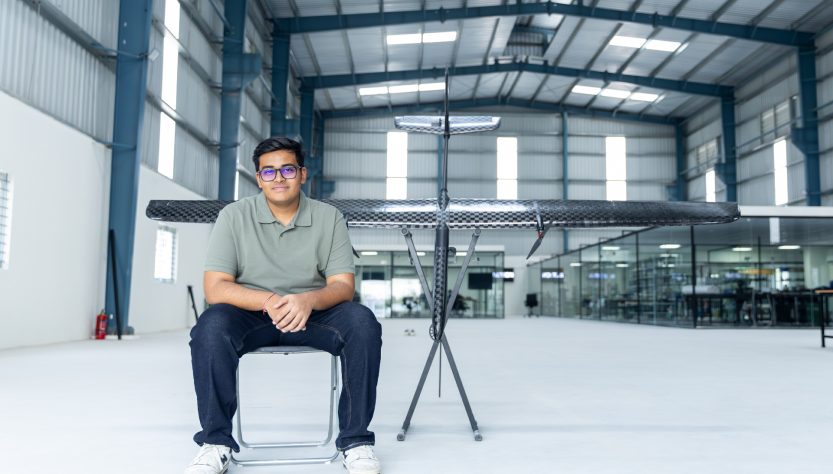
Notable solo investor Lachy Groom has invested in a Bengaluru startup with an ambitious goal: to keep an aircraft airborne for over a year by harnessing energy from ocean winds.
Alteon, established by 20-year-old Samay Sanghvi, announced on Tuesday that it secured $2.5 million in a pre-seed funding round led by Groom, with contributions from Together Fund, to create autonomous aircraft modeled after dynamic soaring, a technique used by albatrosses to utilize wind energy. Groom made the decision to invest within the first half hour of their initial meeting, Sanghvi shared with TechCrunch.
Traditional aircraft must carry the necessary fuel or battery power for flight. Alteon aims to overcome this limitation by creating small, fixed-wing autonomous aircraft capable of harvesting energy from wind shear above the ocean through dynamic soaring—a technique where an aircraft repeatedly transitions between air layers moving at different speeds.
“Once you construct airplanes that can remain airborne for over a year, the possibilities are endless,” Sanghvi told TechCrunch. Alteon intends to initially employ the aircraft for maritime surveillance, providing governments with real-time oversight of activities in their waters.
The current strategy is to develop an aircraft with an approximate wingspan of three meters that will fly near the surface of the ocean, climb, and maneuver through faster-moving air, repeating the process to harness energy from the wind. Ultimately, Alteon plans to utilize its propellers as turbines to convert some of this energy into electricity to recharge its onboard batteries, Sanghvi indicated.
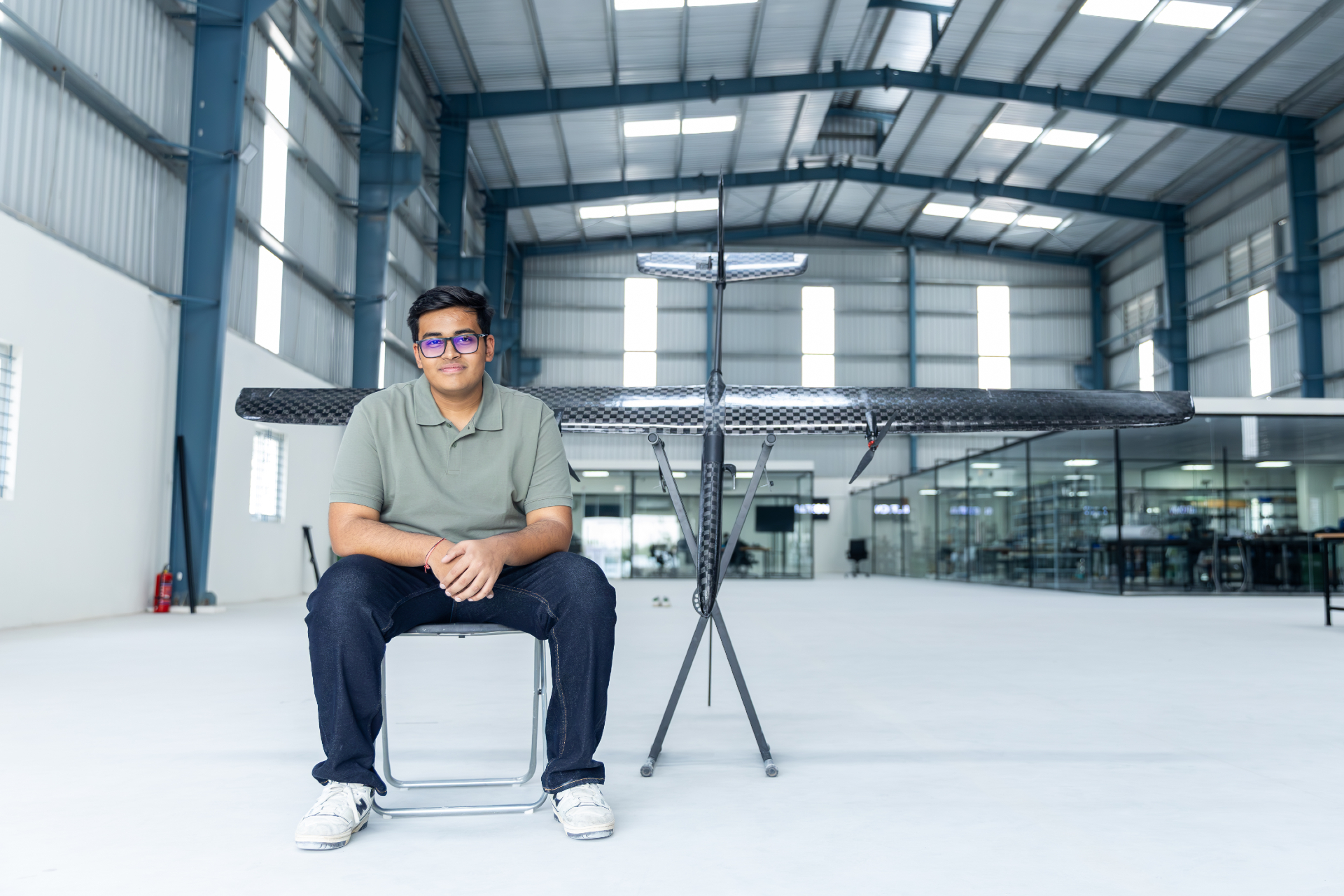
However, the startup has yet to demonstrate that its aircraft can actually maintain flight using energy acquired through dynamic soaring. It has recently completed a test of its autonomous flight system over the Bay of Bengal, where the aircraft autonomously executed seven O-shaped cycles at speeds exceeding 62 miles per hour, flying within one meter of the water’s surface.
The next significant milestone for Alteon will be what Sanghvi refers to as “energy-neutral dynamic soaring.” This would enable the aircraft to fly continuously with its propulsion turned off, drawing sufficient energy from the wind to stay aloft.
Dr. Gabriel Bousquet, an aerospace and robotics engineer based in Silicon Valley, who studied dynamic soaring during his PhD at MIT, described Alteon’s low-altitude flight over water as a “promising initial outcome.” However, he emphasized that the greater challenge will be demonstrating that the aircraft can reliably harvest enough energy from real-world winds to remain airborne for extended durations.
Flying low enough to safely capture that energy is particularly challenging, Bousquet noted to TechCrunch, as the aircraft will face turbulence, waves, spray, rain, and varying light conditions while constantly detecting and responding to a dynamic ocean surface.
Dr. Bharath Swaminathan, who received his PhD from IIT Madras with a focus on the stability of dynamic soaring, remarked that the fundamental physics is well recognized and commended Alteon’s initiative. Keeping an aircraft airborne for several days utilizing dynamic soaring would be “a significant step and a major accomplishment,” he told TechCrunch.
Swaminathan, however, added that while large-scale wind conditions may be predictable, local wind shear and turbulence can fluctuate greatly, complicating an aircraft’s ability to continuously harvest energy from the wind. Some of these challenges, he suggested, may only manifest through practical flight testing.
Groom acknowledged the technical risks involved in this venture. “Ambitious projects are inherently risky,” he told TechCrunch. “For me, it came down to trusting that Samay and the Alteon team are equipped to resolve these issues.”
Sanghvi began developing what would later become Alteon straight after high school in 2023, learning to construct aircraft by building—and crashing—radio-controlled models before creating early prototypes. He officially established Alteon in 2025 and obtained initial support from Emergent Ventures and 1517.
Alteon now boasts a team of 20 in Bengaluru and operates out of a 10,000-square-foot facility. The startup is producing four to five aircraft weekly for testing and has conducted over 200 test flights in the preceding 30 days, Sanghvi noted.
When you purchase through links in our articles, we may earn a small commission. This doesn’t affect our editorial independence.