
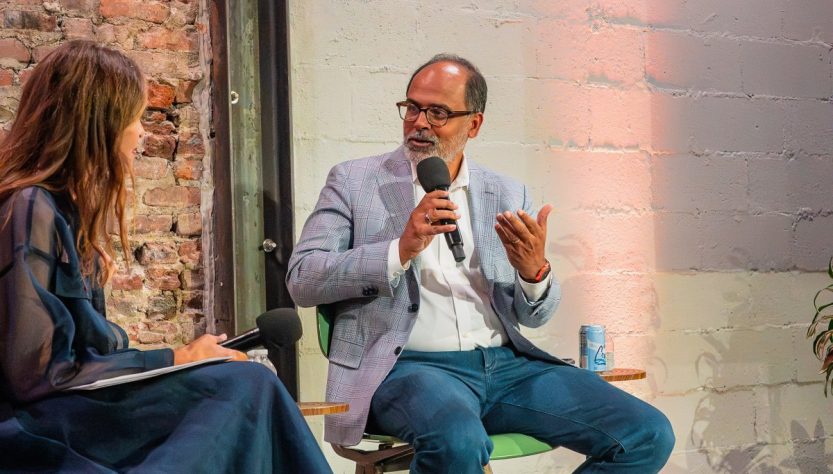
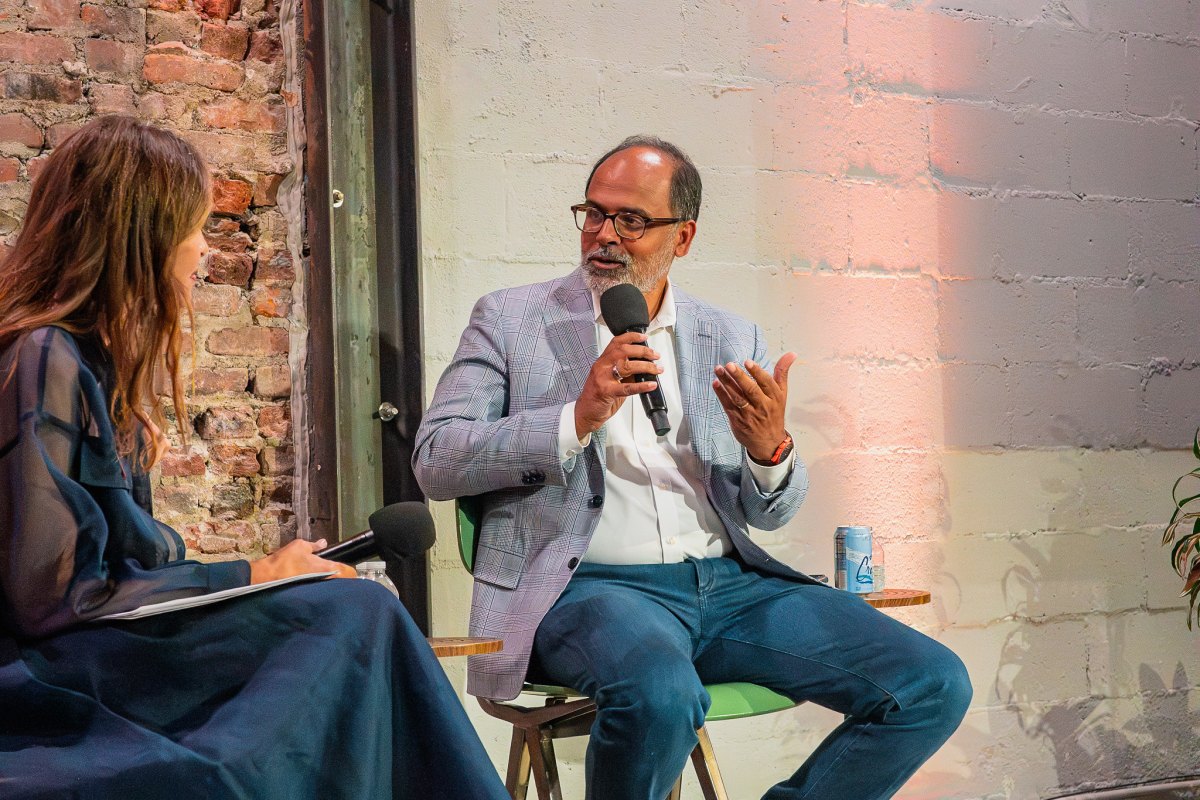
Devin Parekh has co-managed the prominent investment firm Insight Partners for 26 years. In contrast to many VCs who are vocal on X and appear to thrive on podcasts, Parekh and Insight Partners prefer to maintain a lower profile.
During his discussion with TechCrunch at its StrictlyVC event on Thursday evening in New York, Parekh was notably forthright about some of the firm’s successes (it has led and co-led numerous funding rounds in Databricks, for instance, and holds shares in OpenAI and Anthropic); the deals it has missed out on, including the buzzworthy AI legal-tech firm Legora; conflicts of interest within venture investing; and why Insight has adhered to a diversified strategy while other VCs have concentrated on leading AI labs.
This interview has been edited for brevity and clarity.
There’s a researcher who’s made headlines this week — do you perceive concerns regarding AI risks as hysteria, or do you harbor genuine worries?
Of course, there’s a risk that some non-state entity could access an open-source model and develop a biological weapon. However, there’s an even greater likelihood that we will see a significant reduction in the time required to develop new medications and cure illnesses. I’d take that gamble.
I serve on the board of NYU Langone — what AI is currently doing with patient data is astonishing. We can analyze 50 million patient records and inform someone arriving for an unrelated issue that they have a 25% chance of experiencing a heart attack. Overall, I view this as highly beneficial.
There are certainly risks, much like the risks associated with cutting-edge drone warfare. Every generation faces new risks, yet somehow, over time, living standards still rise. We will require AI to enhance healthcare accessibility as the population ages and the number of medical professionals available declines.
Insight has $90 billion in assets under management but appears relatively subdued compared to similarly sized firms. Is this intentional?
Every venture capitalist seems to believe they are an authority on everything nowadays — epidemiology during COVID, geopolitics amid the Iran conflict. I’m not convinced we are all experts in every domain. Our philosophy has been: Let the portfolio speak for itself. We invest in founders and companies. We need to communicate sufficiently for people to know who we are, but our performance should speak for itself — and this is driven by the portfolio, not by our need to be vociferous.
You engage in early-stage, growth, buyouts, and presumably secondaries. What’s the allocation?
It’s time-based, not set in stone — we invest globally, so there is no fixed geographic or strategic allocation. Examining our last seven funds would reveal varying proportions of early-stage, growth, and buyout in each. Currently, buyouts are not favorable — interest rates are high, debt markets are not welcoming for software, and exit multiples have decreased. We haven’t executed a significant buyout since 2024.
On the venture side, valuations are climbing at a rate we witnessed previously in 2021 — and that did not end well. Ordinarily, a follow-on round signifies more data, so you pay a premium for reduced risk. Presently, rounds are moving so swiftly that there’s nearly no incremental data, resulting in higher payments without a corresponding reduction in risk. The sensible reaction is to invest earlier. With a scalable fund, you can make smaller investments — writing a $20–25 million check instead of $500 million — and increase your stake in the successful ventures. That’s where we have seen disproportionate returns. With Wiz, we wrote a Series A and continued to invest, leading to a much larger gain than if we had stopped at the initial check. And if Wiz hadn’t succeeded, it would hardly have impacted a fund our size.
As a global investor, what proportion of your deals are regional versus focused in areas like the Bay Area?
Talent has leveled out worldwide. We pursued Legora — my partner Jeff Horing traveled to [Stockholm] to present to the company, since that’s where the founder was based. We lost that one to General Catalyst.
That said, AI infrastructure talent is genuinely concentrated in San Francisco — my 23-year-old son, also a VC, is relocating there because he believes you cannot invest in AI without being present. However, talent density differs by sector: Ramp is in financial services, and that talent is centered in New York. Thus, sector-specific AI investments can be more geographically diverse than pure AI infrastructure.
Why did you lose Legora to General Catalyst?
I can’t pinpoint the exact reason, but I believe they presented their value proposition more effectively than we did at that time. There are many instances where the reverse has occurred. The world is vast; we don’t have to secure every deal.
You’re invested in competing firms — OpenAI and Anthropic. That used to be considered taboo in VC. Did this cause any internal conflict within the firm? Were you concerned about how founders would perceive this?
The internal discussion was more focused on whether we should have participated in earlier funding rounds. It’s very much dependent on the stage. Khosla led OpenAI’s Series A, and there’s no way they could have subsequently invested in Anthropic, and if we had funded Anthropic’s Series A, we likely could not have invested in OpenAI either. Once you’re at a later stage, off the board, and not influencing governance, you’re merely acquiring a great stock.
We viewed OpenAI as the leading consumer-focused entity and Anthropic as having a distinct enterprise approach; that dynamic is evolving in real-time. As these companies sought to raise $30–$100 billion, they lost the ability to dictate exclusivity. However, at the Series A/B stage, we do have information-sharing constraints and do not invest in companies that directly compete, although some founders are sensitive even to slight revenue overlap.
Are you becoming more aggressive concerning physical AI?
Companies focused on physical intelligence remain largely theoretical endeavors. It’s not that they won’t evolve into viable businesses, but you’re betting on when robotics adoption occurs, which is in addition to a bet on whether it happens at all. We’re observing, but we have yet to engage. My son believes it’s the most exciting area right now and thinks I’m misguided to overlook it, which is exactly what I would anticipate from a 23-year-old.
OpenAI and Anthropic garnered roughly half of all VC investment in the first half of this year. Do you think LPs are apprehensive about concentration risk?
We’re not significantly concentrated, so it’s not a concern for us. However, I’m an LP in other funds, and I’m aware of two funds right now — raising their entire fund in a month — whose proposition is literally “35–40% of this fund is going into one of those two companies.” I’m not suggesting OpenAI and Anthropic won’t perform well. Yet this industry has consistently favored diversification over the long term. We’re on fund 13, so we must think in terms of ten funds, not just one.
At this specific time, if 25% of our fund were in Anthropic, our returns could look superior. However, historical data does not support excessive concentration, and the majority of LPs prefer to avoid that exposure — although firms such as Founders Fund and Thrive have succeeded with concentrated strategies. There will always be exceptions who excel at that.
Secondaries are appealing at the moment, considering the amount of capital raised between 2021 and 2023. How are you approaching these?
The more significant issue is that numerous funds gathered substantial capital and have yet to return any to LPs. Many first- and second-time funds might not secure a subsequent fund because they failed to prioritize liquidity. I advise the fund managers I mentor: If Anthropic is poised to triple from here, that’s fine — take your basis out regardless. LPs want to see you can liquidate positions; that’s the job.
We were also guilty of this early on. As one of the largest LPs in most of our own funds, we would think, “Why sell if it could appreciate further?” However, LPs aren’t compensated that way. Over the past two years, we’ve returned over $20 billion to LPs through strategic sales and IPOs, with a few billion more anticipated. DPI is significant, even at fund 13. Secondaries really serve as a liquidity tool, often for early venture investors rather than employees. Nobody complains about a 10x that remains a 10x, but if it dips to 5x, people question why you didn’t exit.
VC Elad Gill has contended there exists a narrow window — perhaps 6 to 12 months — where a company’s valuation will never be higher, and founders should capitalize on it. Do you discuss this with your founders?
We consistently engage in that conversation, although founders heed my advice about as much as my children do. It’s an individual basis, but when a founder receives an offer at a high valuation, I ask them what happens when the market corrections occur, since they inevitably will, even if I can’t specify when. If I could predict it, I’d be on an island managing my investments, not speaking with you. You don’t need to liquidate everything; mitigating risk by 10 or 20% is prudent.
Currently, valuations are increasing so rapidly that people assume the trend will persist, but you cannot compound $40 billion at 50% every two months for two years without being the global economy. That calculation doesn’t make sense.
Anthropic is expected to file for IPO shortly, presumably with OpenAI following. What does that IPO signify for the industry?
Anthropic is already larger than Salesforce and it’s only four years old — their ability to go public doesn’t necessarily imply much for others in the market. You’ll see three companies — SpaceX, Anthropic, OpenAI — going public within six to eight months, each exceeding a trillion dollars in market capitalization, and the market absorbed SpaceX quite comfortably. The essential inquiry is when the next tier of firms will go public and what standard that establishes. If you’re an investor observing a company’s growth from zero to $65 billion in four years, “double, double, triple, triple” doesn’t seem as thrilling in comparison. However, that 10x growth rate cannot persist indefinitely. Eventually, even these firms will operate as normal-growth entities, and you will require public markets for that. I believe we will see an uptick in these IPOs over the next 18 months.
With so much capital encumbered, will this influx of LP money finally returning sustain the excitement?
We all relate to this in our personal lives — steering clear of an overpriced market until we reach a breaking point, only to dive in right when we should be exercising restraint. LPs operate similarly on a broader scale; everyone sought entrance before 2021, retracted afterwards, and now the same LPs are rushing back in. That boom-bust cycle is challenging to evade. Venture-growth funds ranging from $6 to $10 billion used to be rare; now they are commonplace.
How long do you allow a company with a flawed capital structure before deciding to double down or withdraw?
It varies significantly. Wonderful [an enterprise AI agent platform] was established under two years ago; we engaged in two funding rounds and it’s now valued at $5 billion — a remarkably swift double-down. Conversely, some investments from 2021 stagnated for three or four years before discovering product-market fit. That illustrates why we conduct portfolio evaluations — we recently assessed 300 portfolio companies over three days, monitoring not just the primary positions but also identifying those demonstrating inflection points worth committing further resources to, acquiring secondaries, or, in some cases, pulling back from.
Our prime example is Armis, a security firm. We initially lost the deal to Sequoia, but my partner maintained the relationship with a $5 million investment from an $11 billion fund. Eighteen months later, we acquired the entire cap structure, including Sequoia, for a nine-figure investment, and sold it to ServiceNow this year for $7 billion. At times, smaller investments yield profits, at other times, larger ones do. The goal remains identifying the best founders within the best markets.
When you buy through links in our articles, we may earn a small commission. This doesn’t influence our editorial independence.