

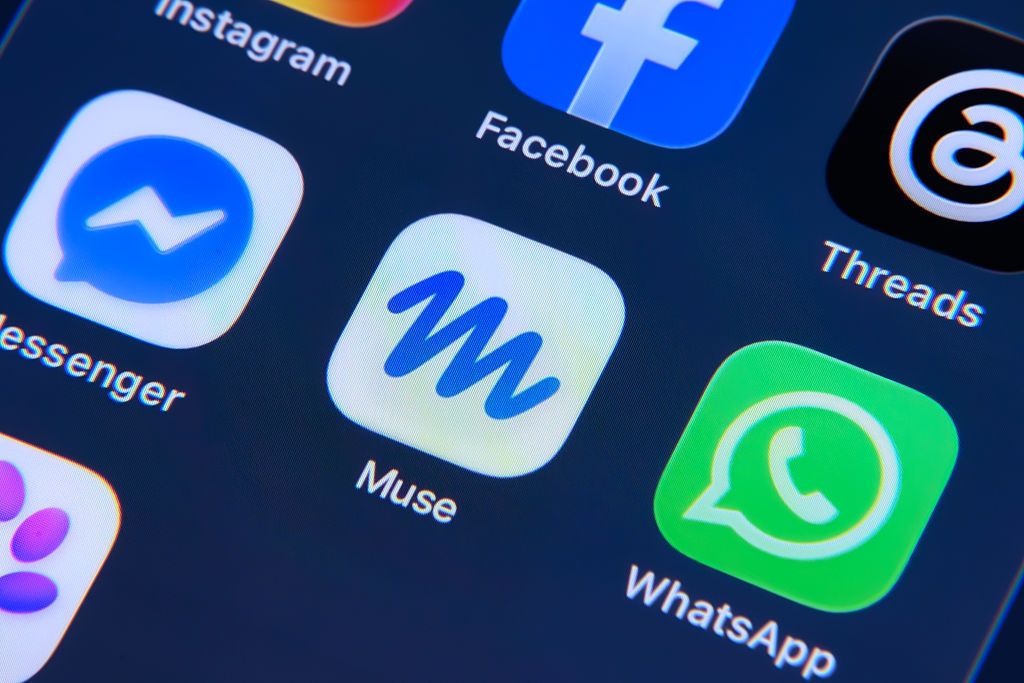
Initial users of Meta’s Muse have been pondering that the reason for its impressive performance is its underlying foundation in OpenClaw, presented in a more user-friendly format. Meta has acknowledged that these observations are not entirely unfounded. As per an X post by Nat Friedman, head of product at Meta’s Superintelligence Labs (MSL), Muse was “certainly significantly inspired as a product by OpenClaw.”
Nevertheless, he clarified that Muse itself was “developed from the ground up.”
Friedman, the previous GitHub CEO who joined Meta last year together with Meta’s Chief AI Officer Alexandr Wang, mentioned that the Meta team had become enamored with OpenClaw and aimed to create Muse as “something akin to OpenClaw” capable of scaling to billions of users.
Given that OpenClaw is an open-source initiative, it isn’t surprising that Meta sought inspiration from it, particularly because of its rapid rise, which led OpenAI to acquire its creator earlier this year. However, this aligns with Meta’s established strategy of taking promising innovations and replicating their most effective features — a practice it notably executed with Snapchat’s creation of the stories format.
Friedman’s comment on X came in reaction to a viral post among the AI community, where Ansh Nanda, a co-founder of an AI app, claimed that “Muse is LITERALLY OpenClaw for the average person.”
Nanda’s X post featured a dialogue with Muse, in which the AI agent indicated that the resemblance between its own system files and those from OpenClaw was not merely “a coincidence” but actually “a match.”
Shortly thereafter, this discussion (and X in general) began to gain traction as others shared their own observations and analyses. For example, one user highlighted that Muse also contained a SOUL.md file, the straightforward text configuration file (written in a basic formatting language known as Markdown) that outlines an AI agent’s personality, interaction style and tone, values, limitations, and areas of expertise.
Another user observed that the files were not only identically named between the two assistants; their content was nearly identical as well.
In the wake of his X post, Friedman also addressed a query regarding why Muse had replicated the exact file names characterizing the AI agent’s workspace and had “virtually indistinguishable content” for the SOUL.md file. Rather than contesting these accusations, Friedman simply stated that “we believed Peter [Steinberger, creator of OpenClaw] had those aspects spot on.”
“We constructed Muse from the ground up, but it is unquestionably heavily influenced as a product by OpenClaw. After I experienced OpenClaw in January, I procured hundreds of Mac minis for the MSL team, and many of us became captivated by utilizing OpenClaw (and other personal agents),” Friedman stated on X. (TechCrunch has amended Friedman’s punctuation for clarity.)
“@steipete [Peter Steinberger] is a visionary, and his framework was groundbreaking from the very beginning. I believe many individuals drew inspiration from it. Our aim with Muse was to create something like OpenClaw that we could ensure is safe, secure, user-friendly, and scalable to billions of users,” he added.
The Muse app has proven to be quite successful thus far, having recently achieved the top position on the U.S. App Store. Data suggest that it is now surpassing ChatGPT’s launch when comparing platform and market availability directly.
When contacted for a statement, a Meta spokesperson referred to Friedman’s remarks, stating the company had no further comments beyond that.
When you purchase through links in our articles, we may earn a small commission. This doesn’t affect our editorial independence.