
Meta’s personal AI assistant, Muse, has just emerged a few weeks ago, and the social media behemoth is quick to enhance what might be its most significant investment in consumer AI yet.
CEO Mark Zuckerberg inaugurated the company’s yearly Connect event in Menlo Park on Wednesday with a keynote that underscored one clear message: Meta is fully committed to Muse.
The Muse agent (known as Jolly in its physical avatar form, as per Zuckerberg) is engineered to manage daily tasks by linking to users’ applications and services, such as email and calendars. During Connect, Zuckerberg unveiled an array of new features and integrations aimed at making Muse more beneficial and seamlessly integrated into users’ everyday routines. Muse will be ubiquitous, if the user opts for it, including on their Meta AI spectacles.
Muse, which made its debut in early September, interacts across a user’s devices and digital platforms. The agent runs on Muse Spark, Meta’s multimodal AI model tailored for agentic activities. Meta has promoted it as a more approachable assistant compared to those from rivals — an AI companion that, right from the start, empowers users to eliminate the tedious tasks in their lives.
“The core of our vision for what we aim to create is Muse,” Zuckerberg stated as he commenced his keynote, dressed in khakis and a black T-shirt sporting the phrase “Building is My love Language.” “In the years ahead, I anticipate that Muse will evolve into the personal superintelligence that billions of individuals worldwide will utilize to achieve their ambitions and enhance their lives.”
Zuckerberg also envisions that Muse will generate revenue for its users — and eventually for Meta.
“We support this by offering Muse free for a substantial number of tokens, with the expectation that we will earn money by charging a small fee from transactions over time,” he stated.
Here are the fresh features and functionalities that captured our interest …
Muse receives its own digital avatar

Among the more entertaining announcements made on Wednesday is that Muse users will soon have the capability to create a personal digital avatar for their agent and then engage in real-time video chats with it. A novel AI model, Muse Realtime Avatar, has been created to enable this feature, according to the company.
The concept is that Meta’s formerly faceless AI software will be given a persona, complete with a face, body, and voice, enhancing its approachability. There’s definitely a touch of Metaverse vibes to this functionality, which was showcased live during Connect. Users will have the ability to engage in live discussions with this avatar, assigning it tasks and posing inquiries.
Muse will also be integrated with Meta’s line of smart glasses, as announced by the company. This implies that users can interact with their agent simply by speaking to their glasses. The agent will activate in response to a wake word, and it will assist users in personalized workouts, meal logging, scheduling appointments, and aiding them in purchasing items they encounter.
Meta indicated that Muse will operate in the background and will check back with users once it completes its tasks.
It remains uncertain exactly when this function will be accessible, although Meta claims it is expected to launch within “the coming months.”
Shortly, you’ll be able to allow Muse to manage your Mac
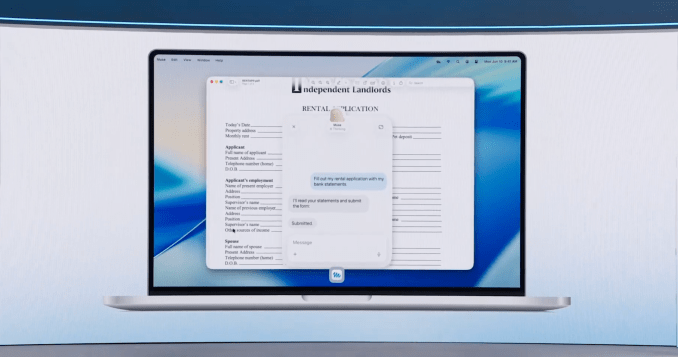
Meta has announced that it is bringing Muse capabilities to Mac computers. The firm had previously mentioned Muse’s arrival on Mac and dedicated more time on Wednesday to elaborate on additional specifics. This means users will have the ability to assign tasks to the agent, and — similar to other well-known AI assistants from OpenAI and Anthropic — Muse will be capable of operating any application on a user’s desktop.
“You can have it assist in managing your small business, or simply handle work on your behalf,” said Meta’s chief AI officer Alexandr Wang during the keynote on Wednesday. “You can step away from your computer and it continues to handle all the tasks you have queued up.”
Muse will acquire its own email address
As Muse will consistently operate in the background, it will inevitably require its own email address. Meta’s Wang revealed that development on this feature is underway and will be rolled out “soon,” although no exact timeline was provided.
Users will also have the option to include Muse in an email thread or forward emails to the agent for it to manage on their behalf.
Meta has secured collaborations with businesses like Stripe and Shopify, indicating that the company views Muse as a vital e-commerce tool.
According to Wang, Muse can agentically access the entire Shopify product catalog and utilize Lync and now Shop Pay to purchase nearly anything online, noting that Meta has also enhanced payment support with PayPal.
Additionally, the company announced several new partnerships with retailers, including Best Buy, Gap, Sephora, Walmart, and Wayfair. Muse will be equipped to connect with these retail applications as well as with Expedia and soon, Instacart. Other integrations include GitHub, Granola, and Notion.
Wang highlighted that the company aims for Muse to link with small businesses as well. Meta has recently opened its platform to developers to create their own “connectors.” The firm received over 1,500 applications in under a week, he remarked, adding, “I believe this could represent a generational opportunity to start developing for a new platform as it gains traction, and the responses have been overwhelmingly positive so far.”
When you purchase through links in our articles, we may earn a small commission. This doesn’t affect our editorial independence.