
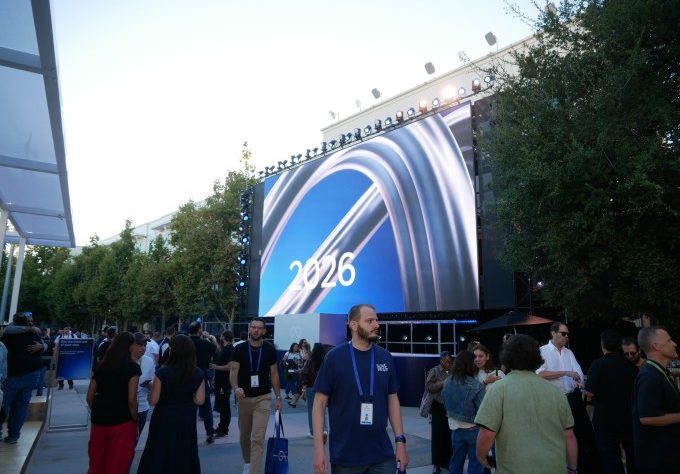
One clear takeaway from this year’s Meta Connect is that the social media powerhouse is fully committed to its expanding range of smart glasses.
The glasses were prominently featured throughout the annual gathering, where Meta showcases its latest hardware and AI innovations. Both Meta employees and the throngs of influencers who attend appeared to be sporting the glasses as if they were a staple. Most demonstrations provided by the company during the week revolved around these glasses.
I quickly blended in with the crowd of eyewear enthusiasts and found myself trying on multiple pairs of Meta’s advanced spectacles.
Among the most notable products I had the chance to test were Meta’s upcoming, audio-only smart glasses. The revelation of these glasses surfaced shortly after the company dealt with backlash regarding its “pervert glasses,” with critics claiming the camera-equipped specs could facilitate invasive surveillance.
These new glasses are fitted with six microphones, yet no camera, and they lack any integrated means to record the environment, which should significantly mitigate privacy concerns. They are much lighter than any other smart glasses I’ve encountered, and they were very comfortable to wear.
The Meta representative I spoke with highlighted the glasses’ capabilities for entertainment and communication: You can enjoy music comfortably (they’re more pleasant than earbuds) and handle phone calls without needing to reach for your mobile device.
The glasses will also work with Muse, Meta’s personal assistant system, which can perform tasks on behalf of the user. This new feature, not yet released to the public, enables users to give vocal commands to Muse. Additionally, Meta plans to customize the assistant, allowing users to select from a range of charming digital avatars to represent it during interactions.
I had the chance to try this feature, which was entertaining but also slightly amusing. It requires being very specific when addressing the agent, and you cannot engage in conversation with others simultaneously, or it will become confused. Unfortunately, I kept interrupting the Meta representative who had provided the glasses, leading the agent to mistakenly believe I was talking to it, resulting in it talking over her.
Nonetheless, in an appropriate setting, this new feature could prove highly beneficial. If you’re comfortable with the idea of conversing with your sunglasses in public, you’ll be able to instruct Muse to manage various digital tasks for you, such as sending emails or reciting your to-do list, while you shop for groceries or enjoy a drink. You can also pose questions to the glasses, and they will provide answers similar to a mobile version of ChatGPT. (I inquired about World War II, and they delivered a clear and historically accurate answer.)
Finally, I also got the chance to test a second audio-only model: Meta’s new glasses designed for the hearing impaired. Considering that hearing loss is a common issue impacting many families (around 50 million Americans are estimated to have varying degrees of hearing loss), this device, unlike many other modern tech gadgets, offers a clear and valuable solution.

I briefly conversed with a member of Meta’s research team who mentioned that the glasses had been in the works for approximately five years, and he highlighted a price disparity that could make them attractive: While many hearing aids can cost up to $1,600, these glasses will retail for $150.
Experiencing these glasses was intriguing. Meta instructed me to wear earplugs before putting them on to replicate the hearing loss the glasses aim to assist users with. Once I donned the glasses, they seemed to enhance the voice of the person in front of me. Users can toggle the amplification from focused, which concentrates on the individual in front, to omnidirectional, which captures sounds from all around, based on how they wish to perceive their environment.
Mark Zuckerberg has made his stance clear that he sees smart glasses as the future, and it’s evident that his company is striving to realize that vision. However, smart glasses still exist in a niche that has not yet solidified its presence. What stood out at Connect was that Meta has— in an effort to succeed where others have stumbled— cast a broad net, endeavoring to make its glasses stylish, functional, and above all, practical.
Is this the path forward? Not surprisingly, everyone at Connect seemed to concur. I guess we’ll just have to wait and see if the wider world agrees.
When you purchase through links in our articles, we may earn a small commission. This doesn’t affect our editorial independence.