
Welcome back to TechCrunch Mobility, your destination for the future of transportation and the significant role AI is playing now more than ever. To receive this in your mailbox, subscribe here for free — just click TechCrunch Mobility!
As I concluded my interview with Rivian CEO and founder RJ Scaringe at TechCrunch Disrupt, one inquiry kept coming to mind: What vision does Scaringe have for Rivian? Observing Rivian’s actions over the last year, it’s evident that Scaringe desires the company to be much more than merely an electric vehicle manufacturer. Yet, he also intends to maintain a connection to that original purpose.
Rivian has become significantly more vertically integrated compared to just a couple of years ago. It has constructed its own AI models to enhance its in-car assistant and is creating a fully automated driving system for its passenger cars and upcoming robotaxis in collaboration with Uber. It’s even developing proprietary silicon, a 5 nm processor, alongside Arm and TSMC. Additionally, there is a $5.8 billion joint technology initiative with VW Group concentrating on electric infrastructure and software.
Scaringe’s ambitions go beyond Rivian itself, though there’s always a connection back to it. He initiated a micromobility skunkworks project that has since evolved into a startup called Also. Furthermore, he founded an industrial robotics venture named Mind Robotics, which is now 31% owned by Rivian and considers the automaker a potential client. (Scaringe announced on stage that former Ford, Apple, and Tesla executive Doug Field has been appointed president of Mind Robotics.)
Scaringe’s vision was apparent as he discussed not only a broader joint venture with VW that includes AI and autonomy, but also the prospect of licensing Rivian’s technology to “numerous different brands.”
So, what will Rivian look like at the end of the decade? Certainly not just a manufacturer of electric trucks and SUVs. The term that kept resonating was “technology provider.”
Consider this. Rivian is paving the way to license its electric architecture and software, along with its AI models and autonomy framework. Meanwhile, the Mind Robotics business it partially owns is constructing industrial robots intended for use in Rivian’s facilities but also to be sold to other enterprises. Additionally, there’s the robotaxi venture. A successful rollout with Uber could lead to further agreements.
And Scaringe is already envisioning how autonomy might redefine Rivian’s own vehicles.
“Where it becomes particularly intriguing is when you move beyond R2 and R3 and start to envision the design forms you aspire to create for a personally owned autonomous vehicle. It opens countless design possibilities. It can foster completely different experiences,” he articulated in an interview with TechCrunch. “I’m immensely excited about what the next decade holds for transportation because of what this allows us to imagine and contemplate.”
Deals!

Bedrock Robotics, a startup focused on autonomous driving technology for construction vehicles, is seeking to raise $600 million, Axios reported, citing sources.
Dot Ai has finalized its acquisition of the electric vehicle car-sharing firm Envoy Technologies in a $65 million all-stock deal, according to a regulatory filing.
Evos, a startup that crafts AI agents to streamline operations for industrial companies, including freight brokerages, secured $9 million in a pre-seed funding round co-led by Uncork Capital and Field Ventures.
Mana Battery, a startup from Colorado that is developing anode-free sodium batteries, has raised $10.15 million in a funding round led by Voyager Ventures.
PlusAI, the autonomous trucking innovator, and Texas Ventures Acquisition III have submitted a Form S-4 registration statement with the Securities and Exchange Commission, progressing their previously announced decision to go public through a merger with a SPAC.
Volvo is enhancing its automated driving capabilities by expanding its nearly decade-long alliance with Nvidia. Neither entity disclosed the financial details of this agreement. The automaker intends to utilize a suite of Nvidia products to provide hands-free, point-to-point driving on highways and city streets.
Waabi, a startup engaged in self-driving truck development, has secured a commercial partnership with carrier Warrior Logistics. According to the arrangement, Waabi’s self-driving trucks will transport freight between Dallas and Houston.
Notable reads and other tidbits

Sales of electric vehicles in the United States are beginning to show positive trends.
Laplace Intelligence, one of 20 startups that participated in TechCrunch’s Startup Battlefield 200, is constructing automated red-teaming that evaluates robots and self-driving vehicles.
MIT startup LNK Energies claims to have devised a method to convert existing heavy-duty trucks from diesel to hydrogen, significantly reducing pollution and costs while protecting operators from price fluctuations.
The Paris Auto Show highlights Chinese automobiles prominently.
Tesla showcased its SpaceX-powered Roadster through an impressive kickflip demonstration. The Roadster employed a combination of high-powered fans and thrusters to ascend an inverted ramp, perform a spin, and land on the ground below. CEO Elon Musk asserts that the vehicle will be available for public use by 2028. However, will future owners be legally permitted to execute these maneuvers on public roads? I don’t foresee how that could be the case.
Waymo is making inroads into Canada — specifically, Toronto — after obtaining approval to be part of an automated vehicle pilot initiative. Waymo has also made its robotaxi service available to everyone, meaning there are no longer waitlists, in San Antonio, San Diego, and Tampa.
One more thing …
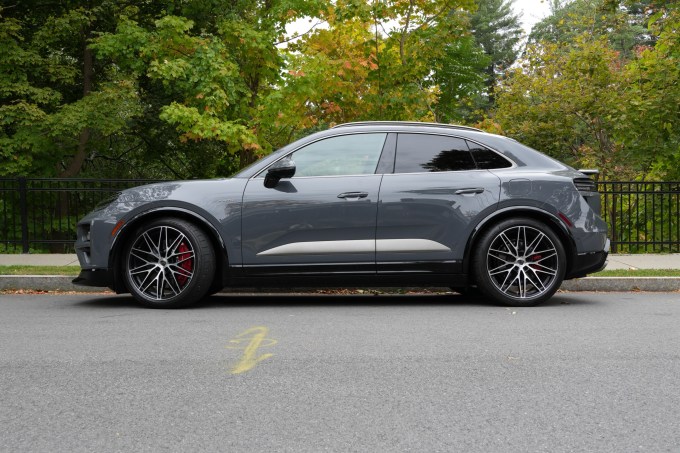
TechCrunch reporter Tim De Chant recently had the opportunity to test drive the 2026Porsche Macan Turbo EV. His experience with the electric vehicle has him reconsidering the very concept of what a sports car should embody. Read the complete review.
When you make purchases via links in our articles, we may earn a small commission. This doesn’t influence our editorial independence.