
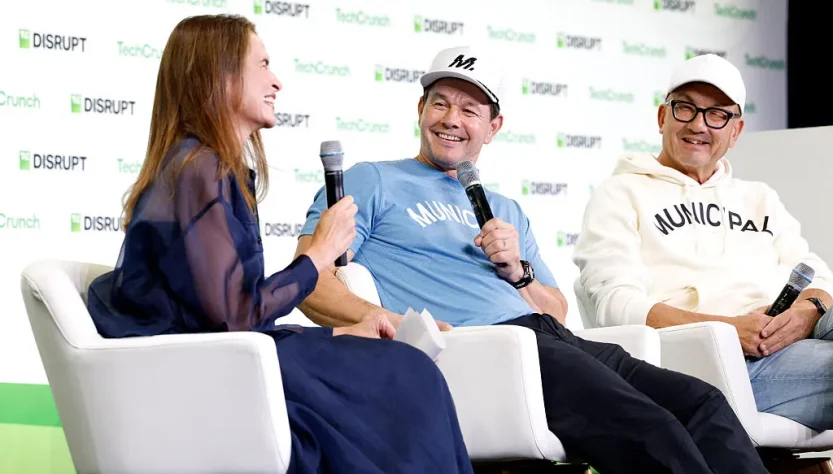
Mark Wahlberg has launched several of his own businesses and supported a multitude of others. However, he claims that the gym he plans to open in December has him more thrilled than anything he has accomplished throughout his career. It also targets a market segment where investment continues to pour in: high-cost, diagnostics-focused wellness.
In a conversation with us at TechCrunch Disrupt in San Francisco on Thursday, the actor announced that the inaugural Municipal Gym will debut in December. This facility spans 32,000 square feet and is located near Las Vegas, offering blood tests, epigenetic assessments, recovery equipment, compression therapy, cold plunges, and a café serving protein muffins, among other amenities. He presents it as a more budget-friendly option compared to longevity clubs that demand tens of thousands of dollars annually for similar services.
This venture is part of a larger plan that, in some respects, originated seven years ago with a casual sportswear line.
The clothing brand Municipal was launched during the COVID pandemic, which Wahlberg openly admitted “was not a great idea,” considering that the apparel industry was struggling in 2020, with brands like J.Crew and Brooks Brothers going under.
This initiative emerged from his experiences as a celebrity fitness ambassador. He had collaborated with various brands and received numerous offers to be their brand spokesperson, but many seemed to have similar goals, he remarked. “Everyone essentially just wanted to sell T-shirts and sneakers. And I was like, well, I want to have a more significant impact on people’s overall lives.”
By this, he meant factors like nutrition, supplement usage, training methods, and recovery processes. “We thought, okay, let’s start with apparel, and then we’ll expand from there.” He asserts he only pursues “initiatives that I’m truly passionate about and things that are a direct expression of who I am.”
Even in the absence of a pandemic, the clothing industry can be incredibly tough, as we highlighted, referencing Lululemon’s recurring quality control issues. Nevertheless, Wahlberg appeared undeterred, instead focusing on why the gym aligns with his vision. He believed it “always could enhance the brand” partly because it provides customers a chance to “actually feel and examine the clothing” before making purchases. Additionally, he remarked, how individuals exercise is “another significant aspect of their lives.”
Most players in this space have been intensely focused on the premium segment. Fountain Life, the longevity firm co-founded by Tony Robbins, secured $18 million last year to expand its facilities targeting affluent clients, and a full membership costs $21,500 per year, as reported. The Estate, co-founded by Robbins and hospitality entrepreneur Sam Nazarian, is still developing plans to charge $35,000 for memberships to its wellness facilities. Equinox is also forming a waitlist for a $36,000 longevity enhancement set to complement a traditional gym membership.
Wahlberg claims Municipal is aiming at that same luxury market but at a fraction of the price. “We provide a more competitive price point than our rivals, and we’re going to deliver significantly better results,” he stated. For example, for $99, members will receive three rounds of blood work and an hour with a physician to identify potential predispositions. Supplements and hormone therapy are also “conveniently accessible.”
When we inquired if the gyms would also serve as retail spaces for his other products (he has a supplements line, for instance), he replied “kind of.” What he is truly creating, he explained, is a “health and wellness ecosystem” that includes “everything comprehensive.”
He did not specify how many gyms he envisions, but he described the growth strategy as “aggressive,” informing us that “landlords and developers who visited the Las Vegas site have proposed “AAA locations at highly favorable terms, with generous TI” (tenant improvement allowances that assist in financing the build-out).
Wahlberg’s previous significant investment in a gym franchise might have deterred others. We shared that we had recently watched “Wahl Street,” his reality program, where an early episode captures his deep involvement with the F45 fitness chain in 2019, and that we intended to caution him about future developments. “How did you know about the pandemic?” he quipped, eliciting laughter from the audience. He invested in the company, recognized for its 45-minute classes, at a valuation of $450 million. It went public in 2021 but was removed from the NYSE in 2023 after its stock tanked. Wahlberg mentioned that he learned a great deal from that encounter.
“I believe the most significant lesson was ensuring that I collaborate with people who share my same philosophy.” He also stated that he has always regarded big box as the superior model. F45’s classes cater to those pressed for time, but he hopes for members to stay at Municipal for extended periods. Many gyms operate on a “sign up but don’t show up” business model, he said, adding, “I find it hard to grasp that mindset.”
The name Municipal is quite deliberate and holds considerable meaning for Wahlberg, who faced poverty during his childhood in Boston, one of nine siblings, playing on public basketball courts and golf courses. “You learn a lot on the blacktop,” he stated. “You learn to win, lose, compete, and hopefully rise again.”
He has never concealed his difficult early years. (He was sentenced to two years for assaults as a teenager and served 45 days.)
Earlier that Thursday afternoon, surrounded by friends and business partners in a backstage lounge at Disrupt — this is the man who inspired the show “Entourage,” after all — he mentioned being transformed by two individuals, including Father Jim Flavin, a priest from the Boston area who has been part of Wahlberg’s life since he was 13.
He desires the gyms to embody that same essence. “It’s a place for work, but also to enjoy, support one another, create community, and genuinely encourage individuals to become the best versions of themselves,” he remarked. “I have come from almost nothing to achieving a remarkable position,” Wahlberg added. “I consistently remind myself that I can inspire others who grow up in similar conditions, mainly inner-city youth and at-risk kids, that it’s possible to better your situation if you’re willing to put in the effort.”
At 55, his ambitions have naturally evolved. While he used to focus on appearance, “I now just want to feel good when I wake in the morning,” he stated. “I want to tackle all the tasks I have planned for the day.”
He also mentioned that his schedule is incredibly packed at the moment, juggling the gym, a film role as Pete Rose, and his daughter’s equestrian pursuits. He’s so impatient for the gym’s opening that visiting the construction site feels like “literally watching paint dry.” Indeed, when asked if he was open to new projects, he shrugged. “I’m not actively seeking the next opportunity for sure.” However, he quickly added that he wouldn’t dismiss it. “If something exceptional were to arise, I certainly wouldn’t say no.”
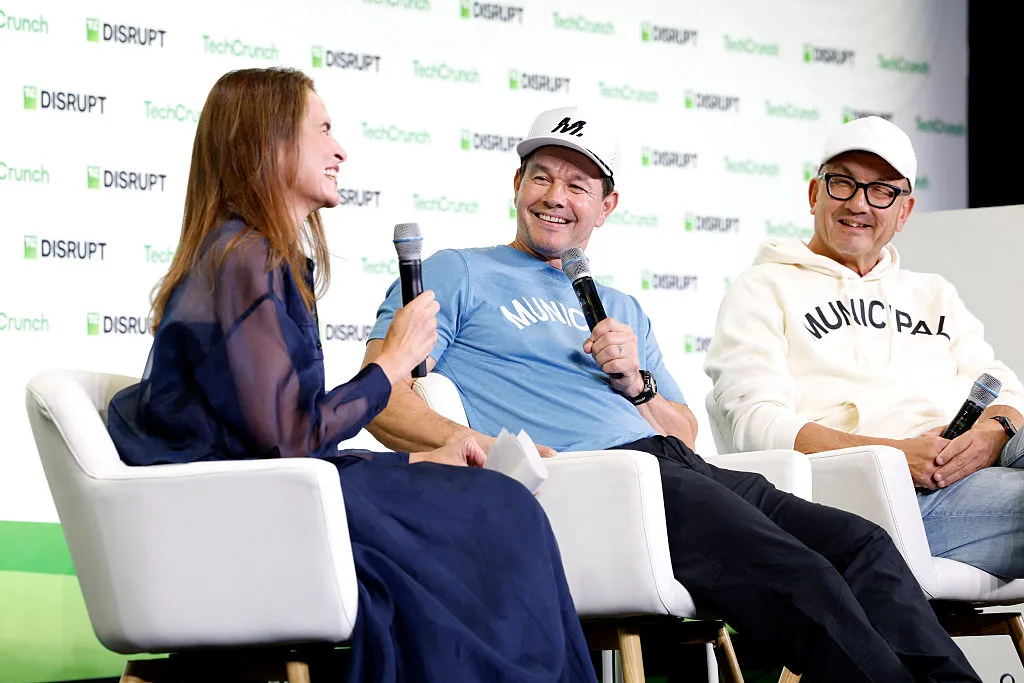
Pictured above with Wahlberg, friend and business partner Bruce K. Lee.
When you click on links in our articles, we may receive a small commission. This does not influence our editorial independence.