Meta removes language that raised scraping and AI training concerns

Meta removes language that raised scraping and AI training concerns

Meta recently updated its commercial terms of use, declaring that the company can “use any content from [a business account’s] domains, web pages, or URLs to provide, develop, improve, research, train, and maintain the integrity of” Meta products and services.

According to legal experts interviewed by Nieman Lab, this looked like a “remarkable provision” that could give Meta permission to scrape the website of any publisher with a Meta business account and use the content to train the company’s AI models. (While Meta defeated a high-profile lawsuit over alleged copyright infringement last year, other cases against AI companies, including Meta, continue.)

However, a Meta spokesperson insisted that the updated terms did not reflect a change in the way Meta crawls the web. And now, The Verge reports that the provision has been removed.

“We’ve heard you and want to clarify: the crawling terms we consolidated only applied to our ads and business products, and we’ve clarified that in the terms themselves,” the company said in a statement. “It does not change how Meta uses web crawlers.”

TikTok announces it has reinstated the advertising account for the ‘Musk’ documentary

TikTok announces it has reinstated the advertising account for the ‘Musk’ documentary

A four-hour documentary focused on Elon Musk is facing challenges on social media platforms, with TikTok reportedly banning the film’s promotional account — although the company claimed on Sunday that the account had been “reinstated after a mistake.”

As reported by The Hollywood Reporter, the film’s distributor Bleecker Street was recently informed by TikTok that the account had been given a “permanent suspension” due to its political themes.

Promotional ads for the trailer of “Musk” — directed by Oscar-winning director Alex Gibney — were initially declined by Meta and YouTube as well, but those platforms ultimately approved the ad, with Meta attributing the initial refusal to “an error.” Gibney has recently confirmed that the film’s international distributor Universal reconsidered its plans for releasing “Musk,” but it is now proceeding.

X, which Musk owns, has declined to run ads for “Musk.” TikTok’s U.S. operations are partly under the ownership of Larry Ellison — who, similar to Musk, has been a prominent supporter of President Donald Trump.

“Musk” premiered in only four theaters last weekend and is now expanding its release. It is expected to stream on HBO next year — which is now part of Paramount/Skydance and headed by Ellison’s son David.

This article was initially published on Saturday, October 17. It has been updated to indicate TikTok’s assertion that the “Musk” advertising account has been reinstated.

Anthropic states that its personnel has shifted towards being less junior and is dedicating more time to meetings.

Anthropic states that its personnel has shifted towards being less junior and is dedicating more time to meetings.

According to a report released by the AI firm on Friday, Anthropic’s workforce composition and the nature of work being performed have evolved considerably over the last year.

Anthropic suggests that its internal work trends might be signals of “how AI may influence work organization, recruitment, and labor needs within the broader economy,” particularly since the company “has fundamentally adapted its workflows around AI.” However, even if other businesses do not adopt AI in the same comprehensive or identical manner as Anthropic, the report provides a fascinating insight into the company’s current operational framework.

Significantly, Anthropic is hiring fewer junior staff, with the share of junior-level employees in technical teams decreasing from 21% to 14% since early 2025, and the proportion of junior technical hires declining even more drastically, from 27% to 9%.

Moreover, Anthropic indicates that technical teams now comprise a reduced percentage of the total workforce, dropping from 61% to 56% — a shift attributed to the “natural expansion of business operations as the company grows,” along with “coding tools increasingly enabling non-technical staff to develop software independently.”

One employee reportedly noted an “ongoing pressure at Anthropic to expedite processes and utilize Claude for all tasks.” In an April 2026 survey, 27% of employees mentioned they had increased their productivity thanks to Claude, and 20% indicated their responsibilities had shifted “from performing actual work to managing Claudes”; reportedly, one engineer likened this experience to babysitting: “When you are babysitting, each child presents issues that equally demand your attention, and the various [Claudes] similarly do that.”

Indeed, the report implies that “human attention and judgement” are becoming a “bottleneck” for productivity, as Claude generates a “flood” of text that requires review and organization.

Predictably, the report claims that AI integration has enhanced the company’s productivity, as shown by “more code per individual, closing more sales per representative, and processing a greater number of contracts.” The firm acknowledges that “more code does not automatically equate to better code or business outcomes,” yet it has discovered no evidence of declining code quality.

According to the report, meeting time per employee has risen by 20% compared to a year prior, with a 16% increase noted for technical contributors. The company attributes this to the significance of “human trust and accountability,” as employees frequently describe “in-person coordination as essential.”

When you make purchases through links within our articles, we may receive a small commission. This does not influence our editorial independence.

Replit chooses OpenAI as its preferred option over Anthropic, says the CEO.

Replit chooses OpenAI as its preferred option over Anthropic, says the CEO.

Replit, the AI coding platform favored by startup founders and developers alike, has ceased its collaboration with Anthropic, revealed the company’s CEO and co-founder Amjad Masad on Thursday during his appearance at TechCrunch Disrupt.

Masad indicated that the choice stemmed from various factors, cost being one of them. While Replit announced a collaboration with OpenAI in August, there had been no signal indicating a termination of the partnership with Anthropic. 

“I believe ChatGPT is superior now,” Masad remarked, noting that the company employs an internal benchmark to evaluate metrics like performance. “We also release a public benchmark, and consistently, Sol and Astra achieve better results in constructing vibe-coded applications from the ground up. This was a decision influenced by cost, partnership, and performance. For all these reasons, we felt they were the right partner at this time.”

Nonetheless, it appears that Anthropic has not been entirely removed from Replit, which offers a cloud-based software development environment where users can create and launch apps directly in their browsers. 

Following Disrupt, Masad clarified that users still have access to Anthropic models on the platform, but OpenAI’s ChatGPT is now the primary option. This change might lead to a notable decrease in Replit’s expenses with Anthropic, as most users tend to stick with the default setting instead of opting for a different model.

Before establishing a partnership with OpenAI, Replit depended on Anthropic’s Claude models for its platform operations. This collaboration was believed to have significantly contributed to the company’s revenue growth, and Masad remarked during the event that Replit had, until recently, been one of Anthropic’s top five clients.

“Replit continues to be model agnostic,” Masad communicated to TechCrunch over the weekend. “Our users have the option to select Anthropic’s Claude or other supported models…OpenAI is now our preferred partner for powering Replit Agent, based on performance, economics, and the robustness of our partnership.”

However, insiders acquainted with the relationship between Anthropic and Replit disputed Masad’s statements made on stage. One individual familiar with the situation, who opted to remain anonymous, asserted that the partnership remains active.

Evidence from the company’s website, blog entries, and social media updates shows that Replit was still advocating for Anthropic products just weeks ago. For example, a blog post from late September references Anthropic’s Claude Fable 5 and Claude Fable 5.1 as models operational within Replit Agent’s production framework. Simultaneously, a Replit product employee shared on X about utilizing Anthropic’s leading model Opus 5.5 and highlighting its features.

Masad also offered perspectives on the company’s growth while on stage at Disrupt, indicating that enterprise contributions are increasingly becoming a larger segment of revenue.

“We’re not disclosing ARR numbers just yet, but in terms of growth, enterprise was about 2% of revenue last year,” Masad stated. “This year, I would estimate that approximately 15% of our revenue comes from enterprise contracts, with more than 50% of our revenue attributed to B2B.”

Backstage, Masad conveyed to TechCrunch that he anticipates more than half of Replit’s revenue will originate from enterprise and government clients by 2027.

Masad also emphasized the importance of establishing robust AI safety protocols.

“Just as humans require a conducive environment for work—such as a comfortable office, good food, air conditioning, and computers—agents need a suitable habitat to thrive and perform effectively,” he noted. “This habitat must include proper orchestration, effective error recovery, strong safety and security measures, sandboxing, solid networking, and reliable identity and authorization. Once you navigate all of that, you can implement AI safely.”

This article was initially published on October 16 at 2:22 pm PT. It has been revised to provide additional context regarding Replit’s associations with Anthropic and OpenAI. The title has also been updated.

When you make a purchase through links in our articles, we may earn a small commission. This does not impact our editorial independence.

Ember’s innovative temperature-regulated mug enhances my evening tea routine significantly.

Ember’s innovative temperature-regulated mug enhances my evening tea routine significantly.

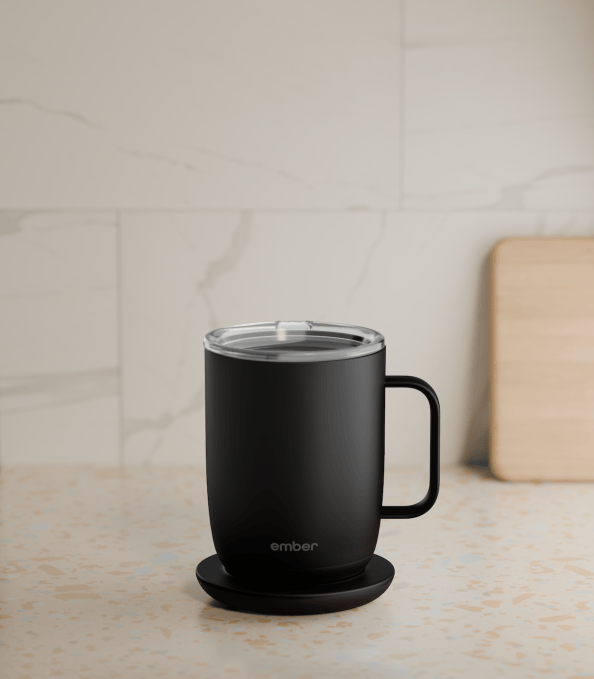
As the evenings grow colder, I’ve been reaching for tea more frequently. If there’s one thing that can enhance a snug fall evening, it’s a hot beverage that remains warm. Introducing Ember’s latest Mug 3, the newest iteration of the brand’s temperature-regulated smart mug, crafted to maintain your drink at the perfect temperature for as long as you enjoy.

Ember unveiled its smart mug in 2016 to address a common dilemma faced by coffee and tea lovers: losing track of time and returning to a tepid drink. Now, the company has returned with its third-generation mug, which features several practical improvements.

The most significant update is that you don’t need to access the app to change your drink’s temperature. Instead, you can utilize the button at the base of the mug to toggle through five preset temperatures, beginning at 125 degrees Fahrenheit. Each press increases the temperature by five degrees, up to a maximum of 145 degrees, allowing you to incrementally warm your drink with each push.

Truthfully, this is the feature I utilized the most during my testing of the mug. At night, when I’m nestled in bed with a book and a cup of tea, my phone is typically across the room. The ability to modify my drink without having to get up to retrieve it is a minor convenience that I truly value.

This is also a beneficial modification for users who have encountered connectivity or pairing concerns with the Ember app. 

However, I have one critique: the button is situated on the bottom of the mug. This design choice is odd when managing a cup filled with hot liquid, and it’s not particularly user-friendly to press. I often found myself having to tilt the mug and press down firmly to elicit a response. While I appreciate the addition of on-mug controls, I wish Ember had designed the button to be more accessible.

For those who favor using their phones, the Ember app still provides ample customization options. Once the mug is paired with your phone via Bluetooth, you can select presets according to your beverage. Ember suggests 136 degrees Fahrenheit for black coffee, 132 degrees for green tea, and 142 degrees for lemon water. Additionally, you can set your own temperature presets, which is useful if you prefer your drinks slightly hotter or cooler than the suggested settings.

Image Credits:Ember

The Mug 3 also features several other enhancements, such as a sliding lid designed to help prevent spills. The mug can maintain your drink at its preferred temperature for up to three hours with a single charge. Additionally, it is the first mug in Ember’s collection that is safe for the top rack of the dishwasher, facilitating clean-up. (Just remember that it isn’t safe for the microwave.)

The Ember Mug 3 is available in two sizes: a 10-ounce variant priced at $129 and a 14-ounce version for $149.

The smaller mug comes in black, white, and stainless steel, while the larger model is offered in eight colors, including sage green, lavender, powder blue, salt blue, sandstone, white, black, and matcha green.

In addition to the new mug, Ember has also launched the Tumbler 2, which replaces both the Travel Mug 2 and the original Tumbler in its range. The 16-ounce tumbler showcases a slimmer, taller design meant to fit standard car cup holders. It is available in black for $179, while the Travel Mug 2 will continue to be sold until stock runs out.

These products can be purchased on Ember’s website, Target, and Amazon.

Purchases made through links in our articles may earn us a small commission. This does not impact our editorial independence.

Mark Wahlberg aims to challenge the longevity-startup sector with an economical gym idea.

Mark Wahlberg aims to challenge the longevity-startup sector with an economical gym idea.

Mark Wahlberg has launched several of his own businesses and supported a multitude of others. However, he claims that the gym he plans to open in December has him more thrilled than anything he has accomplished throughout his career. It also targets a market segment where investment continues to pour in: high-cost, diagnostics-focused wellness.

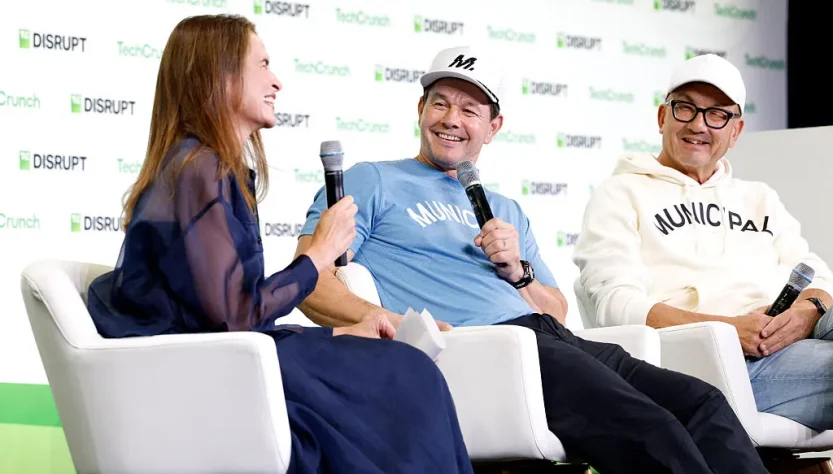
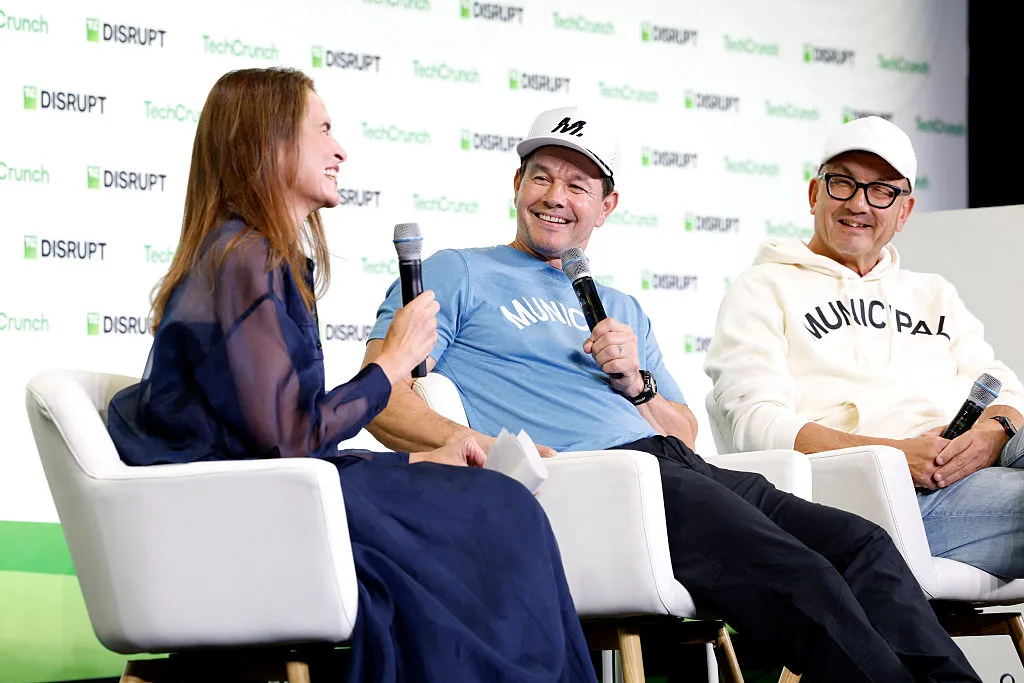
In a conversation with us at TechCrunch Disrupt in San Francisco on Thursday, the actor announced that the inaugural Municipal Gym will debut in December. This facility spans 32,000 square feet and is located near Las Vegas, offering blood tests, epigenetic assessments, recovery equipment, compression therapy, cold plunges, and a café serving protein muffins, among other amenities. He presents it as a more budget-friendly option compared to longevity clubs that demand tens of thousands of dollars annually for similar services.

This venture is part of a larger plan that, in some respects, originated seven years ago with a casual sportswear line.

The clothing brand Municipal was launched during the COVID pandemic, which Wahlberg openly admitted “was not a great idea,” considering that the apparel industry was struggling in 2020, with brands like J.Crew and Brooks Brothers going under.

This initiative emerged from his experiences as a celebrity fitness ambassador. He had collaborated with various brands and received numerous offers to be their brand spokesperson, but many seemed to have similar goals, he remarked. “Everyone essentially just wanted to sell T-shirts and sneakers. And I was like, well, I want to have a more significant impact on people’s overall lives.”

By this, he meant factors like nutrition, supplement usage, training methods, and recovery processes. “We thought, okay, let’s start with apparel, and then we’ll expand from there.” He asserts he only pursues “initiatives that I’m truly passionate about and things that are a direct expression of who I am.”

Even in the absence of a pandemic, the clothing industry can be incredibly tough, as we highlighted, referencing Lululemon’s recurring quality control issues. Nevertheless, Wahlberg appeared undeterred, instead focusing on why the gym aligns with his vision. He believed it “always could enhance the brand” partly because it provides customers a chance to “actually feel and examine the clothing” before making purchases. Additionally, he remarked, how individuals exercise is “another significant aspect of their lives.”

Most players in this space have been intensely focused on the premium segment. Fountain Life, the longevity firm co-founded by Tony Robbins, secured $18 million last year to expand its facilities targeting affluent clients, and a full membership costs $21,500 per year, as reported. The Estate, co-founded by Robbins and hospitality entrepreneur Sam Nazarian, is still developing plans to charge $35,000 for memberships to its wellness facilities. Equinox is also forming a waitlist for a $36,000 longevity enhancement set to complement a traditional gym membership.

Wahlberg claims Municipal is aiming at that same luxury market but at a fraction of the price. “We provide a more competitive price point than our rivals, and we’re going to deliver significantly better results,” he stated. For example, for $99, members will receive three rounds of blood work and an hour with a physician to identify potential predispositions. Supplements and hormone therapy are also “conveniently accessible.”

When we inquired if the gyms would also serve as retail spaces for his other products (he has a supplements line, for instance), he replied “kind of.” What he is truly creating, he explained, is a “health and wellness ecosystem” that includes “everything comprehensive.”

He did not specify how many gyms he envisions, but he described the growth strategy as “aggressive,” informing us that “landlords and developers who visited the Las Vegas site have proposed “AAA locations at highly favorable terms, with generous TI” (tenant improvement allowances that assist in financing the build-out).

Wahlberg’s previous significant investment in a gym franchise might have deterred others. We shared that we had recently watched “Wahl Street,” his reality program, where an early episode captures his deep involvement with the F45 fitness chain in 2019, and that we intended to caution him about future developments. “How did you know about the pandemic?” he quipped, eliciting laughter from the audience. He invested in the company, recognized for its 45-minute classes, at a valuation of $450 million. It went public in 2021 but was removed from the NYSE in 2023 after its stock tanked. Wahlberg mentioned that he learned a great deal from that encounter.

“I believe the most significant lesson was ensuring that I collaborate with people who share my same philosophy.” He also stated that he has always regarded big box as the superior model. F45’s classes cater to those pressed for time, but he hopes for members to stay at Municipal for extended periods. Many gyms operate on a “sign up but don’t show up” business model, he said, adding, “I find it hard to grasp that mindset.”

The name Municipal is quite deliberate and holds considerable meaning for Wahlberg, who faced poverty during his childhood in Boston, one of nine siblings, playing on public basketball courts and golf courses. “You learn a lot on the blacktop,” he stated. “You learn to win, lose, compete, and hopefully rise again.”

He has never concealed his difficult early years. (He was sentenced to two years for assaults as a teenager and served 45 days.)

Earlier that Thursday afternoon, surrounded by friends and business partners in a backstage lounge at Disrupt — this is the man who inspired the show “Entourage,” after all — he mentioned being transformed by two individuals, including Father Jim Flavin, a priest from the Boston area who has been part of Wahlberg’s life since he was 13.

He desires the gyms to embody that same essence. “It’s a place for work, but also to enjoy, support one another, create community, and genuinely encourage individuals to become the best versions of themselves,” he remarked. “I have come from almost nothing to achieving a remarkable position,” Wahlberg added. “I consistently remind myself that I can inspire others who grow up in similar conditions, mainly inner-city youth and at-risk kids, that it’s possible to better your situation if you’re willing to put in the effort.”

At 55, his ambitions have naturally evolved. While he used to focus on appearance, “I now just want to feel good when I wake in the morning,” he stated. “I want to tackle all the tasks I have planned for the day.”

He also mentioned that his schedule is incredibly packed at the moment, juggling the gym, a film role as Pete Rose, and his daughter’s equestrian pursuits. He’s so impatient for the gym’s opening that visiting the construction site feels like “literally watching paint dry.” Indeed, when asked if he was open to new projects, he shrugged. “I’m not actively seeking the next opportunity for sure.” However, he quickly added that he wouldn’t dismiss it. “If something exceptional were to arise, I certainly wouldn’t say no.”

Pictured above with Wahlberg, friend and business partner Bruce K. Lee.

When you click on links in our articles, we may receive a small commission. This does not influence our editorial independence.

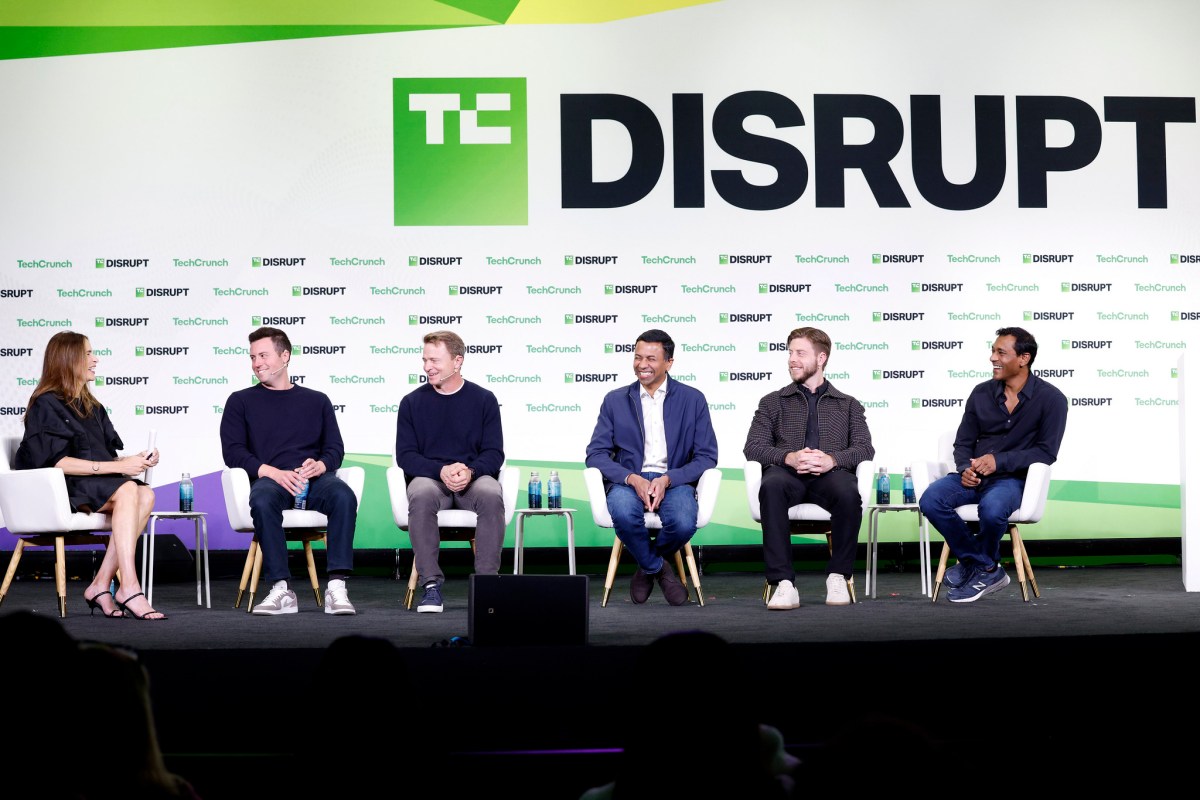
Even Benchmark thinks AI is eroding the venture pact against backing rivals

Even Benchmark thinks AI is eroding the venture pact against backing rivals

For decades, the unwritten rule of venture capital was that a firm doesn’t back two companies that compete head-on. But speaking at TechCrunch Disrupt earlier this week, the partners of Benchmark readily acknowledged that the AI boom is straining that rule.

It’s been on the verge of snapping for some time. The towering AI labs OpenAI and Anthropic share dozens of the same investors at this point. Then, at the end of September, Factory, a startup that builds an AI agent to write software, said it was firing board observer and adviser Chris Degnan for “unethical conduct involving Cognition,” its direct rival and the maker of the Devin coding agent. Factory’s CEO alleged Degnan had discussed a job at Cognition while privy to Factory’s board-level discussions. Degnan said he had already resigned and denied sharing anything confidential. Soon after, he announced he was joining Cognition as chief revenue officer. Powerhouse investor Vinod Khosla sided with Degnan on X, blasting Factory’s CEO and calling the company “a struggling second tier competitor.” Khosla Ventures backs both companies.

Even Benchmark, a firm whose reputation rests on 10-to-15-year partnerships with founders at the earliest stage, said the old rule can no longer be counted on. Asked at Disrupt whether the pact against backing rivals still holds as portfolio companies expand into each other’s territory, its partners described the conflicts as a matter of necessity, not preference.

“The harsh reality of this world is every company is evolving very quickly,” said Eric Vishria. Companies pivot and change, he said, and “you are going to get conflicts, and that’s just the reality of the current dynamic.”

Vishria said Benchmark stays committed to each founder and keeps what it learns confidential, and he downplayed how much a VC could pass along anyway: “We are not product or technology experts.” Seemingly referring to the Factory-Cognition dispute, he said Benchmark has been fortunate not to land in “that type of insane direct conflict.” Exclusivity, he said, remains “really important” at the very early stage Benchmark favors. “But things are evolving. There’s no doubt about that.”

Chetan Puttagunta said AI is accelerating the problem. As the cost of building software “effectively goes to zero,” he said, founders are “incredibly ambitious.” Because they now see a “surface area” and want to claim all of it, he continued, “[i]t’s probably going to happen more, where you start to run into each other.”

He drew a line between a direct competitor at the outset, which he called “an easy answer,” and a portfolio company that expands into another’s turf over time. “That happens,” he said.

Peter Fenton called the issue “kryptonite” and the firm’s toughest problem. He described a spectrum of how investors relate to their companies. At one end is the co-founder, who would never work on a competing company. At the other is the public-market stock picker, who can own several rivals because he is merely allocating capital, not shaping any of them. Benchmark sits nearer the co-founder end, Fenton said, and treats transparency as a golden rule. “There shouldn’t be the surprise after the fact.” If a conflict does emerge, a founder should never feel shortchanged, he added.

Benchmark isn’t declaring the pact dead. At the same time, when a firm that built its name on loyalty says conflicts are coming, founders might rightly wonder who else will be this candid.

When you purchase through links in our articles, we may earn a small commission. This doesn’t affect our editorial independence.

SK Hynix bargains for chip equipment exports to its China facility in return for building a factory in US

SK Hynix bargains for chip equipment exports to its China facility in return for building a factory in US

SK Hynix appears to be navigating choppy U.S.-China chipmaking waters. The company’s flash memory unit, Solidigm, is seeking U.S. approval to send American chipmaking equipment to its factory in Dalian, China, as a condition to continue building a semiconductor factory in the U.S., Reuters reported, citing anonymous sources.

Solidigm has been reportedly chalking up plans to build a NAND flash memory chip factory in the U.S. and is considering upstate New York as a potential location for the facility.

NAND flash chips are primarily used in solid-state storage drives, which are employed in everything from laptops and smartphones to AI data centers. But the global component shortage, thanks to skyrocketing demand for AI data centers, has driven up prices for everything that goes into data centers, including high-speed RAM chips and SSDs. Research firm TrendForce expects NAND prices to rise 15% to 20% in the fourth quarter.

Reuters cited its sources as saying that Solidigm wants to install more chipmaking equipment in spare space at SK Hynix’s Dalian factory in China to boost NAND chip production.

SK Hynix told TechCrunch it is not seeking to expand capacity at its Dalian Mod B facility, which was completed in 2023. The chip giant added that the equipment installation is being carried out in consultation with and under authorization from the U.S. government.

Washington first imposed sweeping restrictions on advanced chips and chipmaking equipment exports to China in October 2022, citing national security concerns, and further tightened the rules in 2023. Then in September 2025, the Trump administration revoked special export exemptions for certain SK Hynix, Samsung, and Intel facilities in China. The U.S. has since granted an annual license to Samsung and SK Hynix for sending chipmaking equipment to their plants in China.

The U.S. has also been pushing foreign chipmakers to build and expand their manufacturing facilities in America. In July, Commerce Secretary Howard Lutnick said he wanted Samsung and SK Hynix to build chip plants in the country and that he was in talks with both companies.

Solidigm is said to be preparing for a 2027 U.S. IPO that could raise around $10 billion and value it at up to $100 billion.

When you purchase through links in our articles, we may earn a small commission. This doesn’t affect our editorial independence.

Science Corporation implants its vision-restoring chip in its first Stargardt disease patient

Science Corporation implants its vision-restoring chip in its first Stargardt disease patient

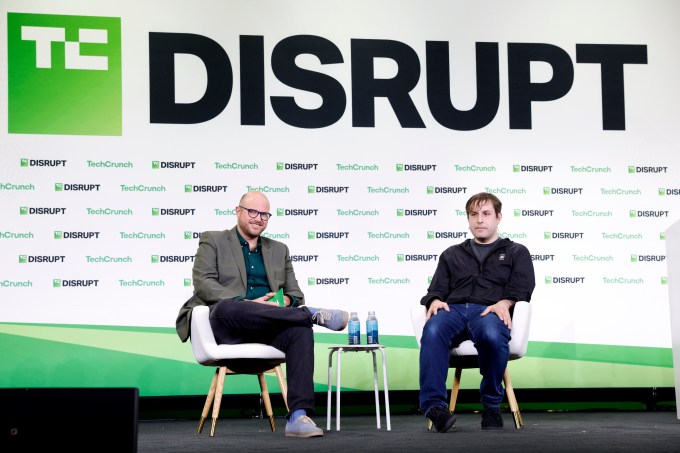
Science Corporation CEO Max Hodak announced that the company has implanted its vision-restoring chip, PRIMA, into its first patient with Stargardt disease, an inherited eye disease that gradually destroys central vision. Hodak, the former president and co-founder of Neuralink, the brain implant company, explained on stage at TechCrunch Disrupt how the company’s work with PRIMA fits into its broader pursuit of a novel brain-computer interface (BCI).

“The retina is part of the central nervous system,” Hodak said on stage. “We consider cochlear implants, retinal prostheses, motor prostheses, these are all different types of BCIs.”

Hodak outlined a vision in which BCIs expand into a wide range of medical technology applications, rather than simply being a way to control computers.

While PRIMA is commercially available in Europe for patients who’ve lost their sight to geographic atrophy, an advanced form of age-related macular degeneration, the company believes its approach can be applied to multiple diseases, including Stargardt disease, which is currently considered incurable.

Stargardt disease affects the outer retina, causing the gradual death of the eye’s light-sensing cells while potentially sparing the inner retina, the part that passes visual signals onto the brain. It causes a central blind spot that gradually enlarges over time. Approximately 150,000 people worldwide have lost vision due to the disease.

“One of the nice things about this device approach, when I was saying the brain’s a computer, vision is electrical potential, like electrical activity down the optic nerve,” Hodak said. “That’s all vision is to the brain, and so if you can get the optic nerve to signal the the rest of the brain correctly, then you can provide vision to it.”

Image Credits:Kimberly White/Getty Images for TechCrunch /

The company says its first patient with Stargardt disease received the PRIMA implant in May as part of its ongoing trial at the Sydney Eye Hospital in Australia. During the patient’s first rehabilitation session, he saw a letter, and during the second, he was able to read a word.

To use the device, patients undergo an hour-long procedure that plants a small chip in the back of their eye, where the photoreceptors have degenerated. Then they wear camera-equipped glasses that transmit a view of the world to the chip. The implant essentially works like artificial photoreceptors.

“The device that this patient has is a two millimeter by two millimeter implant placed under the in the back of the eye, and so it’s like looking through a straw,” Hodak said. “It is not a big field of view color vision. It’s a patch in their central vision where . . .it’s black and white, but it is sharp. It’s high-contrast sharp, and so they can see a couple letters at a time. The next step is to make the field of view bigger. So to make a bigger implant, you have to deal with the curvature of the eye, and we need to make the electrodes smaller so that we get closer to native levels of detail.”

He continued, “I think we have a clear path. There’s a there’s a next ‘next generation’ that’s being worked on that’ll be in humans in the next year, and over the next five years, I think we’ll be able to get pretty close to native acuity.”

When Hodak founded Science Corporation in 2021 after leaving Neuralink, the company outlined plans to develop advanced neural engineering and brain-computer interface technology. But first, the company wants to prove its methods work and develop a sustainable business, which is why it’s working to restore vision with the visually impaired.

Image Credits:Kimberly White/Getty Images for TechCrunch

As for Science Corporation’s brain-computer interface technology, it has previously said that its sensor will be implanted inside the skull and rest on top of the brain, unlike a Neuralink device, which is inserted directly into brain tissue.

The company has said it believes the device could help address neurological conditions, such as possibly monitoring neurological activity in patients with brain tumors.

“In the near term, we’re going to be applying our first clinical indication, which hasn’t been announced publicly, is a neurodegenerative disease that everybody’s heard of,” Hodak said. “We’re also looking at stroke. For example, if you’ve lost part of your brain because it’s been dead due to stroke, if you can get connections into the deep brain in two different areas, you can imagine adding new cortical areas, just like adding new brain areas entirely — something simply not possible with conventional electrodes. But, I’d say longer term, the long-term mission of the company is to understand how the brain creates the mind and to learn to build engineered brains.”

Hodak went on to note that Science Corporation’s belief is that many people will eventually use some kind of BCI. While the company isn’t designing for “healthy 40-year-olds,” he said, it believes people will eventually need some kind of BCI by the age of 60 or 70.

“We want to figure out how do we extend not just lifespan but health span,” Hodak said.

When you purchase through links in our articles, we may earn a small commission. This doesn’t affect our editorial independence.

The 2026 Startup Battlefield Top 20: From organs to orbit and everything in between

The 2026 Startup Battlefield Top 20: From organs to orbit and everything in between

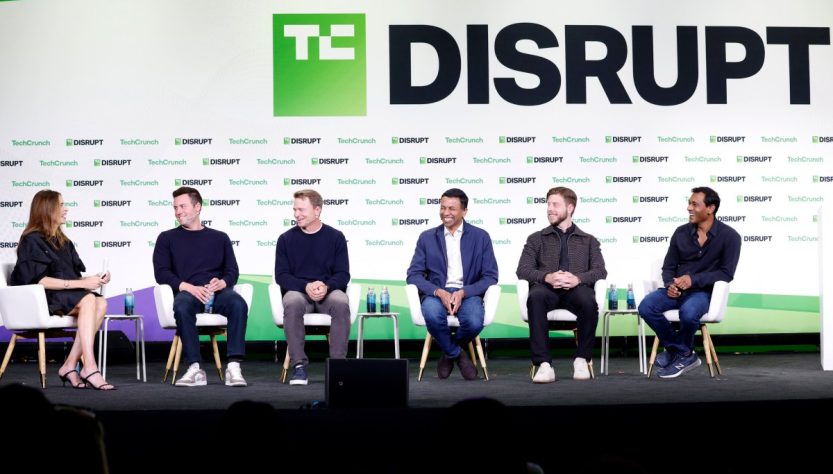
Twenty founders just earned their shot at Disrupt glory. They’re headed to the Disrupt Stage at TechCrunch Disrupt to compete for the $100,000 prize and the coveted Disrupt Cup.

Every year, thousands of founders from around the world pitch us on what they believe the future should look like. This year’s Top 20 are building it from organs to orbit and everywhere in between.

Across this cohort, one theme kept emerging: Making the previously invisible measurable.

These founders are finding ways to understand signals we couldn’t previously capture, model systems too complex to predict, and turn the physical world into data that machines can actually act on. They’re measuring the biological clocks inside our bodies and growing miniature human organs in labs. They’re teaching robots to take on increasingly complex physical work and modeling the real world closely enough to predict what might happen next — even the behavior of wild animals. They’re extracting intelligence from scam calls and finding new ways to use the computing power already orbiting above our heads.

And then, of course, there’s the company trying to launch cargo into space with a giant hydrogen-powered cannon.

Subtle, this group is not.

What connects these 20 companies isn’t a single technology or industry. It’s an ambition to understand more of the world around us — biological, physical, industrial, and digital — and use that understanding to make better decisions, automate what once required human intervention, and tackle problems that previously seemed too complex to solve.

Now they have six minutes on the Disrupt Stage to prove it.

Here are the 2026 Startup Battlefield Top 20.

Tuesday, October 13 

Startup Battlefield Semifinals Session 1 (10:00 a.m. – 11:15 a.m.)

Space and Physical AI 

Longshot Space: Reinventing the economics of space by launching cargo to orbit at $50/kg using hydrogen-powered kinetic launchers.

Veritas: Protecting luxury brands with custom microchips that verify authenticity and enable connected post-purchase experiences.

Laplace Intelligence: Building agentic world models that help cities, ports, and airports roll out counterfactual futures of the real world before they act.

Flox Intelligence: Preventing deadly wildlife collisions at airports and railways with real-time AI that detects animal behavior and safely redirects them.

Satlyt: Helping satellite operators unlock and monetize idle compute by transforming their spacecraft into virtual AI data centers with a single line of code.

Battlefield Semifinal Session 2 (1:00 p.m. – 2:15 p.m.)

Energy and Manufacturing

LNK Energies: Delivering clean hydrogen power cheaper than diesel through breakthrough compact reactor technology compatible with existing diesel infrastructure.

Helix Carbon: Helping steelmakers cut emissions and fuel costs by electrochemically upcycling blast furnace waste gas into replacement fossil fuels on-site.

IndustrialNext: Automating high-precision, contact-rich assembly tasks by deploying AI-driven robotic systems that learn from production data and adapt to new products.

Niobia AI: Helping process and materials engineers compress weeks of root-cause analysis into minutes with domain-expert AI reasoning.

Licube: Producing ultra-high purity lithium and lithium isotopes (Li-6/Li-7), the critical inputs for nuclear fusion and advanced materials.

Wednesday, October 14 

Battlefield Semifinal Session 3 (10:00 a.m. – 11:15 a.m.)

Health Tech and Life Sciences 

Mosqitter: Detecting and preventing mosquito-borne disease spread with real-time disease intelligence platforms that turn sensor networks into early warning systems for national health agencies.

Hiyd AI: Delivering proactive health insights by combining sleep, movement, and nutrition data through an ultra-slim, discreet wearable tracker and AI app.

TimeTeller GmbH: Measuring people’s biological clocks to determine optimal treatment timing through molecular diagnostics and AI, improving efficacy and reducing side effects.

NTangible: Helping coaches and front offices make smarter recruiting decisions by quantifying how athletes perform under pressure with a validated cognitive score.

Intero Biosystems: Accelerating drug development by producing miniature human organs that enable pharma companies to identify safer, more effective medications while reducing clinical trial costs.

Battlefield Semifinal Session 4 (1:30 p.m. – 2:45 p.m.)

Enterprise and Security

Apate.ai: Dismantling scam operations by deploying conversational AI bots that engage scammers and turn their interactions into real-time intelligence for banks, telcos, and governments.

CedarDB: Delivering the data layer for the AI age — real-time transactions and analytics in one engine with guardrails inside the database system that AI agents can’t bypass.

Prismm: Helping banks retain deposits and relationships across generations by automating secure inheritance workflows and financial continuity infrastructure.

Floqer: Streamlining B2B sales by enriching customer data across 80+ sources and stitching every interaction into one millisecond-retrievable timeline for AI agents to act on.

GUDEA: Delivering immediate, actionable insights into audience behavior, engagement patterns, and how information spreads to give organizations a competitive edge in communication management.

And then there were five

After four semifinal sessions across two days, five companies will advance to the Startup Battlefield Finals on Thursday, October 15.

Before the finalists take the stage at 11:30 a.m., we’ll welcome Glīd, Nephrogen, and Molecule.one back to the Disrupt Stage for an alumni update on what’s happened since their time in Startup Battlefield.

Then, at 4:15 p.m., one company will be crowned the 2026 Startup Battlefield champion, taking home $100,000 and the Disrupt Cup.

Feeling the FOMO? It’s not too late. Grab a last-minute Disrupt ticket for 50% off and watch it all unfold live.

Startup Battlefield is proudly supported by Google for Startups and SAP.

Image Credits:TechCrunch

When you purchase through links in our articles, we may earn a small commission. This doesn’t affect our editorial independence.