
On Thursday, Tinder conducted its first-ever product keynote, revealing a bold range of updates aimed at refreshing its offerings, enhancing safety, and utilizing AI. This announcement follows Match Group’s $50 million investment in product development made last August, as the parent company seeks to reconnect with its user base and attract younger Gen Z daters.
The updates include creative features for finding local events and meeting individuals face-to-face, along with a new virtual speed dating experience currently being trialed in Los Angeles. Furthermore, a variety of AI enhancements were revealed to optimize the matching algorithm and improve user safety.
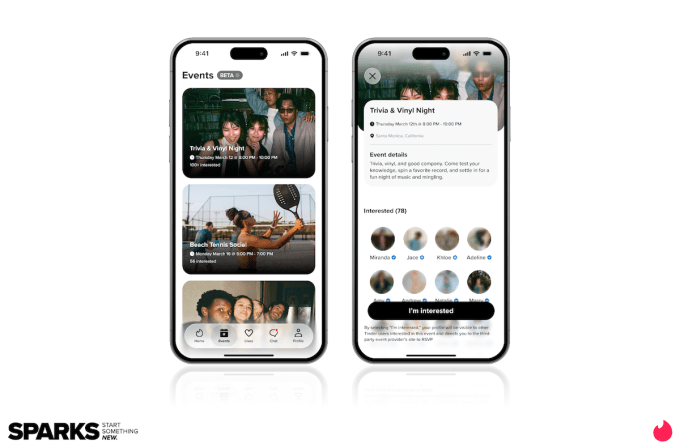
A standout feature is the newly introduced Events tab, which will be in beta for users in Los Angeles starting late May or early June. This function enables users to find curated local events—such as speakeasies, bowling alleys, raves, and pottery workshops—where they can meet matches in person.
This development reflects the increasing desire among Gen Z for real-life interactions instead of endless swiping. Young individuals are moving away from traditional dating apps, looking for genuine offline experiences or unique ways to encounter potential partners. Other applications, such as Breeze, 222, Timeleft, and Thursday, have also embraced this in-real-life (IRL) movement.
“We’re really focusing on engaging younger users in places where they already spend time,” Hillary Paine, senior vice president of product at Tinder, stated to TechCrunch. “You can attend an event with a friend and have a fun experience, or you could meet someone new. Instead of forcing users to make a choice between their dating and social lives, we aim to combine these elements and foster a more community-oriented experience.”
Profiles of attendees will remain accessible on the app post-event for users to like and browse through, a concept reminiscent of “Missed Connections” ads, allowing those who may not have had the confidence to approach someone or simply missed their chance to reconnect.
Speed dating is witnessing a revival as well. To capitalize on this trend, Tinder announced it is now testing a video speed dating format in LA, where users can participate in scheduled three-minute video discussions with potential matches. This acts as a “vibe check,” intended to facilitate ice-breaking and assess chemistry before committing to a face-to-face meeting.
The company indicated that users can opt to continue promising discussions beyond the initial three minutes. A verified profile photo is required to participate in this experience.
Many daters seem to have grown tired of video chats, making it interesting to see if this late-entry experiment will succeed. During the COVID-19 pandemic, Tinder introduced a Face-to-Face feature which was eventually discontinued, showcasing a reduced interest in video engagements.
AI was another major highlight at the keynote.
Tinder continues to invest in this technology, starting with its “Chemistry” feature, which employs AI to learn about users through questionnaires and, with their consent, their photo libraries. This feature curates daily matches to alleviate swipe fatigue and is currently launching in the U.S. and Canada after initial trials in Australia and New Zealand.
In the future, components of Chemistry will evolve from being merely one function into something that enhances the overall Tinder experience, making it more individualized, according to the company.
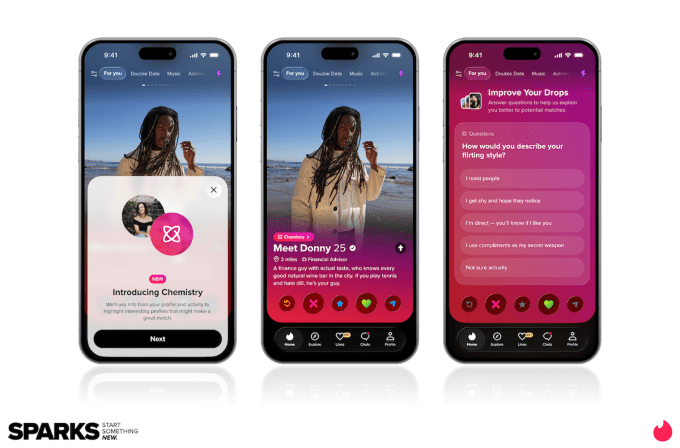
Moreover, Tinder rolled out a fresh “Learning Mode” that offers more pertinent matches sooner. This system is crafted to swiftly understand what users are looking for in potential partners, modifying recommendations to align more closely with individual tastes. Previously, Tinder required multiple swiping sessions to collect sufficient signals for effective personalization.
With Learning Mode, Paine highlights, it can begin to comprehend a user from their very first session. She mentioned, “We aspire for this to be something that makes Tinder genuinely feel like it gets you from the moment you begin using it, or if you’re returning after a break, it feels as if it understands me, and I won’t have to invest much time re-explaining what I’m searching for.”
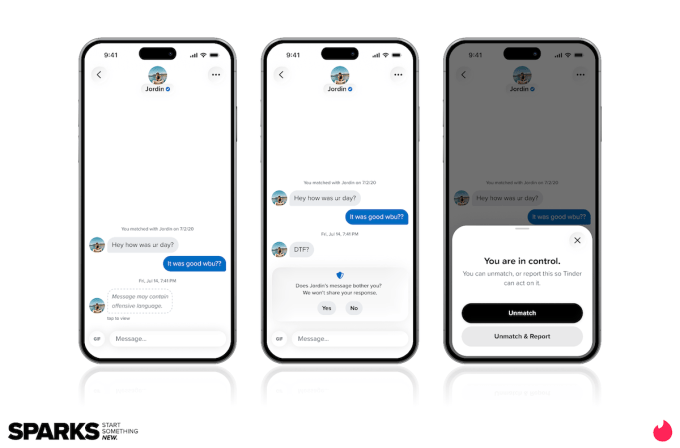
Tinder is also improving safety features such as “Does This Bother You?,” which now employs large language models to more accurately detect harmful messages and auto-blur inappropriate content, while “Are You Sure?” prompts are being refined to better identify potentially hazardous interactions.
Visually, Tinder will feature a stylish redesign: full-width profile images, a gentle blur effect, and a Liquid Glass style for the Like and Nope bar. New features are also on the way: “Music Mode” will allow users to automatically add up to 20 Spotify songs to their profile, and “Astrology Mode” will enable users to input birth information to reveal their Sun, Moon, and Rising signs and check compatibility. This follows the recent introduction of Double Date Mode and College Mode.
Overall, this wave of announcements indicates a significant transformation in Tinder’s strategy. While Match reported favorable earnings in Q4 2025, with $878 million in revenue, the company has faced several quarters of falling paying subscribers. As a result, it is pressured to keep users and regain investor trust, even as its outlook remains cautious, recognizing evolving user preferences and increased competition.
It remains uncertain whether these modifications will sustain user interest in the app. Nevertheless, one fact is evident: Tinder is making a substantial commitment to the future of dating, moving away from exclusively relying on swiping and adjusting to meet the desires of its younger user base.