China halts Meta’s $2B Manus agreement following an extended investigation.

China halts Meta’s $2B Manus agreement following an extended investigation.

China’s leading economic authority, the National Development and Reform Commission (NDRC), announced on Monday that it has prohibited Meta’s $2 billion takeover of Manus, an AI startup created by Chinese engineers that moved to Singapore prior to Mark Zuckerberg’s acquisition attempt late last year.

This decision signifies one of China’s most notable actions regarding an international transaction, reflecting tensions that extend beyond U.S.-China relations and into the larger AI sector. For Meta, this could significantly hinder its aspirations within the rapidly evolving AI agents market.

Without providing any justification, the NDRC mandated that both parties completely dissolve the agreement.

“The National Development and Reform Commission (NDRC) has decided to prohibit foreign investment in the Manus initiative in accordance with existing laws and regulations, and has instructed the involved parties to rescind the acquisition,” it stated.

However, the circumstances are far from simple. Approximately 100 Manus staff members had already transitioned into Meta’s Singapore offices as of March, with the founders taking on leadership roles. CEO Xiao Hong is now in direct communication with Meta COO Javier Olivan. Manus CEO Hong and Chief Scientist Yichao Ji are reportedly subject to exit restrictions, preventing them from departing mainland China.

“The transaction complied fully with applicable law. We expect a favorable resolution to the investigation,” a representative from Meta expressed to TechCrunch.

Founded in 2022 by Hong, Ji, and Tao Zhang, Manus moved its headquarters from China to Singapore around mid-2025. Just a few months later, Meta expressed interest. The company disclosed its acquisition of Manus in December 2025 for approximately $2 billion to $3 billion, intending to integrate its agent technology directly into Meta AI.

Meta has committed to acquiring the Singapore-based AI startup Manus, with the transaction requiring a complete exit from Chinese ownership and operations, according to Nikkei Asia. However, the company’s roots are tied to China. The founders previously set up its parent company, Butterfly Effect, in Beijing in 2022 before relocating to Singapore. This history has attracted scrutiny in Washington, where Senator John Cornyn has raised alarms regarding Benchmark’s investment in the company, questioning the appropriateness of American capital supporting a firm linked to China, as highlighted by TechCrunch, referencing Cornyn’s comments on X.

Manus did not reply to TechCrunch’s request for a statement.

When you make purchases through links in our articles, we may receive a nominal commission. This does not influence our editorial judgment.

OpenAI might be developing a phone that utilizes AI agents in place of applications.

OpenAI might be developing a phone that utilizes AI agents in place of applications.

Numerous speculations have circulated regarding OpenAI’s hardware intentions, which include launching a set of earbuds. A recent insight from industry analyst Ming-Chi Kuo implies that the AI firm may be in the process of developing a mobile device in partnership with MediaTek, Qualcomm, and Luxshare.

Kuo, known for his insights into various Apple hardware initiatives previously, noted that OpenAI would create a smartphone chip with MediaTek and Qualcomm, while Luxshare would serve as a joint design and production associate.

The analyst’s commentary also indicates that rather than traditional apps, the smartphone could utilize AI agents to perform various functions. At present, Apple and Google oversee the app ecosystem and the access permitted to them, limiting some capabilities. Kuo posits that by establishing its own smartphone and hardware framework, OpenAI could incorporate AI in diverse features without limitations. With ChatGPT approaching a billion users weekly, a consumer-friendly hardware offering could enhance OpenAI’s goals to connect with more users.

This notion is not exclusive to OpenAI. Developers of Vibe coding applications are foreseeing a future that moves away from apps. Nothing CEO Carl Pei articulated at SXSW suggested that apps would eventually phase out.

Kuo asserts that OpenAI’s smartphone will be crafted to consistently interpret users’ contexts. By providing the phone itself, the organization could access data about users’ behaviors beyond what an application on the phone can offer. He also mentioned that the company will pursue a blend of compact on-device models and cloud-based models to facilitate various requests and tasks.

The analyst stated that the smartphone’s specifications and its component suppliers are projected to be determined by the end of this year or by the first quarter of 2027, with mass production anticipated to commence in 2028.

Earlier this year, OpenAI’s Chief Global Affairs Officer Chris Lehane indicated that the firm is slated to unveil its inaugural hardware product in the latter half of 2026. Multiple reports at that time suggested that the product may be uniquely designed earbuds.

OpenAI did not respond to the inquiry at the time of writing.

When you make a purchase through links in our articles, we might earn a small commission. This does not influence our editorial independence.

Critical infrastructure leader Itron reports that it has been breached.

Critical infrastructure leader Itron reports that it has been breached.

Itron, an American energy tech firm, has announced that it suffered a cyberattack in mid-April, which allowed hackers to access certain systems.

In a mandatory filing with the U.S. Securities and Exchange Commission late on Friday, Itron mentioned it was “alerted” to an intruder within its systems. The company did not specify who provided the notification but noted that it acted quickly to remove the hackers and has not detected any further intrusions into its internal systems.

Itron did not detail the nature of the cyberattack it faced, including whether ransomware was utilized or if there was direct communication with the hackers. It is also unclear what effect, if any, the cyberattack might have on the company’s operations.

The company stated that it did not find unauthorized activity in the “customer-hosted portion of its systems,” implying that the breach may be confined to its IT network.

Itron also reported that it has informed law enforcement regarding the breach.

Based in Liberty Lake, Washington, the company specializes in technology for managing the energy consumption of energy grids, including water, gas, and electricity supplies. According to its website, Itron provides internet-connected utility meters to more than 110 million homes and businesses. The company caters to thousands of clients, which include cities and municipalities, and operates in over 100 countries, as per its website.

Itron indicated that it activated its contingency plans and data backups, and its operations have “continued in all material respects,” although it cautioned that it might need to make additional legal filings and regulatory notifications. This indicates that the company could have experienced a data breach, triggering further legal notifications under state data breach laws.

It remains uncertain who at Itron, if anyone, is tasked with cybersecurity. A representative from Itron did not promptly respond to TechCrunch’s request for a statement.

When you purchase through links in our articles, we may earn a small commission. This doesn’t affect our editorial independence.

Spotify's upcoming venture: Fitness material

Spotify’s upcoming venture: Fitness material

On Monday, after venturing into podcasts, audiobooks, videos, and even physical books, Spotify unveiled its next significant category: fitness content.

The platform is enhancing its standing as a destination for motivating playlists for workouts to actually serve as the venue for your exercises. To achieve this, Spotify has collaborated with several prominent wellness creators and the fitness equipment manufacturer Peloton.

Exercises from these contributors will be available through a new “Fitness” section within the app, or by entering the keyword “fitness” in the search feature. Their offerings, presented as both music and video content, will be accessible on Spotify’s applications for mobile, desktop, and televisions.

At launch, both free and Premium users will have access to numerous playlists and instructional workout materials from creators such as Yoga with Kassandra, Caitlin K’eli Yoga, Sweaty Studio, Chloe Ting, Pilates Body by Raven, Abi Mills Wellness, Sophiereidfit, among others.

In addition, the association with Peloton delivers over 1,400 ad-free, on-demand workout classes from numerous renowned instructors to Spotify’s Premium users in select regions. This selection encompasses various sessions including those targeting strength, cardio, yoga, meditation, running, and more, without needing Peloton’s specialized gear.

Image Credits:Spotify

Currently, the workout sessions are offered in English, along with some options available in Spanish and German. They can also be downloaded for offline viewing.

Creators involved in this initiative will gain from the partnership by using Spotify’s established monetization features, including the Spotify Partner Program. However, the company did not disclose specific deal terms with Peloton. In the future, Spotify might explore additional monetization strategies, although it would not confirm if this might include items like paid subscriptions or classes.

Spotify indicates that its choice to invest in fitness content stemmed from user data, showing that nearly 70% of its Premium subscribers engage in workouts monthly, with over 150 million fitness playlists available on the platform. The company also noted a heightened interest in workout music following the recent launch of its AI-enhanced Prompted Playlist feature.

Nonetheless, the introduction of yet another content variety to what was originally a music-only application may dissuade some users who already perceive the app as becoming too congested with the company’s expansion into new avenues. Yet, Spotify appears to be considering user experience as well: Recently, it added the feature to disable videos throughout the app.

When you purchase through links in our articles, we may earn a small commission. This doesn’t affect our editorial independence.

Meta secures agreement for nighttime solar energy transmitted from space

Meta secures agreement for nighttime solar energy transmitted from space

The competition to secure energy for AI models has escalated: Meta has finalized a deal with the startup Overview Energy, which could enable a thousand satellites to transmit infrared light to solar farms that supply electricity to data centers during nighttime.

In 2024, Meta’s data facilities consumed over 18,000 gigawatt-hours of electricity — approximately equivalent to powering more than 1.7 million American households for a year — and its demand for computational resources is continually rising. The firm has pledged to establish 30 gigawatts of renewable energy resources, concentrating on large-scale solar power plants.

Usually, data centers looking to utilize solar energy must either invest in battery systems or depend on alternative generation methods to operate after dark.

Overview, a startup based in Ashburn, Virginia, which emerged from stealth mode in December, has a distinct approach: The business is creating satellites that harvest abundant solar power in outer space. They aim to transform that energy into near-infrared light and direct it at sufficiently large solar farms — on the scale of hundreds of megawatts — which can convert that light into electricity.

By employing a broad infrared beam to energize existing terrestrial solar setups, Overview believes it can bypass the technical hurdles and safety and regulatory problems that complicate initiatives for transmitting energy to Earth via high-powered lasers or microwave beams. CEO Marc Berte asserts that one can look directly into his satellite’s beam without any harmful effects.

This technology could enhance the return on investment for establishing solar farms and diminish dependence on fossil fuels — assuming it can be implemented on a large scale.

Overview claims it has already proven power transmission to the ground from an aircraft and intends to launch a satellite into low Earth orbit in January 2028 to conduct its inaugural power transmission from space.

Techcrunch event

San Francisco, CA
|
October 13-15, 2026

In the latest announcement, Meta disclosed it has entered into the initial capacity reservation agreement with Overview to obtain up to 1 gigawatt of power from the company’s satellites, although it’s uncertain if any funds were exchanged. Overview has established a new metric for this agreement, megawatt photons, which quantifies the amount of light necessary to generate a megawatt of electricity.

Berte anticipates commencing the launch of the satellites that will meet this commitment in 2030, aiming to deploy 1,000 satellites in geosynchronous orbit, a high orbit allowing each satellite to remain stationary over the same location on Earth. He expects each of the company’s satellites to deliver power from space for over 10 years.

Once positioned in space, Berte states that the fleet of satellites will cover roughly one-third of the globe, with an initial deployment spanning from the West Coast of the United States to Western Europe. As the Earth rotates and customer solar farms transition into the evening and nighttime, Overview’s satellites are expected to enhance their electrical output with supplementary light from space.

Berte sees potential in merging both generation and transmission, providing the capability to supply energy to solar farms whenever and wherever it holds the most value.

“There’s a substantial distinction between participating in any single energy market and being active in all energy markets,” Berte shared with TechCrunch.

When you purchase through links in our articles, we may earn a small commission. This doesn’t affect our editorial independence.

Truecaller confronts increasing pressures as its expansion reaches maturity

Truecaller confronts increasing pressures as its expansion reaches maturity

Truecaller ranks among the most popular caller identification services globally, boasting over 500 million users. It is now heading into a more challenging chapter as growth plateaus in its main market and rivalry escalates across telecom providers and smartphone OS.

A significant portion of Truecaller’s expansion has originated from India, contributing over 350 million users, approximately 70% of its worldwide total. The influx of spam and unwelcome calls has transformed the app from a basic caller ID tool into a more integral aspect of daily communication.

This role is now influencing its forthcoming stage. The company has rolled out features like AI Assistant and Family Protection to enhance monetization, in addition to tools such as Community Suggestions to maintain relevance amid rising competition. This development coincides with telecom-driven solutions such as Calling Name Presentation (CNAP), specific number series for verified business interactions, and AI-driven spam defense gaining momentum in India. At the same time, smartphone manufacturers like Apple and Google are increasingly integrating caller ID and spam-blocking features directly into their systems.

As competition escalates, Truecaller’s growth is beginning to decelerate. Data shared with TechCrunch by Sensor Tower reveals that downloads in India dropped 16% year-over-year in 2025, while global downloads decreased by 5%, signaling a reversal after several years of increases. Additional data from Appfigures indicates downloads peaked at 175 million in 2021, saw a sharp decline in 2022, and have since stabilized around 120 million per year.

Image Credits:Jagmeet Singh / TechCrunch

India continues to be Truecaller’s primary market; however, its download share has decreased from above 70% at its height to the mid-50s in more recent times, indicating a gradual trend of new user growth toward other markets.

Investors are closely monitoring Truecaller’s changing growth dynamics. The company’s stock has dropped approximately 78% since its IPO in 2021 and has decreased around 37% this year, reflecting investor apprehensions regarding its growth forecast and business approach. Chief Executive Rishit Jhunjhunwala informed TechCrunch that one of the major inquiries from investors pertains to the effects of CNAP in India. He also acknowledged recent challenges in certain aspects of the business, without going into further detail.

CNAP, a scheme promoted by India’s telecommunications regulator and being carried out by telecom companies, shows caller names based on KYC records at the network level without necessitating third-party applications. This overlaps with part of Truecaller’s fundamental offering but is more constrained in scope.

Techcrunch event

San Francisco, CA
|
October 13-15, 2026

Jhunjhunwala stated that the company does not view CNAP as a disruption but as validation of the underlying issue.

“Truecaller acts as a global platform with a significantly more sophisticated and dynamic intelligence layer — encompassing spam detection, fraud prevention, business identification, and user context across calls and messages,” he explained. “This enables us to exceed mere caller ID functionalities.”

Truecaller’s Community Suggestions present user-generated context regarding incoming callersImage Credits:Truecaller

Bharath Nagaraj, director of equity research at Cantor Fitzgerald, remarked that while CNAP could hinder user growth, it’s unlikely to significantly disrupt Truecaller’s primary operations in the foreseeable future. Instead, he highlighted the pressure in the company’s advertising segment — partially influenced by changes from Google — as the more pressing concern.

“If you analyze the company’s earnings, 65%–70% of it now originates from advertising revenue. And that has been impacted recently,” Nagaraj told TechCrunch.

In its last earnings call (PDF), Truecaller reported that it experienced a loss of approximately one-third of ad traffic from its biggest partner in August 2025 — a partner that analysts on the call identified as Google. Jhunjhunwala attributed the decline to an unresolved “algorithm issue,” while CFO Odd Bolin noted that the partner continues to contribute more than a third of total revenue. The company is now seeking new partners and developing its own ad exchange to mitigate reliance on any singular platform.

However, even transitioning to an internal ad exchange may not completely resolve the dilemma. The advertising landscape remains highly competitive, with brands capable of allocating budgets across various digital channels, Nagaraj explained. “You can display your advertisements on Truecaller, but you can likewise display them on Facebook,” he stated.

In-app revenue persists in growth

The pressures on advertising occur even as other segments of Truecaller’s business are charting a different course. Data from Appfigures indicates that while downloads have plateaued in recent years, gross in-app revenue has surged — escalating from $600,000 in 2017 to $39.3 million in 2025. As of April 20 this year, it has already achieved $13.4 million.

Truecaller now consistently generates over $2 million in monthly revenue from in-app purchases and continues to climb, according to Appfigures.

Image Credits:Jagmeet Singh / TechCrunch

Truecaller’s footprint on iOS has also increased from under 5% of total downloads in 2020–2021 to around 11–12% in recent years, according to Appfigures, showcasing a transition toward higher-value markets. The company has intensified its efforts on Apple’s platform, including launching real-time caller ID for iPhone in early 2025 and introducing feature updates to achieve parity with its Android application.

Nonetheless, Apple has recently broadened its call-screening features, potentially decreasing the necessity for third-party applications among iPhone users.

Another crucial component of Truecaller’s monetization strategy is its enterprise solution, Truecaller for Business, which allows organizations to confirm their identities and engage with customers through calls and messaging. This segment has been steadily expanding, with revenue increasing 39% in constant currency in 2025. Jhunjhunwala indicated that the company is globally expanding the platform by making its chat services available to partners and providing tools such as verified business caller ID to assist enterprises in identity verification and customer outreach.

In conjunction with its enterprise initiatives, Truecaller has also been broadening its consumer subscription model, which now has over 4 million paid subscribers worldwide, as more users seek features like advanced spam protection, AI-driven call screening, and an ad-free experience.

Previously, Truecaller faced criticism regarding its methods of constructing and maintaining its extensive database of phone identities. An investigation by The Caravan raised concerns over consent and data collection practices, especially in India, where data protection laws have historically been less stringent. Truecaller has refuted any wrongdoing and asserts compliance with applicable regulations, but the discussion highlights the broader challenge of balancing utility, scale, and user confidentiality.

Despite these obstacles, Truecaller identifies substantial growth potential. The company remains focused on tackling the increasing complexity of communication, Jhunjhunwala mentioned, as spam and scam calls evolve in sophistication alongside advancements in AI. Similarly, it aims to diversify across all three revenue channels — advertising, enterprise services, and premium subscriptions — as it seeks to maintain growth across different markets. However, the adequacy of this strategy may hinge on how swiftly it can adapt as caller identification transitions from standalone apps to network and device integration.

When you purchase through links in our articles, we may earn a small commission. This doesn’t affect our editorial independence.

The Stanford first-year students aiming to dominate the globe . . . will likely peruse this book and strive even more fervently.

The Stanford first-year students aiming to dominate the globe . . . will likely peruse this book and strive even more fervently.

Theo Baker is set to graduate from Stanford this spring, equipped with what most seniors lack: a book contract, a George Polk Award he earned for his investigative work as a student journalist, along with a firsthand narrative of one of the globe’s most glorified institutions.

His upcoming How to Rule the World: An Education in Power at Stanford University was featured in The Atlantic on Friday, and based solely on that, I eagerly await the complete work. The only question that truly matters is one Baker himself may struggle to address: Can a book like this genuinely prompt change? Or does the attention, as it often does, drive more students towards the institution?

The comparison that repeatedly comes to mind is “The Social Network.” Aaron Sorkin crafted a film that serves as a critique in many respects of the specific sociopathy that Silicon Valley often rewards. What it seemingly accomplished was to inspire a generation of youth to aspire to be like Mark Zuckerberg. The cautionary narrative morphed into a recruitment film. The tale of a character who — at least in the film — betrayed his closest friend on his way to wealth didn’t deter ambition; it amplified its allure.

From the excerpt, Baker’s depiction of Stanford appears much more intricate. He engages with hundreds of individuals to vividly portray the “Stanford inside Stanford.” “You sort of join it freshman year or you don’t,” a student remarks to Baker. It’s an exclusive realm where venture capitalists wine and dine 18-year-olds, where “pre-idea funding” amounting to hundreds of thousands of dollars is given to students before they have conceived an original idea, and where the line between mentorship and exploitation is nearly impossible to differentiate. (The stigma of pursuing teenage founders, if it ever was present, has vanished; for most VCs, ignoring them is no longer an option.) Steve Blank, who leads the renowned startup course at the school, informs Baker that “Stanford is an incubator with dorms,” a statement not intended as praise.

What’s new isn’t the existence of this pressure but that it has become fully ingrained. There was an era, perhaps 10 to 15 years ago, when Stanford students felt the weight of Silicon Valley expectations pressing on them from the outside. Now, many step onto campus already assuming, as a norm, that they will launch a startup, secure funding, and achieve wealth.

I think of a friend — let’s call him D — who left Stanford a few years back, partway through his initial two years, to initiate a startup. He was just emerging from his teenage years. The words “I’m considering taking a leave of absence” had barely left his lips before the university, as he puts it, gave him an enthusiastic nod to plunge wholeheartedly into the startup. Stanford no longer opposes this trend, if it ever did. Departures like his are deemed a typical outcome.

D is now in his mid-twenties. His company has attracted what would be considered an extraordinary amount of funding in any other context. He almost certainly possesses greater knowledge about cap tables, venture dynamics, and product-market fit than most acquire in a decade of traditional careers. By every metric the Valley evaluates, he stands as a success story. However, he also rarely sees his family (no time), has hardly dated (no time), and the ever-growing company seems unlikely to offer him the balance he needs anytime soon. He is already, in some significant way, lagging behind in his own life.

Techcrunch event

San Francisco, CA
|
October 13-15, 2026

This is the aspect that Baker’s excerpt hints at but does not fully address, perhaps because he remains entrenched in it himself. The repercussions of this system are not only manifested through fraud — although Baker candidly notes this, defining it as widespread and largely without consequence. These costs are also deeply personal: the connections not forged, the typical milestones of early adulthood sacrificed in pursuit of a billion-dollar dream that, statistically, is highly unlikely to come to fruition. “100% of entrepreneurs believe they’re visionaries,” Blank shares with Baker. “The evidence indicates that 99% are not.”

What happens to the 99% at 30? At 40? These are not queries that Silicon Valley is equipped to answer, nor are they questions that Stanford will begin to address.

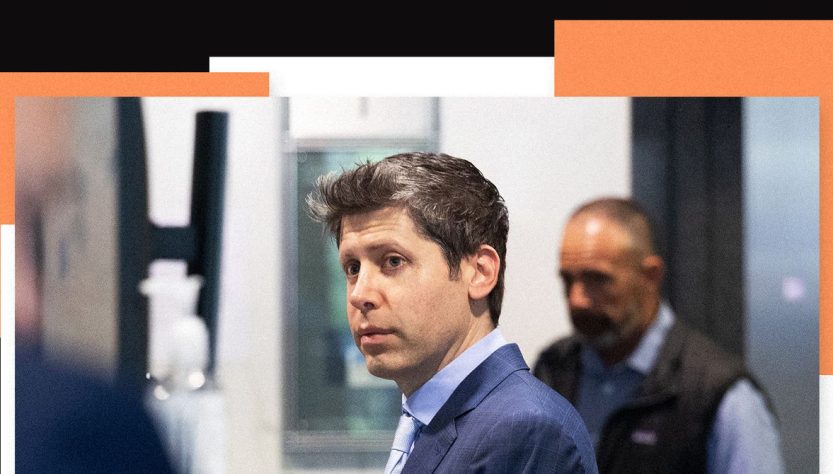
Baker also brings to light something that Sam Altman expresses clearly. Altman — OpenAI CEO, former head of Y Combinator, precisely the type of figure these students aspire to emulate — informs Baker that the VC dinner circuit has transformed into an “anti-signal” for those who genuinely recognize what talent appears like. The students traversing these circuits, showcasing their founder personas for rooms filled with investors, often do not represent the true builders. The genuine creators, presumably, are elsewhere, engaged in construction. The display of ambition and the actual process are increasingly difficult to distinguish, and the system that was supposedly designed to uncover genius has adeptly become proficient at identifying those who excel at creating the illusion of being geniuses.

How to Rule the World appears to be perfectly suited for this current moment. Yet, there’s a certain irony in the strong probability that this critically aware book concerning Stanford’s link to power and wealth will be lauded by the very class of individuals it critiques, and — if it performs well (it has already been optioned for a film) — utilized as further proof that Stanford not only produces founders and con artists but also significant writers and journalists.

When you purchase through links in our articles, we may earn a small commission. This doesn’t affect our editorial independence.

Amazon's latest podcast approach: Profit from it all

Amazon’s latest podcast approach: Profit from it all

The podcasting sector of Amazon has undergone significant changes in the last six months, as reported by The New York Times.

In August 2025, the firm allegedly cut over 100 positions from its podcast studio Wondery. At that moment, Amazon claimed it was not closing down Wondery, which seems to be technically accurate — the Wondery brand is still in use.

However, the NYT reported that Amazon “wielded a sledgehammer” against the studio. Audio-focused podcasts are now managed under Audible, while a fresh division called Creator Services collaborates with on-screen personalities like Dax Shepard, Keke Palmer, and Jason and Travis Kelce.

For instance, the company mentioned it is developing an “expanding universe” around the Kelce brothers’ “New Heights,” with monetization strategies that extend well beyond typical podcast advertising. There is a new section on Amazon titled Kelce Clubhouse, where supporters can buy “New Heights” merchandise, view the documentary “Kelce,” and acquire recommended items for a football viewing event.

As expressed by Creator Services general manager Matt Sandler, Amazon aims to “merge both the content and the commerce together.”

Naturally, other online creators are also investing in commerce. Yet, according to the NYT, Amazon is the sole entity that has “dismembered a company” to achieve this.

What Tim Cook created

What Tim Cook created

Tim Cook will resign as Apple’s CEO in September after holding the position for 15 years. 

In the recent episode of TechCrunch’s Equity podcast, Kirsten Korosec, Sean O’Kane, and I examined Apple’s major announcement. We discussed how Apple has evolved since Cook succeeded Steve Jobs in 2011, and the challenges awaiting incoming CEO John Ternus.

“Some people firmly believe that ‘John Ternus is a product guy, and this will be fantastic’— it evokes nostalgia for Steve Jobs,” said Kirsten. “However, it’s easy to overlook the fact that Tim Cook also created an entirely different product focused on operations.”

In a similar vein, Sean remarked that Cook has provided Ternus with a solid “running start” as “the company’s metrics just keep improving.” But a head start doesn’t assure success: “What kind of volatility lies ahead? Are we truly facing a breakdown of the global economy, coupled with the rise of artificial intelligence reshaping business operations?”

Continue reading for an edited summary — shortened for brevity and clarity — of our complete discussion.

Anthony: The choices made by Apple have a ripple effect on numerous other businesses, as various startups might not base their entire operations on the iOS platform, but a significant share of their income comes from the iPhone.

Kirsten: It’s been fascinating to observe various segments of the tech industry responding to whether this is a smart or unwise decision and evaluating Tim Cook’s achievements and what Apple now requires.

Techcrunch event

San Francisco, CA
|
October 13-15, 2026

When one observes certain factions, it often seems like, “John Ternus is a product guy and this is going to be incredible,” striking a nostalgic chord harkening back to Steve Jobs. Yet it’s crucial to remember that Tim Cook actually developed another product centered entirely around operations. This has been thoroughly examined in various innovative ways, including books analyzing this approach. His operational strategy is an Apple innovation that has transformed entire economies. 

The pressing question is: What occurs when a strategist and operational expert exits? Who will occupy that space? Crafting exceptional products is essential in the Apple ecosystem, of course, but an operations strategy is similarly vital. The landscape is evolving; it’s not the same environment that Tim Cook navigated when he was initiating this development.

Sean: True, but it’s challenging to envision a better head start for a new CEO than the foundation that Tim Cook has built. 

Despite complaints about certain Apple products lacking innovation, the iPhone hasn’t significantly altered its design for many generations, and any new products often come across as niche and over-conceived, such as the Vision Pro — yet despite all this, the company’s figures continue to rise. They are generating substantial revenue and benefiting immensely from the services sector Tim Cook established. 

In some aspects, they are excelling in brand-building more than they have in a long time— by venturing into content creation, even winning an Oscar, among many other activities. The business appears remarkably resilient, even amid uncertain times, providing Ternus a reassuring first year.

It’s important to note: Tim Cook will be leaving his CEO position in September. He will also assume the role of executive chairman. This implies that Tim Cook is not completely leaving the scene; he will still act as a protective figure and collaborator with the Trump administration. He has demonstrated an ability to navigate this successfully— though many would argue that this involved compromising some of Apple’s principles to maintain robust relationships. Donald Trump even posted on Truth Social, commenting on how Tim Cook consistently seeks his favor in reaction to this news.

With all this in mind, the question arises: as comfortable as Ternus’s commencement is likely to be, how much unpredictability awaits? Are we genuinely facing a potential fracture of the global economy? Will the emergence of artificial intelligence transform business dynamics? Is that something he can effectively manage, and who will he bring on to assist in navigating this landscape?

Anthony: Relatedly, Apple appears to have a robust business model presently, both in hardware and increasingly in services, but how long can it maintain this by only relying on proven successes? At what point does it actually need to explore new product categories?

I can’t provide a definitive answer to that. Perhaps the iPhone and the creation of the smartphone category was a generational leap—it’s unreasonable to expect such innovations every ten years or so.

I also find the question of AI intriguing. It doesn’t seem to be a category where Apple has excelled, but maybe that’s acceptable. Perhaps the breakthrough products will simply be software on your iPhone or MacBook, with Apple preferring not to develop it all in-house and pursuing partnerships instead— as it currently does. 

However, that future isn’t guaranteed. There’s likely significant stress and apprehensions regarding what lies ahead.

Kirsten: Quickly, I want to add that Apple possesses ample cash reserves to pursue substantial investments and acquisitions. I’m eager to see how John [Ternus] navigates that.

At one point, I covered Apple’s special projects team, Project Titan, the anticipated Apple car, which has seemingly dwindled after expenditure of significant funds. Will he decide to venture into bold investments? 

You mentioned the cash reserves, which are projected to surpass $45 billion by the end of 2025. They certainly have considerable funds to utilize. Will he take any action with it shortly?

Sean: Additionally, it’s worth mentioning that, while we discuss Apple’s robust business, the App Store has been thriving recently. Sarah Perez wrote an excellent article detailing the various metrics that showcase growth in the App Store—installs, new offerings, it’s an intriguing look for anyone interested in one of the largest software marketplaces globally.

In a time when many are asserting that the ability to vibe-code anything will eliminate the necessity for distributed software, [the App Store] is definitely proving that notion incorrect.

Loading the player…

When you purchase through links in our articles, we may earn a small commission. This doesn’t affect our editorial independence.

TechCrunch Mobility: Elon’s confession

TechCrunch Mobility: Elon’s confession

Welcome back to TechCrunch Mobility — your central destination for updates and perspectives on the transportation landscape’s future. To receive these insights directly in your inbox, register here for free — simply click TechCrunch Mobility!

Tesla released its earnings report, which largely fell into the expected category. Investors appeared taken aback by the $1.4 billion in free cash flow, causing a temporary rise in share prices, and revenue met or slightly outstripped forecasts, depending on which group of analysts one considered. 

However, the earnings call did present a moment that raised eyebrows, prompting contacts from readers (including former Tesla engineers and industry founders) who reached out with schadenfreude-laced remarks. CEO Elon Musk acknowledged that millions of Tesla owners would require hardware upgrades to utilize a forthcoming, more sophisticated version of its Full Self-Driving software that operates without human intervention. 

This has financial and legal ramifications for Tesla. As senior reporter Sean O’Kane detailed, Tesla owners with Hardware 3 vehicles have for years been pressing the company and Musk for a definitive response regarding their ability to operate this advanced rendition of Full Self-Driving — which, it’s pertinent to highlight, has yet to be launched or even demonstrated as feasible. Tesla sold these Hardware 3 vehicles between 2019 and 2023.

Then comes the intriguing part, which made me chuckle. Musk stated the company would need to physically upgrade each of these cars, a task that would necessitate Tesla establishing microfactories across numerous major cities to service possibly millions of vehicles. 

Microfactories? Indeed, that’s correct. This undertaking won’t come cheap, and it could be a line item in Tesla’s capital expenditures plan, which has grown to an impressive $25 billion this year. 

A little bird

blinky cat bird green
Image Credits:Bryce Durbin

Senior reporter Sean O’Kane received (and confirmed) an internal memo from Redwood Materials founder and CEO JB Straubel announcing layoffs and a restructuring. (Thanks to the little bird who tipped us off.) Straubel is a former Tesla CTO.

Techcrunch event

San Francisco, CA
|
October 13-15, 2026

The firm laid off approximately 135 employees, or around 10% of its team, while shifting its focus to better support its expanding energy storage sector. O’Kane later discovered that several executives have also exited recently. Chief operating officer Chris Lister is retiring, along with at least three other VPs, with the company indicating to TechCrunch that there has been an emphasis on flattening management layers.


Last week, I mentioned that a new startup developing autonomous haulers (think driverless large trucks) supported by Eclipse was on the verge of making its debut and announcing a seed round, thanks to a little bird. Well, that occurred just days later. 

The San Francisco-based startup, named Humble Robotics, secured $24 million in a seed funding round. Eclipse spearheaded the funding, which also attracted investment from Energy Impact Partners and RedBlue Capital, a smaller early-stage VC firm that has been notably active. 

As I was informed, Humble is indeed filled with Silicon Valley luminaries, including founder Eyal Cohen, who has held positions at Apple special projects, Uber ATG, Pronto, and Waabi. He also founded Spark AI, which was acquired by John Deere in 2023. 

Other key personnel include Drew Gray, who possesses a likewise impressive background, having spent early years at Cruise, before shifting to the self-driving trucks startup Otto, later acquired by Uber. After leaving Uber, he served as CTO at Voyage, which was then bought by Cruise. 

A full-circle situation, underscored by this interesting nugget: Humble Robotics occupies the same building Cruise inhabited immediately after moving out from founder Kyle Vogt’s garage. I know, we keep retracing our steps to 2016.  

But it’s not 2016 anymore, and Cohen and Gray discussed with me how much has transformed since then, the reasons this is the ideal moment to launch an AV startup, and the direction the industry is heading. Look forward to that story next week.

Have a tip for us? Reach out to Kirsten Korosec at [email protected] or via Signal at kkorosec.07, or contact Sean O’Kane at [email protected]

Deals!

money the station
Image Credits:Bryce Durbin

Lyft primarily focused on the North American markets throughout its history, whereas Uber pursued a global, expand-at-all-costs approach. Lyft has been attempting to catch up since last year when it acquired the German multi-mobility app Freenow from BMW and Mercedes-Benz Mobility for approximately $197 million in cash. 

Now it’s purchasing the U.K. operations of ride-hailing app Gett. Lyft states this acquisition will provide it with the majority of registered black cab drivers throughout Greater London on its platform. The company did not divulge the deal’s specifics, but Calcalist indicated it was valued at $55 million. 

The firm is also enhancing other transportation options in the area, including its recently renewed collaboration with Serco to supply bikes and stations for Europe’s bike-sharing system, Santander Cycles. Lyft is also gearing up to start trials of autonomous rides in London with Baidu later this year. 

Additional deals of interest …

A&K Robotics, based in Vancouver, Canada, a producer of autonomous vehicles for airports, secured an $8 million CAD Series A funding round led by BDC’s Industrial Innovation Venture Fund and Vantage Futures.

Decade Energy, which supplies power infrastructure at logistic hubs, raised €22 million in funding spearheaded by Eiffel Investment Group and SET Ventures, along with contributions from existing investors.

Reliable Robotics, a startup in Silicon Valley developing autonomous aircraft systems, garnered $160 million in a round led by Nimble Partners, with existing backers Eclipse, Lightspeed, Coatue, and Pathbreaker Ventures, along with new investors such as Island Green Capital, Socium Ventures, AE Ventures (a strategic partner of Boeing), RTX Ventures, Presidio Ventures (Sumitomo Corporation), UP.Partners, KAS Venture Partners, What If Ventures, Calm Ventures, Gaingels, and Mana Ventures. Historical note: Co-founder and CEO Robert Rose briefly worked at Tesla as senior director of Autopilot and was instrumental in launching its first iteration in 2015.

PlusAI and the blank-check company Churchill Capital Corp IX have ended their SPAC merger arrangement due to market circumstances.

Porsche is divesting its stake in the Bugatti Rimac joint venture, established in 2021, along with its share in electric vehicle manufacturer Rimac Group. Porsche, holding a 20.6% stake in Rimac and 45% in the joint venture, is selling to HOF Capital. Financial details were not revealed.

Noteworthy reads and other bits

Image Credits:Bryce Durbin

Einride is adding 75 of its electric heavy-duty trucks to Amazon’s Relay freight network as part of a deal that gives the Swedish startup a foothold in the e-commerce titan’s logistics. 

Ford and the Chinese automaker Geely reportedly engaged in discussions about extending a European partnership into the U.S., as reported by the Wall Street Journal. The consequences, of course, would involve Chinese vehicles entering the U.S. market. However, it appears that talks have stalled, leaving this significant deal in uncertainty. Bloomberg noted that Ford has refuted these claims. 

Porsche is introducing another electric vehicle to its range. The Cayenne electric coupe is set to hit the market in late summer. There’s some fascinating data in my article on why this model could be a success for Porsche. 

The first customer-ready Rivian R2 SUVs emerged from the production line at its facility in Normal, Illinois, just days after being affected by an EF-1 tornado that damaged part of the roof. Founder and CEO RJ Scaringe stated that Rivian does not foresee any delays for the R2, expected to be delivered to customers in June. 

One more thing …

Image Credits:Kirsten Korosec

As attentive readers of this newsletter are aware, I evaluate a considerable number of vehicles, and sometimes they aren’t electric. Take the Aston Martin Vantage Roadster, for example. I was eager to experience this roadster, not just because this $205,000 chiltern-green beauty is stylish, powerful, and convertible. I was keen to test the Apple CarPlay Ultra, the state-of-the-art infotainment system that displays iPhone content on the vehicle’s screens (including the instrument cluster) and integrates controls for the radio, performance settings, and climate. CarPlay Ultra initially debuted in the Aston Martin, which isn’t exactly easy to access. 

My initial experience with Apple Ultra CarPlay last summer was a bit of a mixed bag. It worked well — when it operated, but it frequently didn’t. The issue appeared to stem from a glitch that displayed two iterations of the vehicle in the Bluetooth settings. 

This time, the setup was immediate and it functioned flawlessly. Hooray. And it operated consistently. This is crucial for Aston Martin, which has been stuck for years with Mercedes-Benz’s outdated COMAND system. (Mercedes phased out that system in 2018 for its new MBUX one).

When you make purchases through links in our articles, we might earn a nominal commission. This does not influence our editorial autonomy.