
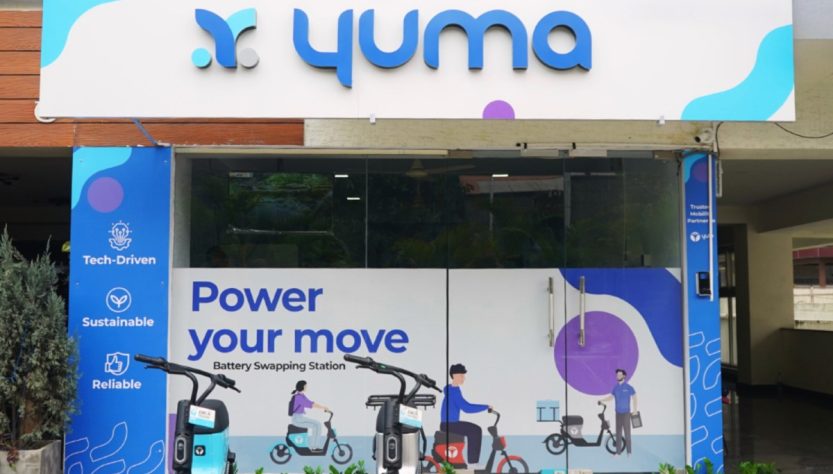
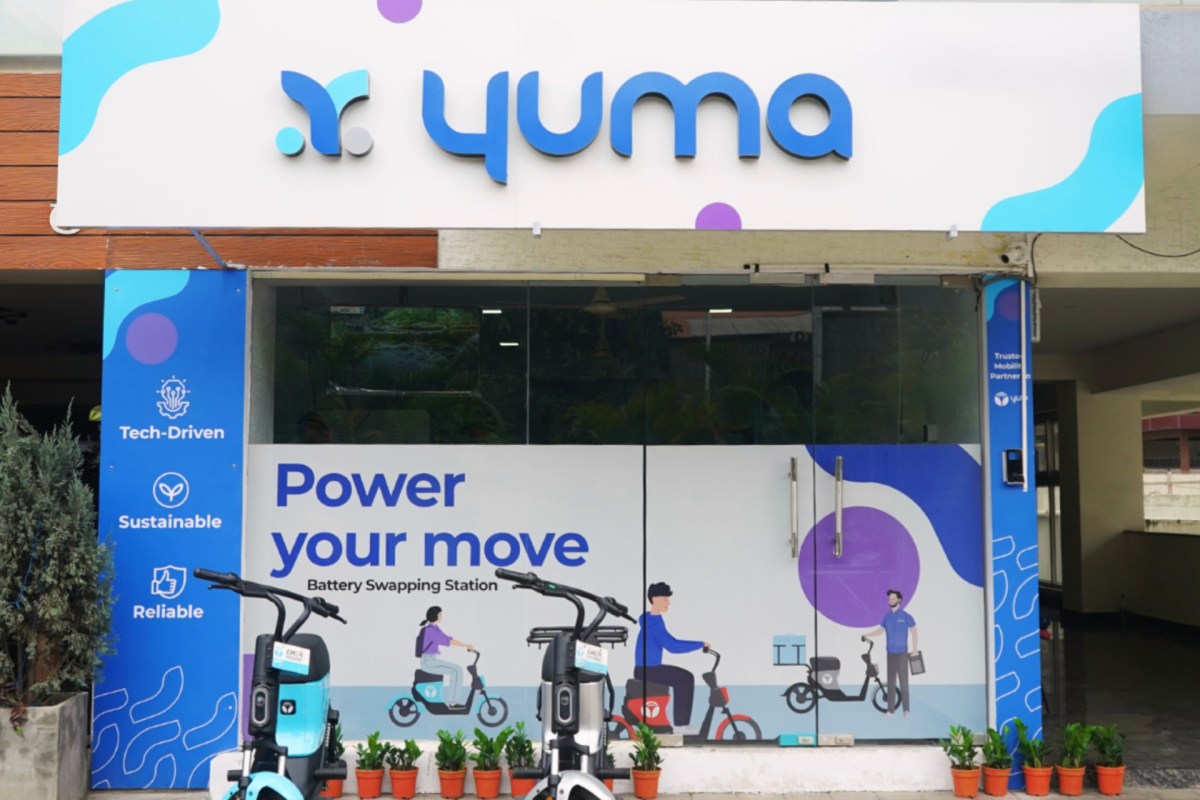
Though battery swapping has faced challenges in gaining traction globally, Canadian auto parts leader Magna International is optimistic about its potential in India, where millions of two- and three-wheeled vehicles along with a rapidly expanding delivery sector provide a unique economic landscape.
Magna is betting on Yuma Energy, a Bengaluru-based company that runs a battery-swapping infrastructure for electric two- and three-wheeled vehicles. Emerging from Indian mobility startup Yulu in early 2023, Yuma has executed over 60 million swaps and currently has around 100,000 batteries in circulation throughout its network.
Magna is set to invest an additional $35 million in Yuma, raising its ownership from the 51% stake acquired during the initial formation of the joint venture, according to Yuma’s managing director Muthu Subramanian in a recent interview. Consequently, Yulu’s 49% ownership will be reduced. Subramanian chose not to reveal the new ownership proportions.
Yulu and Yuma represent Magna’s exclusive investments in Indian startups, as confirmed to TechCrunch. In 2022, Magna allocated a total of $77 million to the two enterprises, with $25 million directed to Yulu and $52 million to the battery-swapping joint venture.
Investing in India’s gig economy
Magna’s recent investment largely depends on the growth of India’s gig economy.
Delivery drivers can lose both time and income while charging their electric vehicles. Subramanian estimates that currently, only about 10% to 15% of vehicles utilized by gig workers in India are electric, indicating significant opportunities for companies like Yuma as more drivers transition from gasoline vehicles.
“Given the high operational hours of Indian gig workers, using an EV becomes highly economical,” Subramanian shared with TechCrunch. “Maintaining uptime is crucial.”
Yuma is focused on those high-usage riders, asserting that swapping batteries is more feasible than fast charging. According to Subramanian, a battery can be exchanged in less than two minutes, while even a quick 20- or 30-minute charge takes a rider off the road and demands additional space and power for multiple vehicles.
However, creating that convenience is costly, as Yuma needs to maintain its battery supply and swapping infrastructure in anticipation of an adequate number of riders. “This is a capital-intensive industry, and the unit economics will materialize once at scale,” Subramanian stated.
Yuma has yet to become profitable, although some of its older swapping stations are already EBITDA-positive, Subramanian pointed out. The company runs over 400 stations with more than 2,500 charging units and concluded the financial year in March 2026 with approximately ₹1 billion (around $10.5 million) in revenue. The goal is to achieve EBITDA break-even in the next two quarters, as per Subramanian’s remarks to TechCrunch.
Achieving this will still necessitate Yuma to anticipate demand. The company intends to allocate a significant portion of Magna’s investment to enhance its swapping infrastructure and double its battery fleet from about 100,000 in the next 12 to 18 months.
Yulu remains the primary contributor to Yuma’s 60 million total swaps, though this reliance is beginning to diminish, as roughly 15% to 20% of swaps in the latest quarter came from clients other than Yulu, Subramanian indicated to TechCrunch.
Aside from Yulu, Yuma now caters to over five fleets and has integrated its batteries with more than 10 different vehicle models, including those from Kinetic Green, Motovolt, BGauss, and Quantum Energy. Subramanian anticipates that non-Yulu clients will represent about 25% of its swaps within the next two years.
Earlier this month, Yulu secured $93 million to expand its electric two-wheeler fleet. Consequently, Yuma will need to grow its network to keep up with its largest client and support newer fleets utilizing its batteries.
Yuma conducts its battery-swapping operations across 18 Indian cities, including Bengaluru, Hyderabad, Mumbai, and the Delhi area, along with Jaipur, Lucknow, Indore, Coimbatore, Kochi, and Kolkata. With the new funding, the company aims to branch out into Chennai and Pune in the upcoming quarters and to add more stations in cities where it currently operates.
India will remain Yuma’s primary focus for at least the next 12 to 18 months. However, Subramanian informed TechCrunch that the company intends to take its model abroad as part of its long-term strategy. Markets in Southeast Asia like Vietnam and Thailand, along with certain regions in Africa, could be viable due to their substantial two-wheeler demographics, he mentioned, although Yuma has not yet initiated discussions about entering those markets.
Distinct from operators who merely manage swapping frameworks, Yuma develops and manufactures its own battery packs and charging units. The firm produces battery packs at its plant in Chennai and charging units in Bengaluru, allowing it to control both the hardware and the network that manages them.
Purchases made through links in our articles may yield a small commission for us. This has no impact on our editorial autonomy.