

MAVI invests in the AI surge generating a need for a new type of accountant

MAVI invests in the AI surge generating a need for a new type of accountant

Molly Liu and Aman Puri are addressing the U.S. accounting shortage from a different perspective — a global one. On Monday, they revealed that their AI-driven talent platform MAVI, established in 2023, has officially come out of stealth mode. The service aids in connecting U.S. businesses with elite global financial and accounting professionals skilled in AI in just a matter of days.

In an interview with TechCrunch, Liu, co-CEO of the company, highlighted the challenges currently facing the U.S. accounting sector — primarily that the workforce is declining and remaining professionals may not possess the AI competencies essential for business growth. Additionally, she noted that many U.S. firms are hesitant to collaborate with global talent, often due to the complexities of hiring and managing them or their belief that such talent may not meet their standards. 

“There’s been an influx of exceptional talent, with a truly high standard that rivals or even surpasses that of the U.S.,” she said regarding the global workforce. MAVI plays a critical role here, Liu mentioned, also alleviating companies from the tedious tasks associated with employing international talent, such as managing cross-border contracts, legal compliance, and payroll. The company aims to swiftly identify full-time, long-term roles that enhance in-house finance teams, focusing on mid- and senior-level positions. 

Liu’s experience includes roles at Ramp, Lyft, and Dropbox. She stated that her time at these firms made her realize that additional automation tools can’t resolve all issues within accounting.

“AI will eliminate many entry-level positions in finance and accounting, which will intensify the talent gap at the mid-level experience tier, considering that fewer entry-level professionals will evolve into mid-level roles over time,” Liu remarked.

Therefore, regardless of the number of AI solutions introduced to simplify basic tasks, businesses still require seasoned professionals to make essential decisions on critical duties. In fact, she observed that the greater the number of AI tools a company embraces, the more pressure it places on those in leadership roles. 

“They are increasingly expected to utilize more of their analytical skills,” she asserted. “Finance teams are now being urged to achieve more with reduced resources.” 

However, there’s another complication — the definition of what it means to be an accountant is evolving. An AI-savvy accountant, for instance, possesses solid finance and accounting fundamentals, she said, but they are also capable of guiding AI tools, exercising judgment to identify AI errors; someone who can incorporate LLMs into finance and accounting processes and is knowledgeable about the latest AI-integrated ERPs and tools. “A conventional accountant has the basic accounting knowledge but only a rudimentary understanding of how to integrate AI into finance and workflows or how to oversee AI tools in finance,” she elaborated. 

Last year, the company secured a $4 million seed funding round led by Harlem Capital, which it only made public on Monday. Liu mentioned that the platform now boasts over 3,000 accounting experts and enterprise clients, including the personal care firm Athena Club.

“We possess a robust perspective on what the future of finance teams entails,” she remarked. “Our focus is on that high-skill talent and the new layer of judgment that is critical for all finance teams and business operations, enabling them to function at the next level and beyond.” 

When you buy through links in our articles, we may receive a small commission. This doesn’t influence our editorial autonomy.


Following a deepfake voice that deceived her grandfather, this entrepreneur took swift measures.

Following a deepfake voice that deceived her grandfather, this entrepreneur took swift measures.

When the phone call arrived, Tarini Padmanabhuni’s grandfather thought he was conversing with his sibling. The voice on the other end claimed he had been abducted and that the only way to rescue him was to pay a ransom. Her grandfather complied, only to discover later that his brother was completely elsewhere, unaware of any such events occurring. The voice was revealed to be a deepfake, an imitation generated by AI.

“What left a lasting impression on me wasn’t the financial loss,” Padmanabhuni reflects on the experience. “It was that he had no means to verify.”

That incident happened about two years ago. Currently, she states, DetectifAI, the company she established in San Francisco, seeks to prevent others from being deceived in a similar manner.

This issue is significant and expanding, accompanied by a corresponding market. According to the FBI, last year, Americans were defrauded of nearly $900 million due to AI-fueled scams, an increase of 24% from 2024. Individuals aged 60 and above suffered losses double that of those between 50 to 59 years old.

The field of deepfake voice detection is crowded with competitors, including companies like Reality Defender, Pindrop, Resemble AI, Microsoft Azure AI Content Safety, and Nuance (owned by Microsoft too). However, existing detection solutions operate in the cloud on remote servers, which, as Padmanabhuni notes, prevents phone manufacturers from integrating them directly into their devices, leaving those targeted with limited protective measures.

Instead of downsizing large cloud models for mobile suitability, as some firms do, DetectifAI claims to develop compact AI models designed from the outset to operate within a smartphone’s operating system. The goal is to provide immediate assessment regarding whether a voice is AI-generated during calls, voice messages, and other audio, without the data ever leaving the device.

DetectifAI is currently marketing its offerings first to smartphone manufacturers, licensing its software tools so detection capabilities can be included as an integral feature of the phone’s operating system. Padmanabhuni likens this approach to AT&T’s involvement in the initial iPhone launch, where the carrier’s exclusive arrangement distinguished it from competitors: The first phone manufacturer to implement DetectifAI will have a competitive advantage, she suggests.

At the core of the product is DetectifAI’s software development kit (SDK), a collection of code that other companies can integrate into their offerings, which can be licensed through pre-existing channels. Padmanabhuni notes that an additional revenue stream will arise from licensing the technology to enterprises and fraud-detection firms.

Meanwhile, the startup already generates early revenue, according to Padmanabhuni, processing over 100,000 calls monthly for financial institutions in India. These calls are made by AI voice agents managing debt recovery and loan document follow-ups, with deepfake detection and speaker verification (confirming the identity of the callers) integrated into every call. Padmanabhuni chose not to disclose customers due to confidentiality agreements.

Padmanabhuni began her foray into machine learning at the age of 12 and pursued studies in cyber-physical systems (technology linking software with physical machinery) at Manipal Institute of Technology in India, where she claims to have become the youngest team leader in what she describes as India’s inaugural driverless race car division in Formula Student, an international student engineering challenge.

DetectifAI has, thus far, secured a modest seed investment from backers Josh Constine (formerly an editor at TechCrunch) and Manohar Kamath, a principal at the consulting services firm KM Growth. The company is among the startups carefully reviewed by TechCrunch’s editorial team to participate in the esteemed Startup Battlefield competition, occurring at TechCrunch Disrupt from October 13 to 15 in downtown San Francisco.

To explore DetectifAI and the other startups featured in this year’s contest, as well as to connect with the individuals funding them, join us next month.

When you buy through links in our articles, we may receive a small commission. This doesn’t impact our editorial autonomy.

Commonwealth Fusion Systems' Brandon Sorbom and Helion's David Kirtley discussing the integration of fusion energy into the grid at TechCrunch Disrupt 2026

Commonwealth Fusion Systems’ Brandon Sorbom and Helion’s David Kirtley discussing the integration of fusion energy into the grid at TechCrunch Disrupt 2026

For many years, the prospect of commercial fusion energy has appeared consistently unattainable. However, two firms are now moving towards a more tangible goal: integrating electricity generated by fusion into the power grid.

Commonwealth Fusion Systems (CFS) is constructing SPARC, a fusion demonstration device aimed at laying the groundwork for its inaugural commercial energy facility, ARC. Helion is in the process of developing Orion, a fusion power plant with a capacity of 50 megawatts, which is set to provide energy to Microsoft starting in 2028.

At TechCrunch Disrupt 2026, Brandon Sorbom, co-founder and chief science officer of CFS, along with David Kirtley, founder and CEO of Helion, will take to the Smart Systems Stage for a session titled “Bringing Fusion to the Grid.” They will explore the advancements propelling fusion technology forward, the obstacles that remain, and the requirements for scaling up fusion energy for grid integration.

TechCrunch Disrupt 2026 Brandon Sorbom David Kirtley
Image Credits:TechCrunch

Curious about the factors separating current fusion advancements from commercial viability? Secure your pass and invite your co-founder, partner, or colleague for 50% off their entry. Uncover the insights shaping the future of fusion collaboratively.

Transitioning fusion from theory to commercial energy

Brandon Sorbom co-established CFS in 2018 with aspirations to commercialize fusion energy in time to mitigate climate change. As the chief science officer, he directs the scientific trajectory and R&D initiatives of the company, aiding in the progress of the ARC design. The concept originates from his experiences at MIT, where Sorbom was the principal author of the study proposing the initial ARC design during his pursuit of a PhD in nuclear science and engineering.

Currently, CFS is progressing towards ARC via SPARC, the organization’s fusion demonstration apparatus. In April, CFS became the pioneer fusion entity to petition PJM Interconnection, the largest wholesale electricity market in the U.S.—an essential phase towards ultimately linking ARC to the grid. In July, the company secured an additional $1 billion, elevating its total funding to $4 billion.

For entrepreneurs and tech executives, Sorbom provides insights that encompass the journey from academic inquiry to the creation of a commercial fusion power facility, including the scientific and engineering hurdles that must be addressed along the way.

What steps are necessary to convert years of fusion research into commercial energy? Ensure your Disrupt pass and take a second at a 50% discount to gain insights from one of the scientists committed to facilitating that transition.

Testing fusion power

David Kirtley launched Helion to advance fusion technology capable of delivering energy on a commercial scale. A fellow of the NSF and NASA Advanced Concepts program, he possesses expertise in high-beta plasmas for energy generation and space propulsion applications, currently heading Helion as it progresses towards commercial fusion power.

In February, Helion revealed that its Polaris prototype succeeded in heating plasma to 150 million degrees Celsius. The firm is now focused on developing Orion, a fusion plant designed to provide electricity to Microsoft as soon as 2028. In June, Helion achieved a critical regulatory accomplishment on its path to constructing and operating the plant. Its Series G funding announcement, initially at $465 million in June, concluded at $500 million in September.

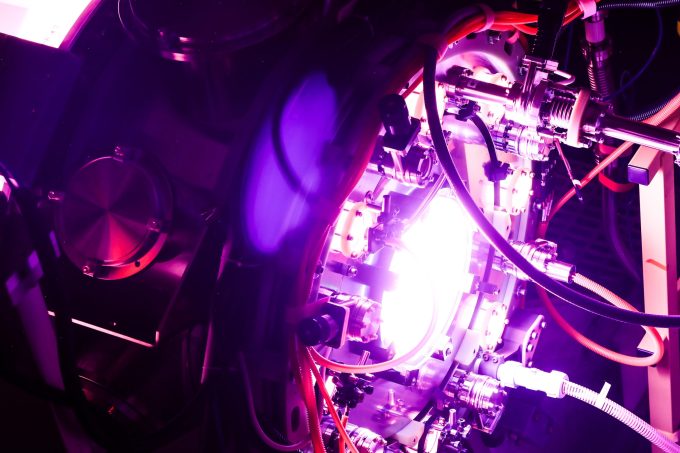
A fusion reactor glows purple.
Image Credits:Helion

This timeline sharply raises the questions central to the Disrupt session. While scientific milestones are crucial, the commercialization of fusion also requires transitioning to a functional power plant that can consistently supply electricity to consumers.

What will be necessary to transform fusion achievements into electricity on the grid? Register for Disrupt and bring a companion at 50% off to gain Kirtley’s insights on the work that lies ahead.

Discover what hinders fusion and grid integration at Disrupt 2026

CFS and Helion are taking varied approaches to fusion, yet both are tackling the challenge at the heart of this discussion: evolving from scientific and engineering advancements to commercial power.

At Disrupt, Sorbom and Kirtley will share firsthand experiences governing their journey through that transition. For entrepreneurs, investors, and tech leaders, their discussion presents an opportunity to learn what is bringing fusion closer to commercialization, the challenges that persist, and what it will take for fusion energy to become widely available on the grid.

Their session is part of over 200 events across six industry stages, roundtables, and breakout sessions at Disrupt, which will occur from October 13-15 at Moscone West in San Francisco. More than 10,000 founders, investors, operators, and tech leaders are anticipated, along with more than 250 speakers and 300 exhibiting startups. In addition to the agenda, matchmaking, dealmaking, and networking will offer chances to connect with founders, investors, and innovators who are defining the future.

For decades, fusion has been viewed as the energy technology of tomorrow. Join two industry leaders as they strive to bring it closer to grid integration. These are the final moments to secure your pass and obtain a second of the same type at half price.

TechCrunch Disrupt Expo Hall
Image Credits:Eric Slomonson, The Photo Group

When you purchase through links in our articles, we may earn a small commission. This doesn’t affect our editorial independence.

Conventional Credit Card Frauds Persist

Conventional Credit Card Frauds Persist

Welcome to Kernel Panic! A weekly newsletter authored by Lily Hay Newman and Matt Burgess, delving into the evolving realm of privacy and digital security. To get this newsletter delivered to your inbox every week, sign up here.

When every unexpected text message seems like a scam, and with AI amplifying digital fraud, traditional credit card skimmers and fake letters arriving in your mailbox may appear ludicrous as potential dangers in 2026. However, as we all endure what feels like an endless stream of possible scams, these outdated tactics continue to exact a heavy toll on victims globally.

The counterfeit-new-credit-card-in-your-mailbox scheme is especially devious. Portugal, France, and Germany have experienced waves of physical credit card scams in recent times where criminals have sent out fake replacement cards or letters to potential targets. The accompanying letters often assert that a current card is about to expire, regardless of whether the victim has one nearing its expiration or not. To activate the new (fraudulent) card, the scam letter instructs that it must be registered using a provided QR code or URL. Some bogus cards even display legitimate customer names, says Georg Hauer, an advisor for digital banks. “The card acts almost like a token that establishes the trust required to fall for the actual ruse,” he explains.

If an individual scans the QR code, they are usually redirected to a counterfeit banking site, where they’re prompted to input their information—potentially granting cybercriminals direct access to their true accounts. “This has been on the rise for nearly two years, and I suspect this type of scam might have proven successful enough to be implemented in other countries,” Hauer notes. “The cost of producing a customized fake card has decreased in recent years due to AI’s ability to replicate a design from an image, and the higher conversion rate per victim may warrant the added expenses.”

Mail scams are not the only ‘90s revival on the agenda. The US Attorney’s Office for the Northern District of Alabama charged two Romanian nationals last week with offenses related to alleged credit card skimming. Officials indicate that the duo specifically targeted government SNAP food assistance benefits disbursed to recipients across most states on outdated magnetic stripe-only debit cards, known as Electronic Benefit Transfer (EBT) cards.

Fraud linked to chip credit cards exists as well, but this recent case serves as a reminder that classic skimmers targeting magnetic stripe credit cards are still being used by scammers due to the apparently sufficient swiping occurring to justify their efforts. The FBI reports that EBT card skimming has gained traction among scammers since around 2021.

“Skimmer fraud is widespread with losses in the United States alone surpassing $1 billion annually,” US Attorney Phillip W. Williams Jr. stated in a press release concerning the recent indictment. (This billion dollars encompasses various types of credit card skimming, not just EBT targeting.) “It is a silent, insidious theft that occurs simply by swiping a credit card at a point-of-sale.”

Gary Warner, the intelligence director at the cybersecurity firm DarkTower, highlights that numerous states continue to employ mag-stripe only cards for benefits. “The risk here is that if the mag stripe is compromised, a clone of the card can be generated and access not only the current value but future value as well,” he states.

More broadly, Warner informs us, there are still multiple dangers associated with making payments using the magnetic stripes on any cards—even if they also have more secure chips that have been issued over the past decade. “Non-bank ATMs and smaller non-chain merchants may expose your chip-enabled card to mag stripe reading,” Warner explains. “Mag-stripe skimmers are often positioned in such a manner that the chip read is compelled to fail.”

PNOE’s latest face mask aims to transform lab-grade breath testing into a self-service experience.

PNOE’s latest face mask aims to transform lab-grade breath testing into a self-service experience.

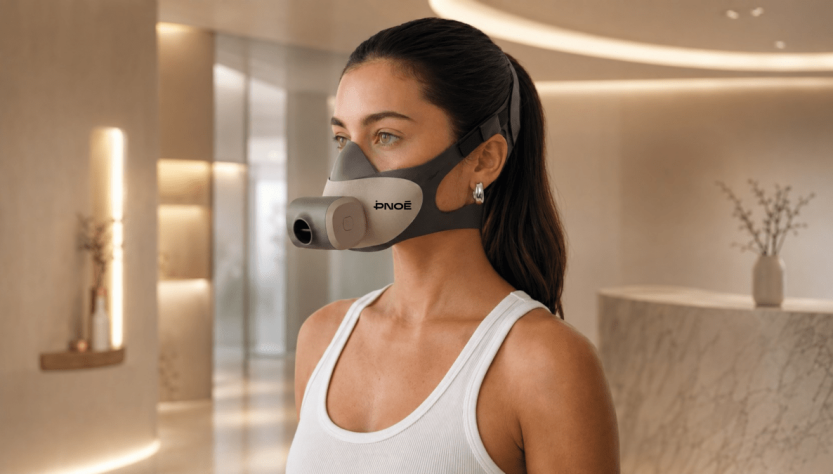
At first sight, the latest gadget from PNOĒ resembles something a supervillain from a comic book might don. The mask, which encloses the nose and mouth and secures at the back of the head, uncannily resembles Bane’s mask, Batman’s formidable adversary. However, its mission is much more innocent; it tracks your oxygen intake and carbon dioxide output, then interprets that information into recommendations on diet, exercise, and what the company aspires to be, longer life.

Based in Malden, Massachusetts, and also operating in Athens, Greece, PNOĒ is set to release the PNOĒ 2.0 on October 1. The significant upgrade from its existing model is that individuals can conduct the test independently. Co-founder and CEO Apostolos Atsalakis stated that one could walk into a gym, “simply wear the mask, press the button, sit down,” and breathe for eight minutes. “That’s all. It’s that straightforward,” he recently shared during a Zoom discussion from the company’s Athens branch.

This improvement matters because PNOĒ’s current device necessitates a trained technician, which limits its usage locations. An independent version could potentially provide access to fitness facilities without full-time staff and even pharmacies, Atsalakis explained.

The science underlying PNOĒ isn’t novel. Metabolic assessments, which evaluate the gases in a person’s inhalation to determine how the body generates energy, have existed for over a century. For many years, it’s been regarded as the benchmark for assessing VO₂ max, the peak quantity of oxygen the body can utilize during physical activity, a widely recognized index of cardiorespiratory fitness. However, these tests have typically required cumbersome, costly apparatus found primarily in sports laboratories and healthcare establishments, thus being predominantly accessed by elite athletes and corporate wellness programs.

What the decade-old PNOĒ promises is identical precision in a portable form, combined with software that interprets the findings into actionable advice. “We made it accessible to everyone,” Atsalakis emphasized.

The firm asserts that its test captures 23 biomarkers, encompassing (in addition to measuring VO₂ max) resting metabolic rate (the amount of calories the body expends at rest) and metabolic flexibility (the efficiency with which the body transitions between burning fat and carbohydrates). Atsalakis contends that these metrics address queries that blood tests fail to resolve, like how many calories an individual requires or how they should exercise.

The timing is advantageous for PNOĒ. VO₂ max has gained traction among longevity advocates, partly due to studies correlating enhanced cardiorespiratory fitness with decreased mortality. Atsalakis identifies VO₂ max as the most significant predictor of human longevity and views his company’s data as a type of scorecard for the thriving wellness sector.

The new gadget is more compact and simpler than its predecessor, with fewer components, which Atsalakis noted enhances its reliability. It was developed in collaboration with Milan-based Design Group Italia during what Atsalakis characterized as “a considerable number of iterations,” since a self-administered metabolic testing device had not been previously created.

It also resolves a concern that users, especially post-pandemic, are likely to have: who used it last? The response: it’s irrelevant, as the electronics can be detached from the silicone mask and straps, allowing multiple users to share the expensive hardware while retaining their own mask.

Despite its clinical aspirations, PNOĒ is cautious about its assertions. The device has not received clearance from the U.S. Food and Drug Administration, and Atsalakis stated that “we do not provide medical advice.” Rather, PNOĒ regards itself as a wellness tool. “It’s similar to a body composition device, like a scale,” he explained. “A physician cannot prescribe medication based on our outcomes.”

That may evolve in the future. Researchers have continuously examined whether elements in human breath could indicate illnesses such as cancer, and Atsalakis believes the company’s expanding data collection could eventually aid in identifying health concerns. Nonetheless, he acknowledged that comprehensive diagnoses are “definitely a few years away,” with regulatory barriers likely extending that timeline. “We’re not at that stage yet,” he admitted.

PNOĒ finds its origins in Atsalakis’s PhD research in sensing technologies at the University of Cambridge, a period when wearables were gaining momentum and he became intrigued by what breath could reveal about the human body. He co-founded the company with Panos Papadiamantis, a longtime friend who currently serves as the chief product officer.

The startup participated in Y Combinator’s Winter 2019 cohort, at a time when “longevity” was not yet the widespread industry it has become. Since then, it has secured approximately $22 million in funding, inclusive of a recently closed $11 million round, from investors such as 50 Years and Google Maps co-founder Lars Rasmussen, who is now based in Athens himself.

PNOĒ exclusively sells to businesses, which in turn provide the test to their clientele. Its customers comprise Equinox, where the test is available at nearly all locations, according to Atsalakis, along with Four Seasons hotels, Red Bull, the NBA, the Mount Sinai Health System, and the med spa chain Restore Hyper Wellness.

Approximately 85% of its revenue is derived from the U.S., which Atsalakis characterized as “by far the most advanced market globally” in terms of longevity. The firm is currently expanding into Europe and, via partners, into Latin America and Asia.

Businesses pay a monthly subscription fee ranging from $400 to over $1,000, which encompasses the hardware, software, training, and marketing resources, a package Atsalakis refers to as a “business in a box.” PNOĒ also links its findings to the services offered by a business, allowing a gym or spa to recommend specific products based on a customer’s test results. Many clients utilize the test during onboarding, Atsalakis noted, placing it between a comprehensive clinical evaluation and the approximations provided by personal fitness trackers.

This intermediate space is becoming increasingly competitive. Apple, Garmin, and Whoop estimate VO₂ max using heart rate data, while consumer products like Lumen evaluate breath to assess fat and carbohydrate utilization. At the high end, traditional metabolic carts continue to be the standard in clinical and laboratory settings.

PNOĒ, which employs 110 staff members, reports that it has recently become profitable while experiencing annual growth exceeding 100%. Atsalakis stated that the company intends to initiate a Series B funding round in the next six to twelve months as it aims to place its mask — Bane associations and all — in front of a wider audience.

When you purchase through links in our articles, we may earn a small commission. This doesn’t affect our editorial independence.

Google is experimenting with purchases from Flipkart, which is owned by Walmart, using Gemini and AI Mode in India.

Google is experimenting with purchases from Flipkart, which is owned by Walmart, using Gemini and AI Mode in India.

Google has initiated trials for shoppers in India to purchase items from Walmart-owned Flipkart directly via Gemini and AI Mode, as the tech giant aims to extend its AI services from product exploration to transactions.

Participants in the trial are seeing a “Buy” button on select Flipkart product displays within Gemini and Google’s AI Mode, which directs them immediately to a Flipkart checkout process without leaving the AI interface, according to sources familiar with the situation and an encounter observed by TechCrunch.

The initial trial is restricted to a limited number of users and a small array of products, including smartphones, electronics, and mobile accessories, the sources informed TechCrunch. Other users continue to notice standard product listings from Flipkart in Gemini and AI Mode without the direct purchase option from the AI interface.

Google is expected to broaden the experience later in October, prior to India’s festive shopping period, as noted by one of the individuals.

This test emerges as Google and competitors such as OpenAI are integrating commerce functionalities into their AI platforms, working to evolve from merely answering shopping inquiries and suggesting products to taking a more immediate part in online transactions.

In response to questions regarding the Flipkart trial, a Google representative told TechCrunch that the company is “constantly evaluating new functionalities and experiences to assist users in discovering and interacting with businesses more seamlessly.” The company regularly conducts trials and lacks additional details to provide, the representative added.

Google has also been developing technology aimed at facilitating purchases through its AI offerings. Earlier this year, it unveiled the Universal Commerce Protocol (UCP) as an open standard intended to enable AI agents to engage with retailers throughout the shopping process, including checkout. Google mentioned that this technology would permit shoppers to acquire qualifying products via Gemini and AI Mode utilizing a Google-managed checkout experience. The company has since enhanced UCP with more features, including enabling shoppers to transfer items to a retailer’s website to finalize a purchase.

The Flipkart trial observed by TechCrunch seems distinct from the Google-hosted checkout experience previously showcased by Gemini’s developer. It presents a Flipkart-branded checkout process when a user selects the Buy button. The technology underpinning the trial remains unclear.

Earlier this month, Google announced that Flipkart was among the vendors collaborating with it to deliver what it refers to as “agentic” shopping experiences to consumers in India, but it did not reveal specifics about the trial or its implementation schedule.

Importantly, Google has a financial connection with Flipkart — in addition to its technological alliance with the e-commerce entity. It invested approximately $350 million in the e-commerce firm in 2024 as part of a funding round led by the U.S. retailer, acquiring a minority ownership.

India, as the second-largest internet market globally with over a billion internet users, witnesses fierce competition between Flipkart and Amazon for online shoppers. This rivalry escalates during the country’s festive period, when e-commerce companies launch some of their most significant sales and promotions of the year.

Currently, the Buy option does not appear across all retailers showcased by Google’s AI services. In the experience noted by TechCrunch, listings from competitors, including Amazon, appeared alongside Flipkart products but did not provide the option for direct purchase through the AI interface.

Flipkart did not promptly reply to an email seeking comments.

When you make purchases through links in our articles, we may receive a small commission. This does not impact our editorial independence.

Insurers assert that AI is already driving up healthcare expenses

Insurers assert that AI is already driving up healthcare expenses

According to an evaluation by the Blue Cross Blue Shield Association, hospitals’ employment of artificial intelligence tools while filing insurance claims resulted in an extra $942 million in healthcare expenditures over a span of two years.

The BCBSA evaluation identified “a significant rise in the documentation of patients with complex conditions,” but contended that there is a “distinct inconsistency between [medical] coding and treatment,” as there’s “no proof of a corresponding alteration in care provided.”

The New York Times highlighted the analysis as merely the latest evidence that AI is driving up healthcare costs. While disputes between hospitals and insurers regarding treatments and payments are longstanding, the NYT indicated that the application of AI on both fronts appears to exacerbate the situation.

Dr. Shiv Rao, the founder of AI startup Abridge, acknowledged that the application of AI could usher in “a terrible dystopian future that no one wishes to inhabit,” with “bots clashing against bots, agents contending with agents.” However, Rao mentioned that it could also alleviate tensions and reduce expenses.

Furthermore, the BCBSA’s senior vice president Luke Chalker refrained from labeling the scenario as a conflict, asserting, “It’s not a war. It’s a thoroughly one-sided massacre,” with insurers on the disadvantaged side.

TikTok consents to disburse a minimum of $100M in settlement for Alabama

TikTok consents to disburse a minimum of $100M in settlement for Alabama

TikTok is set to compensate Alabama with at least $100 million as part of a settlement regarding claims that the short-form video app deceived users about safety and was designed to hook children. The case was slated for trial on Monday.

The Alabama attorney general’s office stated that TikTok may ultimately pay the state up to $300 million, contingent on “certain conditions.” The company also committed to implementing a two-hour daily usage limit for minor users, alongside increased parental controls, as well as limitations on nighttime usage and cosmetic filters.

In a statement, Alabama Attorney General Steve Marshall noted that parents in his state can now “feel more secure knowing real safeguards are in place to protect their children from the threats of social media addiction.”

TikTok also issued a statement affirming that the settlement “reinforces our dedication and primary goal to consistently improve our comprehensive safety tools to safeguard teens.”

In August, TikTok arrived at a $400 million settlement with the Department of Justice concerning allegations of violating child privacy regulations.

Meta and YouTube announce they will indeed air ads for the ‘Musk’ documentary after all

Meta and YouTube announce they will indeed air ads for the ‘Musk’ documentary after all

Two firms have announced they will permit advertising for director Alex Gibney’s forthcoming documentary on Elon Musk, after prior reports indicated that several social media platforms had denied the ads.

The Hollywood Reporter ran a story on Friday stating that TikTok, Meta, YouTube, and X had all declined to display paid advertisements promoting the trailer for “Musk.”

However, when TechCrunch contacted Meta on Saturday, a representative stated, “This was a mistake and the ads are being reinstated.” We’ve sought additional information from Meta and will update this article if we receive a response.

YouTube also provided an update on Saturday, mentioning that “the trailer has always been accessible on YouTube.” (Indeed, that’s how we were able embed it at the conclusion of this article.) The company further stated, “When submitted as an ad, it was briefly restricted by our system. After review, the ad has been approved for airing.”

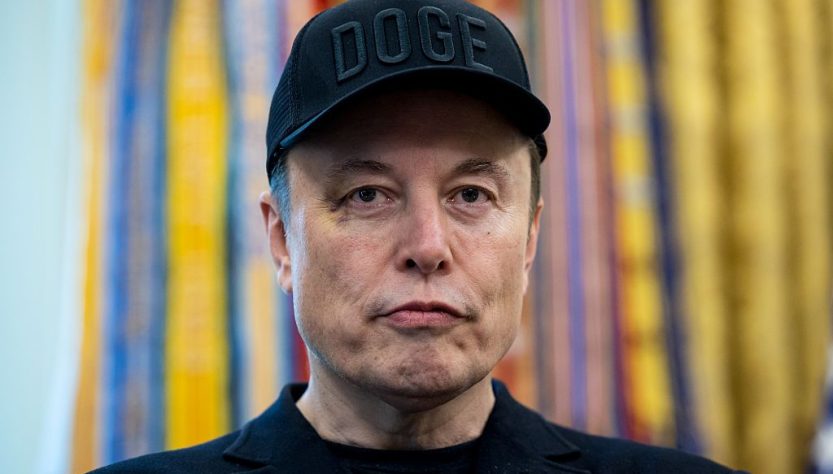
X’s refusal comes as no surprise — Musk, who owns the social media site, recently tweeted that “Dogshit deserves more respect than Gibney.” 

However, Meta, TikTok, and YouTube reportedly turned down the ad for its “political content,” which these platforms have various limitations regarding. (Meta announced last year that it would cease accepting political ads in the European Union, while TikTok states it doesn’t run political advertisements at all.) It remains unclear how a documentary trailer qualifies as campaign advertising, and the film’s U.S. distributor Bleecker Street informed the Hollywood Reporter that it has contested the denials.

Gibney has directed celebrated documentaries such as “Going Clear” (about the Church of Scientology) and “The Inventor” (focused on Elizabeth Holmes and Theranos), in addition to a film about Steve Jobs. “Musk,” his most recent work, debuted at the Venice International Film Festival earlier this month and has garnered nearly universally positive feedback. The film currently holds a 100% “fresh” rating on Rotten Tomatoes and is scheduled for a theatrical release in the United States on October 9.

Vulture’s Bilge Ebiri described the nearly four-hour documentary as an insightful exploration of Musk’s technological journey, his connection with President Donald Trump, and his private life, featuring interviewees including ex-wife Justine Musk and former right-wing influencer Ashley St. Clair (who recently had a child with Musk but now refers to him as “a nuke”).

Ebiri remarked that while the film is a “captivating” character study, he added, “As a narrative of contemporary business, it’s illuminating. And as a cautionary tale about our future, it’s chilling.”

In spite of the initial surge of critical praise, The Hollywood Reporter also mentioned that Universal Pictures was hesitating in its commitment to distribute the film globally, reportedly out of concern of provoking the Trump administration. (Universal later confirmed that it will release the documentary in theaters but is still determining its release strategy).

TechCrunch has also reached out to TikTok, X, and Bleecker Street for comments.

This post has been updated to include YouTube’s announcement that it has approved the ad.

[embedded content]

When you make a purchase through links in our articles, we may earn a small commission. This does not impact our editorial independence.

Levoit’s latest air purifier is designed to tackle the pet smells that have dominated your apartment.

Levoit’s latest air purifier is designed to tackle the pet smells that have dominated your apartment.

Recently, I was told something every pet owner dreads: my apartment had the unmistakable odor of a wet dog. Terrifying. 

Given the endless fur and dander that seem to infiltrate every corner despite my best efforts, the conversation was likely warranted. So, when Levoit introduced its Vital Pet Pro Air Purifier, I was intrigued to see if it could truly make a substantial difference. 

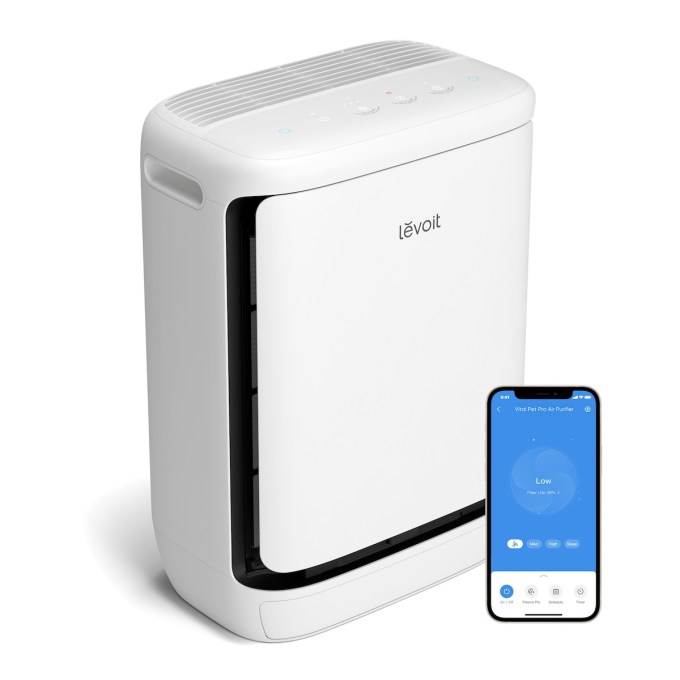
Specifically designed for homes with pets, the $189.99 unit adopts a more focused strategy than traditional air purifiers, integrating a three-stage filtration system with features aimed at combating one of the major challenges pet owners encounter: fur everywhere. (And the occasional “wet dog” aroma.) 

The three-stage filtration system includes a washable pre-filter, a primary filter, and an activated carbon filter. The pre-filter traps larger particles like pet hair, while the primary filter addresses smaller particles and dander. The carbon filter is engineered to neutralize odors, containing 140 grams of activated carbon.

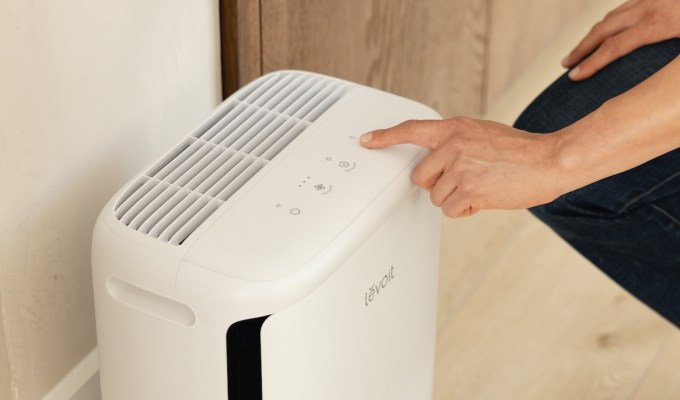
One of the purifier’s standout design features is its U-shaped air inlet, which Levoit claims is meant to catch airborne pet hair and particles while enhancing airflow and preventing filter clogging.

Image Credits:Levoit

After using the purifier for just over a week, I found it notably effective at gathering fur and trapping the kind of debris that usually ends up swirling around or settling on furniture.

Regarding pet odors, Levoit states that the Vital Pet Pro can eliminate up to 70% of smells in an hour. While I can’t conduct an exact test to confirm this, the improvement was evident. After running the purifier, the room had a much fresher scent.

I also liked the automatic cleaning feature, which eliminates accumulated hair and debris from the pre-filter and collects it in a detachable tray. This practical function is especially beneficial when compared to having to disassemble the purifier regularly to remove fur.

Moreover, the accompanying app provides various modes that enhance the purifier’s hands-free operation. Auto Plus Mode observes variations in air quality and adjusts the purifier’s settings in real time.

Pet Mode is tailored to address how pet-related particles can accumulate throughout the day. It alternates between operating the fan at maximum speed for 15 minutes to capture particulates in the pre-filter and then switching to a lower speed for 60 minutes to sustain air quality while minimizing noise and energy consumption.

Image Credits:Levoit

Additionally, instead of showcasing a numerical air-quality reading, the Vital Pet Pro employs a straightforward color coding system. Red signifies poor air quality, orange indicates moderate, green represents good, and cyan denotes very good. I actually prefer this method since one can quickly glance at the purifier to gauge air quality improvement without needing to interpret a numerical value.

I should also mention that the Vital Pet Pro is slightly larger than I anticipated, so ensure there’s sufficient floor space before bringing one home.

Noise is another factor to consider. At its maximum setting, the fan is definitely noticeable. However, when the purifier operates at a lower setting, it’s quiet enough to leave on throughout the night without interrupting my sleep. For those sensitive to noise, Sleep Mode allows the purifier to operate even more silently.

The air purifier can be purchased from Levoit’s website, Amazon, Chewy, and various other retailers.

When you purchase through links in our articles, we may earn a small commission. This doesn’t affect our editorial independence.