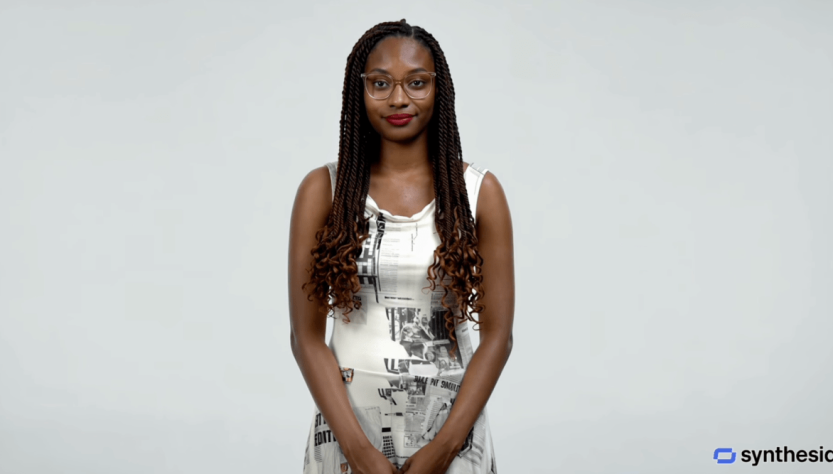
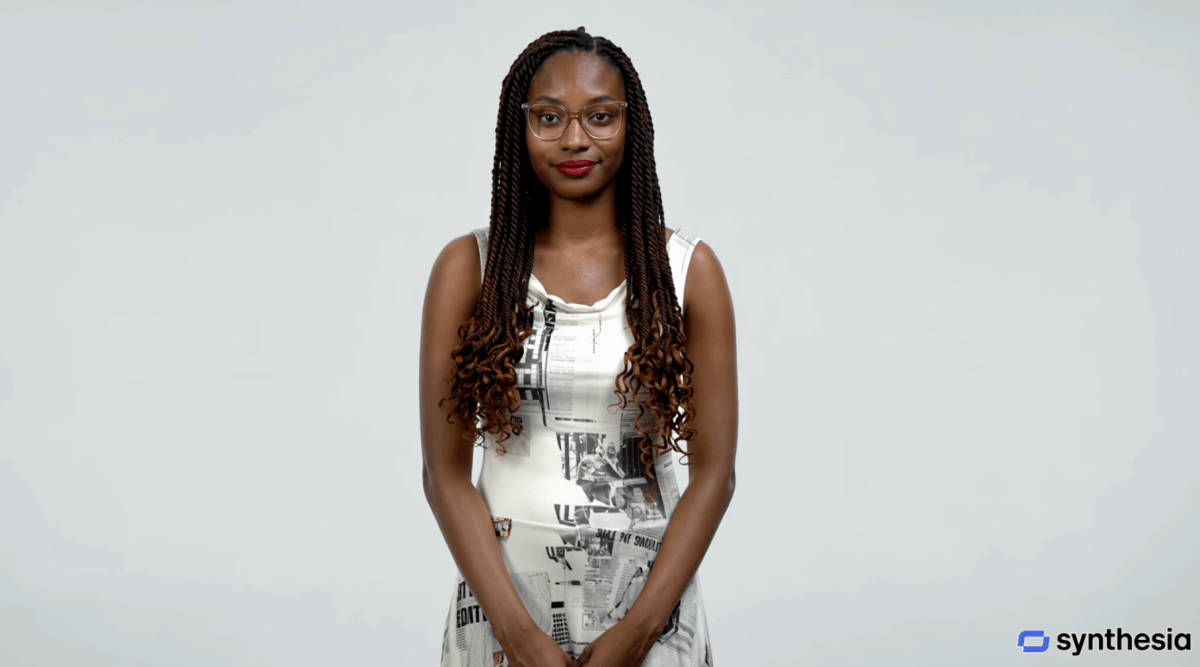
This summer, I was taken aback when Alexandru Voica, the head of corporate affairs at Synthesia, a video-generation startup, shared a link to the latest member of their PR team. It was an interactive virtual avatar of himself, designed to respond to typical press inquiries about Synthesia, such as its operations and functionalities. Just the day prior, I participated in a panel where PR professionals asked whether I was comfortable with AI-generated text pitches. However, Alexandru’s avatar transcended that — it struck me as the ultimate application of AI in PR.
In September, I received an invitation from Synthesia to explore their new office in New York. Formerly headquartered in the U.K., Synthesia has emerged as a leading digital avatar startup, joining the ranks of competitors like D-ID, HeyGen, and Colossyan. Earlier this year, it achieved a remarkable $4 billion valuation and disclosed that it surpassed $100 million in annual recurring revenue the previous year.
Synthesia enables businesses to create engaging training videos featuring AI avatars and has recently introduced a feature called Roleplay Sessions, allowing employees to practice sales pitches with an AI avatar that interacts with them and assesses their performance.
When I attended the grand opening of their new office and they offered me a chance to have my own AI avatar, I immediately agreed. Naturally, I wanted my own digital counterpart. My outfit that day was stylish, and my hair was perfectly styled.
Before encountering my digital twin, I had felt indifferent towards avatars; however, I recognized their future role in our online interactions. I had heard about individuals on Instagram crafting avatars resembling themselves to create social media content. I find the concept quite captivating, which perhaps explains my eagerness to showcase my digital twin to you. This marks the first time Synthesia has created a digital avatar for a journalist (or anyone else, apart from Voica). It is specifically programmed to respond to inquiries related to my article about the propensity for venture-backed startups to engage in higher fraud rates than those without VC backing.
To begin, simply click “start in a new window.”
You can inquire about:
- What prompted me to write this article?
- What is the topic of the research paper?
- What conclusions did the researchers draw?
In order to create this avatar, I stepped into a small film studio within Synthesia’s office, where they took countless photos of me and recorded a two-minute audio sample of my voice. I had to grant permission for these avatars to be created, and thus, digital Dom came into existence. They designed a personal avatar for me (which simply reads any script I provide) — available both with and without glasses — along with two interactive avatars (capable of responding and processing my input), also in both styles.
We selected an article to inform the training of the interactive avatar, after which one of the teams developed my interactive avatar, utilizing a mix of voice-to-text, video, language, and text-to-voice technologies. My avatar’s technological foundation utilizes Synthesia’s proprietary voice and video models, though the company permits clients to opt for alternatives from other providers like Cartesia, ElevenLabs, Google, or OpenAI. Organizations can also select their preferred cloud for hosting their avatars or choose to have Synthesia manage hosting services.
The voice-to-text system converts spoken words into text, the agentic language model interprets text and can take corresponding actions, the text-to-voice model converts responses to audio, and lastly, a video model (developed by Synthesia) animates the avatar while it speaks.
In total, Synthesia develops three categories of products: a video-creation and distribution platform featuring traditional avatars, where a script is typed and repeated by the avatar; an agentic platform called Sessions where users can engage with avatars in surveys or role-play; and an API platform enabling users to integrate Synthesia’s video and voice technologies with other services to create interactive avatars or diverse products.
Creating my avatars took the Synthesia team a few days. I began with the personal avatars and wrote a simple script to assess how my AI voice sounded. I had it discuss the arrival of fall in New York, which is my favorite season. The voice was fairly accurate, and I was pleased it didn’t capture the hoarseness I experienced while recording my voice sample.
I presented it to some non-tech-savvy friends, who found it both intriguing and unsettling.
Afterward, I revealed my interactive version, which operates deterministically, meaning it can only respond with the information it was trained with. In this instance, that was my venture fraud article. I tried asking where I was prior to joining TechCrunch and what part of New York I resided in, but each inquiry reverted me back to the story.
My friends felt the voice didn’t closely resemble mine, and they thought the likeness was not nearly as strong as the personal avatar, yet it was still sufficiently close to evoke some discomfort. My mother deemed it “amazing,” which is quite a compliment from her. She and my father attempted to ask it questions that only they would know about me — but the model repeatedly redirected them to the venture fraud article.
“I don’t recall giving birth to two of you,” she joked after testing the model.
This experience prompted me to ponder the future of journalism. Would people accept news presentations delivered by an avatar? One investor immediately responded no. There’s considerable backlash today against AI-generated content saturating social media and other news platforms. However, others I spoke with were uncertain. Could avatars supplement — or even substitute — journalists? Would CEOs prefer to interact with an AI avatar representing a journalist instead of a human?
What I value about my profession is the connection with individuals, crafting stories, and diving into new topics. Yet, trust remains the cornerstone of journalism. That aspect seems unlikely to be outsourced to AI.
Beyond journalism, I believe the concept of cloning oneself could be enticing. No more scrambling to catch up on work after a holiday or vacation, as a version of you could always be present, responding to inquiries.
We will have to observe the evolution of avatar usage in corporate America. However, now that I have my own, I carry a mix of emotions. Once I overcame the initial novelty, I scrutinized my avatar closely after it ceased speaking and waited — for what, I cannot specify. Perhaps I anticipated it to blink. Or to utter something new, or smile, or simply to indicate it knows.
Since my digital twins are deterministic, they will never do that. But it’s easy to see how someone might spiral into a sense of AI psychosis with one that operated nondeterministically, driven by a chatbot that could freely elaborate.
I mentioned to one investor that regardless of what lies ahead for digital twins, my generation, Gen Z, likely won’t acclimate to them. They feel like something out of science fiction: Everything we’ve envisioned in movies is now a reality. Nevertheless, I find digital avatars less unsettling than humanoid robots. At least with an avatar, if things get odd, I can simply log off.
Until then, here is my personal avatar delivering the highlights of the top stories on our website this week!
Should you make a purchase through links in our articles, we may receive a small commission. This will not influence our editorial independence.