Meta is experimenting with VR glasses once more, this time incorporating more IMAX.

Meta is experimenting with VR glasses once more, this time incorporating more IMAX.

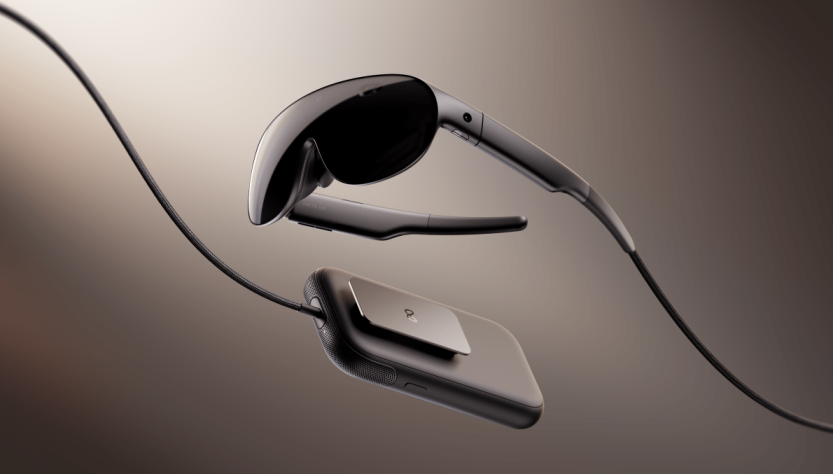
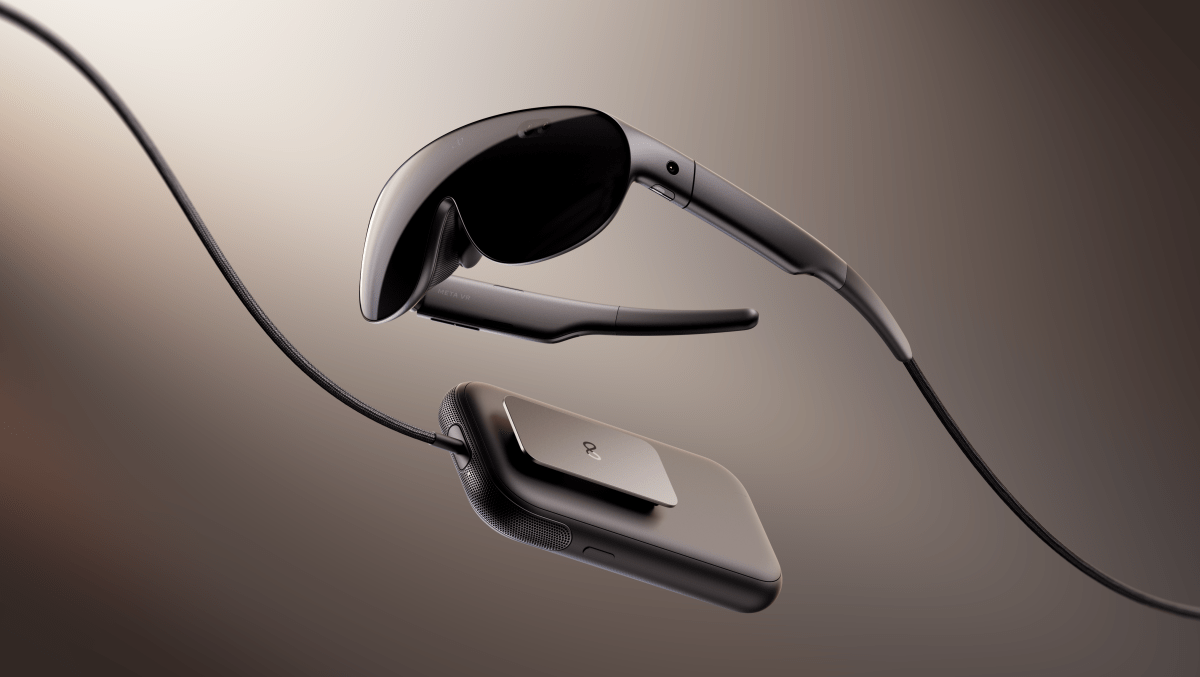
Meta is revitalizing its efforts to establish virtual reality as a staple. During its Connect event on Wednesday, the firm revealed Meta VR Glasses, its latest advancement in the VR sector, which will be released next spring at a starting price of $1,299.99.

These glasses appear to hold considerable promise, owing to a distinctly lighter design and a variety of new entertainment integrations — including alleged compatibility with IMAX.

Just before showcasing them, Meta CEO Mark Zuckerberg reminded attendees that the company had previously opted to shift its priorities away from the Metaverse and produce fewer VR gadgets until significant advancements were achieved.

“This is a significant advancement,” he asserted before demonstrating the glasses. “Many concur that augmented reality glasses featuring holograms will undoubtedly play a role in the future, but we’ve also learned that many are less keen on wearing a headset. Thus, we have developed a new type of VR device that provides the same enchanting sense of presence and immersion with high-definition displays and views of the surrounding world in a glasses form factor for the very first time.”

Meta claims that the glasses are five times lighter than the Meta Quest 3 — and they closely resemble standard eyewear rather than the hefty headsets previously released by the company. The frames are crafted from magnesium alloy, and the glasses are powered by Qualcomm’s Snapdragon Reality Elite processor. They connect to a computing puck that also serves as a battery, which users can conveniently slip into their pocket for on-the-go use.

The glasses are primarily designed for entertainment. Integrated micro-OLED panels within the lenses create what Meta refers to as a 5K Infinite Display with 37 pixels per degree, alongside support for Dolby Vision and Dolby Atmos audio. Users will have the ability to download and view movies.

One of the more distinctive aspects of the glasses is that Meta is marketing them as an excellent means to enjoy films captured in IMAX.

Indeed, the company labels the glasses as the “first IMAX-enhanced certified VR device ever” and claims they will be one of the few avenues to experience the expanded aspect ratio that characterizes IMAX’s unique high-resolution viewing experience.

Additionally, the glasses support 3D content, including films that incorporate a user’s physical environment into their viewing experience. Meta states that it has partnered with Disney, and in November, Disney+ subscribers will be able to stream select movies — including certain Marvel titles — in 3D.

Meta indicates that users will have the opportunity to watch particular films and have their surroundings “transformed with immersive environments, dynamic effects, stunning 3D visuals, and spatial audio” — essentially converting the film into a VR gaming-like experience.

The glasses will also feature Meta AI — its automated virtual assistant — integrated, meaning users can converse with the glasses and automate various tasks through voice commands. For example, Meta states that you will be able to initiate a movie simply by asking your glasses to do so. Alternative command methods include hand gestures.

When you purchase through links in our articles, we may earn a small commission. This doesn’t affect our editorial independence.
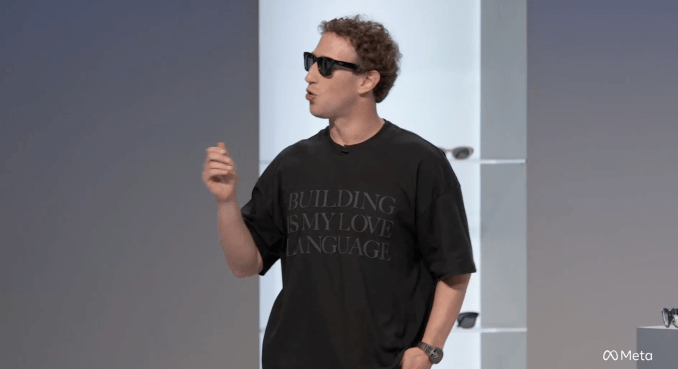
Meta unveils AI glasses that operate without a camera

Meta unveils AI glasses that operate without a camera

Reaffirming previous news, Meta unveiled its inaugural set of camera-free AI glasses, the awkwardly titled Ray-Ban Meta Audio, during its Connect 2026 conference on Wednesday. Crafted to address concerns about potential misuse of AI glasses, which earned them the nickname “pervert glasses” from some quarters, the new offerings will be audio-exclusive, enabling users to enjoy music and podcasts, make calls, translate conversations, and interact with Meta’s AI assistant, Muse.

The design of the glasses comes from Meta’s collaborator in its AI hardware initiatives, EssilorLuxottica, with a starting price of $349.

Currently, Meta provides a diverse array of AI glasses in different styles, colors, and features. The audio-only version might assist the brand in recovering some of the reputational harm inflicted after critics highlighted instances of individuals, often men, using AI glasses to record videos without the consent of those filmed. Meta sought to resolve this concern by implementing a feature that would disable the camera if the LED light indicating recording was tampered with. Yet, the uncomfortable nature of the product persisted.

This new device could potentially attract more users for that reason, while also serving as a response to Apple’s Siri-enabled AirPods.

“Once you get accustomed to high-quality audio, it’s something you desire all the time, correct?” Meta CEO Mark Zuckerberg stated during a keynote on Wednesday, mentioning that after developing the concept, the company recognized it could create an entirely new category of glasses centered around audio.

Image Credits:Meta/Screenshot /

Since they don’t incorporate cameras, the glasses are lighter than Meta’s other versions, weighing merely 43 grams. They also feature adjustable temple tips, interchangeable nose pads, overextension hinges, and a battery life of up to 12 hours per charge, according to Meta. With the charging case included, the battery life can extend to 48 hours.

Available in various colors and options — totaling 23 color and lens combinations — the glasses will be offered in two new styles, a retro “Clubmaster” Ray-Ban design and “Burbank,” which is characterized as a “classic, timeless, rectangle shape.” Additionally, similar to other Meta glasses, users can order them with their optical prescriptions, if required.

The glasses will be up for preorder on October 13, as noted by the company.

Alongside these glasses, Meta introduced its next generation of AI glasses (the models with cameras), the Ray-Ban Meta (Gen 3). In addition to the Ray-Ban Meta Wayfarer, two new styles will be available, the Aviator and Zena — the latter featuring a more cat-eye frame design. These will come equipped with a 12 MP camera that supports 3K Ultra HD video, a six-microphone array, and up to nine hours of battery life.

The glasses launched by Meta with EssilorLuxottica will see an expanded range of styles and colors, as well as a new collaboration with singer Lisa, which follows the prior brand partnership with Kylie Jenner. Additionally, Meta mentioned that the glasses will be rolled out to more countries worldwide.

Naturally, all of Meta’s AI glasses will include access to its enhanced personal AI assistant, Muse.

The company also hinted at forthcoming updates, such as support for Dolby Atmos Capture, a function that selects the best image from a series of frames, options for landscape or portrait modes, hearing enhancements for individuals with hearing loss, more comprehensive responses, alternative audio modes, customizable settings, and a feature referred to as “private processing” that Meta asserts will prevent the company from accessing your data.

When you purchase through links in our articles, we may earn a small commission. This doesn’t affect our editorial independence.
Vogue showcased robots on the runway at Vogue World, and the audience was not pleased

Vogue showcased robots on the runway at Vogue World, and the audience was not pleased

This week, Vogue World concluded its Milan edition featuring a group of robots—potentially a glimpse into what attendees can expect when the event arrives in San Francisco next year.

Vogue World is the magazine’s yearly traveling spectacle, now in its fifth edition: part fashion show, part celebrity exhibit, part variety show, part advertisement sales opportunity, staged in a different locale each time. It has previously taken place in New York, London, Paris, and Hollywood. This year’s Milan installment was promoted as a homage to Italian craftsmanship and the “human element” amidst a technological age, making the subsequent events rather odd.

In the segment titled The Age of Intelligence, humanoid robots crafted by the Chinese company Unitree walked into the Galleria to the tune of Gigi D’Agostino’s “L’Amour Toujours.” They waved their arms to encourage applause from the spectators. One even performed a lasso trick. They were unadorned. Alessandro Michele, the creative director of Valentino, was seen with a distressed expression that rapidly went viral.

I haven’t seen any discussion regarding the actual fashion showcased at Vogue World Milan. Instead, it’s all about the robots. (These robots have gained global attention for their dance abilities and mishaps.) Similar robots also appeared on the runway at London Fashion Week, currently ongoing.

Earlier this year, Vogue attracted attention when it announced that the next edition would take place in San Francisco, arguably one of the least fashionable cities in the U.S. The timing is not accidental. Anna Wintour has increasingly aligned herself with the technology magnates of today, and Vogue World Milan was partially sponsored by Meta Glasses, with further support from OpenAI.

This was one of those instances that highlights how disconnected the tech world can be, and that not everyone endorses the swift uptake of new technologies, including Vogue cozying up to the symbols of the excessively wealthy—who are becoming even more affluent—during a cost-of-living crisis. This is before considering AI, mass surveillance, job displacement, and the energy crisis, all overseen by the same elites. For some, a robot on the runway is further evidence of the current world’s issues.

“I’m frustrated by the celebrities applauding the entire spectacle,” one tech entrepreneur messaged me on Instagram. “It’s disturbing. People are genuinely losing jobs and livelihoods because of these technologies. They should stop promoting it. What are they even showcasing? Headphones?” 

A fashion journalist friend simply replied “No,” when I sought opinions on the robots and Vogue World San Francisco. Jason Johnson, founder of Culture Impact Agency, mentioned that Vogue has been attempting to foster ties with Silicon Valley for at least a decade, recalling when Jony Ive co-hosted the Met Gala in 2015. The presence of dancing robots at Vogue World Milan seemed inevitable, as does the upcoming Vogue World San Francisco and Jeff Bezos along with his wife, Lauren Sanchez, gracing the Vogue wedding cover and co-hosting the 2026 Met Gala. 

“Publications are discovering new avenues to generate revenue, and tech is financially backed,” he shared with me. “Vogue possesses the cultural impact and access that those tech individuals desire.” Ultimately, both parties benefit, he stated. 

Nonetheless, the manner in which Vogue is approaching this seems oddly unnatural. 

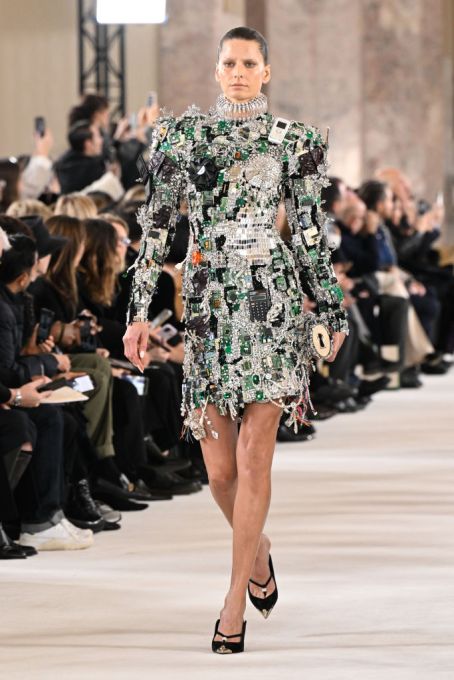
The collection that occupies my thoughts daily and should be displayed at Vogue World San Francisco. Image Credits:WWD / Contributor / Getty Images

Muna Ikedionwu, founder of MKEDI, a strategy firm for early-stage startups, remarked that what intrigued her most about the robots is that they do not fully encapsulate the innovation and progress underway in the creative technologist realm. “I’ve witnessed remarkable examples of engineering and AI influencing fashion, shaping design and art,” she remarked, adding that robots parading down the runway merely skim the surface of current developments at the confluence of fashion and technology.

She highlights the artist duo AA Murakami, who designed Olympian Eileen Gu’s bubble dress at this year’s Met Gala. They are fashion creators and engineers, Ikedionwu noted, referring to a presentation she recently attended about creating an “everlasting bubble.” They are at the forefront of pioneering “ephemeral technology,” she stated, “this concept of technology and innovation that resonates with the transient nature or the temporariness of art, humanity, and the soul.” 

Admittedly, when viewed in this context, the robots did seem quite dull. Whenever I contemplate the crossroads of fashion and technology, the Spring 2024 Schiaparelli collection comes to mind, featuring a robot baby constructed with Swarovski crystals and a gown made from vintage tech such as PC microchips. (I once joked about wearing that gown to Disrupt; see image above.) 

Ikedionwu ponders if this robotic performance was an attempt to ease the general public into the idea of technology merging with fashion, a combination that has been quietly developing for years. If that was the goal, it seems it fell flat. However, perhaps Vogue World is reserving all the exciting elements for San Francisco.

When you purchase through links in our articles, we may earn a small commission. This doesn’t affect our editorial independence.

Anthropic claims that its biology lab has discovered something substantial.

Anthropic claims that its biology lab has discovered something substantial.

Recently, Anthropic disclosed that it has established a wet biology laboratory in the Bay Area where it utilizes its AI models for conducting physical experiments. This week, the AI powerhouse revealed that this lab has purportedly made a significant finding: a novel enzyme “system” possessing certain “characteristics akin to CRISPR,” as per Anthropic’s description.

CRISPR represents a natural defense mechanism employed by bacteria to combat viruses, which has transformed into a widely-used gene-editing technology among researchers.

Essentially, Anthropic claims the discovery entails an unidentified enzyme system concealed within the DNA of bacteriophages, viruses that infect and proliferate within bacteria. Researchers at Anthropic assert this system operates similarly to CRISPR in that it can “carry out processes like cutting, copying, and pasting DNA.”

The broader research community will need to assess how substantial or groundbreaking this finding truly is. Anthropic’s CEO Dario Amodei acknowledged that the discovery built upon the efforts of prior researchers, referencing that a Stanford team had previously identified a system “that shares some similarities with the one Claude uncovered,” he tweeted on X.

However, Amodei and Anthropic are not solely focusing on the finding. They are highlighting that it was discovered “primarily, though not exclusively, by Claude,” the CEO noted.

On one hand, this is remarkable. The lab was only launched this spring (although Anthropic chose not to specify how many months it has been operational). Achieving a discovery within such a short timeframe would be impressive; the team mentioned that it took Claude merely 21 hours of dedicated work. Claude sifted through data using approximately 950 agents that processed 210 million tokens.

Nevertheless, the announcement that Anthropic has been engaged in biology experiments follows AI CEOs, including Amodei, publicly expressing that models have grown so powerful, and potentially hazardous, that the industry must decelerate and implement safety testing protocols. This comes after a few of his employees publicly stated earlier this month that AI poses the risk of causing mass harm.

Amodei himself has stated that one of his greatest concerns is that AI could be exploited for bioterrorism. However, he also holds the belief that AI will “eliminate the majority of diseases within 5-10 years,” he wrote. Hence, Anthropic has evidently concluded that the potential benefits outweigh the dangers.

In light of this, perhaps the most significant revelation in this update isn’t the discovery itself, but that the biology lab has not yet unleashed Claude fully. The hands-on experiments were conducted by human researchers.

“Our laboratory, situated in the Bay Area, resembles a conventional molecular biology lab. Our research strictly involves the lower biosafety risk levels (BSL-1 and BSL-2), and we do not engage with pathogens that can infect humans. All laboratory work is conducted by human scientists.”

Moreover, it remains true that AI-enhanced biological research is not solely the domain of Anthropic. Researchers from Stanford recently released a study regarding their efforts with LLMs and CRISPR. Researchers at UC San Francisco have utilized AI to design enzymes from the ground up. Google introduced its first AI-driven biology research instrument, AlphaFold, back in 2020. Thus, AI has evidently penetrated biological research beyond the AI labs actively pursuing it.

Nonetheless, Amodei has not dismissed the possibility of a fully automated biology lab in the future. “Eventually, it might even become feasible for Claude itself to safely conduct experiments by autonomously manipulating lab equipment, with adequate safeguards in place, but we are not implementing that today,” he mentioned.

.

When you purchase through links in our articles, we may earn a small commission. This doesn’t affect our editorial independence.

If Amazon doesn’t understand how to reduce carbon emissions, then who does?

If Amazon doesn’t understand how to reduce carbon emissions, then who does?

The head of sustainability at Amazon stated on Tuesday that the company is uncertain about how it will meet its net-zero carbon emissions target by 2040.

“We are still making efforts to reach that goal,” Kara Hurst mentioned at an Axios event, later remarking that she won’t claim, ‘We know all the methods we are going to use to accomplish this.’”

This acknowledgment was both candid and pragmatic. It is also somewhat disheartening. If Amazon lacks a strategy for decarbonization, then who among them does?

Amazon ranks among the largest corporations globally, with revenue growing 12% last year to reach $717 billion — roughly equivalent to Ireland’s economy. Its expansion exemplifies the shift in power from governments to a handful of corporations, as noted by UN Secretary General António Guterres.

As power shifts, so does accountability. The pertinent question is, how much responsibility falls on Amazon?

“This is not a matter of companies versus governments,” Hurst stated in a written response to TechCrunch after the event. “Addressing climate change at the scale required necessitates both, and collaboration between them is essential.” She further added, “We lead where we can.”

Indeed, Amazon has been proactive. In her discussion yesterday, Hurst highlighted that the company has been “one of the largest buyers of clean energy worldwide for several consecutive years,” boasting a portfolio of 42 gigawatts. She also mentioned that Amazon has lowered its carbon intensity, defining the amount of pollution created per dollar of revenue, although this assertion is contingent on the timeframe. Carbon intensity increased last year compared to 2024, even while remaining lower than levels seen in 2022.

As a vast enterprise, Amazon’s carbon emissions span nearly every economic sector, from aviation and AI to agriculture and construction. To fulfill its ambition, the company requires suppliers from all these sectors. “We cannot do this in isolation,” Hurst emphasized at the Axios event.

The company recognizes that its pledges are its own. “We are committed to The Climate Pledge, aiming for net-zero carbon by 2040. That commitment remains unchanged,” Hurst informed TechCrunch.

However, Amazon has made decisions that compromise its authority on this matter. Earlier this year, an investigation uncovered plans for the company to construct a 7.65 gigawatt natural gas power plant to supply an AI data center campus. The project’s 35 turbines could emit up to 33 million tons of carbon dioxide yearly, establishing it as the largest single source of such pollution in the U.S.

With rare exceptions, companies tend to give precedence to revenue growth over climate commitments. For a business like Amazon, which runs the largest cloud service globally, AI serves as a significant revenue generator that is hard to ignore.

The climate technology sector has been optimistic that as clean energy becomes more affordable, market forces would lower carbon emissions. While there have been a few success stories, the rush toward AI has illustrated the limitations of this approach. Even Amazon, a prominent player in this arena, has made substantial investments in natural gas, effectively suggesting that climate change is an issue for future executives to address. Does that sound familiar?

When you make purchases through links in our articles, we may receive a small commission. This does not influence our editorial independence.

VC firm Bessemer has an additional $5.75B to allocate towards (what else?) AI

VC firm Bessemer has an additional $5.75B to allocate towards (what else?) AI

Bessemer Venture Partners revealed on Wednesday that it has acquired $5.75 billion through two new funds to enhance its investments across the entire AI ecosystem. The firm, which has supported businesses such as Anthropic, Cognition, Legora, Perplexity, Ramp, Shopify, and Waymo, allocated $1.75 billion for seed and early-stage investments, while the remaining $4 billion is set aside for growth startups.

Bessemer has garnered a reputation as a prominent venture capitalist in the SaaS landscape, with a unique ability to identify successful enterprise firms, including Box, Docusign, and Gainsight. Since 2022, it has invested in over 260 AI-focused companies. To date, the firm claims to have put $3 billion into AI-oriented startups, encompassing those centered on computing, infrastructure, foundational models, developer tools, app-layer ventures, and autonomous technology.

Currently, Bessemer champions all aspects of AI as the opportunity of a lifetime—a widespread belief, until the next major technological revolution arrives, naturally.

“AI-native companies are growing more rapidly than any technology segment we’ve previously supported,” stated Bessemer Partner Byron Deeter in the announcement regarding the funding. VC firms must also continue to bolster their financial reserves, Deeter informed Bloomberg, as the trend of companies remaining private for extended periods has become “a lasting structural change.”

Enveda obtains $311M to advance additional nature-sourced AI medications into clinical studies

Enveda obtains $311M to advance additional nature-sourced AI medications into clinical studies

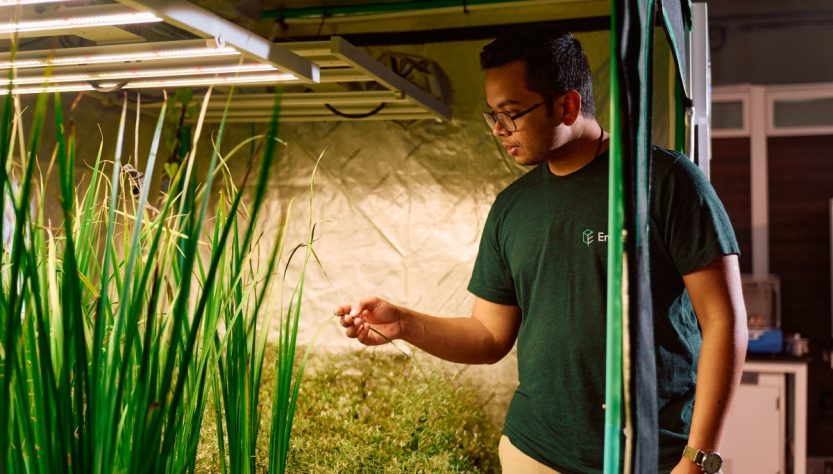
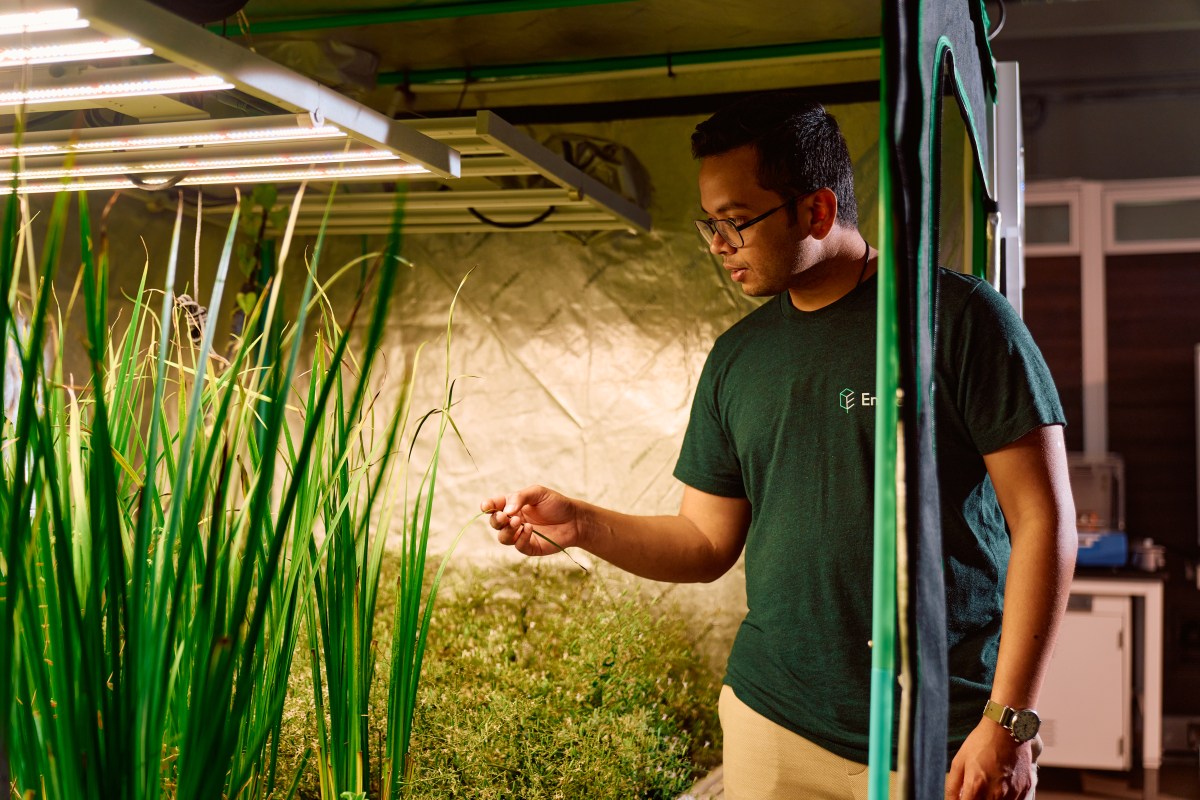
Enveda, a biotechnology firm leveraging AI for natural drug discovery, has successfully secured a $311 million Series E funding round, achieving a valuation of $2 billion. This new investment, spearheaded by Catalio Capital Management alongside participation from Iconiq and others, represents a doubling of Enveda’s valuation over the past year.

Enveda operates on the premise that significant therapeutic agents can be derived from plants and microbes instead of being artificially created in laboratory settings. Founded in 2019 by Viswa Colluru, a former employee of Recursion Pharmaceuticals, Enveda aims to expedite the identification of these innovative drugs through AI and additional methodologies.

Although AI has yet to yield any drugs approved by the FDA, Enveda is part of the emerging cohort of companies progressing AI-generated candidates into clinical trials involving humans. The startup is actively evaluating multiple drugs in patients, including one aimed at treating severe skin issues and another intended to aid in sustaining weight loss after discontinuing GLP-1 therapies.

Modal Motors is aiming to completely exclude China from the electric motors market.

Modal Motors is aiming to completely exclude China from the electric motors market.

Recently, it appears that everyone is discussing the idea of revitalizing manufacturing in the United States, particularly concerning advanced technologies such as drones and robotics. Michael Van Steenburg believes he is on the forefront of this movement.

Van Steenburg has dedicated the previous ten years to producing a variety of electric motors in the U.S. and North America, and he now aims to repeat this with his new venture, Modal Motors. This time, he plans to eliminate rare-earth magnets altogether, seeking to further distance the U.S. from China’s supply chain.

As one of the participants in Startup Battlefield 200 who will present at TechCrunch Disrupt next month, he views this as a critical pitch to deliver.

“China has already demonstrated its power a few times,” Van Steenburg commented, alluding to the country’s limitations on access to rare-earth materials.

Other firms are also making efforts to establish electric motor production and supply chains in the U.S., but Van Steenburg contends they are taking the wrong approach by continuing to depend on rare-earth magnets. He noted that domestic availability of these materials is still years away.

“Others are ‘reshoring,’ [but] they’re essentially replicating Chinese motors and simply manufacturing them in the U.S. They’re banking on the U.S. rare-earth magnet system picking up speed quickly enough,” he remarked. “It will still take a considerable amount of time before they can truly substitute for China.”

Modal Motors is developing two products in advance of Disrupt. The first is a compact electric motor designed for drones that is also suitable for fans, blowers, and even actuators. It’s engineered to “reduce mass while maximizing torque density and efficiency,” as stated on the startup’s website.

The more innovative design is what Modal dubs the “Hybrid Enigma Drive,” a planar — or flat — electric motor that can fit in tighter spaces.

Van Steenburg is leveraging decades of expertise in the automotive sector to create these motors and prepare them for customer use. However, there’s also a twist in the work he’s doing to make Modal Motors’ products a viable China-free alternative; in the late 1990s, he was involved in a hybrid gas-electric drivetrain initiative that China aimed to incorporate into its so-called “People’s Car.”

“It’s somewhat amusing,” he said, reflecting on that experience and the significant changes in the world since then. What remains constant, he remarked, is his outsider perspective and steadfast belief in tackling difficult challenges.

“I often remind people that the countdown began 25 years ago, and throughout that entire period, I’ve observed a slow-motion disaster as China has traveled the globe, acquiring mines, securing mineral rights, engaging in various activities, and gradually monopolizing the entire rare-earth supply chain,” he stated.

When you purchase through links in our articles, we may earn a small commission. This doesn’t affect our editorial independence.

Disney+ and Hulu contribute to the increasing trend of streaming inflation.

Disney+ and Hulu contribute to the increasing trend of streaming inflation.

The cost of streaming services is rising again. Disney is the most recent media conglomerate to increase charges for its streaming offerings, contributing to an expanding trend in the sector. These hikes occur approximately a year after Disney’s last significant price adjustment for streaming.

Disney is boosting the price of its ad-free Disney+ and Hulu bundle to $21.99 monthly, up from $19.99, while each ad-free standalone plan will now be $21.49 per month, an increase from $18.99. Additionally, the company is lifting the fees for its ad-supported Disney+ and Hulu standalone plans to $12.49 each month. 

The updated prices are shown on the support page for Disney+. Bloomberg was the origin of the report regarding these modifications. 

Disney+ and Hulu are not isolated cases. Streaming services have been gradually raising prices consistently over the past few years. Peacock and Apple TV also implemented price increases in August, while Netflix raised its prices earlier this year.

Upon its inception in 2019, Disney+’s basic subscription started at $6.99 per month. Since then, the service has incrementally distanced itself from that introductory price as Disney works to make streaming a lucrative segment of its entertainment portfolio.

The recent price hikes happen as streaming continues to be a vital component of Disney’s overall business. In its third-quarter 2026 financial report, Disney disclosed that revenue from entertainment streaming via Disney+ and Hulu surged 11% to $5.5 billion, propelled by subscriber growth and the effects of previous price adjustments.

Simultaneously, Disney seems to be investigating new avenues for enhancing its streaming services beyond merely elevating subscription costs.

Reportedly, the company is considering introducing a free tier for Disney+. This move could position Disney in direct competition with platforms like YouTube and Tubi, which have been capturing an increasing percentage of viewers’ time.

Earlier this month, Disney+ launched “Playlists,” a fresh feature aimed at helping users to uncover and continuously engage with selected content.

On the technology front, Disney is making adjustments too. The company recently appointed Karandeep Anand as its inaugural chief technology officer. Anand previously served as the CEO of Character.AI, a firm Disney had accused of violating its intellectual property rights.

When you purchase through links in our articles, we may earn a small commission. This doesn’t affect our editorial independence.
The traditional cybersecurity model is collapsing

The traditional cybersecurity model is collapsing

Loading the player…

As the issue of AI safety and rogue agents continues to dominate the headlines, it’s not surprising that cybersecurity stocks are experiencing a rise, nor that investors are channeling significant funds into startups that are working on the next wave of security solutions for an AI-inclined world. We’re witnessing companies like Instinct and Simile attract nine-figure investments and valuations that would have seemed unrealistic a few years back.

At the forefront of this evolving landscape is Shardul Shah, a partner at Index Ventures who has devoted nearly two decades to investing in cybersecurity and enterprise software — which includes six consecutive funding rounds in the cloud security startup Wiz, acquired by Google for $32 billion earlier this year, marking one of its largest acquisitions ever.

In this episode of TechCrunch’s Equity podcast, Shah speaks with Rebecca Bellan about why he believes that traditional, human-mediated security is no longer sufficient, and why Index continues to invest in AI-native security startups at stages that historically required much more substantiation.

Subscribe to Equity on YouTube, Apple Podcasts, Overcast, Spotify, and other platforms. You can also follow Equity on X and Threads, at @EquityPod.