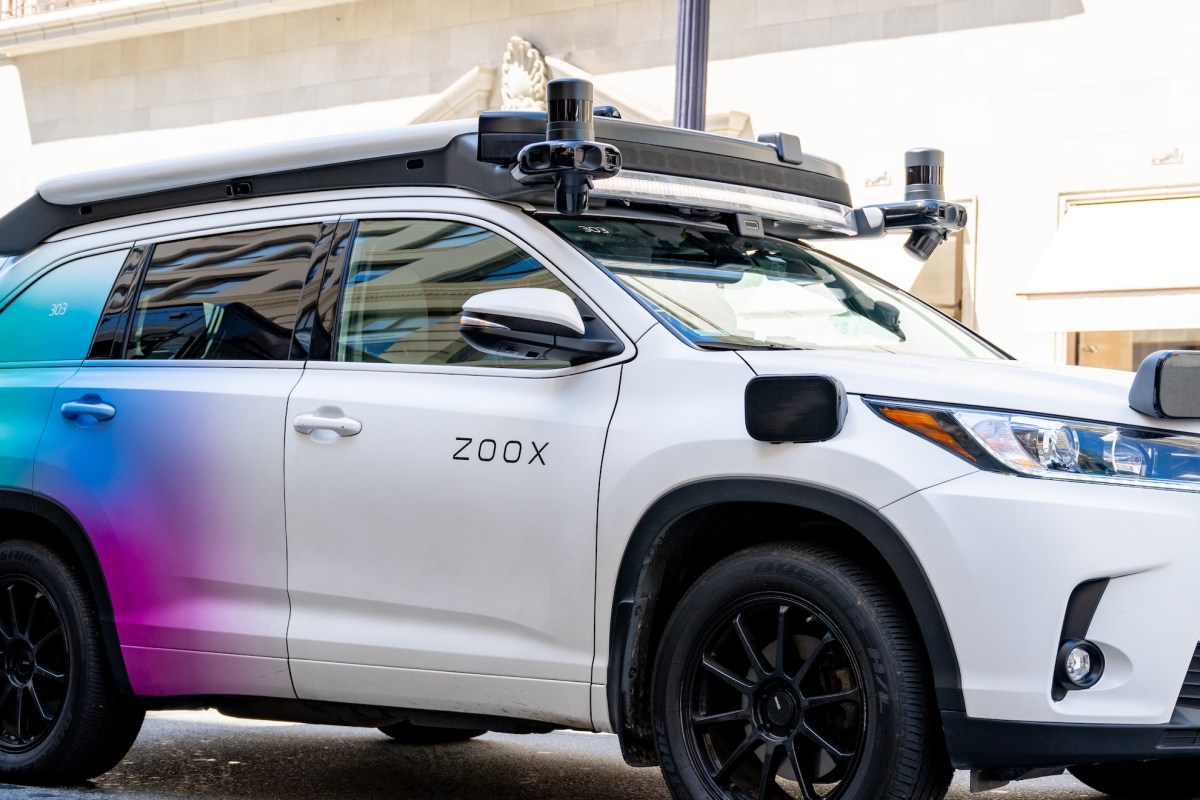
Zoox halts Atlanta test fleet after employees report symptoms of toxic gas exposure

Zoox halts Atlanta test fleet after employees report symptoms of toxic gas exposure

Zoox has halted its autonomous vehicle testing operations in Atlanta after safety drivers might have been exposed to gases such as carbon monoxide, carbon dioxide, or hydrogen sulfide inside the vehicles last month, as per TechCrunch’s findings. The incidents prompted one employee to lodge a complaint with the Occupational Safety and Health Administration, which has initiated an investigation and instructed Zoox to look into the exposures. 

Potentially 40 employees were exposed to gases in the vehicles, according to a letter from OSHA to Zoox that TechCrunch accessed, although the Amazon-owned firm claims the actual number is lower.  

Zoox reinstated at least one group of workers into a different vehicle after one of them vomited and the others reported symptoms of exposure, a contractor informed TechCrunch. He mentioned that this second vehicle might have also had toxic gases, as the workers experienced further symptoms later that day. 

“They made us go right back to work after we said we were throwing up,” Jay Davis, a contractor who fell ill in mid-August, recounted to TechCrunch. “I reached out to HR, explained the situation, and expressed that it’s wrong for y’all to send us [back out].” 

Workers noted exposure symptoms and unusual odors for much of last month until August 22, when someone phoned 911 for an employee who fell ill. The facility located in northwest Atlanta has been running at limited capacity since, with the test vehicles isolated while Zoox examined the exposures, according to two staff members. The purpose-built electric robotaxis from Zoox remain unaffected.

TechCrunch interviewed Davis, who submitted the OSHA complaint, along with one current employee and two former employees for this report. The other three were granted anonymity to address sensitive company issues and due to fears of retaliation. 

These health concerns arise as Zoox expands into new cities and enhances its operations in locations like Las Vegas and San Francisco, aiming to rival the market leader, Waymo. This rapid expansion has endangered some safety monitors. As previously reported by TechCrunch, contractors have suffered injuries due to sudden braking and evasive maneuvers in the Zoox test vehicles. Waymo has also documented similar injuries among its test drivers to OSHA.  

It remains uncertain which gases the Zoox employees encountered. Davis mentioned that he and two other sick coworkers were informed at the emergency facility that their symptoms aligned with carbon monoxide exposure. The OSHA complaint references potential carbon dioxide, or CO2, exposure. 

In a letter to OSHA dated September 10, which TechCrunch reviewed, Zoox stated it inspected its test vehicles for CO2 signs and replaced their 12-volt batteries. Malfunctioning batteries can emit hydrogen sulfide gas, which carries a “rotten egg” odor. Some employees who talked to TechCrunch noted they detected a similar smell in the vehicles. (After the publication of this article, Zoox informed TechCrunch that no battery damage or hydrogen sulfide gas had been found.)

Zoox identified 28 individuals who rode in six test vehicles that had an “unexplained odor,” according to its letter to OSHA. The company informed OSHA that 10 workers “voluntarily underwent medical evaluation” to “confirm whether any exposure had occurred.” In the letter, Zoox revealed it received only “one medical report indicating CO2 exposure.”  

Zoox communicated to TechCrunch that it hasn’t discovered carbon monoxide, which is odorless, in its vehicles. The firm mentioned consulting an external medical expert to investigate the situation, asserting that the only gas detected in the affected vehicles was CO2.   

In its OSHA letter, the company disclosed plans to install CO2 monitors in the vehicles and indicated to TechCrunch that these devices would also be able to identify other gases like carbon monoxide and hydrogen sulfide. OSHA has now closed its investigation. 

“The safety and welfare of our Zoox test fleet operators is our top priority in this situation,” the company conveyed to TechCrunch. “We are taking ongoing, necessary, and careful actions to investigate the reported incidents as needed and support any requirements from our operators. While we thoroughly review these reports, we have halted operations of our test vehicles in this area.”  

Known risks

Vehicles emit carbon monoxide and carbon dioxide while burning fuel. These gases can infiltrate a car if there is a leak in the exhaust system; they can also accumulate if a vehicle operates in a confined space for too long. This is a sufficiently common concern that the National Highway Traffic Safety Administration investigated Ford for six years regarding reports of carbon monoxide accumulation in its Explorer SUVs. 

In its letter to OSHA, Zoox claimed it has tested the vehicles’ exhaust systems for leaks and conducted a “smoke test” for cabin breach. It did not specify whether any evidence of either was found. The company also removed all the 12-volt batteries, checked them for damage, and replaced them. It did not inform OSHA if it uncovered any indications of battery damage. 

The company keeps its test vehicles operating for most of the day, partly to maintain sensor calibration and reduce the boot time of the onboard self-driving computer. Zoox employs an exhaust-capture system at its indoor locations — similar to what’s utilized to capture truck exhaust at fire stations — designed to reduce the accumulation of harmful gases.  

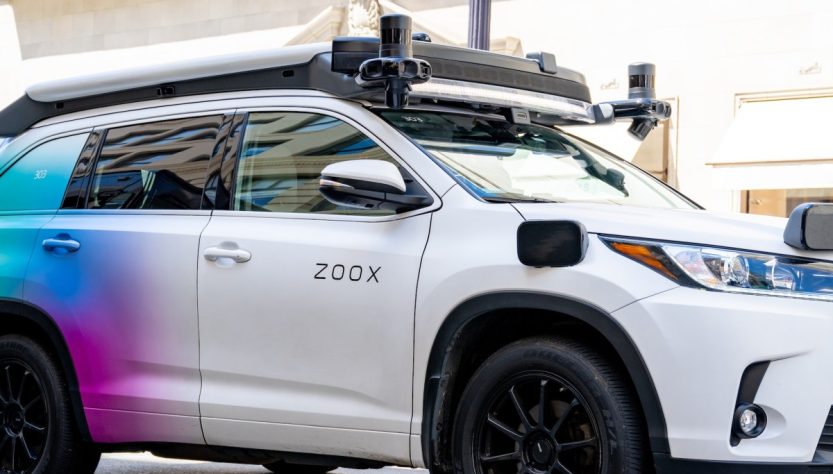
Zoox customizes the Highlander SUVs used in its testing fleet. Much of the modification focuses on adding sensors and an autonomy computer. However, the company also makes additional changes, including installing an interior “snorkel” above the central infotainment display that directs air toward rear-seat passengers, as reported by the employees to TechCrunch.  

Zoox asserts that it does not alter the ventilation systems in these SUVs. However, any modification to a vehicle can heighten the risk of gases seeping into the cabin. In the Ford inquiry, the National Highway Traffic Safety Administration stated in 2023 that the highest concentrations of carbon monoxide were detected in police vehicles that had added sirens, lights, and other alterations, which can lead to sealing problems. 

Zoox stands out among notable robotaxi developers because its test fleet vehicles utilize internal combustion engines. Waymo, Tesla, Avride, and Motional all deploy electric vehicles, which do not generate exhaust fumes. May Mobility has hybrid vans in its testing fleet, and Nvidia operates a limited number of gas and electric Mercedes-Benz sedans.   

“Everybody got quiet for some reason” 

Davis and the other staff indicated that individual safety monitors began reporting potential exposure symptoms to Zoox at the start of August.  

The incidents Davis experienced on August 14 were particularly serious since four employees were riding together in the SUVs — a procedure Zoox employs while training new staff members. 

Davis recounted to TechCrunch that early signs of issues appeared that morning. 

“Everything was fine. We were all laughing and chatting, just enjoying a normal workday, and then suddenly everyone got silent for some reason,” he remarked.  

Davis recalled a colleague asking if anyone else in the SUV felt “weird.” The group was nearing their scheduled morning break at 10 a.m., and so they stopped at a Chick-fil-A. As soon as they exited the vehicle, Davis reported that one coworker began vomiting, and he and the others felt lightheaded.  

They contacted the dispatcher at Zoox’s Atlanta depot, who arranged for the SUV to be towed back to base, he stated. Meanwhile, Zoox organized an Uber to return the employees to the depot.  

“As soon as we arrived back at base, we thought, okay, since we had been unwell and mentioned feeling lightheaded, we would have a lighter duty day. Just sit down and recover,” Davis expressed. “No, they assigned us to another [test car] and instructed us to go back to work.” 

After driving throughout the afternoon, Davis reported that he and his coworkers went to a food court, where he started vomiting after just a few bites of his meal.  

Davis then contacted a representative from HireArt, the third-party contractor technically responsible for Zoox’s test drivers in Atlanta. He conveyed that the representative provided him with a workers’ compensation hotline number and advised him to contact Poison Control. Three workers went to the emergency room, where they were assessed for carbon monoxide exposure.  

Davis informed that the emergency room physician did not recognize elevated carbon monoxide levels in his body. Nonetheless, he and the others were told their symptoms matched those of carbon monoxide poisoning.  

Workers continued to fall ill in the subsequent days, as reported by all four employees who spoke to TechCrunch. On August 22, one contractor became ill enough that someone at the depot dialed 911.  

It is unclear who placed the 911 call or what transpired with the ailing worker. Concerning the four employees who reported symptoms on August 14, Zoox instructed them to undergo what it labeled as a random drug test in the following days.  

This story has been amended with fresh information from Zoox.

When you purchase through links in our articles, we may earn a small commission. This doesn’t affect our editorial independence.


ChatGPT mobile application receives voice-driven agentic functionalities

ChatGPT mobile application receives voice-driven agentic functionalities

On Wednesday, OpenAI revealed that it is introducing voice-driven agentic functionalities for mobile, enabling users to initiate workflows such as document creation or email summarization.

Users with Plus and Pro subscriptions will have access to the Work tab on their mobile devices for tasks like document creation, email drafting, or summarizing Slack conversations, for example. These subscribers can engage in activities like website development, presentation creation, utilize the cloud browser, and access other features such as finances in ChatGPT. Conversely, Free and Go users will have the ability to work with plugins and connected applications.

OpenAI noted that ChatGPT’s voice interactions will produce more robust text outputs. Additionally, users will find it straightforward to toggle between text and voice modes. They can initiate a conversation while on the move and continue it on their desktop.

This feature comes at a time when more users are opting to use voice commands for AI assistance in handling intricate tasks.

In July, OpenAI introduced its latest conversational model, GPT-Live, which was later integrated into the desktop application, allowing users to vocalize commands for task completion in the Work tab or to develop applications in the Codex tab. This new release extends similar functionalities to the mobile application.

Recently, Anthropic improved the transition between mobile and desktop experiences and also unified its Cowork and Chat interface. However, OpenAI continues to maintain a distinction between chat and workspaces.

Even Americans who engage with AI daily are concerned about it.

Even Americans who engage with AI daily are concerned about it.

Individuals globally are increasingly relying on AI for routine activities, including finding recipes, completing homework, researching professional projects, or creating presentations.

However, frequent AI usage does not mean that users feel at ease with its broader implications: Approximately 68% of Americans who engage with AI daily express concerns about it, according to a recent Gallup survey, and anxiety regarding the technology is notably higher among less frequent users.

Emerging amidst significant discussions about the risks of AI, rapid advancements in AI safety, fears of AI malfunctioning, and allegations of monopolistic practices, these results complicate the idea that usage can be seen as a straightforward indicator of public enthusiasm for AI.

Initiated by Microsoft, the Gallup study currently gathers feedback from 37 nations, where researchers surveyed around 1,000 individuals in each country from April to July. Ultimately, the project aims to encompass 140 countries. Notably, India, with its vast tech user base, is not included in the current results, nor are Australia and Malaysia.

The results suggest that the U.S. ranks among the most apprehensive on an international scale, even as individuals in other regions anticipate that the technology will enhance their lives. According to Gallup, countries in the West, particularly the United States, demonstrate significant anxiety regarding AI — 74% of Americans have conveyed feelings of worry, while only 36% believe AI will primarily benefit the nation.

Other affluent Western nations exhibit a similar juxtaposition of regular use and apprehension. For instance, in Canada, 29% of participants indicated daily AI use, and over half of them expressed concerns regarding the technology’s effects. Overall, 64% of Canadians knowledgeable about AI reported feeling anxious about it.

A noticeable wave of discontent surrounding AI is apparent, with tech companies laying off hundreds of thousands of employees to invest in AI, reducing entry-level job openings, instances of AI-induced mental distress, and stark warnings from AI leaders like Anthropic CEO Dario Amodei, who cautioned that the technology could lead to widespread job losses.

Conversely, the survey presents a different narrative in other parts of the world. In Singapore, which recorded the highest daily user rate in the study (46%), over 80% of individuals aware of AI expect the technology to enhance their daily lives, and 77% believe it will benefit their country. In China, where 35% of respondents reported daily AI use, the majority anticipate positive outcomes for the nation. Similar sentiments are observed in Israel.

However, optimism surrounding AI does not necessarily equate to trust in its accuracy. Gallup noted that daily users generally exhibit more confidence in AI’s results, particularly in high-adoption countries like Singapore, Israel, and China, while those who use it less frequently tend to be skeptical. In the U.S., just 45% of daily users expressed that level of trust. Overall, only 36% (median) of the surveyed individuals indicated a strong trust in AI’s results.

Overall, Gallup indicates that positive sentiments toward AI outweigh negative ones: In 34 of the 37 countries surveyed, individuals primarily expressed curiosity about the technology, with fewer reporting feelings of happiness or excitement. Approximately 32% of those surveyed indicated feelings of worry regarding AI. Positive emotions appear most prevalent in China (90%), Singapore (89%), and Kenya (87%).

It remains uncertain how sentiment in certain nations, particularly China, may have shifted since the survey concluded in July, as the speed of AI progression has recently transformed into a matter of international significance. AI safety is a prominent topic for discussion during the upcoming meeting between U.S. President Donald Trump and Chinese Premier Xi Jinping on Thursday.

Significantly, Chen Yixin, head of China’s Ministry of State Security, remarked in a recent article that AI will have “a systemic impact on the political and security environment,” potentially endangering China’s “political security, institutional security, and ideological security.”

“One of the key insights is that attitudes toward AI possess multiple dimensions. People can be inquisitive about AI, expect it to provide benefits, and engage with it frequently, all while feeling concerned. Similarly, they may perceive substantial potential in AI while remaining doubtful about the accuracy of the information it delivers,” stated Pablo Diego-Rosell, senior scientist at Gallup, to TechCrunch.

While the report illustrates a landscape of optimism tinged with some concerns, it is nonetheless true that worries about AI are increasingly entering public discussions. Those who depend on AI for their daily activities might advocate for stricter regulations or resist its deployment in areas like hiring, healthcare, education, or government. Moreover, it can be argued that the development and use of AI systems may negatively affect the environment, and their unregulated adoption could jeopardize cybersecurity, undermine content ownership, disrupt creative industries, or compromise data privacy.

Ultimately, the report suggests that merely increasing exposure will not alleviate the discomfort surrounding the technology. Nevertheless, considering the substantial investments being made, AI is likely to continue expanding even as debates persist regarding its proper role and the boundaries that should be established.

When you make purchases through links in our articles, we may earn a small commission. This does not influence our editorial independence.

YouTube is enhancing comments to be more enjoyable — and making fandom more profitable for creators

YouTube is enhancing comments to be more enjoyable — and making fandom more profitable for creators

YouTube’s comments section is poised for enhancement, coinciding with the introduction of various community-centric features like exclusive paid memberships, as announced during its Made On YouTube event on Wednesday. Commenters will now have the ability to reply using GIFs or leave comments directly from their TVs, while creators will receive new tools to nurture their fan bases, including features for customized moderation, inviting members into VIP-like zones, and providing fans with additional opportunities to help monetize their content.

Comments remain a primary method for YouTube viewers to engage with creators’ content, yet they’ve frequently fallen behind the commenting options available on other social platforms. For example, TikTok recently revealed that commenters can reply to videos using their voice and incorporate polls, photo carousels, and Live Photos in their comments. Spotify allows video podcasters to utilize polls and Q&As to interact with their audiences.

Image Credits:YouTube

YouTube is gradually catching up by enabling users to leave GIFs in comments and allowing commenting while watching on TV. The latter is facilitated by voice, circumventing the need to awkwardly type “LOL” on a remote control, as per YouTube’s explanation.

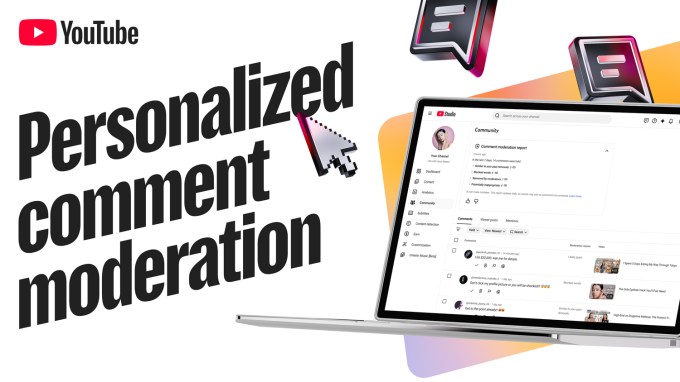
Among the notable new features is a customized comment moderation tool tailored to each creator’s requirements. While YouTube provides a standard comment moderation filter, creators might wish to adjust it more specifically, especially during live streams, where monitoring is more challenging. For the moment, the company is referring to this individualized moderation as an “experiment” without disclosing specific technical details on its functionality.

Image Credits:YouTube

Other features aim to assist creators in expanding their fan bases—and capitalizing on that engagement. These updates come at a time when revenue from ads is no longer the sole way for creators to monetize their videos.

The company announced that its Channel Memberships features are evolving, introducing paid, members-only communities where members can exchange posts and initiate discussions with other top fans. YouTube will promote these communities alongside other memberships on a new “channel memberships” page for viewers, designed to assist them in discovering those that align with their interests.

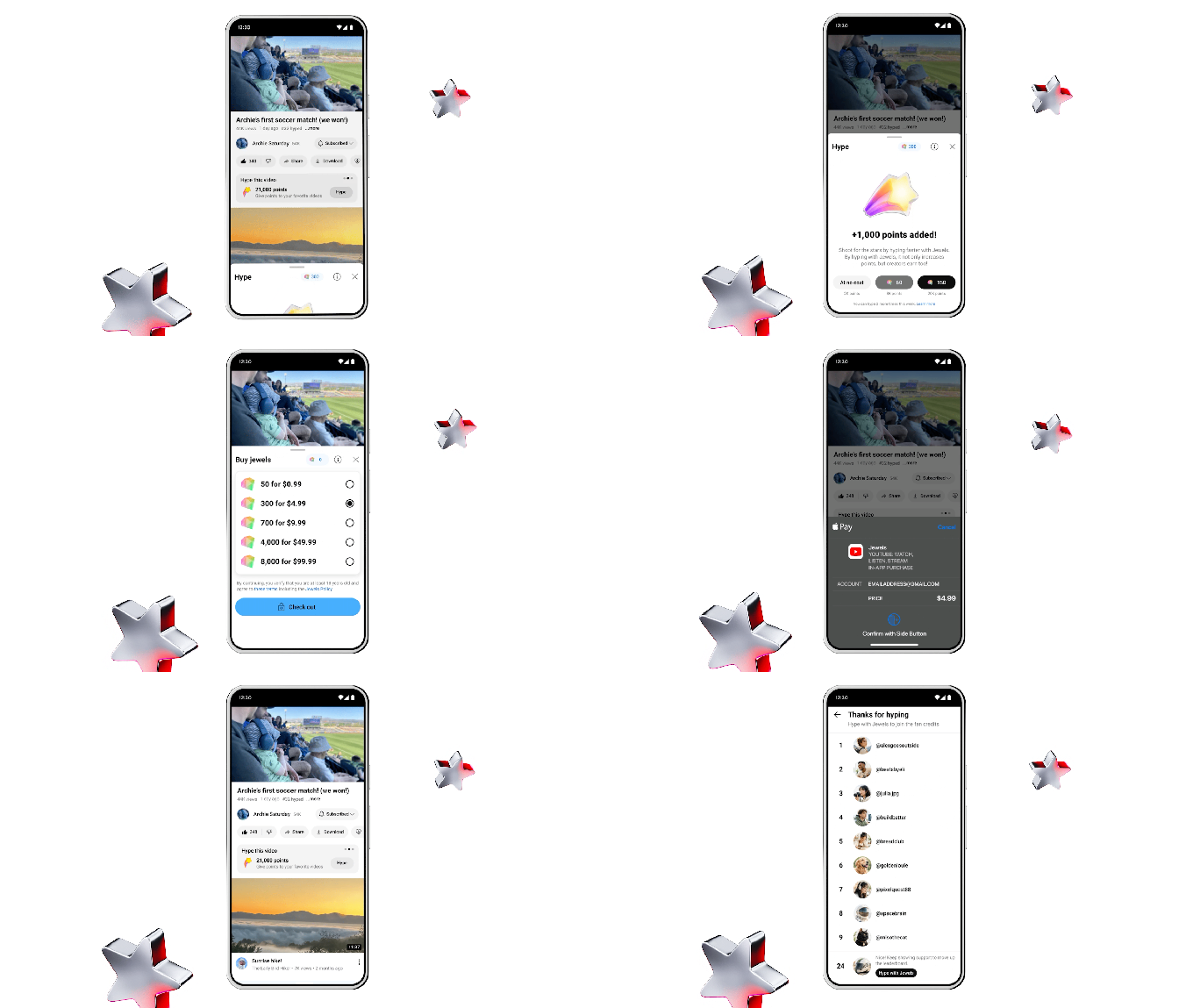
Hype, a feature that enables fans to recommend videos from smaller creators to others and ascend fan leaderboards, will introduce a new functionality called “Hype with Jewels.” Previously, fans were allowed to “hype” videos three times a week for free. Now they can purchase Jewels, a form of virtual currency, to hype videos more frequently, thereby supporting creators and expanding their audience. Fans seeking recognition may also value that their handles will be permanently included in the video’s description.

YouTube indicated that viewers have hyped more than 75 million unique videos over 1 billion times to date.

Image Credits:YouTube

The company’s direct messaging function for sharing videos with friends and family will also be upgraded to support group chats in the upcoming months. Users will have the option to record short, spontaneous videos and share them within these conversations as well.

These community-oriented features have been launched alongside additional creator tools, including those for A/B testing, live dubbing, AI-assisted video editing, and beyond.

When you purchase through links in our articles, we may earn a small commission. This doesn’t affect our editorial independence.

YouTube's interactive video editing feature enables creators to make changes using everyday language.

YouTube’s interactive video editing feature enables creators to make changes using everyday language.

At Wednesday’s Made On YouTube event, YouTube unveiled several new tools for creators, including a conversational editing feature that utilizes natural language to enhance both long-form and short-form videos.

“A one-hour filming session can take 10 hours or more to edit. So, what if we could expedite that process while maintaining our creative control?” shared YouTuber Happy Kelli during her presentation.

In an interactive chat interface, creators instruct the AI on how to assist them in assembling a video. For instance, in Happy Kelli’s scenario, she presents clips of her dancing in various outfits and requests the AI to identify the best performance for each outfit. Subsequently, she incorporates music and transitions that complement the dance.

 Happy Kelli
Image Credits:YouTube

“If I ever desire more control, I can return to the editing timeline and make adjustments manually,” she remarked. “In summary, conversational editing transforms the editing journey into a genuine dialogue with a perpetually patient assistant. It’s a collaborative partner that edits alongside you, not on your behalf.”

This capability can also implement text overlays, eliminate speech pauses, and more. Additionally, it can offer suggestions to the creator based on the context of the discussion.

Some creators may find this tool beneficial as it saves time and accelerates the often monotonous video editing process, while others might believe their unique editing style distinguishes their videos and may hesitate to cede control to an AI.

Conversational editing is set to launch for both YouTube Shorts and the YouTube Create app in early 2027.

When you make purchases through links in our articles, we may earn a small commission. This does not influence our editorial independence.

YouTube Music becomes more interactive with new AI functionalities

YouTube Music becomes more interactive with new AI functionalities

YouTube is enhancing YouTube Music with new AI-driven functionalities aimed at simplifying how listeners unearth music, investigate artists, and locate podcasts they might otherwise overlook.

Revealed during this year’s Made On YouTube event, the updates feature “Ask Music,” a chat-based tool for music and podcasts, alongside “Your Podcast Lineup,” a customized audio guide intended to assist listeners in discovering fresh shows.

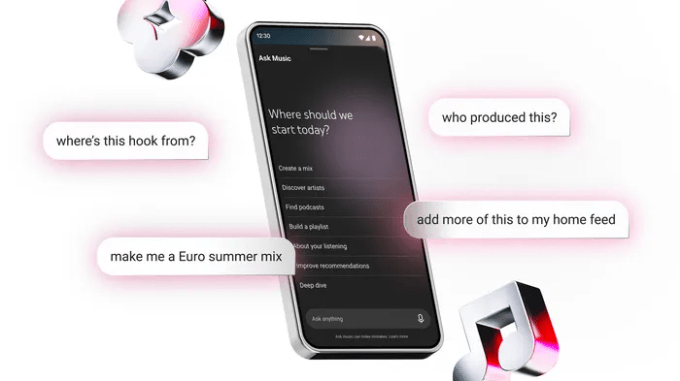
Integrated directly into the YouTube Music app, Ask Music enables users to articulate what they wish to hear in casual language instead of hunting for specific tracks or artists. This functionality operates within YouTube Music’s extensive collection of over 300 million songs, which includes official tracks, remixes, live shows, covers, and DJ performances. Users can utilize it to create tailored listening playlists, investigate an artist’s influences, or delve into musical history.

Image Credits:YouTube

YouTube underscores that, rather than conducting a manual search, users can simply phrase their request as they would ask a friend. For example, one might ask Ask Music to generate a mix inspired by a specific song. Users can also pose various questions, like identifying the bassist on a particular track or other specifics about its production.

Image Credits:YouTube

Additionally, YouTube Music is launching Your Podcast Lineup, a tailored AI-created audio resource for discovering podcasts.

This feature addresses a common issue: the overwhelming number of podcasts exceeds the time most individuals can allocate for listening. Even fans with an established list of preferred shows often find it difficult to stay updated with new episodes, much less uncover new ones.

Your Podcast Lineup will appear on the podcast section within the YouTube Music app. Each week, it will deliver a brief spoken preview of recommended programs and clarify why these suggestions might be of interest to the user. It will then seamlessly transition into recommended episodes.

Spotify recently launched an AI-based feature with a similar approach. Its personal podcasts function employs AI to curate podcast episodes based on users’ interests and prompts.

These new features form part of YouTube’s wider initiative to integrate AI across its offerings. Last year, YouTube Music trialed AI-driven music hosts that deliver stories, fan trivia, and commentary connected to the music users are listening to.

Both updates will soon be available to YouTube Music and YouTube Premium subscribers globally.

When you buy via links in our articles, we may receive a small commission. This does not influence our editorial integrity.

Eight Sleep's latest Pod 6 is available in compact and individual dimensions, with prices beginning at $1,999.

Eight Sleep’s latest Pod 6 is available in compact and individual dimensions, with prices beginning at $1,999.

On Wednesday, sleep technology firm Eight Sleep introduced its latest Pod 6 model, now offered in a more compact size than prior versions for better compatibility with various bed frames, as well as solo options for individual use. The company stated that the device can modify the temperature on each side 20% more quickly than its predecessor.

With its 50% reduced size, the new pod is compatible with most bed frames. The firm asserts that it features 9 times more sensors, allowing it to finely tune temperature adjustments for each sleeper, even when they are close together. Moreover, it can disregard temperature readings from a pet or child sharing the bed with two adults.

Starting today, the Pod 6 is available in over 37 countries, with prices beginning at $1,999 for solo versions and $2,699 for standard variants. The solo models are suitable for twin beds and one side of queen, king, and California King beds. Standard options will be offered in queen, king, and California King sizes. Additionally, it is compatible with existing accessories like a blanket, pillow cover, and base.

Image Credits:Eight Sleep

In addition to its new sleep solutions, the company is seeking approval from the Food and Drug Administration (FDA) to classify its Eight Sleep Pod as a regulated medical device for sleep apnea in the United States.

Earlier this year, Eight Sleep secured $50 million in funding from Tether at a valuation of $1.5 billion. The company has also made strides to enhance its global presence, launching its products in China, Qatar, Bahrain, Kuwait, and Singapore over the last year, with China emerging as one of its rapidly growing markets.

According to CEO Matteo Franceschetti in a statement to TechCrunch, international sales account for over 30% of the company’s revenue. He indicated that they plan to expand into additional areas of Asia and Latin America. Franceschetti remarked that they are closely monitoring the supply chain issues affecting the electronics industry but did not confirm whether these would affect pricing.

“We definitely see the market changing a little bit because AI companies are requesting a lot of different components. We are adjusting our supply chain [to counter that]. It’s definitely something that we need to watch out for, particularly as our devices become more and more, I would say, compute-heavy and intelligent to be able to provide AI features to our users,” he said.

When you purchase through links in our articles, we may earn a small commission. This doesn’t affect our editorial independence.

YouTube unveils fresh AI tools for creators in its Studio application

YouTube unveils fresh AI tools for creators in its Studio application

During its annual Made On YouTube event, YouTube revealed new features for YouTube Studio, the application creators rely on to oversee their channels, designed to assist them in analyzing their videos and expanding their audiences. The enhancements encompass the expansion of Ask Studio, an AI-driven Q&A tool, to iOS and Android, alongside additional features that offer feedback on drafts and generate dynamic thumbnails.

The draft-feedback feature employs AI to examine a creator’s unreleased video and provide recommendations regarding its pacing, structure, and storytelling. YouTube is also introducing a new research feed in the Studio app, displaying to creators what types of content are successful on the platform, enabling them to add their own perspective.

Creators are often discerning about the preview images and titles they select for their videos. The Studio app will now allow them to create thumbnails and titles based on a video’s content, tailored to their style. Additionally, creators can utilize a new dynamic thumbnail feature to produce three options and present each one to different audience segments.

Image Credits:YouTube

YouTube reported that creators have utilized its A/B testing feature to execute over 40 million tests on titles and thumbnails. Soon, the company stated, users will be able to assess up to three video versions to determine which opening hook is the most effective. Later this year, YouTube Studio will also automatically track thumbnail performance and proactively change one if it underperforms.

YouTube further announced that it’s enhancing its analytics to go beyond mere numerical data, clarifying why videos perform as they do and offering advice on how to improve content engagement.

Image Credits:YouTube

In addition to the overhaul of the Studio app, YouTube also unveiled further tools for creators, such as conversational editing in Shorts and the YouTube Create app.

When you purchase through links in our articles, we may earn a small commission. This doesn’t affect our editorial independence.

Best Samsung Smartphones of 2026: Ultra, Foldable, Affordable

Best Samsung Smartphones of 2026: Ultra, Foldable, Affordable

Alternative Samsung Phones to Consider

If a Samsung device isn’t mentioned in this guide, it may be due to its limited accessibility in the US, making it challenging to evaluate. Nevertheless, here are several other Samsung phones we’ve assessed.

Samsung Galaxy Z Fold8 Ultra for $2,100: An upgrade from the Z Fold7, the Z Fold8 Ultra is designed for foldable phone aficionados willing to pay for excellence. Its book-style layout features a 6.5-inch cover display and unfolds to reveal an 8-inch tablet-sized screen with a less prominent crease and improved hinge durability. It provides top-notch performance, extended battery life, and features Samsung’s best camera in a folding format, boasting a 200-megapixel main camera, a 50-megapixel ultrawide, and a 10-megapixel telephoto lens.

Samsung Galaxy S26 FE for $700: The Samsung Galaxy S26 FE is a capable phone providing robust battery life, a large display, and a dependable triple-camera system; however, the added $100 over the nearly identical S25 FE is hard to rationalize. The only significant enhancement is a marginally better processor, while Samsung even downgraded the USB-C port to USB 2.0 in the S26 FE. You might be better off choosing the S25 FE while it’s still available.

Z Fold7 for $2,000 or Z Flip7 for $1,100: For a Samsung foldable that’s budget-friendly, consider the 2025 Galaxy Z Fold7 or Galaxy Z Flip7, particularly if available at a discount. The Fold7 is marginally thicker, features a more prominent screen crease, and has average battery life, but the differences from the Fold8 Ultra are not significant. Likewise, the Flip7 only has slight variations compared to the Flip8, which includes minor hinge upgrades, a more refined design, a more efficient processor, and enhanced software for the external display.

Samsung Galaxy S25 Edge for $1,300: Have you ever desired an exceptionally slim and lightweight phone? The Galaxy S25 Edge attempts to fulfill that need with its 5.8-mm thickness, sacrificing certain features like a stylus, a telephoto camera, and battery size for its sleek profile. While the thin design is striking, its 3,900-mAh battery life is short-lived – regular charging was essential. Nonetheless, if you are often near a power source and lean toward a slender design, it may suit you.

Samsung Galaxy A17 5G for $249: On paper, the Galaxy A17 seems to provide excellent value, featuring six years of software updates, an AMOLED display, expandable memory, and a decent camera; however, its performance is curtailed by the 4 GB RAM in the US variant. The insufficient RAM leads to a less stable user experience, making it inadequate for urgent needs. If your needs are minimal, it could be a viable choice.

If saving money is your aim, the Galaxy S24 series from 2024 may be worthwhile, provided their prices are significantly reduced from the original retail values. These products will continue to receive support and remain relevant. Older models are not advised.

Investing in Samsung’s Ecosystem

Samsung provides an ecosystem comparable to Apple, with hardware that includes smartphones, the <a href="https://cna.st/affiliate-link/HJ99Tbj4dgEhtDLnr

Comma's autonomous driving technology is being examined following two deadly accidents.

Comma’s autonomous driving technology is being examined following two deadly accidents.

Comma.ai, the venture established by hacker George Hotz, is under federal scrutiny following five reported incidents involving the company’s aftermarket hands-free driving assistance technology, with two of those resulting in three fatalities.

The National Highway Traffic Safety Administration’s Office of Defects Investigation (ODI) reported this week that the incidents involved Comma devices that failed to identify or react to slow or stationary vehicles in the same lane. In four of the incidents, up to 11 individuals sustained injuries, some of them severe.

Some of these incidents, including at least one of the fatal occurrences, may have involved “forked” or altered versions of Comma.ai’s software, according to the ODI.

Comma.ai was not immediately available for comment. Hotz, who stepped back from the startup’s daily operations in 2022, did not promptly respond to a request for comment.

Established in 2015, Comma.ai produces devices that can be fitted to a variety of contemporary vehicles. The devices — along with Comma.ai’s software, “openpilot,” — are capable of managing a vehicle’s Adaptive Cruise Control (ACC) and Automated Lane Centering (ALC) systems to execute functions “akin to Tesla Autopilot and GM Super Cruise,” based on the startup’s website. The aim is to “make driving relaxed.”

According to Comma.ai’s website, “openpilot can steer, accelerate, and brake automatically for other automobiles within its lane.” Nevertheless, similar to Tesla and GM, Comma.ai cautions drivers that they “must always be ready to regain manual control of the vehicle at any moment, by pressing either pedal or the cancel button.” The company’s device includes a camera-based driver monitoring system to detect distracted or drowsy drivers.

One of the two fatal incidents reportedly occurred in February 2026 in Ascension Parish, Louisiana. A 2022 Toyota RAV4, which was operating FrogPilot, a third-party variant of openpilot, collided with a stationary first responder vehicle.

The Louisiana State Police provided details of a February crash that seemingly aligns with the report in the National Highway Traffic Safety Administration’s database. In its account of the incident, the agency noted that two rear-seat passengers of the Toyota lost their lives.

This story is ongoing…

When you make purchases through links in our articles, we may earn a small commission. This does not influence our editorial independence.