
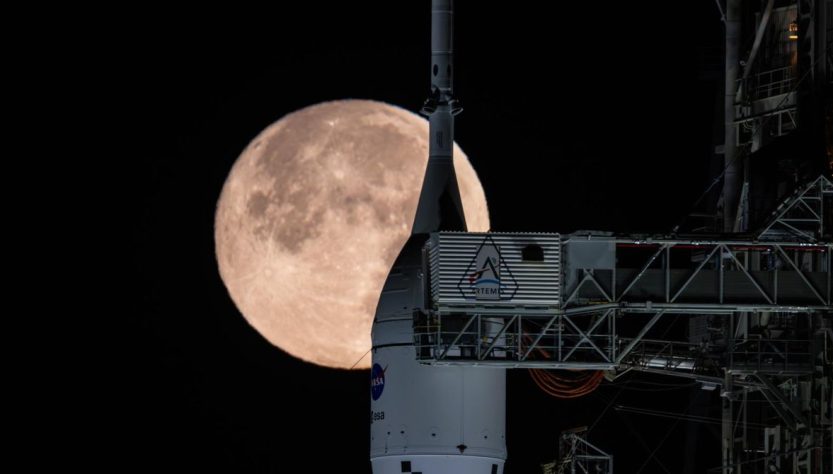
After a series of delays, rocket maintenance, and a program overhaul to resume lunar exploration, the Artemis II mission is poised for launch. If all goes as planned, four astronauts will kick off NASA’s new lunar program on Wednesday, more than 50 years after the Apollo era.
The Artemis II team won’t touchdown on the moon; that milestone will be reached with Artemis IV. Their spacecraft will traverse 6,000 to 9,000 kilometers above the moon’s far side, orbit it, and make the return journey. This mission intends to showcase NASA’s ability to safely transport humans to the moon.
Once this goal is achieved, NASA will gear up for upcoming lunar landings in the following years, with the objective of setting up initial lunar bases and ensuring a long-term human presence on the moon.
When and Where to Watch the Artemis II Launch:
The new launch window opens on Wednesday, April 1, at 6:24 pm EDT and remains open for two hours, permitting liftoff anytime from 6:24 pm to 8:24 pm EDT, contingent on conditions. Should there be any delays, NASA has an additional five days to make an attempt, with April 6 marking the final day of this launch window. If that fails, the next opportunity will be on April 30.
NASA will stream the event live on its YouTube channel, beginning at 7:45 am with coverage of tank operations, while the official broadcast will start at 12:50 pm and will continue through liftoff. A press briefing is scheduled to occur two hours after the launch.
Mission Details:
The astronauts will be launched on a NASA SLS rocket, traveling in the Orion spacecraft, comparable in size to a large van. They will spend two days orbiting Earth testing onboard systems before preparing to set course for the moon. By the fifth or sixth day, the capsule is expected to enter the moon’s gravitational influence and dock with its orbit.
The most critical phase will occur when the spacecraft is positioned “behind” the moon; during this period, the crew will lose contact with Earth for about 50 minutes due to the moon’s interference. They will need to capture images and data during this time, employing advanced technology that surpasses what was available in the Apollo era.
Upon their return, the capsule will utilize the Earth-moon gravity field to save fuel and make its way home. NASA anticipates that the crew will approach Earth by the tenth day.