
As the tech world concentrates solely on AI models, Anthropic is experiencing an extraordinarily prosperous year.
The firm is on the verge of outpacing its primary rival, aiming to gather tens of billions in a funding cycle which could elevate its valuation to around $950 billion (OpenAI was valued at $854 billion during its March funding round), with business clients increasingly favoring Claude over ChatGPT. A recent study indicated that Anthropic has surpassed OpenAI with business clients, quadrupling its market share since May 2025.
Cat Wu, who leads the product team for Claude Code and Cowork at Anthropic, has played a pivotal role in that success. Since becoming part of the company in August 2024, Wu has guided Claude through a significant phase, enhancing it from a purely informational chatbot to a more advanced coding tool. Wu, who manages the creation of new functionalities, often collaborates with Boris Cherny, a vital member of Anthropic’s technical team and the developer of Claude Code, leading them to be dubbed Anthropic’s “Batman and Robin.”
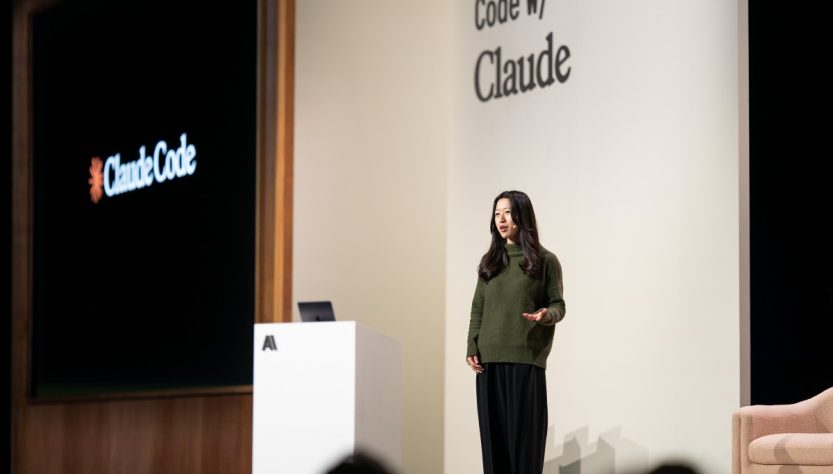
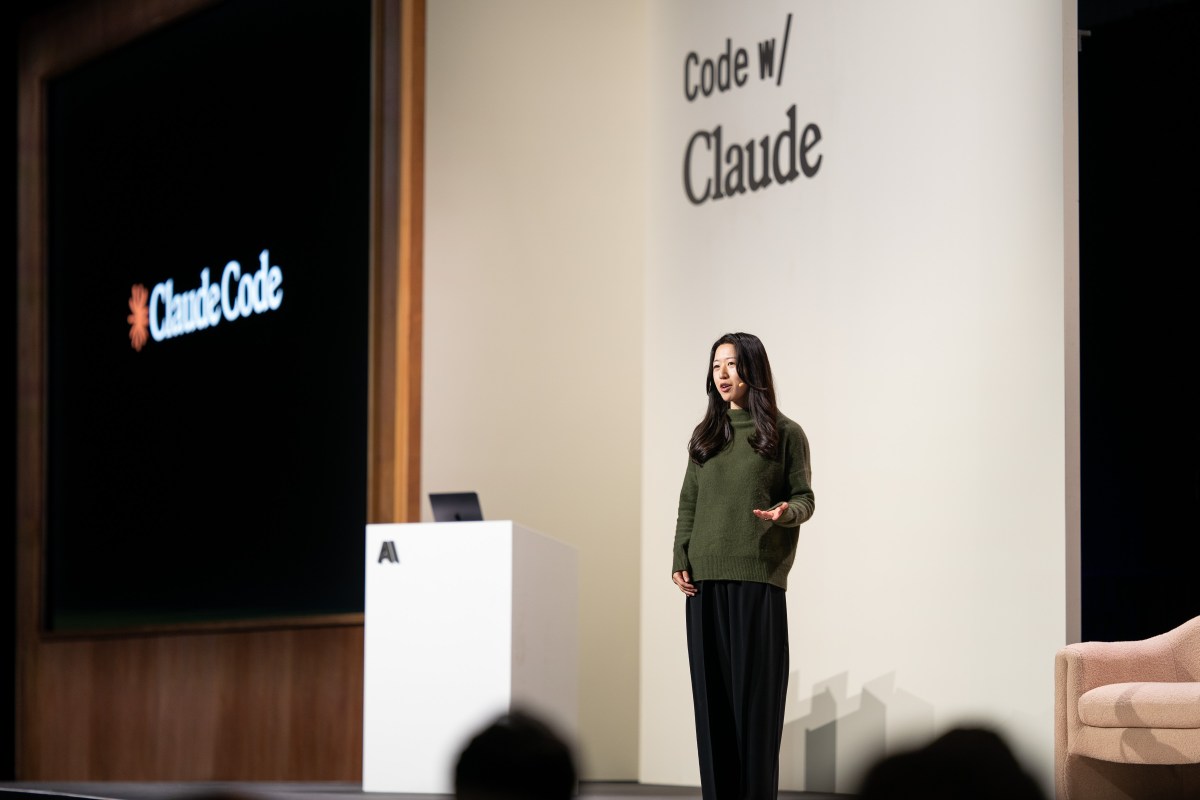
Wu met with me during last week’s second annual Code with Claude conference in San Francisco, where she shared her insights on product strategy and her vision for how the use of Claude will evolve in the future.
This interview has been condensed for brevity and clarity.
When considering product strategy, how much of it is influenced by your peers or rivals? Is that a concern for you?
Our primary focus is on remaining at the cutting edge, so I believe we instill in our team the understanding that AI will consistently improve. For us, the goal is to remain at this forefront. We do not concentrate on competitors. I think if you start considering competitors, you risk being perpetually a few weeks, or even a month, behind your capacity to execute. Therefore, this approach usually doesn’t keep you at the forefront.
Anthropic introduced at least six models last year and has nearly matched that number this year. Do you foresee this pace of development persisting?
We hope it persists (laughs). I believe the models continue to advance at a steady rate, allowing us to share them with our users consistently. The deployment may vary—like our approach with Glasswing—but as much as feasible, we want this intelligence to be advantageous to as many individuals as possible, and it must be managed very safely, which is why we approached Glasswing [the way we did].
[Glasswing is an initiative that Anthropic launched in April, inviting a select group of partner organizations—including firms like Amazon, Apple, CrowdStrike, and Microsoft—to access its new cybersecurity model, Mythos. Unlike many of Anthropic’s other AI models, Mythos is not set for a general public release. The company has expressed concerns that the model—designed to scan codebases for software vulnerabilities—might be misused by malicious actors.]
You previously mentioned that the future of work involves staff overseeing fleets of agents. This could eventually lead to situations where agents perform jobs better than humans, right?
Managing agents is incredibly challenging if you lack the skills for the job. Managers still need to be experts in their field. It’s a novel skill set that many will need to acquire, but managing agents is actually quite similar to managing people, in that you need to grasp why an agent made a mistake. Did it misunderstand my instructions? Was my request ambiguous? You need the ability to troubleshoot.
It appears that the long-term vision is to reduce team size. If agents can handle jobs, then does an intern become unnecessary?
Ideally, the notion is that everyone can achieve much more. For every role, there’s always a portion that is quite tedious. For me, that’s dealing with emails. Everyone has some aspect of their life similar to this… So, I hope that the AI agents can take on those tasks, freeing up time for everyone to pursue more exciting projects [in their free time].
What are you most enthusiastic about in the upcoming six months?
I believe the next significant development is proactivity. Last year was focused on synchronous development. Currently, people are transitioning to routines, like automating responses to customer support inquiries. I think the next phase is that Claude will understand your work patterns and autonomously set up some of these automations for you.
When you purchase through links in our articles, we may earn a small commission. This doesn’t affect our editorial independence.