
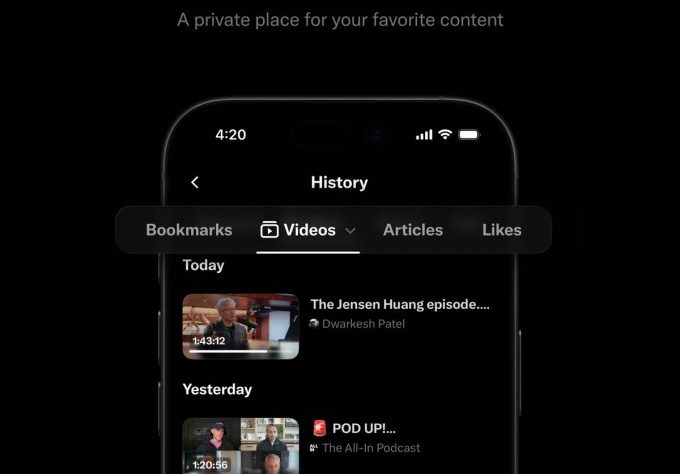
X is evolving into a more “save-it-for-later” platform with its new History tab that aggregates your bookmarks, likes, videos, and articles into one easily accessible location.
First introduced on iOS, X’s product head, Nikita Bier, refers to this new feature as an improved method for monitoring all your preferred content, enabling you to revisit items you want to finish reading or watching at a later time.
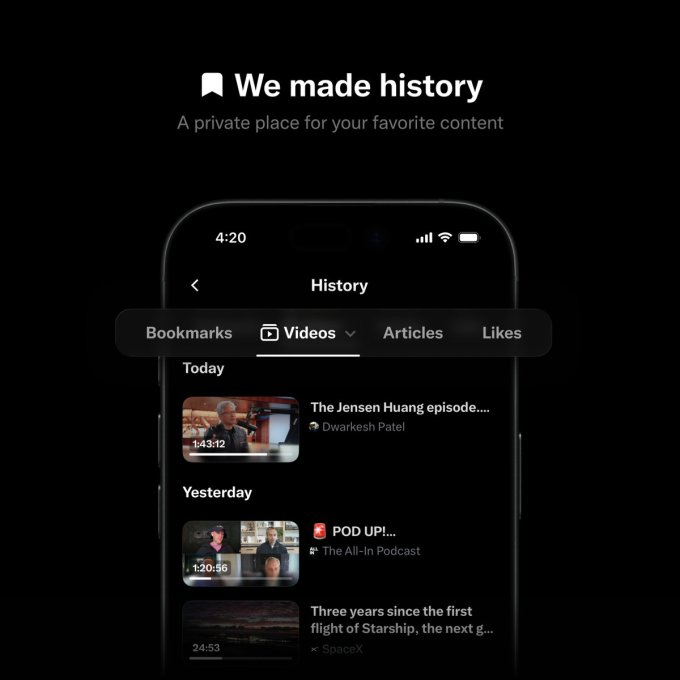
With this update, the Bookmarks button in X’s left-side menu on the mobile app has been renamed to History. The new section categorizes your saved content into four distinct tabs — Bookmarks, Likes, Videos, and Articles — allowing for seamless navigation at any moment. While Bookmarks and Likes are intentional saves, the Videos and Articles tabs will auto-fill based on your viewing or reading activities on X. The History area keeps your data private,
Bier’s announcement states.
This enhancement gives X a more browser-like feel, where users can revisit previously viewed content even without consciously saving it. It brings together functionalities that were scattered across the app, with bookmarks located in the main menu and likes tucked away in a tab on the user profile.
This initiative may also promote increased utilization of X’s long-form article feature, which the company has been promoting as a means for businesses and creators to share updates that extend beyond the typical post limit of 280 characters. X users can keep track of the articles they discover while scrolling, crafting a customized news reader experience within the app.
The update arrives as web publishers face a downturn in referral traffic from platforms such as Facebook and Google, influenced by evolving algorithms and AI-driven experiences that have diminished external site clicks. X regards this evolution as a chance to attract more publishers and creators to produce content directly on its platform, where distribution and discovery are inherently integrated.
When you purchase through links in our articles, we may earn a small commission. This doesn’t affect our editorial independence.