

Anthropic has launched Claude Fable 5, the inaugural public version of its highly anticipated Mythos model. What can Fable achieve? A vast range of functionalities, it appears.
Ethan Mollick, a prominent AI researcher and academic at the University of Pennsylvania, has been experimenting with the model and appears to be thoroughly enjoying it.
In his explorations, Fable notably “surpassed essentially every other public model I have utilized by a significant margin,” Mollick noted on his Substack on Tuesday. He further mentioned that it was “competent across numerous challenges and yielded some astonishing outcomes — it could operate for up to twelve hours executing extensive multi-page specifications.”
Perhaps most notably, Mollick leveraged Fable to develop a selection of video games — all of which were produced from “a single initial prompt” in Claude Code, according to the researcher.
Among these, Snake is precisely what you would expect. You control a Pac-Man-like serpent as it slithers around consuming apples. The snake is perpetually in motion, and if you veer off the screen, it’s game over. It has a very 1980s arcade vibe but, like many classic titles, it’s oddly captivating. I found myself playing it longer than I’d care to admit before recalling that I am a gainfully employed writer, not actually a fruit-loving serpent.
Next came Strata, where you navigate a seemingly infinite maze of underground tunnels with the objective of illuminating as many lanterns as possible. The visuals resemble a lower-quality version of Myst — not impressive — yet the mere existence of the game, created from a single prompt, is commendable.
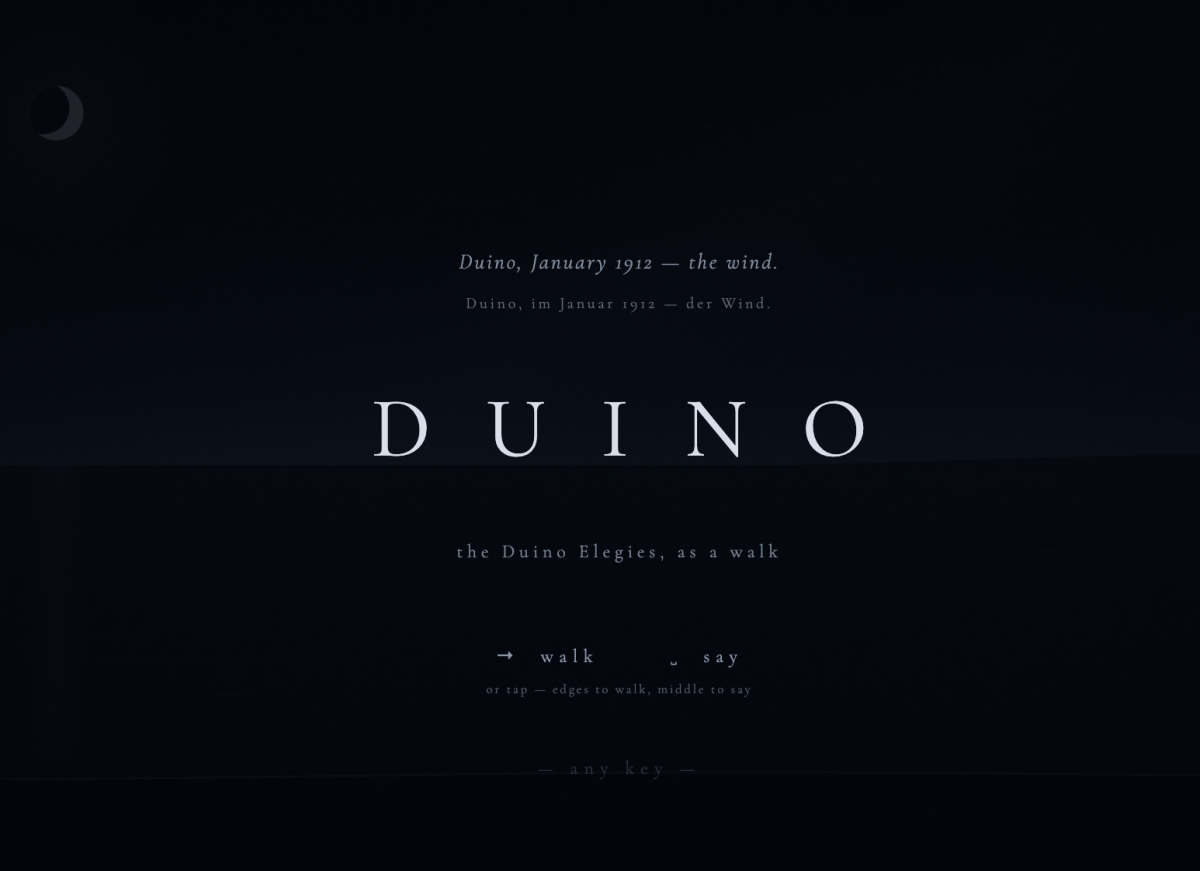
Mollick even succeeded in crafting Duino, a game inspired by the Duino Elegies, the famed sequence of poems by Rainer Maria Rilke. The animation is my favorite aspect here — you play as a solitary figure in a nighttime setting — although the gameplay itself is minimal, consisting primarily of wandering around while passages from Rilke appear on the screen.
Beyond the array of immediate games Mollick created, he also utilized Fable to generate an isochronic map — a visual representation of travel times between any two points. The precision and intricacy are striking.
The implications are fairly obvious. Software projects that once demanded entire teams — such as games, mapping tools, and intricately detailed specifications — can now be initiated from a single prompt. This should be a cause for celebration among vibe coders globally. For founders and operators monitoring advancements in AI capabilities, it serves as a valuable data point regarding the rapid elevation of the baseline.
When you buy through links in our articles, we may earn a small commission. This doesn’t influence our editorial independence.