
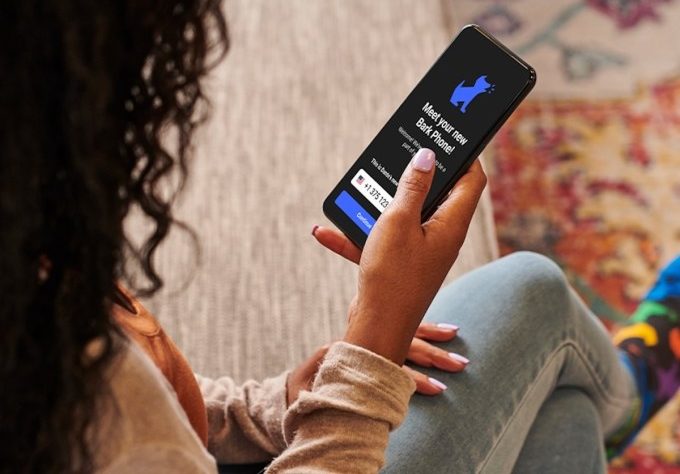
With parents increasingly worried about the hazards of unrestricted smartphone availability for children, more and more companies are creating devices tailored specifically for young users.
Modern phones designed for kids usually come with touchscreens, cameras, and communication features akin to standard smartphones. Nevertheless, the software on these devices is significantly altered to eliminate or limit access to web browsers, social media, app stores, and other potential distractions.
Typically, parents can oversee these devices using a companion app, granting them the ability to approve contacts, track locations, impose screen time limits, choose accessible apps, and in some cases, receive notifications concerning cyberbullying, adult content, or online predators.
In addition to these customized devices, several companies provide a more simplified approach, crafting gadgets that emphasize solely on phone calls and texting.
Specialized home phones for children are also available, like Tin Can and the newly introduced Pinwheel Home.
Below is an overview of the key players making waves in the kid-phone industry.
The Bark Phone
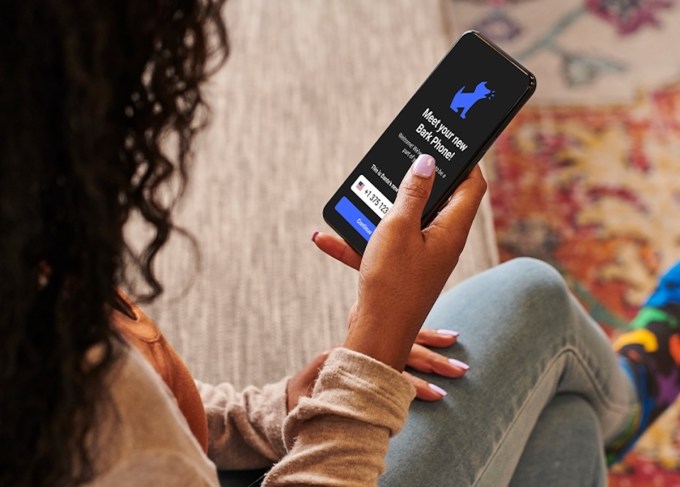
The Bark Phone stands out as one of the most well-known smartphones created specifically for children.
Utilizing Samsung Galaxy hardware and powered by Bark’s tracking software, it restricts calling and texting to approved contacts only. Bark consistently monitors texts, emails, images, and supported applications for indications of cyberbullying, grooming, suicidal thoughts, sexual material, and other potential issues, subsequently notifying parents.
A prominent feature is that parents can progressively enable web browsing, apps, and additional functionalities as their child grows. The device also incorporates GPS tracking and management of screen time.
The standard model is currently priced at $240, and a necessary wireless plan starts at $29/month. Higher-tier plans feature internet access and unlimited texting.
Gabb
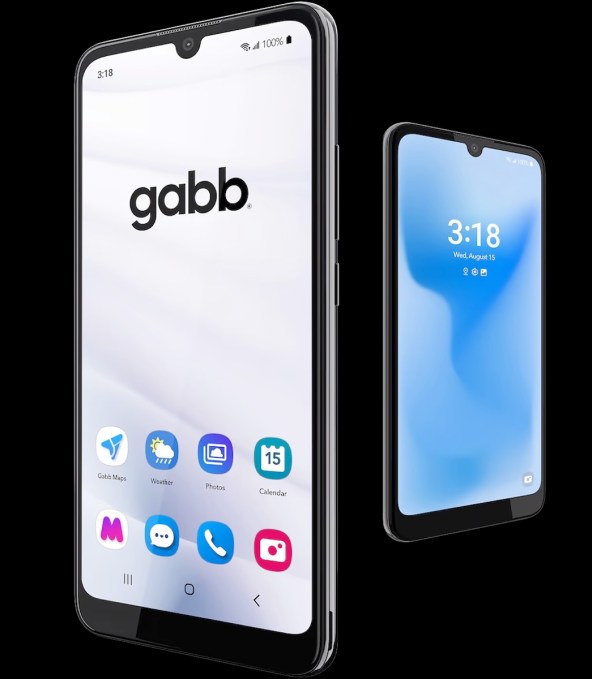
Gabb is a recognized brand within the kid-friendly phone sector. In contrast to Bark, Gabb places less emphasis on content monitoring and more on altogether removing online dangers.
Gabb phones exclude social media, a web browser, or an app store. Instead, children can make calls, send texts, and access a carefully selected assortment of preinstalled apps such as a camera, calendar, and calculator. The company also promotes its “worry-free” music streaming service featuring millions of songs.
Furthermore, parents can monitor locations and adjust various device settings, while optional offerings like “Gabb Guard” provide filters for spam calls and unsolicited texts.
Current pricing for the phones begins at approximately $159.99, with cellular service starting around $24.99 monthly.
Pinwheel
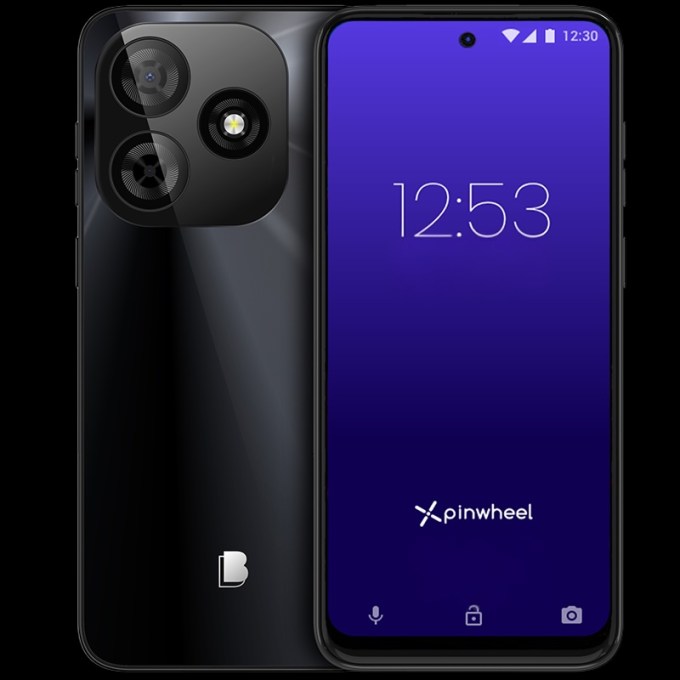
With Pinwheel, parents can approve each app, control contacts, schedule screen time, establish custom routines, and keep an eye on location history.
A notable feature is the capability to design various “modes” throughout the day. For instance, restricting the device to calling and navigation during academic hours before unlocking more features afterward.
Pinwheel phones start around $119, with the Caregiver Portal subscription commencing at $14.99 monthly without cellular service. (Cellular service may be purchased separately through participating providers.)
Recently, the company introduced two landline phone models priced at $68 and $79, in addition to a smartwatch available for $160.
Teracube Thrive
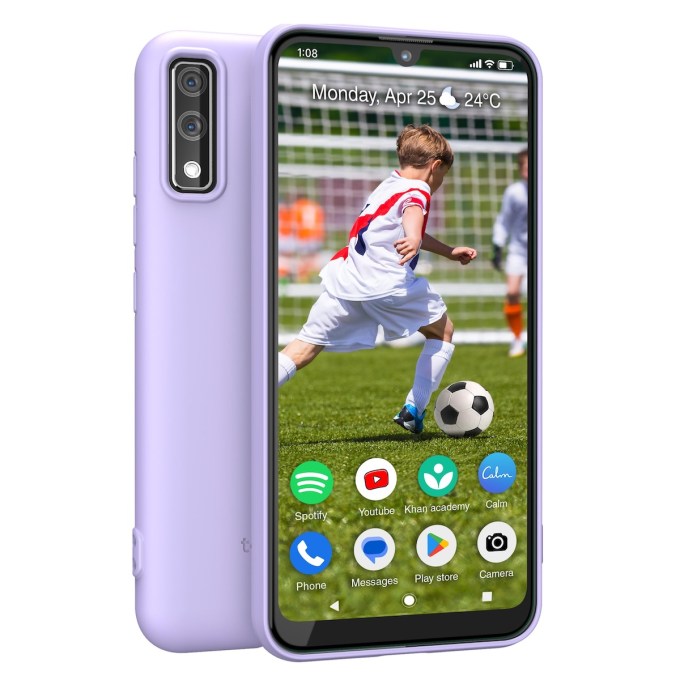
Introduced in 2022, Teracube features a customized version of Android known as Thrive OS, enabling parents to authorize all app installations, filter web browsing, set application-specific and overall screen time restrictions, monitor location, and develop personalized routines for school or bedtime. However, due to its more conventional smartphone capabilities, it’s primarily suggested for older children.
Thrive is currently priced at $99, with plans starting at $35 a month.
Ooma MyPhone

In contrast to the other entries in this roundup, Ooma MyPhone is not a mobile device. This child-oriented home phone is crafted as a contemporary substitute for the traditional household landline.
The service permits calls solely between confirmed contacts via its Trusted Circle feature, offers scheduled Quiet Hours, provides address-based 911 support, sends emergency notifications when 911 is dialed, and allows parents to examine call logs through an online platform. There are no applications, web browsing, texting, or social media functions.
The phone retails for $99.99, with service commencing at $7.99 monthly.
Tin Can
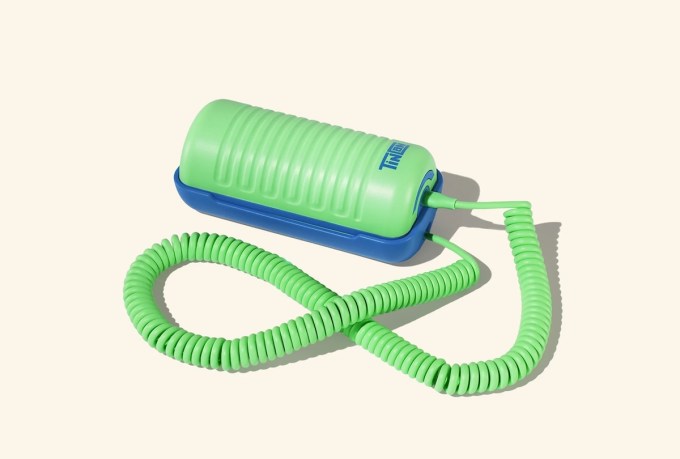
At a price of $100, Tin Can is designed to mimic a landline phone while featuring a unique tin can design, which inspired its name.
This device does not necessitate a traditional phone outlet but connects via Wi-Fi. Calls can only be made to approved contacts, successfully preventing spam or unauthorized communications. Parents can easily manage contacts through an intuitive companion app.
Tin Can provides a complimentary plan for calling other Tin Can users and offers a $9.99 monthly plan that permits calls to all approved contacts.
When you purchase through links in our articles, we may earn a small commission. This doesn’t affect our editorial independence.