
Chip manufacturer AMD is setting its sights on rival Nvidia with its newest hardware introduction: a rack-scale solution crafted to meet the computing demands of the globe’s largest AI laboratories.
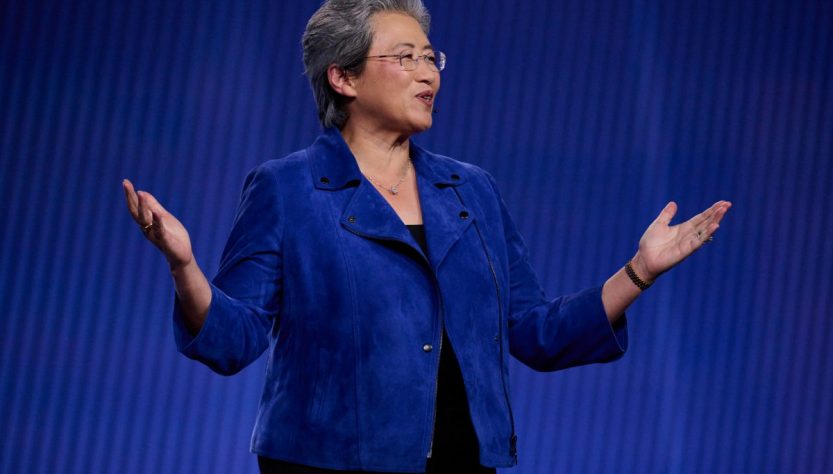
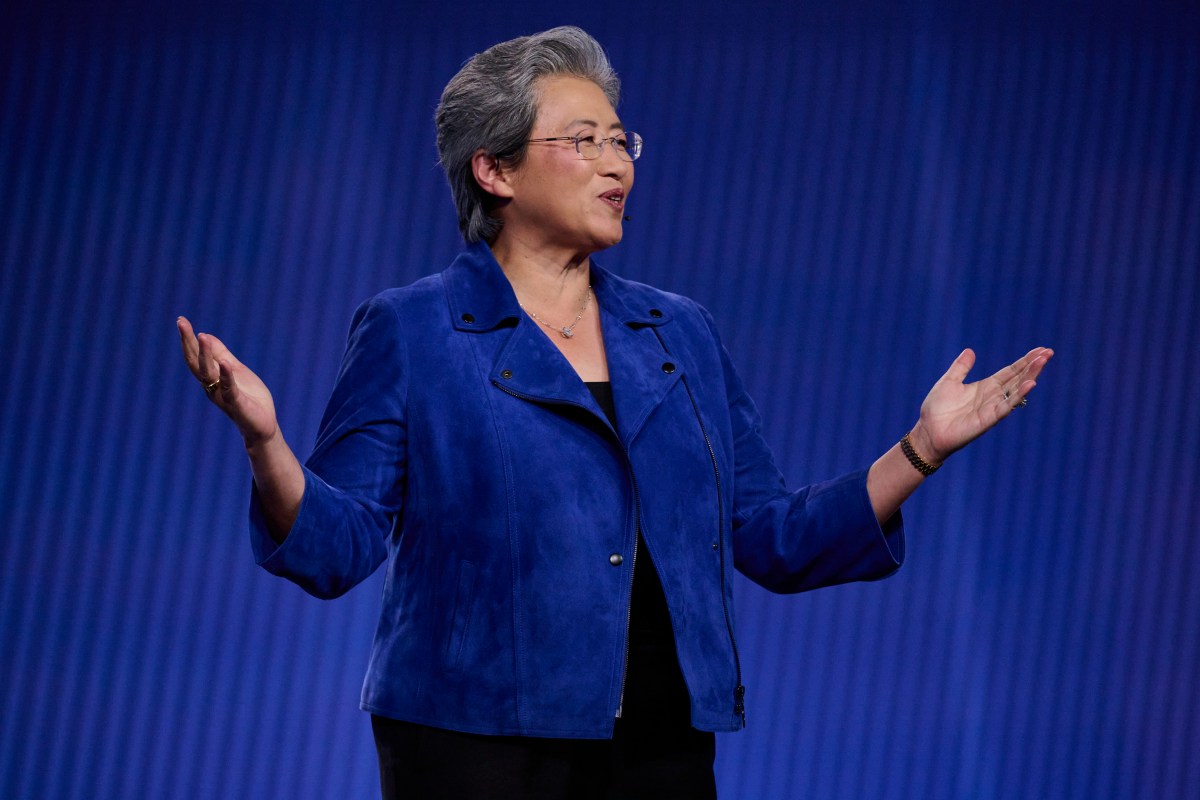
At the company’s packed Advancing AI conference in San Francisco on Thursday, AMD Chair and CEO Dr. Lisa Su showcased the new AI rack system named Helios — along with its increasing roster of clients, which includes Microsoft — as the firm gears up for its release later this year. Su also promoted the firm’s latest chips designed to satisfy the high demands of the AI sector.
Rack systems merge multiple processors into one robust unit. They are specifically designed for data centers, where they facilitate the training and operation of AI models and other computation-heavy tasks.
Su described Helios as the industry’s “top-performing AI rack,” noting that it was “engineered to train and execute the most demanding frontier models globally at an unprecedented scale.” The system is set to be implemented by prominent AI enterprises at gigawatt-scale, according to the company.
Historically, Nvidia has led this field with its Vera Rubin and Grace Blackwell rack-scale systems. AMD is clearly aiming to get a piece of the pie. Helios’ performance indicators seem to offer it a tangible opportunity, reportedly surpassing Vera Rubin in various metrics, as noted by The Register.
Helios, unveiled in 2025 and presented live in January at CES 2026, already counts some notable clients among its base, such as OpenAI, Meta, Oracle, Anthropic, and Microsoft, all of which intend to utilize the system. Microsoft CEO Satya Nadella mentioned on Monday that the company plans to enhance its Azure infrastructure with Helios. Additionally, Anthropic and AMD declared a strategic alliance on Wednesday to deploy up to two gigawatts of GPUs through the new rack system.
On Thursday, AMD also unveiled its Venice-X CPU, engineered for data centers and capable of managing high-computing workloads. The Venice-X is projected for launch in 2027.
During her speech, Su reflected on the chip industry’s path, asserting that by 2030, chips supporting AI will constitute a significant portion of the overall computing market. This transformation is propelled by a “step change in compute demand,” largely fueled by the emergence of agentic AI, she stated.
“When you instruct the agent to perform a task, it goes through numerous steps, reasoning, calling tools, accessing data, and repeating the process until it resolves the issue; thus, a multitude of GPUs is required to manage all of that,” the executive explained.
“We anticipate that by 2030, the AI accelerator market will reach approximately $1.4 trillion,” Su stated. “This indicates that by decade’s end, the AI accelerator market will come close to matching the total size of the current semiconductor market.”
“We do foresee that GPUs will represent the bulk of that market since the algorithms are still in their early stages, and we’re observing continual shifts in workloads, which favors programmability within the complete silicon ecosystem,” she added.
When you purchase through links in our articles, we may earn a small commission. This doesn’t affect our editorial independence.