
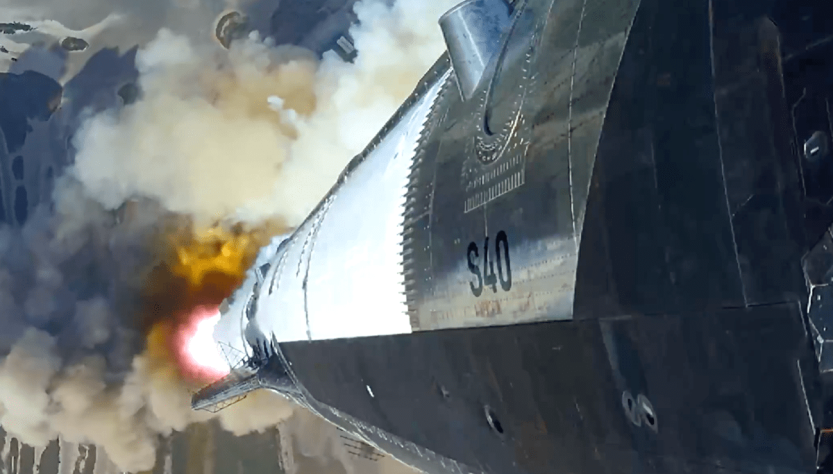
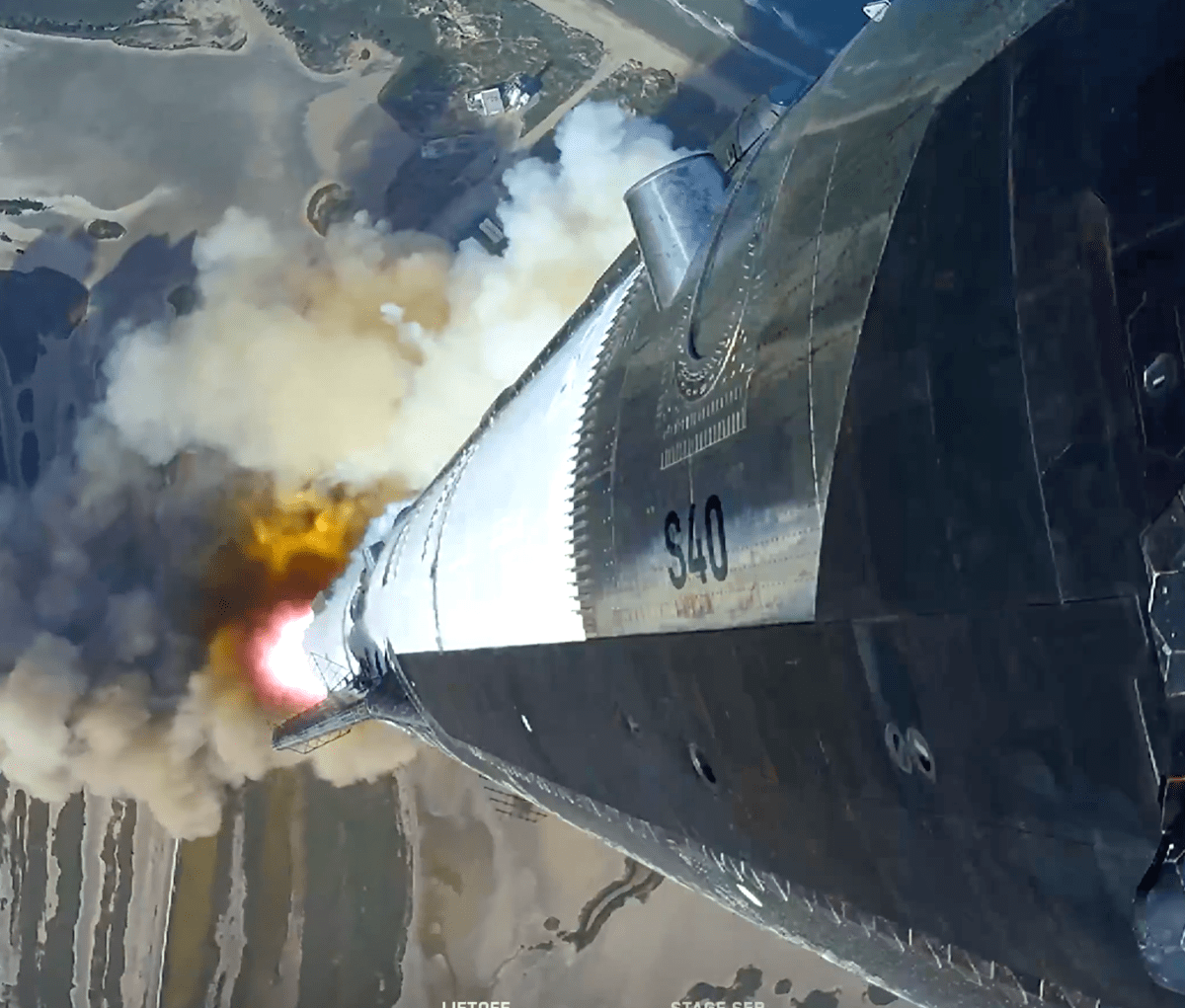
On Friday, SpaceX achieved the successful deployment of its inaugural third-generation Starlink satellites utilizing an enhanced version of its prototype Starship — marking the 13th test flight of its colossal rocket thus far. However, the firm faced another setback with its Super Heavy booster during a scheduled simulated landing in the Gulf of Mexico.
This marks the second occurrence of a problem with the Super Heavy booster on this version V3 of Starship. In May, during the initial Starship V3 flight, SpaceX experienced a malfunction with the Super Heavy booster as it detached from the upper stage of the rocket. Following the deployment of the Starlink satellites, SpaceX managed to carry out a simulated landing of the Starship’s upper stage during the launch on Friday.
This launch took place just over a week after SpaceX attempted to conduct the 13th Starship launch, which had to be aborted immediately after ignition due to several engine failures. To address this issue, SpaceX stated that it replaced six engines before Friday’s flight.
During the launch on Friday, the booster progressed further into its intended flight path but failed to ignite all of the engines necessary for its simulated landing burn properly. As a result, the booster exploded after making impact with the water, which occurred more quickly than anticipated.
This was the initial launch of Starship since SpaceX went public in June, achieving the largest IPO ever. As part of SpaceX’s “fly, fail, fix” strategy for Starship development, the company’s stock saw a decline last week following the launch abort. The decrease is part of a broader downward trend since the IPO, with shares falling from a previous high of over $200 to $115 at the end of trading on Friday. In after-hours trading, SpaceX shares dipped another 2% following the failure of the booster, though some losses were later mitigated.
SpaceX experienced greater success with the Starship V3 upper stage during the launch on Friday. Unlike the first V3 launch in May, where the upper stage lost a rocket engine, this time, Starship faced no complications on its route to deploying the new Starlinks. The Ship, as the company refers to it, successfully withstood the intense forces of atmospheric reentry and accomplished a simulated landing in the Indian Ocean approximately one hour post-liftoff.
Differing from earlier Starship missions, the Ship did not explode upon tilting into the water. Instead, it floated, allowing SpaceX to deploy a drone to meticulously inspect the heat shield tiles on its underside.
The latest Starlink satellites disintegrated in the atmosphere around 20 minutes following their deployment, as Starship remains unable to achieve Earth orbit. SpaceX was able to establish communication with all the satellites while they were in space, signaling progress for that program, the only profitable segment of the company’s operations.
The capacity to deploy the more advanced V3 Starlink satellites enhances the financial viability of the company’s capital-intensive space internet network. SpaceX asserts that launching 60 of the new satellites onboard Starship represents a “potential twenty-fold increase” in downlink capacity compared to those carried by a single Falcon 9.
Nonetheless, it remains uncertain whether SpaceX can achieve those benefits if the Super Heavy booster is expended rather than reused. According to SpaceX’s S-1, without a fully reusable Starship, progress on Starlink “would be at a slower pace and higher cost.”
With contributions from Tim Fernholz.
When you buy via links in our articles, we might earn a small commission. This does not influence our editorial independence.