
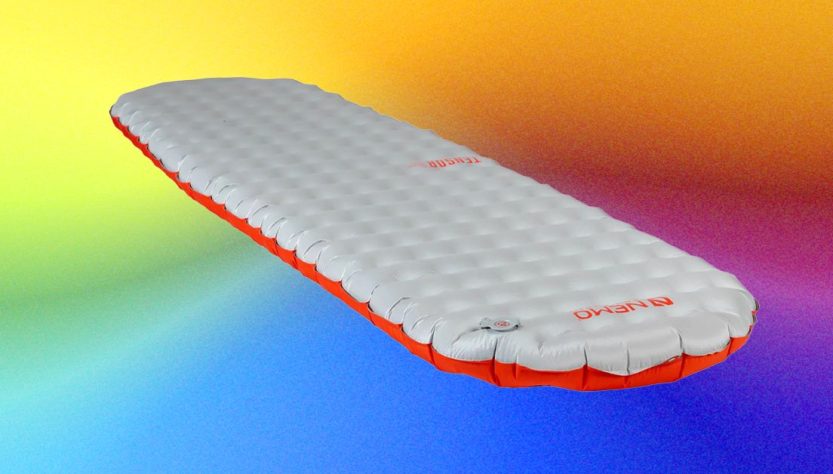
I’ve seldom faced issues with inflatable sleeping pads. Some have lost air, but none have fully deflated (knock on wood). Here are a few suggestions for a restful night’s sleep and an enjoyable journey.
**Avoid using your mouth to inflate your pad**: Some pads are large, and inflating them by mouth can be cumbersome. Your breath adds warm, moist air, potentially leading to mildew and mold, although this concern might be exaggerated. Many have opened pads and discovered no mold. Most brands now come with a pump sack for quick inflation. There are also lightweight motorized pumps, like the Flextail pump.
**Be cautious with inflation**: Insulated pads form a barrier between you and the chilly ground. Inflate until firm, then let out some air while lying down until you feel comfortable. A pad that isn’t fully inflated isn’t as thick, so you might hit the ground. This is less problematic for back or stomach sleepers but might require some adjustment for side sleepers.
**Bring a patch kit**: Most pads include patch kits, but I prefer carrying a small roll of Tenacious Tape, which can repair tears in various camping gear. Test the tape on your pad in advance and pack an alcohol wipe to clean the area to be repaired.
**Women require higher R-value pads**: Women typically have lower body mass, necessitating about 1 extra R-value for comparable insulation. This is also recommended if you tend to be a cold sleeper.
**Sleeping bag ratings are based on R5 pads**: Temperature ratings on sleeping bags assume the use of a pad with an R-value of 5 or greater along with a base layer. If your pad’s R-value is lower, you’ll need to adjust your sleeping bag’s temperature rating. For example, a 30-degree quilt paired with an R4 pad won’t be adequate in freezing conditions; either upgrade the pad’s R-value or opt for a warmer sleeping bag.