
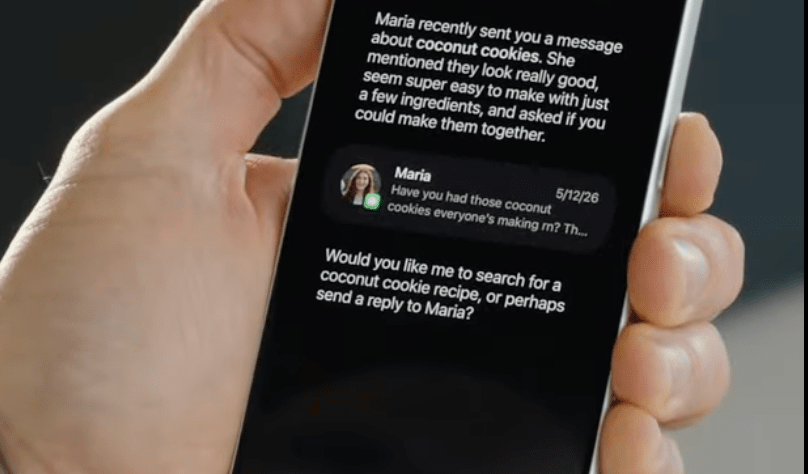
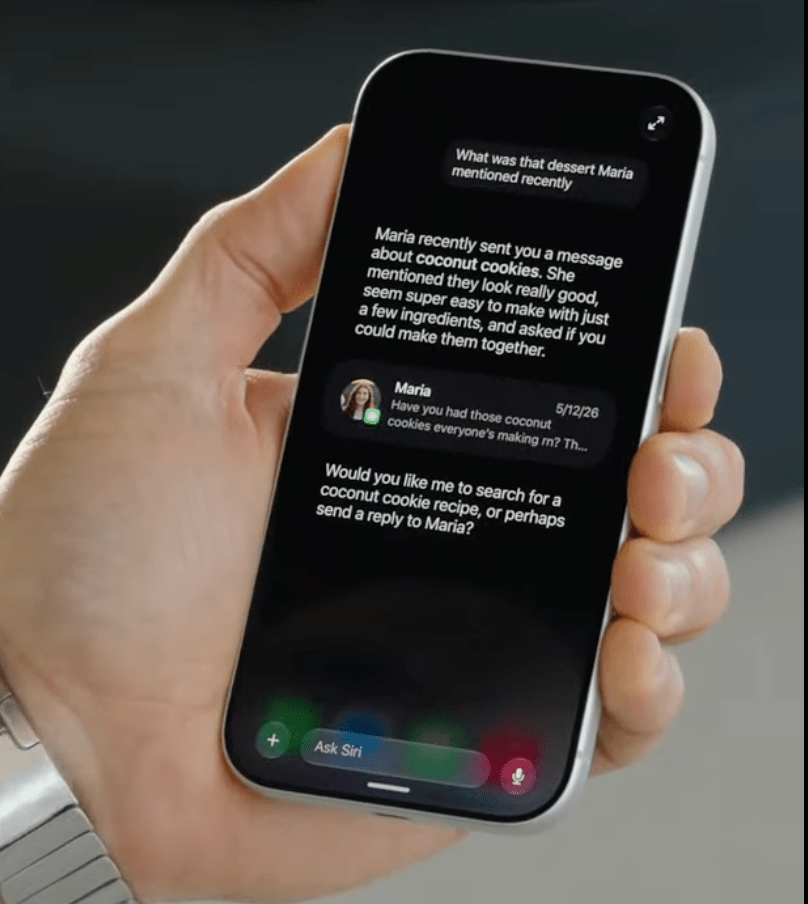
Following several delays, Siri AI made its debut in the consumer beta version of iOS 27, released in July. The AI assistant now fulfills Apple’s promises: It comprehends your personal context, leverages extensive world knowledge to respond to your queries, and retrieves relevant information stored on your iPhone.
Nevertheless, the launch feels somewhat underwhelming. Apple now possesses a functional — indeed, rather impressive — AI assistant, but it has arrived after the novelty and excitement of such a launch have faded.
In fact, the AI competition has rapidly advanced during the time Apple has lingered on AI. Currently, AI tools are developing software, AI agents are executing multistep tasks, and AI is collaborating with you, using your computer, reasoning, thinking, remembering, creating media, and more. Being merely a functional chatbot or AI assistant no longer constitutes the groundbreaking development it once represented.
This is not to imply that Apple’s Siri AI lacks value or utility. With the launch of Siri AI, Apple has delivered on its commitments and more.
You can now engage in natural, back-and-forth dialogues with Siri, which offers settings to adjust the expressiveness and pacing of its voice responses. Additionally, you can type to the assistant if you prefer, or use it through a dedicated app for the first time, allowing for reference to previous conversations.
The assistant is capable of understanding your personal context, aiding you in locating items such as photos, emails, contacts, texts, or calendar events—even when you’re uncertain about what you’re searching for or where it is. For example, you could request it to display the last receipt you saved on your iPhone, without specifying its location or purpose, and Siri will retrieve it for you.
You can also inquire about information you’ve saved only as a photo, such as your driver’s license number from a picture of your license, or a QR code you captured for future reference. You can navigate websites and operate apps via Siri, accomplishing tasks such as acquiring directions, playing music, editing a photo, drafting an email, listening to your audiobooks, and much more.
Fortunately, Siri now reliably and accurately plays the song, podcast, or audiobook you request on your chosen app—a minimal expectation, to be certain, but one that Siri struggled with previously.
Siri is also capable of brainstorming with you. Among other functionalities, it can assist you in refining ideas, exploring a new topic, or finding a recipe—like suggesting a dish you can prepare with the random ingredients available in your fridge! You can ask about concert dates for your favorite band or when a certain event occurs, and Siri responds accurately, providing you the information you need based on your location.
You can utilize Siri through the camera’s viewfinder to gather information about real-world objects or to help you divide a restaurant tab with friends.
In essence, it is precisely what you have always desired Siri to be: a helpful assistant that simplifies using your iPhone by just speaking, and one that can answer various questions instead of directing you to the web.
These enhancements were made possible by Apple’s collaboration with Google for the utilization of its Gemini AI models. Apple didn’t merely label its product with Gemini AI; it employed Google’s technology to train and enhance its own proprietary Apple Foundation Models. The outcome is AI models tailored to operate on Apple’s own silicon and within its private cloud computing infrastructure, functioning as intended.
However, despite finally introducing a functional, helpful version of Siri, it feels almost as if Apple has merely repaired a long-standing issue—a continuously unreliable Siri—rather than achieving something groundbreaking. This is how Siri was always supposed to perform. The only wonder is that, after years of failing to execute tasks properly, it indeed works.
The general public, who do not operate beta builds on their devices, will be granted access to the new Siri once Apple officially launches iOS 27, anticipated in September.
When you purchase through links in our articles, we may earn a small commission. This doesn’t affect our editorial independence.