

Prior to this week, the prevailing narrative about Nvidia was essentially this: Throughout the initial years of the AI surge, Nvidia stood as the sole provider of premium GPUs, which became extraordinarily lucrative as the sector expanded. Recently, hyperscalers like Amazon and Google have begun developing their own chips, resulting in Nvidia no longer being the sole option available, prompting investors to question the sustainability of its edge.
This is a captivating narrative, and largely accurate. After experiencing a tenfold increase in its market capitalization from early 2023 to mid-2025, Nvidia’s stock has followed a more tempered path over the last year, influenced by worries regarding GPU rivalry.
A fresh narrative has emerged following the company’s earnings report on Wednesday, and investors are starting to recognize that Nvidia’s strengths extend far beyond GPUs. As AI’s computational needs escalate to gigawatt levels, orchestration has transformed into a progressively intricate responsibility. Unsurprisingly, Nvidia has developed much of the cutting-edge hardware required to manage it, providing the company with a substantial advantage in the systems surrounding the GPU, despite facing intensified competition in GPU production itself.
For all the discussions regarding computing as a commodity, managing a megascale data center at optimal efficiency remains extraordinarily challenging — and as deployments become larger and more rapid, this challenge only intensifies.
Rack by Rack
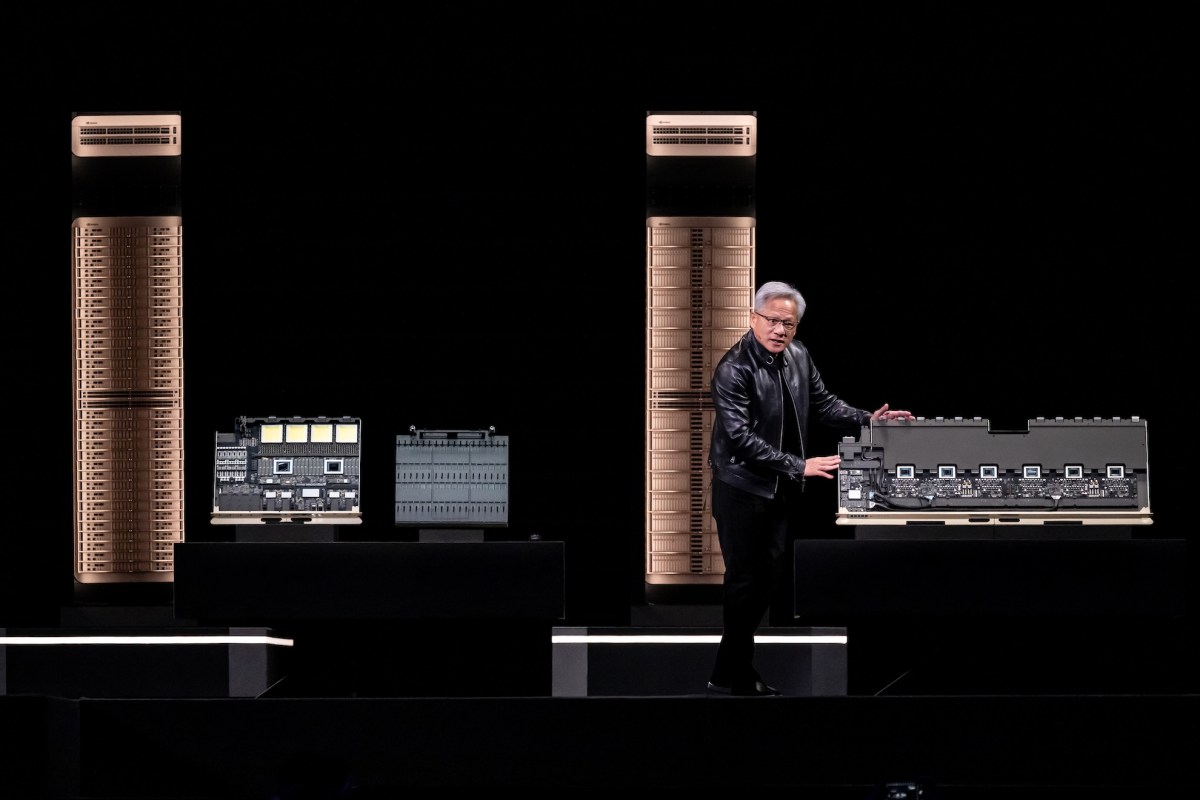
You can observe some of this simply by examining the specifics of what Nvidia is offering. The company is currently introducing its Vera Rubin architecture, which combines the Rubin GPU with various other units, such as the Vera CPU, the Groq 3 LPX inference accelerator, and similar racks for storage and networking.
Over the past week, I’ve engaged with representatives at Nvidia about the functions of these systems, and the findings have been quite revealing. Like the Rubin GPU itself, they are highly specialized systems, but rather than solely processing tokens, they ensure that everything surrounding the GPU operates as efficiently as possible. If the GPU serves as the engine, these components function as the rest of the vehicle.
Particularly, the Vera CPU is concentrated on the challenge of data orchestration. “Vera is significant because there’s a limit to the memory you can fit within a single server or any compute platform,” Jason Hardy, Nvidia’s VP of storage technology, explained to me.
As data centers have escalated their computing capabilities, the memory capacity has likewise increased, which is why businesses like Micron have thrived in the recent infrastructure boom’s second wave. However, delivering that data to the GPU at the appropriate moment is not trivial — and as firms strive to lower tokens-per-watt, they are coming to realize the critical importance of directing that traffic.
“We observed improvements exceeding 3x in these operations, where the Vera CPU enables acceleration,” Hardy remarked. “Thus, we can now fully utilize our flash without creating bottlenecks.”
Similar versions of this issue can be identified beyond Nvidia. When OpenAI created its Jalapeño chip, a primary goal was to entirely circumvent these obstacles by minimizing data movement.
“We designed Jalapeño to reduce data movement and communication delays,” the company mentioned in a blog entry earlier this month. “Its expansive domain allows the entire workload to remain within a single connected system, thereby minimizing data movement and ensuring that the complete request remains rapid and efficient from start to finish.”
This presents an alternative approach, eliminating data movement by executing a workload within a single integrated chip. Yet the underlying principle is consistent, boosting efficiency through more intelligent traffic management instead of merely relying on increased processor cycles. This, in turn, paves the way for a new tier of infrastructure for companies to vie over.
This new emphasis on data orchestration does not guarantee a victory for Nvidia. The firm will need to contend with competing chipmakers and hyperscalers just as it has with GPUs. However, the competition has evolved to a new dimension, where creating a rival GPU is less pertinent than ensuring the efficiency of the entire system.
And at least during the initial stages, Nvidia appears to have a significant advantage.
When you purchase through links in our articles, we may earn a small commission. This doesn’t affect our editorial independence.