
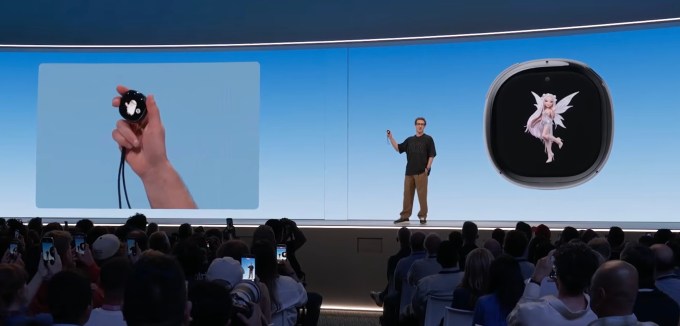
Is Meta’s recently revealed Muse Charm a fun gadget designed to make AI more accessible to common users, or will it just be another failure among the myriad of AI hardware devices that flopped, like the Ai Pin, Rabbit, or Friend pendant? So far, the feedback has been varied. Nevertheless, what the Charm represents is very much in line with current trends.
Whether one likes it or not, the design could attract Gen Z users who, in this post-Labubu phase, have shown interest in a variety of dangling accessories attached to keychains and bags. This shift is part of a wider kitschy, retro-influenced movement in their style choices regarding fashion and technology.
Gen Z has already established a market for dangling items, from lip glosses to hand sanitizers to sun protection and fragrances, all transformed into bag charms, mainly aimed at women.
Hailey Bieber’s trending Rhode lip case, which attached lip gloss to a phone case, significantly influenced the notion that beauty items could also serve as fashion accessories, alongside other beauty-themed bag charms. (The brand recorded $212 million in annual net sales from a lineup of around 10 products, as Vogue reported last year when the company announced its billion-dollar sale to Elf Beauty.)
Additionally, the Labubu phenomenon led to the surge in sales of the so-ugly-it’s-cute fuzzy monster bag charm, pushing Pop Mart’s (the Chinese brand behind the product) revenue to $1.8 billion in 2024, which is a 7x increase from 2019. Even though the Labubu’s popularity has since waned, the notion of decorative bag charms remains strong. One research firm projects the global bag charm market will surpass $1 billion by 2030.
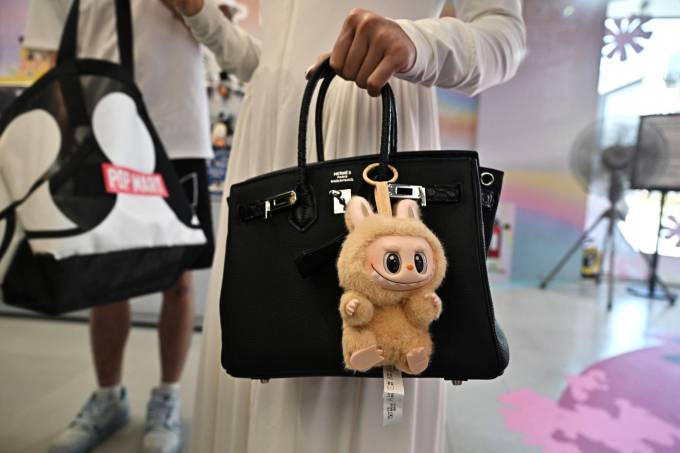
Currently, bag charms may take the form of characters, embellished beauty items, or other fanciful creations, such as Coach’s sought-after cherry charms, a top choice among Gen Z. Their popularity lies in the fact that they allow for personal expression, similar to how people have long done through their fashion selections, cosmetics, and adornments.
In a similar vein, Meta’s Muse is a customizable figure; you create your own avatar, which makes the AI agent a representation of yourself as well.
Moreover, as many have observed, the Muse Charm’s design brings to mind a Tamagotchi, the portable digital pet that became a significant toy craze in the late 90s and again in the mid-2000s.
However, the Tamagotchi is not the most recent example. The Muse Charm appears to be an adaptation of what some younger individuals are already doing with their Apple Watch. Frequently intended as a method to repurpose an older gadget, the idea of the Apple Watch keychain or charm is gaining traction, spurred on by TikTok videos showcasing various ways to utilize the watch when it’s not worn on the wrist.
On platforms like Amazon and Walmart, as well as marketplaces like eBay and Etsy, thousands of Apple Watch keychains, bands, pendants, lanyards, clips, and bag charm cases are now available in nearly every imaginable style. Unsurprisingly, these keychain watches are often embraced by younger women primarily as fashion pieces, rather than merely technological devices.
This scenario intertwines with the wider retro-tech movement, which has witnessed the resurgence of older technologies such as digital cameras, flip phones, iPods, CDs, cassette tapes, home phones, and wired headphones.
This shift in technology comes at a time when young individuals express that the addictive, algorithm-dominated feeds and the “soulless” nature of tech make them feel increasingly disconnected, which has also contributed to the trend of seeking tactile technology. (One startup, Clicks, is even reviving the physical phone keyboard in a BlackBerry-alike device, for example.)
For Gen Z, these tangible items help them feel more connected to the technology they engage with and provide a sense of agency in a realm where technology has become so deeply woven into daily life that using it feels more like an obligation than a choice.
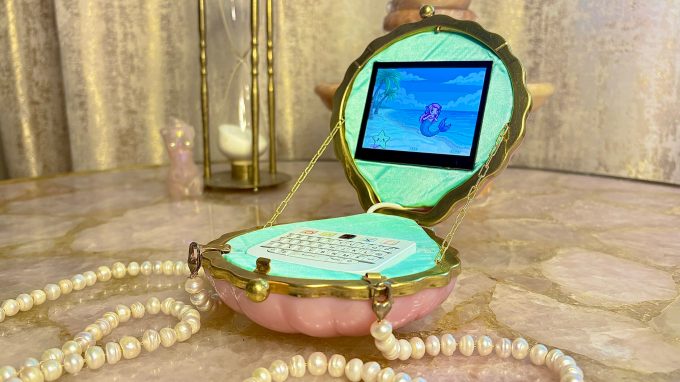
Young women have once again been leading this movement, with some even creating their own portable, mini computers, referred to as “cyberdecks,” which they fit into clamshell bags or specialty cases and adorn with gems, flowers, stickers, pearls, and other elements to give them a more personalized touch.
This brings us back to the Muse Charm. While it’s evidently crafted with the tech-as-fashion accessory trend in mind, its success is not guaranteed.
Meta has significantly undermined consumer trust over the years, perhaps to an extent that full recovery may be impossible.
For instance, the tech behemoth had to resolve issues with the FTC regarding allegations of misleading consumers by making their private information public without consent, and has faced penalties from the FTC for numerous privacy infractions. In 2023, the FTC accused Meta of breaching a privacy order established after the 2019 settlement. It has repeatedly appeared before Congress due to its impact on minors, has either lost or settled several lawsuits regarding similar issues, and has faced numerous whistleblower revelations of its misdeeds.
Such reckless privacy practices may ultimately result in Meta failing to become the preferred consumer AI… unless, of course, consumers conclude that the “known devil” is preferable to the one that remains unfamiliar. (Especially when the alternative warns that AI could endanger humanity.)
Meta’s ultimate aim is, after all, targeted and personalized advertisements. If accessing free AI comes at the cost of privacy — Meta intends to make money from Muse by imposing a nominal fee on transactions — consumers might be open to taking the risk.
When you purchase through links in our articles, we may earn a small commission. This doesn’t affect our editorial independence.