Anthropic's Claude announces extensive downtime

Anthropic’s Claude announces extensive downtime

Anthropic faced significant disruptions on Monday morning, with numerous users reporting difficulties accessing Claude services.

The outage appears to impact both Claude.ai and Claude Code, although the company stated that the Claude API is functioning as expected. Most users encounter the error while trying to log in, as depicted in the screenshot below.

Image credits: TechCrunch

“The problems we are experiencing pertain to Claude.ai and the login/logout processes,” the company’s status page indicates. Anthropic has not provided specific details regarding the cause of the outage, though they have acknowledged an issue and are working on a solution.

The disruption comes after a surge of users to Claude, which seems to have gained from the attention surrounding the company’s tense negotiations with the Pentagon. The chatbot app climbed to the top of the App Store rankings this weekend, surpassing competitor ChatGPT, after a prolonged period positioned outside the top 20.

U.S. President Donald Trump instructed federal agencies last week to cease using Anthropic products following a disagreement over safeguards that prevent the Department of Defense from utilizing its AI models for extensive domestic surveillance or fully autonomous weaponry. Secretary of Defense Pete Hegseth stated he would classify the company as a supply-chain risk, although Anthropic reports that it has not yet received any official notifications.

When the Internet Breaks Down, Reality Vanishes

When the Internet Breaks Down, Reality Vanishes

Alaqad asserts that the loss of on-the-ground journalists equates to a loss of vital truths, as mainstream media outlets dictate the storyline. “Voices that are silenced and censored prevent us from fully grasping events,” she remarks.

During crises, disrupted communication leads to a lack of accountability and overlooked injustices. “Injustice shouts,” Alaqad claims, “while justice must be even louder.”

Journalists encounter ongoing suppression. In December 2025, Reporters Without Borders highlighted the deaths of 67 journalists that year, with 43 percent occurring in Gaza at the hands of Israeli forces. Since October 7, 2023, RSF reports over 220 fatalities among journalists in Gaza, whereas the UN reports a figure exceeding 260.

Dagher points out that the media blackout is part of a comprehensive tactic that includes limited movement and communication. Israel refutes the claim of targeting journalists.

“Murders of journalists stifle the truth,” Alaqad states. This leads to several consequences—diminishing on-ground reports and portraying journalists as dangers. “Such a message discourages individuals from interacting with journalists,” she observes.

Her protective press gear signaled her as a target, causing her mother to worry about her safety. Initial warm greetings and hospitality shifted to caution upon witnessing the targeting of journalists, Alaqad reflects.

Operating in Gaza involved navigating unpredictable conditions. Plans seldom extended beyond daylight hours, and circumstances rapidly evolved. “Uncertainty is the sole certainty,” Alaqad notes.

She frequently discovered that those she interviewed were subsequently killed in airstrikes. Now residing in Beirut, she studies media at the American University, backed by the Shireen Abu Akleh scholarship, named in honor of a journalist who lost her life due to Israeli forces.

Her widespread social media presence unveiled the truth of Gaza, yet also put her life at risk. While digital reporting reaches a broad audience, its permanence remains unstable, as accounts and content can vanish in an instant.

Polymarket witnessed $529M exchanged on wagers related to the bombing of Iran.

Polymarket witnessed $529M exchanged on wagers related to the bombing of Iran.

Participants in prediction markets have engaged in significant wagers concerning the potential bombing of Iran by U.S. and Israeli forces, reaping profits in the process.

According to Bloomberg, contracts associated with the timing of the attack saw $529 million traded on Polymarket. An investigation by the analytics company Bubblemaps SA revealed that six newly established accounts finished with a profit of $1 million by accurately betting that the U.S. would target Iran by February 28 — a pattern that may suggest insider trading.

While these wagers might simply indicate wider speculation regarding U.S. actions in Iran, Bubblemaps CEO Nicolas Vaiman pointed out that the flow of information “related to war or conflict,” along with Polymarket’s anonymity, “can incentivize informed participants to take action earlier.”

In January, the analytics firm Polysights also observed a notable increase in bets regarding the possibility that Iran’s late Supreme Leader Ali Khamenei would not retain his position by the end of March.

In response to worries that such wagers might effectively introduce a financial motive for assassination, Kalshi CEO Tarek Mansour stated, “We do not offer markets directly related to death. When markets exist where potential outcomes involve death, we formulate the rules to ensure individuals cannot gain from death.” He further mentioned that Kalshi would reimburse all fees associated with these bets.

Let’s examine the top alternatives to Discord

Let’s examine the top alternatives to Discord

The social community platform Discord is set to implement age verification requiring users to confirm their age by mid-2026, raising concerns among users regarding the privacy implications of sending a government ID or facial scan to the platform. While most functionalities remain accessible without verification, many users express discomfort in sharing additional personal information with a company that experienced a data breach last year, exposing the IDs of approximately 70,000 users. 

For certain users, this serves as a sufficient reason to look for other platforms that emphasize security and privacy, or simply provide a different user experience. Here’s a review of the most notable Discord alternatives, ranging from open-source secure options to voice-centric platforms tailored for serious gamers. 

Stoat

Image Credits:Stoat

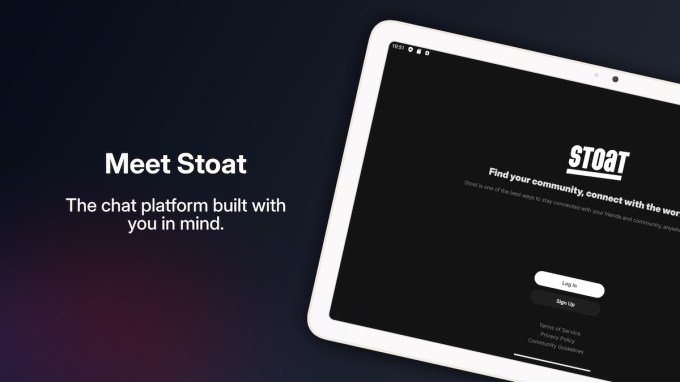
Stoat (formerly known as Revolt) is recognized as a leading alternative to Discord in terms of layout and functionality. As an open-source initiative, it empowers users with enhanced control over their data, appealing to those who prioritize privacy and openness. In general, the platform is straightforward for Discord users to navigate, featuring comparable text and voice channels, along with community servers. 

Nonetheless, Stoat is a relatively nascent platform (established in 2021) and currently grapples with initial developmental challenges. Recently, it faced issues with server capacity and occasional lag during peak user times. Its feature support still lags behind that of Discord, and user onboarding can sometimes be slow, particularly during spikes in popularity. For users willing to exchange a degree of reliability for enhanced privacy, Stoat may be worth considering.

Element

Image Credits:Element

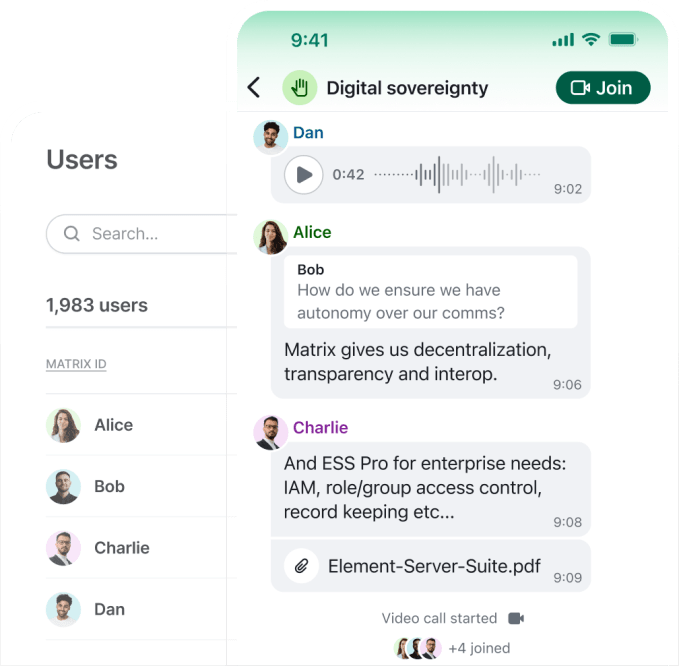
For users who value privacy and autonomy above all, Element presents an attractive choice. Based on the decentralized Matrix protocol, Element allows users to host their own servers, uphold end-to-end encryption, and interact with other Matrix-related services. This setup guarantees that no singular entity holds dominion over your data. 

Although the setup process and interface requires more technical knowledge compared to Discord, Element is well-suited for individuals who prioritize secure and decentralized communication.

TeamSpeak

Image Credits:TeamSpeak

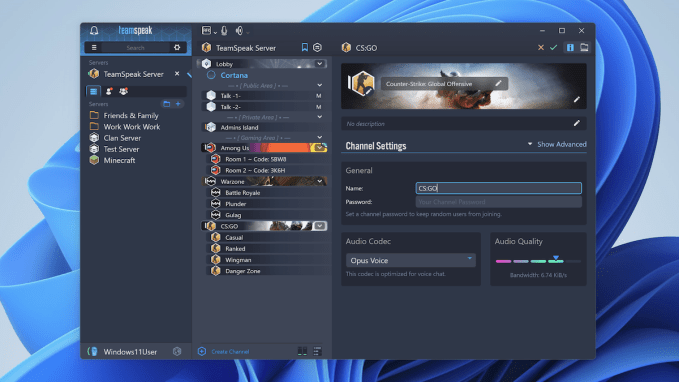
For those whose main requirement is high-quality, low-latency voice communication, TeamSpeak represents the premier alternative to Discord. It remains favored among competitive gamers for its superior audio quality and private server capabilities, although its text chat and media sharing functionalities are relatively basic. Furthermore, it lacks built-in video calling and features like emojis and gifs. Thus, for groups that focus heavily on voice without the additional features, it serves as an excellent option.

Techcrunch event

San Francisco, CA
|
October 13-15, 2026

Similar to Stoat, TeamSpeak has seen an influx of new users, prompting the platform to boost its hosting capabilities. In February, TeamSpeak launched two additional community creation regions: “Frankfurt 3” and “Toronto 1.”

Mumble

Mumble is a complimentary, open-source voice communication application. Like TeamSpeak, it delivers high-quality, low-latency audio and allows users to host and personalize their own servers. However, its interface appears dated and lacks several features available in Discord, making it more suitable for dedicated gamers who prioritize voice communication over community engagement through video calls, media sharing, or screen sharing.

Discourse

Image Credits:Discourse

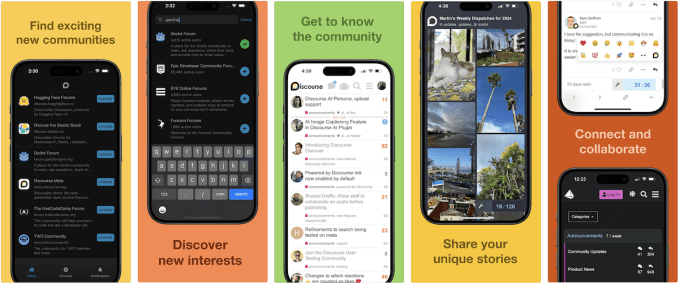
Individuals who appreciate lengthy, well-structured discussions over rapid chat may find Discourse more attractive. As an open-source forum platform, Discourse accommodates threaded exchanges, making it ideal for educational groups, professional teams, and communities that emphasize detailed conversations. However, those seeking instant messaging, voice, and more casual group chats may find it less intuitive than Discord.

Slack, Microsoft Teams, Signal, or WhatsApp

Other significant mentions include Slack and Microsoft Teams, which are well-suited for professional and productivity-centered communication. Signal is another excellent option for those seeking end-to-end encryption and privacy. On the other hand, WhatsApp provides free messaging and group voice calls, though it is not tailored for gaming or expansive communities.

What to know about age verification on Discord 

Discord recently revealed plans to introduce age verification protocols aimed at fostering a safer environment, particularly for younger users. This effort is intended to confirm that users meet the appropriate age requirements to access specific features and communities on the platform. Users might need to verify their age through various methods, which may involve submitting an ID, undergoing a facial age estimation, or utilizing a credit card. 

By default, all users will start with a “teen-appropriate” setting, and only those verified as adults will have the capacity to adjust certain settings or navigate age-restricted content. Adults will need to verify their status to view sensitive content and to access channels and servers catered to an older audience. 

Following a recent backlash, Discord has postponed the official rollout to the second half of 2026, noting that 90% of users will not need to undergo age verification and can continue utilizing the platform without alterations, as many users do not interact with age-restricted content. The platform had initially intended to implement age verification in March. 

Google aims to address persistent RCS spam in India — but not by itself

Google aims to address persistent RCS spam in India — but not by itself

With ongoing spam issues hindering Google’s Rich Communication Services (RCS) expansion in India, the firm is focusing on enhanced carrier integration to improve protections on the platform.

On Sunday, Bharti Airtel, India’s second-largest telecom provider with over 463 million subscribers, announced its collaboration with Google to merge the carrier’s network-level spam filtering into the local RCS network. This initiative aims to enhance defenses against unwanted communication and fraud within the platform, according to the companies.

India has proven to be an especially tough market for spam and fraud in messaging, influenced by the extensive mobile user demographic, swift growth in digital payment systems, and incisive enterprise marketing strategies. In 2022, reports regarding unsolicited advertisements on Google’s RCS—mostly sent via the Google Messages app—were significant enough for the company to momentarily halt business promotions on the service in India. However, some users are still expressing frustrations over spam messages on Google Messages, indicating that the problem persists.

Airtel mentioned it had exercised caution in deepening its collaboration with Google’s RCS until traffic could be filtered through its own spam detection systems, emphasizing telecom operators’ apprehensions regarding increasing fraud threats.

“We had refrained from onboarding Google because we initially wanted RCS messages to be funneled through the Airtel spam filter,” a representative from Airtel stated.

Through this partnership, Airtel’s network intelligence will integrate with Google’s RCS platform to facilitate real-time evaluations of business messaging, including sender authentication, spam identification, and compliance with users’ do-not-disturb settings. Airtel characterized this initiative as a “global first” for incorporating a telecom operator’s spam detection directly into an over-the-top messaging platform, although the companies did not offer comparative specifics.

“We are dedicated to further collaborating with the wider ecosystem of carriers to foster a consistent and reliable messaging experience for RCS users globally,” stated Sameer Samat, president of the Android ecosystem at Google. This remark suggests the company may seek to replicate this model beyond India while striving to standardize security within the RCS ecosystem.

Techcrunch event

San Francisco, CA
|
October 13-15, 2026

India is a pivotal market for Google’s messaging aspirations, boasting over a billion internet users and more than 700 million smartphone users. The nation also has over 853 million WhatsApp users, according to World Population Review, accentuating the competitive landscape in mobile messaging.

Prabhu Ram, vice president of the industry research group at CyberMedia Research, noted that the increased carrier integration signifies efforts to address enduring vulnerabilities in rich messaging ecosystems that have been susceptible to spam and fraud.

“The success of this partnership should be evaluated through metrics like decreases in spam volume, user complaints, and fraud occurrences, along with enhancements in engagement with legitimate messages,” Ram informed TechCrunch.

Airtel has intensified its anti-spam initiatives over the past year, stating that its AI-driven systems have blocked upwards of 71 billion spam calls and 2.9 billion spam messages, contributing to nearly a 69% reduction in fraud-related financial losses on its network.

More generally, Google has been advocating RCS as the next generation of SMS, asserting in May 2025 that the standard was processing more than a billion messages daily in the U.S., based on a 28-day average.

Google did not clarify whether similar integrations with carriers are anticipated in other markets or provide estimates concerning the potential reduction of spam and fraud from this initiative.

Investors reveal what they no longer seek in AI SaaS firms

Investors reveal what they no longer seek in AI SaaS firms

In recent years, investors have invested billions in AI firms as the technology remains influential in the Valley and the global landscape. Yet, not all AI companies are captivating investor interest.

In fact, as it appears that numerous companies are rebranding to incorporate “AI” into their titles, several startup concepts have fallen out of favor with backers. TechCrunch consulted VCs to determine what traits investors no longer seek in AI software-as-a-service startups.

Currently favored SaaS sectors for investors include startups developing AI-native infrastructure, vertical SaaS with exclusive data, systems of action (aiding users in completing tasks), and platforms that are deeply integrated into essential workflows, according to Aaron Holiday, managing partner at 645 Ventures. 

He also outlined a list of companies that are currently deemed rather uninspiring to investors: startups creating thin workflow layers, generic horizontal solutions, light product management tools, and superficial analytics — effectively, anything that an AI agent can now efficiently perform. 

Abdul Abdirahman, an investor at F Prime, noted that generic vertical software “lacking proprietary data advantages” is out of favor, and Igor Ryabenky, founder and managing partner at AltaIR Capital, elaborated on this sentiment. He stated that investors are wary of anything that lacks substantial product depth. 

“If your uniqueness mainly resides in UI [user interface] and automation, that’s simply not sufficient anymore,” he articulated. “The entry barrier has lowered, complicating the establishment of a genuine moat.” 

New entrants to the market must focus on “real workflow ownership and a clear comprehension of the problem from the outset,” he specified. “Extensive codebases are no longer a bonus. What weighs more is agility, concentration, and the capacity to adapt swiftly. Pricing must also offer flexibility: rigid per-seat arrangements will be more challenging to justify, whereas consumption-based pricing aligns better in this setting.” 

Techcrunch event

San Francisco, CA
|
October 13-15, 2026

Jake Saper, a general partner at Emergence Capital, shared insights on ownership as well. To him, the distinctions between Cursor and Claude Code serve as the “canary in the coal mine.” 

“One governs the developer’s workflow, while the other merely performs the task,” Saper remarked. “Developers are increasingly opting for task execution over process management.” 

He noted that any product addressing “workflow stickiness” — which aims to engage numerous human users to repeatedly utilize the product — may face challenges as agents take over the workflow.

“Prior to Claude, persuading humans to use your software was a significant advantage, but if agents are carrying out the tasks, who remains concerned about human workflows?” he told TechCrunch.

He also believes that integrations are losing their allure, particularly as Anthropic’s model context protocol (MCP) simplifies the connection of AI models to external data and systems. This allows users to bypass the need to download numerous integrations or develop customized ones; they can simply employ the MCP. 

“Being the connector used to be an advantage,” Saper stated. “Shortly, it will become a utility.”

Additionally, the “workflow automation and task management tools that facilitate the coordination of human tasks are diminishing in necessity if, over time, agents solely carry out the tasks,” Abdirahman observed, citing examples, primarily public SaaS companies experiencing stock declines as new AI-native startups emerge with superior and more efficient technologies. 

Ryabenky mentioned that the SaaS companies struggling to secure funding at present are those easily replicable.

“Generic productivity applications, project management solutions, basic CRM replicas, and superficial AI integrations atop existing APIs belong to this category,” he remarked. “If the product consists mostly of an interface layer without substantial integration, proprietary data, or embedded process expertise, robust AI-native teams can replicate it rapidly. This is what prompts investors to be cautious.”

Overall, what continues to appeal about SaaS is depth and expertise, with tools integrated into pivotal workflows. He indicated that companies should currently focus on embedding AI thoroughly into their offerings and update their marketing accordingly, Ryabenky reiterated.

“Investors are redirecting capital toward businesses that control workflows, data, and domain expertise,”  Ryabenky concluded. “And away from offerings that can be duplicated with little effort.” 

OpenAI discloses additional information regarding its contract with the Pentagon

OpenAI discloses additional information regarding its contract with the Pentagon

CEO Sam Altman acknowledged that OpenAI’s agreement with the Department of Defense was “undeniably hurried,” and “the perception isn’t favorable.”

Following the collapse of discussions between Anthropic and the Pentagon on Friday, President Donald Trump instructed federal agencies to cease utilizing Anthropic’s technology after a six-month adjustment window, while Secretary of Defense Pete Hegseth labeled the AI firm a supply-chain risk.

In response, OpenAI swiftly announced it had finalized its own agreement for models to be implemented in classified settings. With Anthropic asserting that it would not allow its technology to be used in fully autonomous weapons or large-scale domestic surveillance, and Altman confirming that OpenAI maintained similar boundaries, several pertinent questions arose: Was OpenAI truthful about its protections? How could it finalize a deal when Anthropic could not?

While OpenAI executives defended the deal on social media, the company also released a blog post detailing its stance.

The post highlighted three domains where OpenAI claimed its models are prohibited — mass domestic surveillance, autonomous weapon systems, and “high-stakes automated decisions (e.g., systems like ‘social credit’).”

The firm declared that unlike other AI entities that have “diminished or eliminated their safety guardrails and relied mainly on usage policies as their principal safeguards in national security applications,” OpenAI’s agreement shields its boundaries “through a more comprehensive, multilayered strategy.”

“We retain complete discretion over our safety framework, we operate through the cloud, authorized OpenAI personnel are involved, and we have robust contractual protections,” the blog stated. “This complements the strong safeguards already present in U.S. law.”

Techcrunch event

San Francisco, CA
|
October 13-15, 2026

The company added, “We are unsure why Anthropic couldn’t secure this agreement, and we hope they and other laboratories will consider it.”

After the blog was released, Techdirt’s Mike Masnick asserted that the agreement “certainly permits domestic surveillance,” as it states that the collection of private information will adhere to Executive Order 12333 (in addition to various other laws). Masnick characterized that order as “how the NSA obscures its domestic surveillance by intercepting communications by accessing lines *outside the US*, even if involving information from/on US citizens.”

In a LinkedIn post, OpenAI’s head of national security partnerships Katrina Mulligan contended that much of the conversation surrounding the contract language presumes “the only barrier between Americans and the utilization of AI for mass domestic surveillance and autonomous weaponry is a singular usage policy clause in a solitary contract with the Department of War.”

“That’s not how any of this functions,” Mulligan stated, adding, “Deployment architecture is more crucial than contract language […] By confining our deployment to cloud APIs, we can guarantee that our models cannot be directly embedded into weapons systems, sensors, or other operational devices.”

Altman also addressed questions regarding the agreement on X, where he acknowledged that it had been rushed and provoked notable backlash against OpenAI (to the point that Anthropic’s Claude surpassed OpenAI’s ChatGPT in Apple’s App Store on Saturday). So why proceed?

“We truly aimed to de-escalate matters, and we believed the deal being offered was favorable,” Altman remarked. “If we are correct and this indeed results in a de-escalation between the DoW and the industry, we will be seen as geniuses, and a company that endured considerable pain to assist the sector. If not, we will continue to be perceived as […] hasty and careless.”

Honor claims its 'Robot phone' featuring a mobile camera can groove to tunes.

Honor claims its ‘Robot phone’ featuring a mobile camera can groove to tunes.

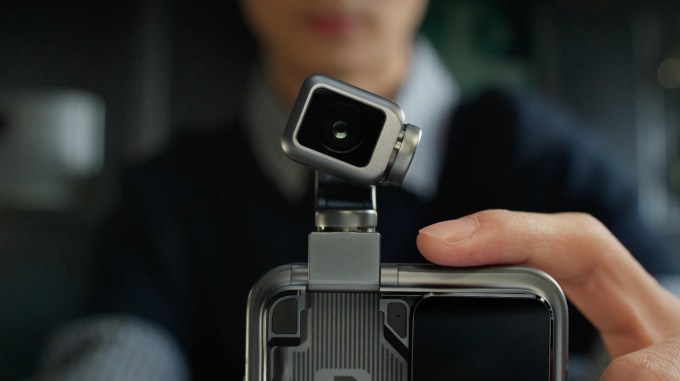
Earlier this year, Honor first hinted at its “Robot phone” featuring a movable camera arm. In anticipation of the Mobile World Congress (MWC) taking place in Barcelona, the Chinese firm shared more information about the device, highlighting its ability to react to various scenarios autonomously. The company indicated plans to unveil this device in the latter half of this year.

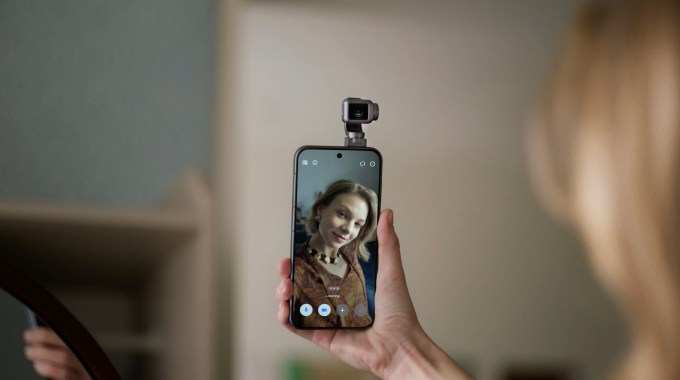
Honor disclosed that the robot possesses a “personality” and can interact with users through “head shakes” and even dance in time with music. They emphasized that users can communicate with the phone’s assistant via text and voice. Honor demonstrated a video showing a user requesting clothing suggestions, with the robot nodding or shaking its head to indicate outfit choices.

Equipped with a 200-megapixel camera on a three-axis gimbal with stabilization technology, the phone can seamlessly rotate to capture steady videos and images. The device also features a Super Steady mode for filming. The firm stated that cinematic shots can be achieved with its Spinshot capability, allowing the robot camera to rotate by either 90 or 180 degrees.

Image Credits: Honor

The robotic camera enhances video calling experiences, capable of tracking users through AI-assisted object tracking technology. If effective, this feature compares to an advanced version of Apple’s Center Stage.

The company revealed that it created a proprietary micro motor to manage the camera’s movements. They mentioned that they applied certain techniques from foldable phones to enhance the camera’s durability and accommodate the four-degree-of-freedom gimbal system within the device’s structure. Honor confirmed that the same sturdy materials used in the Honor Magic V6’s hinge are being utilized for the robotic arm, which has a tensile strength of 2800 MPa.

Image Credits: Honor

At its event, Honor also launched the Honor Magic V6 foldable featuring a 6,600 mAh battery, the Honor MagicPad 4 tablet, and the Honor MagicBook 14 laptop.

Techcrunch event

San Francisco, CA
|
October 13-15, 2026

Honor introduces its latest slim foldable Magic V6, equipped with a 6,600 mAh battery.

Honor introduces its latest slim foldable Magic V6, equipped with a 6,600 mAh battery.

Honor unveiled its latest foldable device, the Honor Magic V6, featuring a robust 6,600 mAh battery and an innovative durable hinge just before the Mobile World Congress (MWC) in Barcelona.

The Chinese brand is committed to showcasing that it produces the slimmest foldable devices. This year’s model measures 4mm in thickness when open and 8.75 mm when closed. In comparison, last year’s Magic V5 had a thickness of 4.1 mm when unfolded and 8.8 mm when folded. While the differences are minimal, they enable the company to substantiate its assertions.

The battery might be among the standout features of the device. The Honor Magic V6 is equipped with a 6,600 mAh battery, an upgrade from the 5,820 mAh found in the previous model. Utilizing Honor’s SuperCharge technology, it supports charging at 80W via a wired connection and 66W wirelessly.

Additionally, Honor showcased a new Silicon-carbon battery technology featuring a 32% silicon density that could elevate the battery capacity of foldable phones beyond 7,000 mAh.

This new device boasts a 7.95-inch main AMOLED display with a resolution of 2352 x 2172 pixels and a 6.52-inch cover display with a resolution of 2420 x 1080 pixels. Both displays support LTPO 2.0, allowing them to adjust to variable refresh rates ranging from 1-120Hz, enhancing content visibility and conserving battery life.

The firm stated that it has developed a new Super Steel Hinge with a tensile strength of 2,800 MPa, ensuring durability for extended use. Furthermore, it mentioned a reduction in crease depth by 44%, resulting in a smoother display. Honor highlighted that the Magic V6 features an advanced anti-reflective coating for the external screen, boasting a reflectivity rating of 1.5%.

Powered by Qualcomm’s Snapdragon 8 Elite Gen 5 processor, the device includes 16GB RAM and 512GB of storage. The Magic V6 comes with three rear cameras: a 50-megapixel main camera with an f/1.6 aperture, a 64-megapixel telephoto camera with an f/2.5 aperture, and a 50-megapixel ultrawide camera with an f/2.2 aperture. On the front, it features dual 20-megapixel cameras with an f/2.2 aperture.

Techcrunch event

San Francisco, CA
|
October 13-15, 2026

Honor is making strides to ensure seamless file and notification sharing with Apple devices. For example, the Honor Magic V6 allows users to establish a two-way notification sync with an iPhone. Additionally, the device is equipped to display notifications on the Apple Watch. It also has the capability to share files with Macs with a single tap and can function as an extended display.

Honor has not disclosed the pricing for the device but mentioned that the Magic V6 will be available in selected international markets in the latter half of the year.

Anthropic's Claude ascends to the top position in the App Store after Pentagon disagreement

Anthropic’s Claude ascends to the top position in the App Store after Pentagon disagreement

The chatbot Claude from Anthropic appears to have gained from the heightened interest surrounding the firm’s challenging talks with the Pentagon.

As initially reported by CNBC, Claude has been ascending to the upper ranks of the free applications in Apple’s US App Store. By Saturday night, it surpassed OpenAI’s ChatGPT to seize the top position, a rank it continued to occupy on Sunday morning.

Data from SensorTower indicates that Claude was just outside the top 100 at the end of January, while it has maintained a presence in the top 20 for most of February. It has surged swiftly in recent days, jumping from sixth place on Wednesday, to fourth on Thursday, and then claiming first on Saturday.

A spokesperson for the company reported that new daily signups have shattered all previous records each day this week, free user registrations have risen by over 60% since January, and the number of paid subscribers has more than doubled this year.

Following Anthropic’s efforts to negotiate safeguards against the Department of Defense utilizing its AI models for extensive domestic surveillance or fully autonomous weaponry, President Donald Trump instructed federal agencies to cease using all Anthropic products, and Secretary of Defense Pete Hegseth announced that he is labeling the company as a supply-chain risk.

In response, OpenAI declared its own agreement with the Pentagon, which CEO Sam Altman stated includes protections related to domestic surveillance and autonomous weapons.

This article was initially published on February 28, 2026. It has been revised to reflect Anthropic’s ascension to No. 1 and to incorporate the company’s growth figures.

Techcrunch event

San Francisco, CA
|
October 13-15, 2026