A Solo Hit Won't Disable the Gulf's Desalination Infrastructure

A Solo Hit Won’t Disable the Gulf’s Desalination Infrastructure

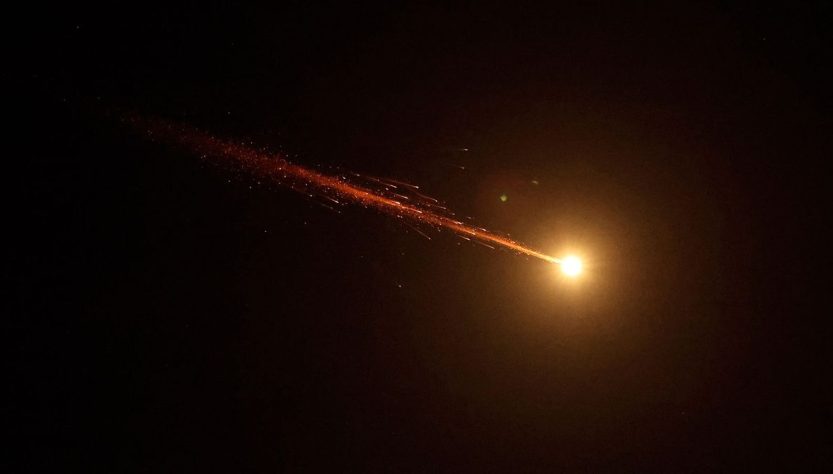
Across the region, facilities associated with water and electricity, such as desalination plants, are under threat or experiencing damage due to Iranian attacks aimed at locations outside traditional areas.

A single attack is unlikely to sever the gulf’s water supply. The system can manage isolated interruptions, but prolonged or multi-site assaults could quickly put pressure on supply.

“In the Gulf, desalination is engineered with sufficient buffer capacity so that the loss of one facility doesn’t instantly impact the availability at the tap,” remarks Rabee Rustum, a professor of water and environmental engineering at Heriot-Watt University Dubai.

In Kuwait, Iranian drone strikes have damaged power and desalination facilities and ignited fires at oil sites. Other regions, including Fujairah in the UAE, may also be at risk.

“Attacking desalination facilities would be tactical but could cross a line,” observes Andreas Krieg, a senior lecturer at King’s College London.

Water infrastructure is unique. “It’s not merely another utility,” Krieg emphasizes. “In regions that depend on desalination, it underpins civilian survival, public health, hospital functions, sanitation, and fundamental state credibility.”

International humanitarian law provides specific protection to civilian assets essential for survival. “This is why assaults on water systems carry significant legal and ethical consequences,” Krieg further states.

These occurrences highlight a structural reality: Desalination is crucial for water supply in the gulf, and any disruption swiftly impacts everyday life.

How the System Manages Disruption

Initially, desalination appears at risk. Shutting down a facility diminishes supply. In actuality, the system features multiple layers of redundancy.

Plants are dispersed across several sites, enabling output redistribution if one slows down. Water is stored at various network points, including central reservoirs and tanks, creating a buffer for delays.

Veolia, an environmental services provider that oversees nearly 19 percent of the region’s desalination, indicates the water supply is diversified through numerous facilities along the coast.

The company further notes that distribution systems are interconnected, allowing plants to assist and substitute for one another, thereby ensuring service continuity.

In the UAE, storage can last around a week, while in other regions, it’s restricted to two to three days, according to Veolia.

This indicates that the system can temporarily manage disruptions. Once reserves are exhausted, water supply relies on the capability of plants to generate enough to satisfy demand.

The System That Generates Water

Unlike many regions, the Gulf does not depend on rivers or precipitation. It relies on desalination plants along the coast, continuously converting seawater into drinkable water.

Seawater undergoes processing through reverse osmosis or thermal methods, eliminating salt and impurities. The resulting water is distributed, stored, and sent to homes, hospitals, and industries.

It is a rigid system, designed for ongoing operation, supporting cities, industries, and services. Gulf states produce approximately 40 percent of the world’s desalinated water, with over 400 plants in operation.

Dependence varies but remains high across nations. In the UAE, desalination comprises 41 to 42 percent of total water usage, 90 percent of Kuwait’s drinking water, and around 70 percent in Saudi Arabia.

When Disruption Becomes Apparent

For residents, disruption isn’t immediately perceived—water continues to flow.

Rustum notes that buildings contain internal storage and pumps, concealing early changes in supply. Water pressure usually remains stable as the system adapts.

‘Eerie Chasm’: Iran’s Menaces Against US Technology, Trump’s Midterm Strategies, and Polymarket’s Temporary Failure

‘Eerie Chasm’: Iran’s Menaces Against US Technology, Trump’s Midterm Strategies, and Polymarket’s Temporary Failure

Kate Knibbs: So, you went there twice?

Makena Kelly: Yes, Kate. I went there twice.

Kate Knibbs: I missed that detail.

Zoë Schiffer: Hold on, is the Pentagon Pizza thing a joke about the pizza foretelling the war?

Makena Kelly: Yep.

Zoë Schiffer: Oh, my gosh.

Makena Kelly: Because they had these Pentagon pizza trackers set up. When I returned the second night, most things were running. Some displays were still off, and I didn’t spot any real Bloomberg terminals. There were a few self-made monitors that looked like Bloomberg terminals, but there was no authentic $50,000 Bloomberg terminal around. The second night was again crowded with people eager to witness the event, though I did run into a couple of individuals who wagered on sites like Polymarket and Kalshi. One of them, William, claimed he was in the military but didn’t provide his full name. He began betting last year with all his tax refund on Oklahoma City sports wagering.

Makena Kelly, archival audio: So, you’ve used Kalshi?

William, archival audio: Yes.

Makena Kelly, archival audio: When did you first start using that service?

William, archival audio: Probably when I got my tax refund back.

Makena Kelly, archival audio: Got it.

William, archival audio: So, I filed my taxes early and thought, “Awesome, I got my tax refund. What should I do with it?” So, I chose to put it on Kalshi.

Makena Kelly: He noted he’s fluctuating by $100 but hasn’t scored any big wins. Unlike some tales of people making enormous insider bets and winning millions, he’s just in it for the enjoyment.

Brian Barrett: Kate, what’s your take on a pop-up like this and Polymarket’s intentions—is it a move to legitimize or just a promotional strategy? And how does it align with these companies’ rapid growth and their effort to attract a wide audience?

Kate Knibbs: This event clearly appears to be a strategic effort to appeal to journalists based in DC. One observation Makena made encapsulates the current situation—the individuals in the Palantir hoodies. The week this bar launched, Polymarket announced a collaboration with Palantir, who will assist them in ensuring the integrity of their sports market by identifying insider traders and market manipulators. I inquired with Polymarket last week if they had additional agreements with Palantir while investigating the Iran bets that are stirring up a lot of attention. They stated Palantir is only involved with sports, which seemed peculiar. It indicates how rapidly they’re growing, but in a chaotic, rushed manner that doesn’t seem coherent. If you’re engaging Palantir, why not use them for geopolitical issues instead of March Madness? Truly wild times.

How Trump's Strategy to Capture Iran's Nuclear Fuel Might Truly Function

How Trump’s Strategy to Capture Iran’s Nuclear Fuel Might Truly Function

President Donald Trump and senior defense officials are reportedly contemplating the deployment of ground forces to Iran to procure the nation’s highly enriched uranium. Nonetheless, the administration has not revealed specifics regarding the deployment, the extraction procedure, or where the nuclear material will be taken.

“Individuals will need to go and retrieve it,” Secretary of State Marco Rubio mentioned during a congressional briefing earlier this month, alluding to the prospective operation.

Indications suggest that a military operation might be on the horizon. On Tuesday, The Wall Street Journal highlighted that the Pentagon intends to position 3,000 brigade combat troops in the Middle East. (As of this writing, the official order has yet to be given.) These soldiers would be drawn from the Army’s 82nd Airborne Division, renowned for its joint forcible entry capabilities. Following this, on Wednesday, Iran’s government dismissed Trump’s 15-point strategy to conclude the conflict, while White House Press Secretary Karoline Leavitt stated that the president “is ready to unleash hell” in Iran if a peace agreement is not achieved—a strategy that has raised concerns among some lawmakers.

Utilizing publicly sourced intelligence and their own expertise, two analysts described the potential intricacies and dangers of a ground operation aimed at nuclear facilities. They informed WIRED that any ground operation would be exceedingly complex and could jeopardize American military personnel.

“I personally believe that a ground operation utilizing special forces backed by a larger contingent is markedly high-risk and ultimately impractical,” stated Spencer Faragasso, a senior research fellow at the Institute for Science and International Security.

According to the analysts, any iteration of the operation might require several weeks and necessitate concurrent actions at multiple far-off locations. Jonathan Hackett, a former operations specialist for the Marines and the Defense Intelligence Agency, noted that up to 10 sites could be targeted: the Isfahan, Arak, and Darkhovin research reactors; the Natanz, Fordow, and Parchin enrichment sites; the Saghand, Chine, and Yazd mines; and the Bushehr power plant.

As per the International Atomic Energy Agency, Isfahan likely contains the majority of the country’s 60 percent highly enriched uranium, which could facilitate a self-sustaining nuclear chain reaction, although weapon-grade material typically comprises 90 percent enriched uranium. Hackett suggested that the other two enrichment facilities might also hold 60 percent highly enriched uranium, and that the power plant along with all three research reactors could possess 20 percent enriched uranium. Faragasso emphasized that all such materials should be examined closely.

Hackett indicated that eight of the 10 locations—excluding Isfahan, which is expected to remain intact underground, and “Pickaxe Mountain,” a newer enrichment facility near Natanz—were largely or partially buried as a result of the air strikes in June. Right before the conflict, Faragasso noted, Iran backfilled the tunnel entrances to the Isfahan facility with soil.

The most dangerous scenario for a ground operation would involve American forces directly retrieving nuclear material. Hackett explained that this material would be stored as uranium hexafluoride gas in “large cement vats.” Faragasso added that it remains uncertain how many of these vats could be broken or compromised. At damaged locations, troops would require excavators and heavy machinery to move significant quantities of soil to access them.

A considerably less hazardous approach to the operation would still necessitate ground troops, according to Hackett. However, it would primarily rely on aerial strikes to entomb nuclear material within their facilities. Ensuring that the nuclear material is made inaccessible in the short to medium term, Faragasso said, would involve obliterating the entrances to underground facilities and ideally collapsing the roofs of those underground structures.

Hackett conveyed to WIRED that, based on his experience and all publicly available data, Trump’s negotiations with Iran are “probably a diversion” to gain time for troop positioning.

Hackett speculated that an operation would likely initiate with aerial bombardments in the vicinity of the target sites. These bombers, he indicated, would probably come from the 82nd Airborne Division or the 11th or 31st Marine Expeditionary Units (MEU). The 11th MEU, a rapid-response unit, and the 31st MEU, the sole Marine contingent continuously stationed abroad in strategic locations, have reportedly both been sent to the Middle East.

Iranians Do Not Have Missile Alert System, Thus Volunteers Develop Their Own Warning Map

Iranians Do Not Have Missile Alert System, Thus Volunteers Develop Their Own Warning Map

Since the beginning of Donald Trump’s confrontation with Iran more than three weeks ago, U.S. military forces have allegedly targeted upwards of 9,000 locations, creating an atmosphere of fear and uncertainty among Iranians in Tehran and across the country. With no governmental warning system in place and amidst Iran’s longest internet blackout, Iranians are confronted with a lack of information.

Even before the airstrikes by Israel and the U.S., the lack of a public emergency alert system and strict state-controlled digital censorship adversely affected millions. Following last year’s 12-day conflict between Israel and Iran, Iranian digital rights advocates launched ‘Mahsa Alert,’ an innovative platform that delivers push notifications regarding warnings of Israeli assaults, confirmed target areas, and offline mapping capabilities. While it does not serve as a substitute for a coordinated emergency service, this tool aids citizens in critical moments.

“There is no emergency alert system in Iran,” asserts Ahmad Ahmadian, CEO of Holistic Resilience, the U.S.-based organization supporting Mahsa Alert. Established last summer, the platform addresses a vital need by charting Iran’s landscape of repression and surveillance. Lightweight applications for Android and iOS have been developed for offline functionality, essential due to Iran’s internet restrictions. Updates are minimal; a recent one was only 60 kilobytes.

Mahsa Alert features overlays of verified “confirmed attacks” through videos or images provided via a Telegram bot or social networks. Alerts regarding evacuation zones, “danger areas,” and potential hazards to nuclear or military sites keep the public informed. Ahmadian notes that most confirmed attacks correspond with pre-identified map locations.

The platform also catalogs CCTV, government checkpoints, medical facilities, religious locations, protest sites, and more. Mahsa Alert’s visibility internationally has increased on social media, encouraging users to disseminate its findings, resulting in over 100,000 daily active users in a brief period. Roughly 335,000 individuals have utilized it this year, with 28% reportedly from within Iran, particularly during January’s crackdown on demonstrators.

How 'Handala' Emerged as the Symbol of Iran's Cyber Counteractions

How ‘Handala’ Emerged as the Symbol of Iran’s Cyber Counteractions

In the wake of the extensive airstrike operations conducted by the United States and Israel over Iran in late February, the cybersecurity sector anticipated retaliatory cyber offensives targeting Western entities. Tuesday night saw such an incident unfold in the US: a data breach at the medical technology company Stryker, believed to have ties to Iran, disabled tens of thousands of computers and disrupted global operations. The Iranian hacking collective Handala took responsibility for the breach.

A pronouncement on Handala’s website characterized the cyber operation as a reaction to the American Tomahawk missile assault that claimed the lives of 165 civilians at a girl’s educational institution in Iran and the ongoing hacking actions of the US and Israel. This pronouncement marks the beginning of a new phase in cyber warfare.

Once relatively unknown, Handala—named after a character created by Palestinian artist Naji al-Ali—is regarded by cybersecurity analysts, particularly in Israel, as a façade for Iran’s Ministry of Intelligence. Renowned for its data-deletion and hack-and-leak strategies, its targets have included the Albanian government and Israeli organizations.

In light of escalating existential threats, Iranian hackers, chiefly Handala, are encouraged to use every intended tool and network access against the US and Israel, stated Sergey Shykevich from the cybersecurity firm Check Point. Shykevich identifies Handala as the most active and prominent group in this vengeful campaign.

While hacking collectives often inflate their achievements, Handala has claimed numerous victims, predominantly in Israel, throughout the recent hostilities. Merging chaotic hacktivist tactics with governmental capabilities, the group acts as a primary cyber-retaliation entity for Iran, according to Justin Moore from Palo Alto Networks’ Unit 42.

Despite the chaos it generates, Handala’s operational coherence is doubtful, according to Rafe Pilling from Sophos’ X-Ops team. The group attempts swift access and infliction of damage in reaction to airstrikes that reportedly impact Iran’s cyber capabilities. Currently, Handala seems to be exploiting any available opportunity without an evident strategic framework.

Conflict in Iran Drives Up Oil Prices; Trump to Affect Future Rates

Conflict in Iran Drives Up Oil Prices; Trump to Affect Future Rates

Oil prices soared on Monday following the United States and Israel’s assault on Iran over the weekend, with forecasts indicating that prices might surpass $100 a barrel. Increasing assaults on regional oil and gas facilities, coupled with blocked traffic in a crucial shipping lane, have experts asserting that the actions of the White House and responses from Iran and other oil producers will be pivotal in shaping future prices.

Brent crude prices surged to almost $80 a barrel—a 13 percent increase since Friday—when markets opened on Sunday evening. Tyson Slocum from Public Citizen highlights that the potential risks of the US’s confrontational approach toward Iran had already been integrated into market values, averting an even steeper rise. Nonetheless, the chaotic US reaction post-attack on Ayatollah Ali Khamenei, Iran’s supreme leader, has added more unpredictability.

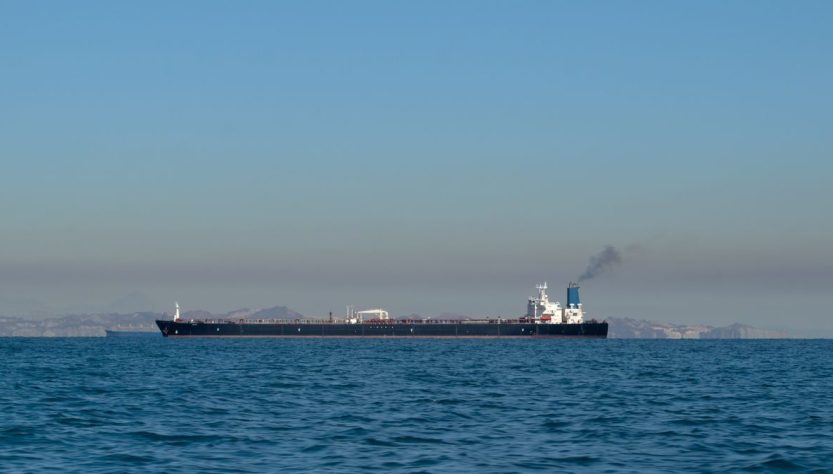
Iran governs the Strait of Hormuz, a vital shipping corridor. One-fifth of the globe’s oil transits through this route. OPEC nations depend greatly on it to sell their oil. Rory Johnston, a Canadian oil market analyst, mentions that OPEC would typically boost production during a crisis, but its supplies are situated on the opposite side of the conflict zone, limiting its capacity to respond.

Throughout the weekend, while Iran conveyed mixed signals regarding the formal closure of the strait, traffic significantly diminished. Insurance costs for vessels navigating through the strait have surged, and several ships have faced attacks. Johnston characterizes the scenario as a “voluntary closure.”

The likelihood of worsened outcomes persists if regional tensions escalate. In 2019, drone assaults on Saudi oil installations increased oil prices by 15 percent. Similarly, recent drone strikes compelled Saudi Arabia to shutter a refinery, and Qatar’s LNG production was interrupted, triggering a rise in European gas prices. Should these assaults persist, prices may skyrocket.

Clayton Seigle from the Center for Strategic and International Studies cautions that growing Iranian desperation might lead to leveraging energy as a bargaining chip. Should Gulf trade be abandoned or significant oil infrastructure be compromised, prices reaching triple digits could make a comeback.

When the Internet Breaks Down, Reality Vanishes

When the Internet Breaks Down, Reality Vanishes

Alaqad asserts that the loss of on-the-ground journalists equates to a loss of vital truths, as mainstream media outlets dictate the storyline. “Voices that are silenced and censored prevent us from fully grasping events,” she remarks.

During crises, disrupted communication leads to a lack of accountability and overlooked injustices. “Injustice shouts,” Alaqad claims, “while justice must be even louder.”

Journalists encounter ongoing suppression. In December 2025, Reporters Without Borders highlighted the deaths of 67 journalists that year, with 43 percent occurring in Gaza at the hands of Israeli forces. Since October 7, 2023, RSF reports over 220 fatalities among journalists in Gaza, whereas the UN reports a figure exceeding 260.

Dagher points out that the media blackout is part of a comprehensive tactic that includes limited movement and communication. Israel refutes the claim of targeting journalists.

“Murders of journalists stifle the truth,” Alaqad states. This leads to several consequences—diminishing on-ground reports and portraying journalists as dangers. “Such a message discourages individuals from interacting with journalists,” she observes.

Her protective press gear signaled her as a target, causing her mother to worry about her safety. Initial warm greetings and hospitality shifted to caution upon witnessing the targeting of journalists, Alaqad reflects.

Operating in Gaza involved navigating unpredictable conditions. Plans seldom extended beyond daylight hours, and circumstances rapidly evolved. “Uncertainty is the sole certainty,” Alaqad notes.

She frequently discovered that those she interviewed were subsequently killed in airstrikes. Now residing in Beirut, she studies media at the American University, backed by the Shireen Abu Akleh scholarship, named in honor of a journalist who lost her life due to Israeli forces.

Her widespread social media presence unveiled the truth of Gaza, yet also put her life at risk. While digital reporting reaches a broad audience, its permanence remains unstable, as accounts and content can vanish in an instant.