Siri AI might introduce a subscription fee for advanced users

Siri AI might introduce a subscription fee for advanced users

During his last earnings call as Apple’s CEO, Tim Cook mentioned that the long-anticipated upgrade to Siri AI might include some features behind a paywall. Cook acknowledged that these plans are not fully finalized, but he imagines that users could purchase additional computing power for Siri AI through their existing iCloud+ subscriptions, which provide increased cloud storage.

“We anticipate that there will be users who wish to utilize [Siri AI] extensively, hence we will have some upgrade options available on iCloud+, allowing users to enhance their iCloud+ subscriptions, and we’ll see how well this is received,” Cook stated on Thursday. “However, we are incredibly excited about the direction [Siri AI] is headed.”

Most other AI companies, such as Anthropic and OpenAI, function similarly by providing a limited free version for users, with the possibility of upgrading for more extensive usage.

The enhanced Siri AI is currently available in the iOS 27 beta and is expected to be more widely released this autumn.

As longtime Senior Vice President of Hardware Engineering John Ternus assumes Tim Cook’s role, he will lead the company during a pivotal moment. Apple has lagged in its quest to develop a sophisticated AI assistant, even conceding to its main rival Google by licensing a tailored Gemini model to enhance Siri. The update to Siri AI faced such delays that Apple was compelled to pay $250 million to resolve a class action lawsuit regarding its marketing of the iPhone 16’s AI features.

Apple, like all hardware manufacturers, is confronted with a challenging path in securing the necessary supplies to satisfy customer demand. The AI-driven RAM scarcity across the industry has increased hardware production costs, prompting firms such as Meta, Samsung, Microsoft, and Sony to hike prices on some products. Last month, Apple elevated the prices of its Macs and iPads, while still holding off on adjusting the cost of its current iPhone models.

When you make a purchase through links in our articles, we may earn a small commission. This doesn’t impact our editorial independence.

GM and Ford are discussing EVs less frequently.

GM and Ford are discussing EVs less frequently.

Just a few years back, General Motors and Ford were fully invested in electric vehicles, pouring billions into these initiatives. Currently, the two leading American car manufacturers are scarcely discussing EVs with their shareholders.

TechCrunch collaborated with Hudson Labs, a financial research organization based in New York, to evaluate the past seven years of GM and Ford’s quarterly earnings calls and discovered that both firms are mentioning EVs less frequently compared to the period prior to the pandemic.

This shouldn’t come as a surprise to anyone who has kept up with recent developments. Both manufacturers have modified, postponed, or completely scrapped plans for upcoming EV models, leading to layoffs and scaled-back factory initiatives. While GM and Ford still produce EVs and have new models in their development pipelines, their overall emphasis has shifted, which is evident in the statistics.

Jim Cain, a representative for GM, stated that “quality is more important than quantity.”

“We’ve consistently made it clear that our belief is that EVs are the ultimate goal, the strength of our current portfolio, the loyalty of EV customers to the technology, the awards we’ve achieved, our expanding EV market share, and our dedication to continue investing in technologies like LMR (lithium manganese-rich) to boost profitability,” he mentioned in an email statement.

However, he added, “we spend time on calls discussing growth prospects such as software and services and autonomous technology, as well as addressing complex topics of interest to analysts/investors like trade and regulatory policy implications, operational performance, capital distribution, regional performance, headwinds, and tailwinds — all while ensuring that at least half of the call is reserved for Q&A.”

Ford spokesperson David Tovar emphasized the company’s upcoming launch of its “Universal Electric Vehicle” platform next year. “[W]e believe the first product coming off the production line, a midsize pickup truck, will perfectly fit the EV market regarding cost, price, and technology,” he remarked.

For this evaluation, TechCrunch omitted the seemingly third member of the Detroit Big Three, Stellantis, for several reasons. This automaker, which resulted from the 2021 merger of Fiat Chrysler and France’s PSA Group, has typically lagged behind its U.S. peers in EV adoption. Until the first quarter of this year, Stellantis had also conducted comprehensive earnings calls only twice a year, unlike most public companies that hold them quarterly.

Hudson Labs acquired earnings call transcripts from S&P Market Intelligence dating back to 2019 and utilized its Co-Analyst — an AI research tool designed for high-precision financial analysis — to tag each sentence with relevant topics. It then calculated the incidence of these topics, along with each topic’s share of the dialogue, resulting in the charts displayed below.

General Motors

GM made a move towards mass-market EVs before many other major manufacturers. It introduced the Bolt EV at the Consumer Electronics Show in January 2016 and made the vehicle available for purchase by the end of that year — a significant six months earlier than Tesla’s initial deliveries of the Model 3.

EVs truly became a central point of GM’s earnings calls as its investment surged in 2019 and into 2020. At that time, the company was hinting at new models produced in the U.S. and discussing the transformation of Cadillac into an all-electric brand. GM increasingly focused on its EV strategies through early 2021, with over 100 references to electric vehicles during each of its final two earnings calls in 2020. This indicated that EVs comprised roughly a third of the total discourse during those calls.

Aside from a drop in the first quarter of 2021, when global companies faced a significant chip shortage, GM dedicated nearly the subsequent four years — notably during President Biden’s administration — to discussing EVs for about a quarter of each earnings call. (Another significant decline occurred in the first quarter of 2025 due to President Trump’s “Liberation Day” tariffs, which overshadowed that earnings call.)

Following Trump’s return to office, he eliminated environmental regulations that had encouraged zero-emission vehicles and his administration repealed the $7,500 federal tax credit for new EVs. Concurrently, GM’s discussions about EVs dropped considerably, decreasing from 82 mentions during the second-quarter call in 2025 to merely 21 during its most recent call concerning Q2 2026.

While GM is still the second-largest seller of EVs in the U.S., the company that once pledged to be fully electric by 2035 is now more focused on how it has “align[ed] our EV capacity and manufacturing footprint with the shifts in regulatory policy” — whenever it mentions EVs at all.

Ford

Ford’s significant entry into the mass-market EV sector was the Mustang Mach-E, which launched in late 2019. As the company neared the delivery of its first models in late 2020, it began to highlight electric vehicles more frequently during its earnings calls.

Aside from a similar decline in mentions during the Q1 2021 call, hampered by discussions about the global semiconductor crunch, Ford — like GM — started dedicating around a third of each quarterly investor meeting to EV discussions. These talks intensified with the introduction of its second significant EV model, the F-150 Lightning, in 2021. This level of emphasis mostly persisted through the Biden administration, as his administration allocated federal funds for charging stations and EV manufacturing incentives while shaping policies related to the battery material supply chain.

However, Ford began talking less about EVs ahead of the 2024 election. By mid-2024, the company was already retreating from some of its largest contemporary EV investments in favor of a skunkworks project that ultimately evolved into the Universal Electric Vehicle platform. Conversations regarding EVs further declined after Trump took office, with CEO Jim Farley spending increased time discussing support for the president’s protective trade policy and the company’s immediate focus on its higher-margin gas F-Series trucks.

Nonetheless, during Ford’s latest call, Farley emphasized that the company “will become a significant scaled competitor as we invest in affordable, versatile EVs.” But for that to materialize, investors will need to wait until at least next year.

When you purchase through links in our articles, we may earn a small commission. This doesn’t affect our editorial independence.

Samsung anticipates that the memory deficit will escalate until 2027 and persist into 2028.

Samsung anticipates that the memory deficit will escalate until 2027 and persist into 2028.

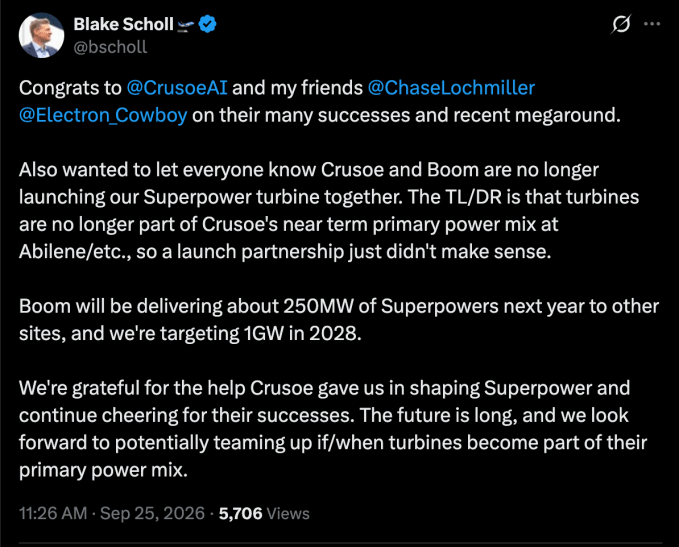
The current scarcity of RAM chips is anticipated to continue into next year and is expected to escalate further in 2027, with tight supply conditions remaining until at least 2028, as per Samsung, which produces and supplies approximately one-third of the global memory chip market.

During its Q2 earnings call, Samsung mentioned that leading AI laboratories, eager to gain access to memory infrastructure, have been “providing their medium- to long-term demand projections” straight to the Korean tech firm to ensure future supply.

The elevated demand allows Samsung to give preference to clients who are willing to enter into long-term agreements. This extended visibility will enable the company to set up equipment and increase production without the concern of dwindling demand, thereby helping it steer clear of the typical boom-and-bust cycles in the memory sector.

Shortages in memory fueled by the AI surge have also led to increases in chip prices lately. This situation has proven to be a double-edged sword for Samsung: while its semiconductor division recorded unprecedented sales in Q2, profits in its smartphone and TV sectors decreased due to the soaring component costs attributed to the pricier chips.

Samsung has begun to pass some of those rising component costs onto consumers by raising the prices of its Galaxy smartphones and tablets. However, this has led to a decline in demand for these products.

The ongoing memory shortage, informally referred to as “the RAMaggedon,” has also compelled Apple, Samsung’s main competitor, to increase the prices of its MacBooks, Macs, and iPads last month. In its latest earnings call, Apple cautioned that revenue growth for the upcoming quarter is expected to decelerate to between 9% and 11% year-over-year, down from its recent rate of 16% quarterly growth.

With memory manufacturers reallocating production capacity toward AI data centers instead of consumer electronics, consumers are encountering a new reality: higher device prices. Nvidia is anticipated to boost its consumer graphics card prices by 20% to 30%, which could further escalate prices for gaming devices, desktop computers, consoles, laptops, and similar products.

When you purchase through links in our articles, we may earn a small commission. This doesn’t affect our editorial independence.
SpaceX will not eliminate all of xAI's unauthorized turbines for an additional year.

SpaceX will not eliminate all of xAI’s unauthorized turbines for an additional year.

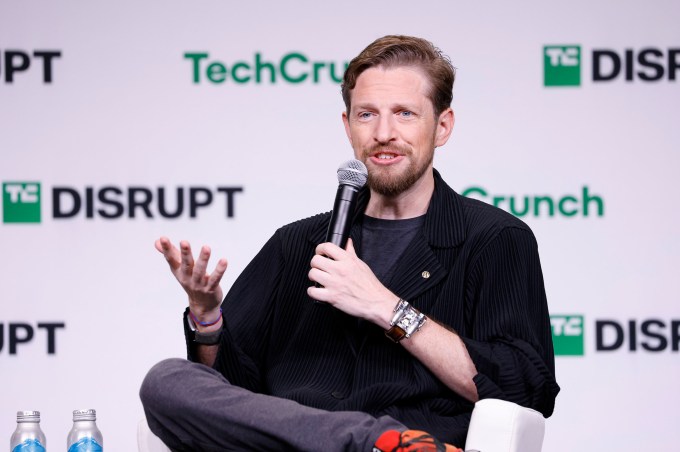
On Thursday, SpaceX announced it will eliminate the unauthorized turbines supplying power to its xAI data centers near Memphis as it shifts to a permanent natural gas power facility with a capacity of 1.2 gigawatts. 

However, the complete removal of the turbines won’t occur until July 2027. SpaceX revealed that it is currently functioning with 69 gas turbines for the Colossus data centers, many of which have been operational for several months. The NAACP and the Southern Environmental Law Center have filed a lawsuit against xAI regarding the use of these unlicensed turbines.

In February, SpaceX acquired xAI. According to its IPO filing, SpaceX intends to invest $2.8 billion in gas turbines for its data centers over the upcoming three years.

The company contends that it can operate the current turbines without permits since they remain on the trailers from which they were delivered. Nevertheless, federal regulations stipulate that the turbines xAI is using require permits due to their dimensions and operational usage.

The turbines are situated just south of Memphis in Mississippi, near the Tennessee border. This area is among the most polluted regions in the U.S., and xAI has been utilizing gas turbines that could potentially emit over 2,000 tons of smog-producing NOx annually.

Recently, the Department of Justice supported SpaceX in the NAACP lawsuit, asserting that the issue of unpermitted turbines relates to “national, economic, and energy security.”

SpaceX’s new power facility will feature 41 gas turbines varying from 16.48 megawatts to 50 megawatts, as indicated in permit documents provided by the state of Mississippi. They seem to differ from those currently utilized, yet TechCrunch was unable to confirm the precise models of the 69 active turbines.

Earlier this year, Elon Musk purchased APR Energy, a firm specializing in temporary natural gas power solutions. According to an archive of the company’s website prior to its removal, the turbines in APR Energy’s inventory also seem to be distinct from those referenced in permits for the forthcoming permanent power facility. 

Considering that APR Energy’s turbines are unlikely to be included in the new Colossus power facility, it is probable that the new turbine fleet is aimed at another, unspecified project.

If you make a purchase through the links in our articles, we may receive a small commission. This does not compromise our editorial independence.

Reddit is evaluating a fresh method to view — and hear — its trending content.

Reddit is evaluating a fresh method to view — and hear — its trending content.

Reddit is inspired by TikTok to animate trending narratives via video. During the earnings call for the second quarter on Thursday, the organization announced its development of a fresh “video Reddit” experience that would enable users to view videos on the platform while also listening to posts in the background.

CEO Steve Huffman informed investors that the company has observed users engaging with this kind of content across various platforms.

He is correct — on TikTok alone, there are 19.6 million entries tagged with #reddit and an additional 9.9 million tagged #redditstories. Numerous entries showcase a text-to-speech narration of a popular story shared on Reddit along with an unrelated video, such as gameplay clips or culinary content.

“There’s a rising type of content online, essentially, podcasts where individuals narrate Reddit material,” Huffman remarked during the call. “I believe this format of listening to or spoken Reddit can be highly engaging, too,” he stated. “So that would represent nearly an entirely different format.”

It remains uncertain how these varieties of Reddit videos will be integrated into Reddit’s primary app, but Huffman hinted that the company will have something ready for testing “later this year.”

This announcement arrives as major social and entertainment applications experiment with incorporating TikTok-style video feeds into their offerings.

Last week, Facebook revealed plans to start testing a refined experience later this year that would immerse a group of users in a full-screen video immediately upon app launch. Streaming services like Netflix, Disney+, Peacock, and HBO Max have also introduced TikTok-style short video feeds in recent months. Amazon provides a brief video feed for shopping inspiration. There’s even a short video feed available on LinkedIn, surprisingly.

It signifies the widespread TikTok-ification of the internet.

Additionally, the company highlighted the initial success of video comments, which debuted in June. Reddit stated that the new feature now represents over 10% of its video posts.

When you make a purchase through links within our articles, we may receive a small commission. This does not impact our editorial autonomy.

Smallest.ai secures $13M to develop ultra-quick voice AI that truly mimics human sound.

Smallest.ai secures $13M to develop ultra-quick voice AI that truly mimics human sound.

As AI agents become more adept at addressing customer support issues, most individuals can still easily discern when they are interacting with a machine rather than a human.

Smallest.ai, a startup established in late 2024, is wagering that the next advancement in voice agents will arise not from accelerating large language models, but from deploying smaller, specialized models crafted for human dialogue. In essence, the firm’s goal is to make conversing with an AI agent just as seamless as chatting with a person.

To achieve this, it is working on a compact voice model that aims to replicate the way humans process information by listening, contemplating, and speaking concurrently.

“While I’m conversing with you, you’re already processing information, and you might interject if I speak for an extended period,” Sudarshan Kamath (shown left), founder and CEO of Smallest.ai, shared with TechCrunch, adding that this is precisely how the startup’s model is intended to operate.

To support this endeavor, Smallest.ai has secured $13 million in a Series A funding round, led by Seligman Ventures, with contributions from Sierra Ventures and 3one4 Capital. This infusion of funds elevates the startup’s overall funding to more than $21 million.

“The functioning of an LLM involves providing it with a complete prompt, after which it begins to process,” Kamath stated. While such latency is tolerable in a text chat, even a brief silence feels unnatural in a voice conversation. “If you consider how we communicate, I’m not sending you a lengthy segment of my audio, and then you start to ponder.”

The startup’s model operates as a real-time intelligence layer, facilitating natural discussions with customers on particular subjects, with nearly no response delay. However, if the model comes across a topic outside its narrow knowledge scope, Smallest.ai routes the inquiry to a large foundational model, momentarily putting the customer on hold to “research” the matter—just as a real person would do.

Kamath envisions that all AI agents will soon depend on two models: a small voice model for instantaneous interaction, and an “offline” LLM that is summoned as necessary to tackle intricate problems.

In contrast to large foundational models, Smallest.ai zeroes in specifically on voice-related subtleties, such as accommodating various accents, supporting a multitude of languages, and functioning efficiently in noisy settings.

Among the startup’s current clientele are companies within the voice sector, including RingCentral and Truecaller. Kamath noted that any customer support organization, including newer entrants like Sierra and Decagon, could be a potential client for the startup.  

When questioned why a well-capitalized AI customer support company wouldn’t develop its own voice model, Kamath replied that for customer support startups, excelling in voice capabilities can detract from their primary focus.

Smallest.ai competes with voice AI frontrunner ElevenLabs, as well as Cartesia and regional entities like Sarvam that cater to local languages.

While some rivals leverage voice AI for applications such as audio dubbing and podcast production, Smallest.ai dedicates itself solely to real-time conversational voice agents for its enterprise clients.

“Our aim is for our models to surpass the Turing test,” Kamath stated. “You should interact with our model without recognizing whether it’s AI or human. That’s the company’s singular objective.”

When you purchase through links in our articles, we may earn a small commission. This doesn’t affect our editorial independence.
WhatsApp is experimenting with a new directory for messages from major companies.

WhatsApp is experimenting with a new directory for messages from major companies.

During Meta’s Q2 2026 earnings call, Mark Zuckerberg announced that the other revenue in the apps family segment surpassed $1 billion, primarily due to paid messaging and subscriptions on WhatsApp.

As more companies utilize WhatsApp to connect with customers, users often find their inboxes overflowing, complicating the retrieval of personal and group messages. TechCrunch has exclusively learned that Meta is experimenting with a new feature that will categorize messages from larger businesses, such as banks and airlines, into a separate folder.

When a large business sends a user a message, WhatsApp will automatically relocate that message to a newly created “Offers & Updates” folder after a designated number of hours. The company indicated it is assessing various durations, extending up to 24 hours, for moving messages into this new folder.

Users who favor having their messages visible in the timeline can disable this feature. However, they will not have control over the timings of the automatic message relocation.

With this new feature, Meta claims that messages, such as discount codes or delivery notifications, can be cleared from the inbox within a few hours, leading to a less cluttered main chat timeline. For businesses, this allows users to easily locate their messages in a specific folder rather than having them lost among all other chats.

WhatsApp has begun testing this feature with select partners utilizing its WhatsApp Business Platform, with plans to broaden the rollout based on the outcomes of these tests. Currently, small businesses and individual accounts utilizing WhatsApp Business are not included in this feature. WhatsApp mentioned it may consider integrating business messages from small enterprises into the new “Offers & Updates” folder in the future.

In recent years, WhatsApp has implemented measures to minimize spam from business messages. In 2024, it enabled users to opt-out from marketing communications from brands. The previous year, it restricted the quantity of broadcast messages businesses and individuals could send within a specific timeframe. As of October 2025, it further limited the number of messages businesses could send without receiving a response from users. The first two features have been fully launched, while the third is still undergoing iterations.

Even with these advancements, the WhatsApp inbox can seem overwhelming. Based on my experience, I’ve had days where I’ve wiped clean unread messages at the beginning of the day only to end up with 30-40 additional unread messages. Even now, over half of my unread messages consist of business communications. I’m not the only one feeling this way.

The upcoming feature might alleviate some of the clutter, but it won’t be fully effective until users can manage the filtering of messages from the main inbox.

WhatsApp globally released its AI business agents in June, with more than 1 million businesses already taking advantage of them. During the earnings call, Zuckerberg referenced Brazil’s car rental service Movida, stating that it has experienced increased conversions and better handling of customer support issues via AI agents. In the next few months, we might see more businesses utilizing AI within WhatsApp for various sales, marketing, and support scenarios. A messaging app with over 3 billion users must find a balance between personal and business communications to avoid becoming a platform for AI-generated spam.

When you buy through links in our articles, we may receive a small commission. This does not impact our editorial independence.

Tesla is said to potentially divest its operations in China prior to a merger with SpaceX.

Tesla is said to potentially divest its operations in China prior to a merger with SpaceX.

According to The Wall Street Journal, Tesla is allegedly contemplating divesting its complete business in China to facilitate a merger with SpaceX.

The publication states that “certain Tesla executives have been instructed to get ready for a potential separation from the China branch,” which may entail a “spinoff, sale, or shutdown,” referencing unnamed sources. The firm is said to be poised to implement this fairly swiftly since CEO Elon Musk has already directed executives to prepare for a division should Beijing take action against Taiwan.

Dividing China from Tesla’s worldwide operations could streamline the integration of the company into SpaceX, a defense contractor that must adhere to stringent regulations regarding citizenship and national security. This would also represent a significant concession. China has increasingly become a cornerstone for Tesla’s operations, serving not just as a market for its vehicles but also as a production center catering to Asia at large and also Europe.

Best Dyson Vacuum Models (2026): V15 Detect, Gen5Detect, PencilVac

Best Dyson Vacuum Models (2026): V15 Detect, Gen5Detect, PencilVac

Evaluating Popular Dyson Vacuums

Other Dyson Vacuums to Think About

We have looked into various Dyson vacuums, including both corded and cordless models. The options listed below are worth considering, especially if you can avoid paying the full price.

Dyson Ball Animal 3 for $420: For those preferring an upright model over a Dyson cordless stick vacuum, the Dyson Ball Animal 3 is an excellent selection. We reviewed the Ball Animal 3 Extra, which comes with additional accessories, yet the base version is just as powerful. Previous WIRED reviewer Jaina Grey highlighted its efficiency in tackling rabbit fur in her residence. It is, however, somewhat loud and heavy.

Dyson Clean+Wash Hygiene Wet and Dry Floor Cleaner for $500: This cleaning device features a filter-free design that’s said to be “unhygienic,” and WIRED reviewer Kat Merck reported no bad odors after using it for three months. It is similar to the earlier Wash G1 with a self-propelling structure that is easy to control. It showcases a battery life indicator and mode display, along with a dock for self-cleaning. Dyson’s latest probiotic floor cleaner ($24) works efficiently on Merck’s Coretec LVP flooring, ensuring they remain pristine.

Repeat founder Ryan Williams secures $10M in seed funding for an AI venture aimed at private credit managers.

Repeat founder Ryan Williams secures $10M in seed funding for an AI venture aimed at private credit managers.

Ellis AI disclosed its exit from stealth mode on Thursday, securing $10 million in seed financing from backers such as First Round Capital, 645 Ventures, Harlem Capital, Khosla Ventures, Thrive Capital, Slow Capital, Kearny Jackson, and Mellody Hobson, CEO of Ariel Alternatives.

Ellis employs AI agents to address the disjointed workflow encountered by private credit managers, including handling documentation, spreadsheets, and communication. The firm was established by Ryan Williams, notably recognized for co-founding the real estate investment platform Cadre with Josh and Jared Kushner in 2014. That enterprise raised upwards of $160 million in capital and, at its zenith, held a valuation of $800 million before being acquired for an undisclosed amount by the alternative investment firm Yieldstreet in 2024.

“At Cadre, I identified the next significant limitation,” Williams remarked. “Even as the frontend of private markets became more modern and accessible, the underlying operational framework remained disjointed.”

He began developing Ellis last year. The organization aims to link and consolidate all the disparate software, accounting data, and documentation that a private credit firm would utilize into a single, easily navigable platform. The system can identify inconsistencies in the data and employs AI agents to assist with tasks such as portfolio oversight and report preparation.

For instance, Williams asserts that the agents can aid in closing a fund’s financial statements at the month’s end.

“A team could be required to extract files from multiple systems, reformat the data, compare account balances, investigate inconsistencies, and input information manually. In numerous firms, Excel becomes the de facto operating system,” he elaborated. “Ellis integrates with the systems and documents a firm is already utilizing instead of compelling it to overhaul everything and start anew.”

It also involves a human element, he mentions. “Critical decisions and actions remain with the human specialists,” he explained.

“I foresee the human element becoming more streamlined, but not vanishing,” he added, when questioned about a future where AI functions entirely autonomously. “Our aim is not to supplant human judgment; it’s to assist individuals in cutting through the clutter and making informed decisions more swiftly.”

This article was revised to include an investor.

When you make purchases through links in our articles, we may receive a small commission. This does not influence our editorial impartiality.