Meta has chosen not to close Horizon Worlds on VR after all.

Meta has chosen not to close Horizon Worlds on VR after all.

As per an Instagram update from Meta’s CTO Andrew Bosworth, it appears Meta is not discontinuing VR support for Horizon Worlds after all, which should be a significant comfort to, like, five users.

“We have made the decision, just today in fact, to keep Horizon Worlds operational in VR,” Bosworth mentioned during an Instagram Stories Q&A after a user of the app expressed they were “heartbroken” over the announcement.

A Meta spokesperson validated Bosworth’s statements to TechCrunch.

Earlier this year, Meta had hinted at stopping support for the social metaverse application on its Quest virtual reality headsets, which marked a considerable retreat for an app that Meta once saw as vital for social interactions in VR. Eventually, it became clear that very few users actually wanted to socialize in VR. On Tuesday, Meta announced on its community forums that Horizon Worlds would transition to web and mobile only on June 15, but that declaration was swiftly retracted.

Even though Horizon Worlds will now still be available through Quest, the initial intent to shut it down highlights that the metaverse — or at least its envisioned version in VR — turned out to be a void where Reality Labs funding was wasted. That branch at Meta has incurred a loss of $73 billion since 2021, the year Meta changed its name from Facebook. As previously mentioned, you would have to spend $1 million every day for 200 years to exhaust that sum. (Reality Labs also encompasses expenses on augmented reality products like smart glasses and some AI research.)

According to IDC, a technology market research firm, Meta’s Quest headset sales declined by 16% year-over-year from 2024 to 2025, making it look improbable that this hardware will ever compete effectively with smartphones. Meta isn’t the only one facing challenges in creating compelling virtual reality — Apple had to reduce production of its $3,500 Vision Pro headset due to insufficient demand.

In response to this downturn, Meta executed major cuts in its Reality Labs division in January, affecting over 1,500 employees and closing several game studios. There are rumors that Meta is contemplating another significant round of layoffs, potentially affecting 20% of its workforce.

While Meta will keep supporting Horizon Worlds for the Quest headset, the company intends to emphasize the mobile experience. Bosworth remarked in a podcast with journalist Alex Heath that Horizon had shifted its focus to mobile since it had a more suitable product-market fit there.

“There’s a significantly larger audience in mobile, and it’s seeing a very positive response there,” Bosworth commented regarding the app. “[The team] is having to develop everything twice — they’re developing it once for mobile devices, and again for VR. There’s a straightforward way to enhance their productivity, which is simply to let them develop for mobile.”

Mobile analytics company Appfigures informed TechCrunch that the Horizon Worlds mobile application has reached 45 million total downloads globally across iOS and Google Play, with 1.5 million downloads thus far in 2026. That represents a 53% year-over-year increase compared to the previous year when the Horizon Worlds application totaled around 983,000 downloads at this time.

Nevertheless, Appfigures estimates that total consumer spending on the app has only reached $1.1 million, which is negligible compared to the scale of Meta’s metaverse investments.

Bosworth is correct that there’s a greater potential for Horizon Worlds on mobile than on the Quest headset — but Meta will need to witness significantly more consumer spending for the app to demonstrate it is a worthwhile investment.
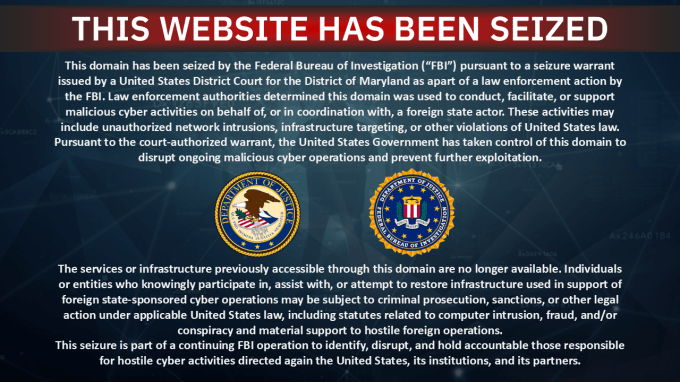

FBI takes control of websites belonging to pro-Iranian hacking collective following damaging Stryker breach

FBI takes control of websites belonging to pro-Iranian hacking collective following damaging Stryker breach

The FBI confiscated and dismantled two websites associated with the pro-Iranian hacktivist organization Handala, which had claimed responsibility for a damaging cyber assault on the U.S. medical technology firm Stryker just last week. 

As of Thursday, the content of a site where Handala showcased its hacks, along with another site the group utilized to reveal personal information about several individuals allegedly connected to the Israeli military and defense contractors, such as Elbit Systems and NSO Group, was replaced by a banner indicating the law enforcement intervention. 

The announcement regarding the seizure did not specify the reasons the FBI and the Justice Department acted against these websites. However, the wording suggests that U.S. officials believed these sites were managed by hackers with affiliations to a foreign government.

“Law enforcement authorities concluded this domain was employed to execute, facilitate, or assist malicious cyber endeavors on behalf of, or in collaboration with, a foreign state actor,” stated the seizure announcement. “The United States Government has seized control of this domain to disrupt ongoing malicious cyber operations and avert further exploitation.”

TechCrunch verified the seizure of the website by analyzing its nameserver records, which now direct to servers managed by the FBI. 

The FBI and the Justice Department have not promptly replied to TechCrunch’s request for comments.

A notice regarding the takedown and seizure by the FBI and the U.S. Department of Justice, which replaced the contents of two websites tied to the pro-Iranian hacktivist group Handala.
A notice regarding the takedown and seizure by the FBI and the U.S. Department of Justice, which replaced the contents of two websites tied to the pro-Iranian hacktivist group Handala. (Image: TechCrunch)Image Credits:TechCrunch / Getty Images

In a series of updates shared on the group’s official Telegram channel on Thursday, Handala recognized that their websites had been taken down, labeling the seizures “a desperate attempt to silence our voice.”

“This act of digital aggression merely serves to underline the fear and anxiety our actions have induced in the hearts of those who oppress and deceive,” the hackers stated. “Even though they strive to eliminate the evidence and conceal their misdeeds through censorship and intimidation, their actions only affirm the significance of our mission. The quest for justice cannot be halted by dismantling a website; the movement for truth will endure and strengthen.”

Handala’s X account was also suspended recently.

The group did not reply to a message sent to their official chat account. 

Handala has been operational at least since the attacks by Hamas on October 7, 2023, and is thought to have connections with the Iranian government. Last week, they claimed responsibility for the cyberattack against the U.S. medical firm Stryker, which employs over 56,000 people worldwide. The hackers asserted that the attack was a response to the U.S. government missile strike that targeted an Iranian school, resulting in the deaths of at least 175 people, most of whom were children. 

Last year, Stryker entered into a $450 million agreement to provide medical equipment to the Department of Defense.

Handala reportedly accessed an internal Stryker administrator account, obtaining nearly unlimited access to the company’s Windows infrastructure. Following this, the hackers allegedly took control of Stryker’s Intune dashboards, a system designed for managing employee laptops and mobile devices remotely, which included the capacity to delete data. 

With access to these dashboards, the hackers reportedly managed to erase devices owned by both the company and its employees. 

On Tuesday, Stryker announced it is still in the process of restoring its computers and internal network following the breach. 

Nariman Gharib, a U.K.-based Iranian activist and independent cyber-espionage researcher, expressed to TechCrunch that the takedowns represent positive news.

“Their organizational and management framework is currently disrupted, and at any time, members of this group might find themselves targeted by missile strikes, just like other cyber units of the regime,” Gharib informed TechCrunch. 

“However, this does not imply that their activities will cease — no. It is plausible that future leaks could be disseminated by this group through media outlets affiliated with the IRGC,” referencing the nation’s military.

CISA calls on businesses to safeguard Microsoft Intune systems following a mass wipe of Stryker devices by hackers.

CISA calls on businesses to safeguard Microsoft Intune systems following a mass wipe of Stryker devices by hackers.

The U.S. Cybersecurity and Infrastructure Security Agency (CISA) has alerted organizations to bolster the security of their employee device management systems following a breach by pro-Iran hackers at medical technology leader Stryker, which resulted in the mass deletion of thousands of its phones, tablets, and computers.

On Thursday, the agency recommended that businesses take proactive measures and confirmed its knowledge of hackers exploiting their access to Stryker’s Windows-based infrastructure to manipulate its device management systems, leading to persistent disruptions in the company’s global operations.

Among its recommendations, CISA advised network administrators to ensure that specific user accounts with access to systems like Microsoft Intune—which Stryker utilizes to remotely control its employees’ devices—can execute sensitive or high-impact actions (such as erasing devices) only with the approval of a second administrator.

Stryker, which manufactures medical devices and equipment for hospitals, acknowledged on March 11 that it had suffered a cyberattack, noting it was facing “global disruption” to its network. 

The company reported that the hackers did not deploy malware or ransomware, but sources indicate that they exploited their access to Stryker’s internal systems to get into its Intune dashboards and remotely erase data on tens of thousands of employee devices, including personal phones and computers linked to Stryker’s network.

Stryker has indicated that it contained the cyber incident and is working on restoring its systems. While the company’s medical devices continue to function, Stryker stated that its supply chain, ordering, and shipping systems remain offline. 

Stryker has not announced a timeline for its recovery efforts. The company did not reply to TechCrunch’s inquiry for comments.

A faction of pro-Iran hacktivists called Handala claimed responsibility for the cyber breach on Stryker last week, stating they targeted the company in response to the U.S. strike that killed numerous children at a school in Iran. The hackers asserted that they had exfiltrated large volumes of data from the company’s network, although they did not provide immediate proof of this allegation.

According to TechCrunch, the FBI confiscated the Handala group’s website on Wednesday.

TechCrunch Startup Battlefield 200 applications remain available

TechCrunch Startup Battlefield 200 applications remain available

Attention Pre-Series A founders! Nominations for Startup Battlefield 200 remain open, and the competition is already heating up. If you’ve been intending to apply, now is the moment to act.

During TechCrunch Disrupt 2026, carefully selected startups will not only pitch. They’ll take the stage and compete in front of top-tier VCs and the entire TechCrunch audience. This is a proving ground for startups, where they are tested, challenged, and thrust into the limelight.

Nominate your startup or recommend one that’s prepared to enter the arena and demonstrate its worth. Submit here.

TechCrunch Disrupt 2025 Startup Battlefield
Image Credits:TechCrunch

Reasons to nominate for Startup Battlefield

Gain global visibility and $100,000 in equity-free capital. Plus, direct access to top VCs. And the opportunity to showcase your startup among the elite.

Firms like Trello, Mint, Dropbox, Discord, and Fitbit once found themselves precisely where you stand today. They entered the startup arena and left their imprint.

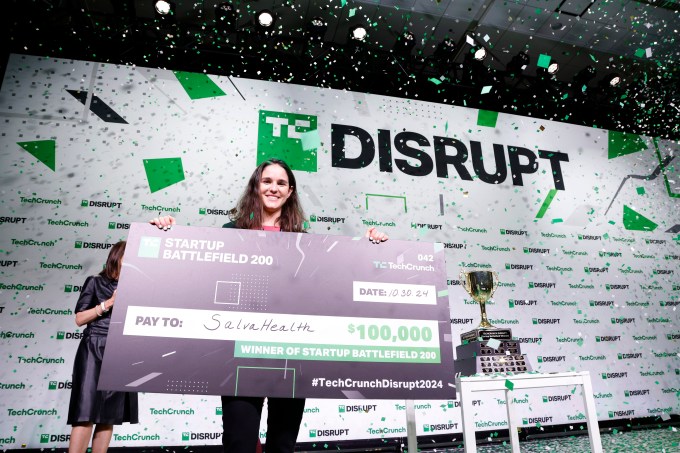
Salva Health Co-Founder & CEO Valentina Agudelo Vargas, winner of the Startup Battlefield 2024, poses onstage during TechCrunch Disrupt 2024 Day 3 at Moscone Center on October 30, 2024 in San Francisco.
Image Credits:Kimberly White / Getty Images

Advantages of Startup Battlefield 200 

  • Free exhibit booth for all three days of Disrupt
  • 4 free Disrupt passes
  • Startup branding and inclusion in the Disrupt event app
  • Press list access along with lead-generation opportunities
  • Entry to exclusive founder masterclasses
  • A chance to pitch live on the Disrupt Stage
  • Immediate feedback from top-tier VCs
  • An opportunity to compete for $100,000 in equity-free funding

Nominate now

The nomination deadline is May 27, but the most formidable founders don’t wait until the last moment. They act quickly, prepare diligently, and seize their opportunity before others catch up.

Join Startup Battlefield 200 today. Start nominating.

Techcrunch event

San Francisco, CA
|
October 13-15, 2026

2026 TechCrunch Startup Battlefield 200
Rivian relinquishes 2027 profit target to dive further into autonomy

Rivian relinquishes 2027 profit target to dive further into autonomy

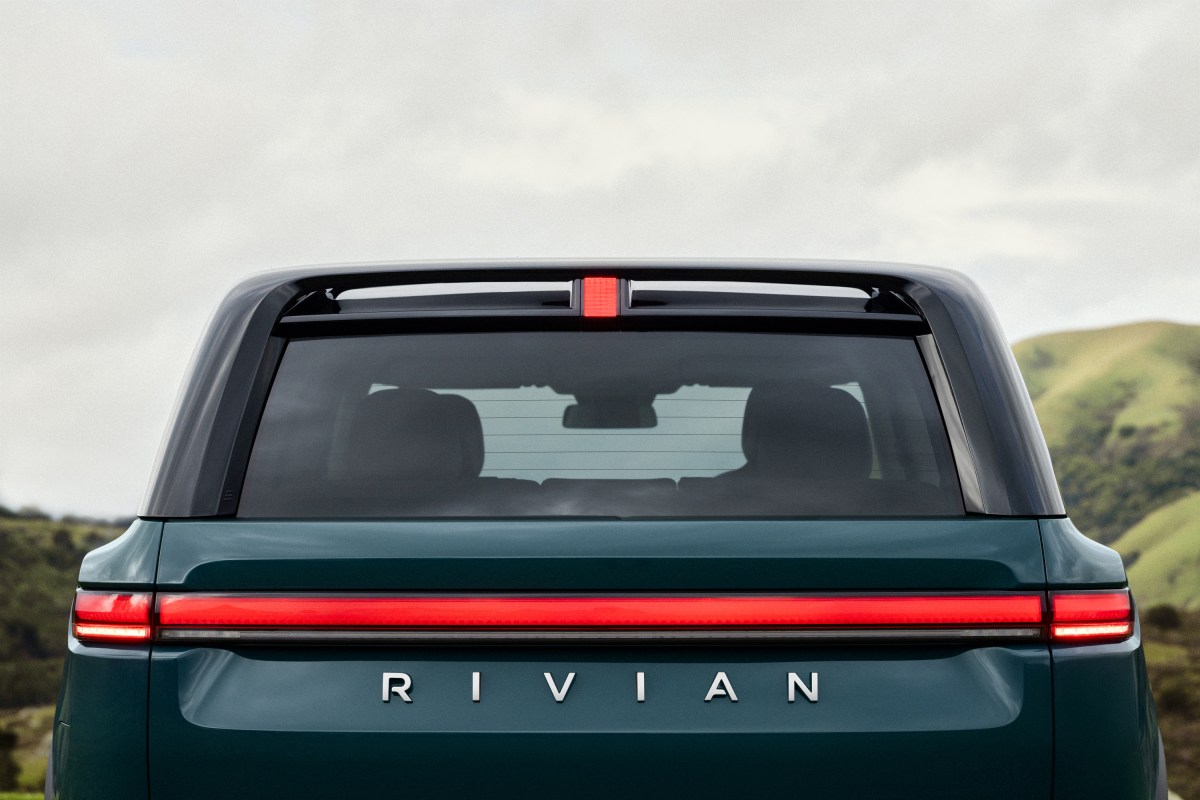
Rivian has adjusted its timeline regarding a long-anticipated profitability target for 2027, attributing this shift to substantial expenditures on its autonomous vehicle initiatives, as announced by the company on Thursday.

The firm indicated that it does not foresee achieving EBITDA positivity by the next year, noting an increase in R&D expenses correlating with its accelerated drive to enhance self-driving technology.

This revelation was embedded within a document that also highlighted Rivian’s new collaboration with Uber to create robotaxi versions of its forthcoming R2 SUV for the ride-hailing giant’s network.

Rivian refrained from additional comments beyond what was provided in the filing.

Rivian has consistently informed its shareholders of its potential to attain positive EBITDA (earnings before interest, taxes, depreciation, and amortization) by 2027, reliant on the successful introduction of the R2 SUV and a boost in software revenues. However, the firm has encountered a growing array of obstacles hindering that goal: the cessation of the federal EV tax credit, diminished ability to sell regulatory credits to other automakers, and cost hikes attributed to President Trump’s tariffs.

These challenges have undoubtedly complicated Rivian’s path to financial stability. At least one analyst, Joseph Spak from UBS, noted in February that he did not anticipate the company achieving positive EBITDA for “several years.” Rivian reported in February a cumulative net loss of $27 billion since its founding in 2009 through the end of 2025.

However, the company’s significant investment in self-driving technology has pushed back the timeframe for its EBITDA positive milestone. Founder and CEO RJ Scaringe stated that Rivian is currently investing more in autonomy research and development than in any other area. The company’s annual report reflected an expenditure of $1.7 billion on R&D in 2025, an increase from $1.6 billion in 2024, which was attributed to “rises in engineering, design, and development costs, prototyping costs, and software expenditures to support our R2 launch and AI and autonomy initiatives.”

Techcrunch event

San Francisco, CA
|
October 13-15, 2026

Rivian is working on its own “large driving model” and has created a custom processor along with an “autonomy computer” to facilitate that software. The company aims to debut eyes-off, hands-off driving next year and is striving to enable its electric vehicles to perform “personal L4” driving, referencing the level established by the Society of Automotive Engineers where an autonomous vehicle can operate within a specified area without human involvement.

Rivian first presented many of these objectives in December during its inaugural “Autonomy & AI Day” event, where Scaringe guided investors and media through the company’s Silicon Valley campus, offering test rides that showcased the current capabilities of its driver-assistance software.

The partnership with Uber revealed on Thursday marks a new initiative in addition to those disclosed in December. This collaboration includes Uber investing up to $1.25 billion in Rivian and possibly ordering up to 50,000 R2 SUVs. However, the ride-hailing giant is initially committing $300 million and will order only 10,000 R2s upfront. Much of the agreement appears to be poised for execution around 2030.

The company also faces numerous significant expenses on the horizon. It plans to commence construction of a new factory in Georgia this year and is just months away from starting the R2’s production. The company informed investors in February that it anticipates spending between $1.95 billion and $2.05 billion this year.

Instruments for entrepreneurs to steer through and overcome disputes

Instruments for entrepreneurs to steer through and overcome disputes

The pressure is significant for any founding team, meaning conflict is likely to arise, and even promoted. Nevertheless, the fabric of company culture relies on genuine reactions and interactions rather than the principles displayed on the wall. If team members observe co-founders or the leadership getting heated and engaging in counterproductive disputes, it fails to foster a respectful, growth-oriented environment. 

Fortunately, this dynamic can be mended, and the effort can be made to effectively manage conflict in a constructive manner. Ian Schmidt serves as a strategic advisor at Trimergence, a consultancy that assists leaders in enhancing their effectiveness from the inside. During a recent episode of Build Mode, Schmidt explored how founders and teams should refresh their personal operating systems.

“Companies encompass a human operating system that requires an upgrade process over time, similar to the product itself and your go-to-market approach,” Schmidt remarked. “Thus, we collaborate with leaders and teams to outline their operating system, their thought processes, how they confront conflict, and how they make decisions, providing them with what we refer to as a noise-reduction algorithm.”

In application, this implies that founders can develop frameworks for addressing conflict and transformation when the team is as small as two or three individuals, and if executed properly, it can grow alongside the organization. 

Schmidt proposed a framework that any founder, leader, or team member can put into practice when conflicts occur:

Pause and conduct an “internal 360” on the recent events

When a conflict has not resolved positively, it’s essential to evaluate the conversation and acknowledge your involvement. Perhaps you reacted impulsively, heightened the conflict, or created an uncomfortable moment for the team. Avoid rushing to find a solution; take a moment for self-reflection, articulate what transpired, and consider how it might have affected others. 

Relate this incident to a recurring pattern

Conflicts that escalate are rarely isolated incidents. Take the necessary time to identify patterns within this behavior. “How does this connect to something I’m aware of about myself? Oh, my partner mentions this frequently, or I’ve observed this growing up, or I’ve received similar feedback in the past. Thus, you have both the situation and the ongoing pattern,” explained Schmidt.

Techcrunch event

San Francisco, CA
|
October 13-15, 2026

Reach out to those affected

Once you’ve contemplated the situation, approach your team members for any necessary interpersonal reconciliations. In this dialogue, it is beneficial to express your perception of what occurred and how it may have affected them, explicitly acknowledge your role in it, and inquire about their feelings regarding the outcome. Be receptive to their experiences and feedback, allowing that dialogue to guide a recalibration.

Such openness and accountability will foster greater trust within the team and facilitate more constructive conflict resolutions in the future. 

Listen to the full episode of Build Mode for additional practical guidance on building your team.

Loading the player…

Apply to Startup Battlefield: We seek early-stage companies that have a minimum viable product. So nominate a founder (or yourself). Be sure to mention that you learned about Startup Battlefield through the Build Mode podcast. Apply here.

TechCrunch Disrupt 2026: We will return for TechCrunch Disrupt on October 13 to 15 in San Francisco, where the Startup Battlefield 200 will take the spotlight. If you want to cheer them on or simply connect with thousands of founders, VCs, and tech enthusiasts, be sure to get your tickets.

Use code buildmode15 to receive a 15% discount on any ticket type.

Isabelle Johannessen is our host. Build Mode is produced and edited by Maggie Nye. Audience Development is led by Morgan Little. Special thanks to the Foundry and Cheddar video teams. 

K2 is set to introduce its inaugural high-performance satellite for space computation.

K2 is set to introduce its inaugural high-performance satellite for space computation.

A bold satellite manufacturer is set to launch one of the most powerful spacecraft ever created in the coming weeks to showcase technology that will be essential for establishing data centers in space.

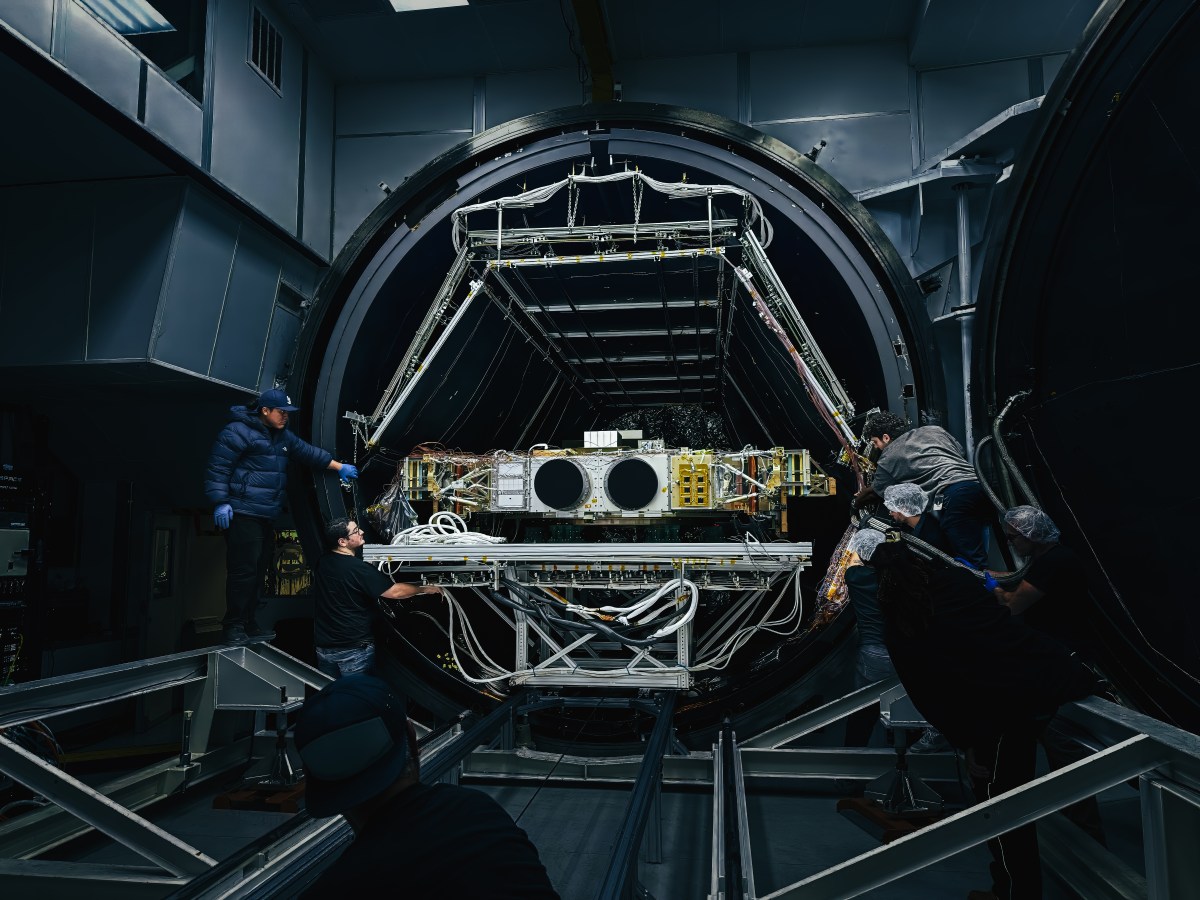
K2 Space, established by brothers and ex-SpaceX engineers Karan and Neel Kunjur in 2022, has integrated its satellite Gravitas into a SpaceX Falcon 9 rocket, anticipated for launch as early as the end of this month. Gravitas weighs two metric tons and boasts a wingspan of 40 meters when its solar panels are extended.

The main goal of this substantial satellite is high power: Gravitas can generate 20 kW of electricity for powering payloads such as sophisticated sensors, transceivers, and computing systems. In comparison, the larger and pricier ViaSat-3 spacecraft can produce over 25 kW, while Elon Musk has stated that Starlink V3 satellites will provide 20 kW. However, most satellites typically generate only a few kilowatts.

“The future demands higher power,” explains CEO Karan Kunjur. K2 has secured $450 million to realize this vision, and its valuation reached $3 billion from investors in December 2025. This launch marks the company’s initial venture into genuine space operations — which Kunjur describes as “the beginning of our iterative journey.”

The Gravitas mission will carry 12 unspecified payload modules from various customers, including the Department of Defense, along with a 20 kW electric thruster that the firm expects to be the most potent ever to be used in space.

Kunjur indicated that the demonstration will be assessed based on multiple success criteria — first, can K2 successfully deploy the spacecraft and generate power? Next, can it activate its payloads and test its powerful thruster? And if that goes well, can it utilize the thruster to elevate the spacecraft thousands of kilometers into a higher orbit?

Kunjur understands that launching a new spacecraft is challenging — 85% of its components were designed and produced internally — and acknowledges that markets respond quickly to anomalies. He emphasizes that the priority will be to maximize data collection to inform the next satellite design; K2 aims to launch 11 satellites in the upcoming two years, engaging in a combination of demonstration and commercial missions. By 2028, Kunjur anticipates the company will be manufacturing satellites for clients to expand commercial networks of high-powered space vehicles.

Techcrunch event

San Francisco, CA
|
October 13-15, 2026

As satellites increasingly contribute to the economy, the provision of power helps to unlock new business opportunities. Kunjur anticipates the initial impact on communications networks — greater power translates to increased throughput and a signal that is less prone to jamming. As data processing in orbit becomes more critical, high-powered satellites will be essential for operating advanced processors.

Nevertheless, the significant hurdle for data centers — and large satellites across the board — is the cost of launching them into space. K2’s original concept involved harnessing the capabilities of Starship, the massive rocket being developed by SpaceX, which may offer substantial reductions in launch costs. However, the timeline for when the vehicle will be operational or begin providing low-cost services remains unclear.

Yet, the rising demand for increased power in orbit shifts K2’s perspective on its distinctive spacecraft. Expansive communication networks like Starlink and Amazon LEO, alongside hyperscalers considering the possibilities of orbital computing, and the Pentagon’s plans for a $185 billion missile defense initiative with thousands of new satellites all indicate a need for satellites with greater electrical capacity.

K2 asserts that its spacecraft continue to be a viable option even in a scenario where launch costs might be around $7.2 million (at customer rates on a Falcon 9) instead of $600,000 (in a future where Starship significantly lowers launch expenses). Kunjur contends that Gravitas, priced at $15 million, is still less expensive than high-powered satellites produced by traditional manufacturers while being more capable than similarly priced smaller spacecraft.

Once the largest rockets commence regular flights, Kunjur mentions that his team will be prepared with even larger alternatives.

“The plan is to construct all the components that we will need to be first movers when Starship and New Glenn become available for everyone else,” he told TechCrunch. K2 has prepared designs for a 100 kW satellite fully mapped out on its factory floor, extending throughout the entire building.

This article has been revised to reflect a more recent assessment of Starlink satellite power generation.

Recall the Nokia Twist and Motorola Flipout? This portable device reintroduces their strangest feature.

Anbernic established its reputation on retro replicas, yet a recent leak indicates the company is venturing into original territory. A video showcases a square Android handheld featuring a swiveling screen that reveals concealed controls, emulating the mechanical innovation of the Flipout.

The article Remember the Nokia Twist and Motorola Flipout? This handheld revives their strangest feature first appeared on Digital Trends.