Anthropic has acquired the stealth biotech AI company Coefficient Bio in a $400 million stock transaction, as reported by The Information and Eric Newcomer. Insiders familiar with the agreement confirmed to TechCrunch that it was finalized, yet they refrained from commenting on the specifics of the financial terms.
This acquisition aligns with Anthropic’s ongoing expansion into healthcare and life sciences, following the October announcement of Claude for Life Sciences, a platform designed to assist scientific researchers in making discoveries.
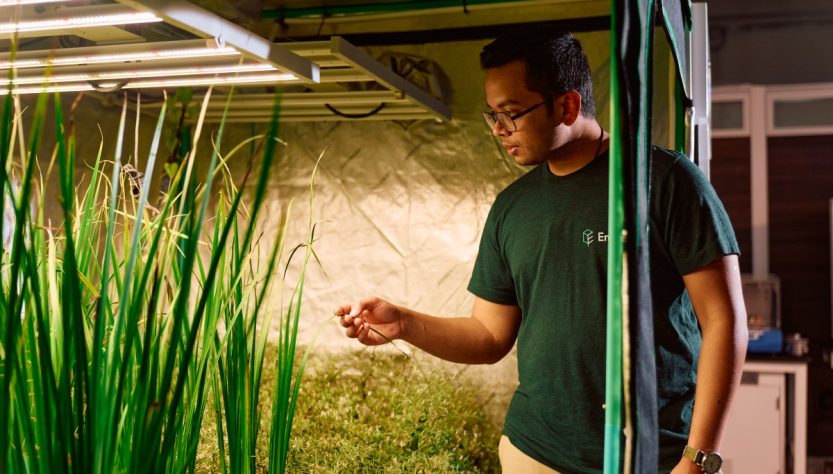
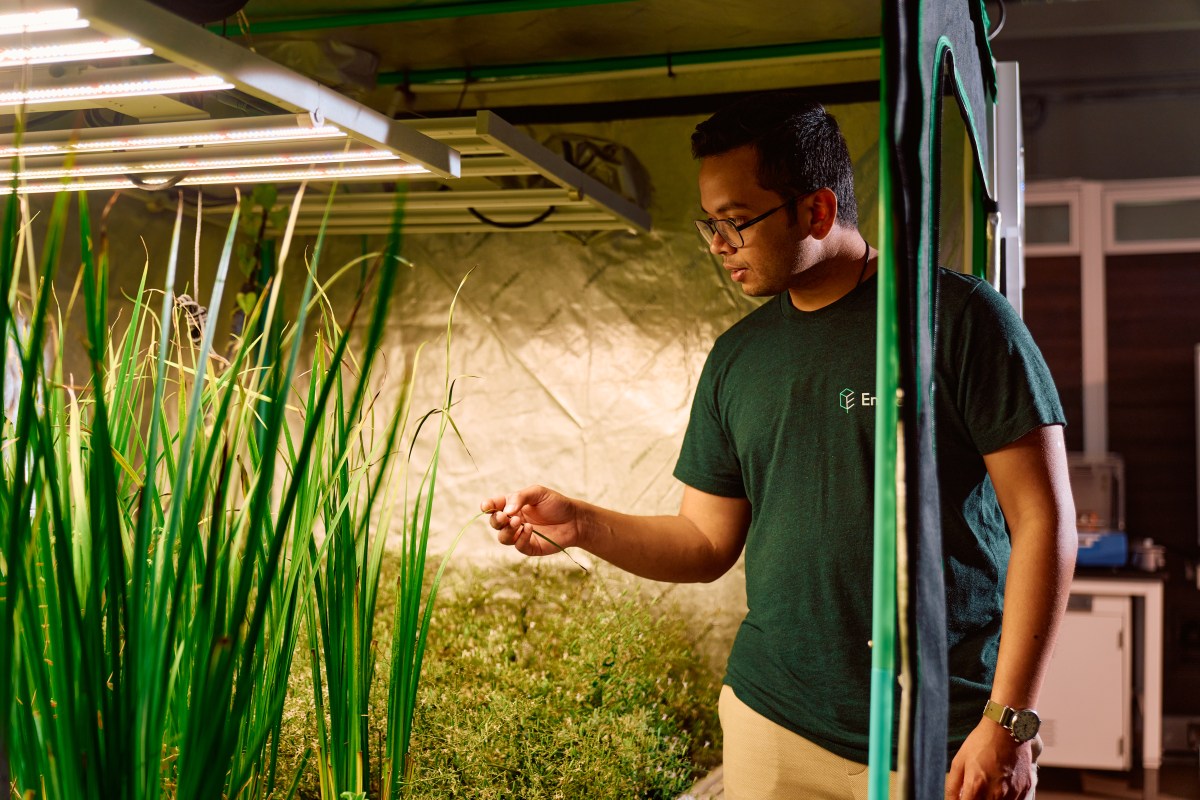
Coefficient Bio’s founders, Samuel Stanton and Nathan C. Frey, established the startup eight months prior, both of whom have experience in computational drug discovery at Genentech’s Prescient Design. Coefficient Bio was leveraging AI to enhance the efficiency of drug discovery and various forms of biological research.
The team, comprising about 10 members, is anticipated to integrate into Anthropic’s health and life sciences division.
Anthropic has submitted paperwork to establish a new political action committee — indicating that, similar to its counterparts, the AI organization is allocating substantial resources to influence legislation and regulation.
AnthroPAC intends to make donations to both political parties during the midterm elections, including contributions to existing D.C. lawmakers and emerging political figures. The PAC will rely on voluntary contributions from employees, limited to $5,000, according to Bloomberg. A statement of organization submitted to the Federal Election Commission features a signature from Allison Rossi, the treasurer of Anthropic. TechCrunch contacted Anthropic for further details.
AI firms, which serve as both allies and rivals in a rapidly evolving and often volatile sector, have increasingly aimed to advocate for their preferred policies at both state and federal levels. The Washington Post highlighted last month that AI companies had already donated an astounding $185 million to midterm campaigns. In February, The New York Times also covered Public First, a new Super PAC that was said to have received at least $20 million from Anthropic, which financed advertising campaigns backing a specific regulatory framework.
Anthropic’s political engagement has intensified as the organization remains embroiled in a contentious legal dispute with the Defense Department. The conflict began earlier this year regarding the government’s utilization of Anthropic’s AI models and the regulations (if any) that should govern such use.
Apple’s iPads are equipped with integrated productivity applications like Notes, Calendar, and Reminders. However, if you wish to discover innovative methods for enhancing productivity and organizing your life, numerous apps are available to assist you.
Initially designed as a device for streaming media or browsing the internet on the move, Apple’s iPads have evolved into versatile computers capable of managing a wide range of tasks for personal, professional, and educational purposes. Consequently, many applications exist to aid in establishing a centralized location for organizing your life or maintaining focus on daily activities by minimizing distractions.
We have curated a selection of some of the top apps currently offered in the App Store.
Milanote
Image Credits:Milanote /
Milanote is an excellent choice for individuals who value a visual workspace for constructing a task manager, curating mood boards, or organizing plans.
You have the capability to transform disorganized concepts and tasks into a visual framework. Rather than depending on conventional lists, you can develop a board to outline your projects and arrange to-do tasks in a single location, providing a comprehensive overview. The application allows you to combine notes, images, videos, sketches, and beyond.
For collaborative projects, you can invite others to edit, comment on, or view your boards.
The application is versatile enough to facilitate activities like planning story outlines, creating storyboards, outlining marketing strategies, gathering artistic inspiration, arranging fashion ideas, drafting scripts, and much more.
Techcrunch event
San Francisco, CA | October 13-15, 2026
Milanote can be used free of charge, but for unrestricted notes and file uploads, a subscription fee of $9.99 per month is required.
Goodnotes
Image Credits:Goodnotes
Goodnotes ranks among the most popular applications for iPad, and it’s easy to see why. This app excels for users who appreciate writing notes with an Apple Pencil, as it allows the integration of both handwritten and typed content on a single page, along with images, stickers, and even sketches.
You can establish a digital notebook featuring blank or ruled pages for note-taking, checklists, planners, and beyond. The application permits exporting entire digital notebooks or selected pages as PDFs and other formats.
Additionally, Goodnotes includes an AI assistant capable of interpreting your handwritten or typed notes, summarizing, rewriting, or organizing them. It can answer inquiries, resolve mathematical problems, generate templates, and identify significant themes, among other capabilities.
Goodnotes is equally effective for drawing and sketching. While it may not be as advanced as some more creative applications like Procreate, it is user-friendly and suitable for quick sketches or diagrams.
Should you participate in a class or meeting, you can also record audio notes synchronized with your writing. Furthermore, you can utilize AI to summarize your notes and provide writing assistance.
You can create three digital notebooks and access basic AI functionalities such as the option to ask five questions per month and solve math problems free of charge. To unlock unlimited notebooks and advanced AI features, a subscription fee of $11.99 per year or a one-time payment of $35.99 is required. The app also offers a monthly AI Pass add-on for $9.99, granting additional monthly credits and advanced AI functionalities such as image generation.
TickTick
Image Credits:TickTick
If you’re not satisfied with your iPad’s built-in Reminders application, or if you seek a more powerful to-do list and task management tool, TickTick could be an appealing option. It is suitable for both personal and professional tasks.
The application enables synchronization of tasks across all your devices and integration with your preferred calendar application. You can establish checklists, schedule recurring tasks, attach files to tasks, collaborate by sharing your task lists, and much more.
If you’re working on developing a habit—like meditating before sleeping—you can set your objectives in the app and monitor your advancement. Additionally, if you receive an email but are too busy to reply, you can convert it into a task to ensure you remember to answer.
Tags can be added to your tasks for better management, and you can assign priorities to them.
For concentrated work, the app’s “pomo timer,” based on the Pomodoro Technique that divides work into focused segments, can be activated to enhance productivity.
TickTick is available for free, but to access extra features such as adding up to five reminders to a task or more lists and assignments, a fee of $3.99 per month or $35.99 annually applies.
Forest
Image Credits:Forest
Forest is a unique application that gamifies productivity while contributing to environmental sustainability. If you find it difficult to maintain focus or are prone to distractions, this app could be beneficial for you.
When you need to concentrate, you can launch the app and plant a tree. Your tree flourishes as you focus and complete your tasks. If you exit the app before the timer concludes, your tree will die.
You can establish “Allow Lists” for particular applications you use to enhance productivity, such as email or Microsoft Word. The app also tracks your productivity.
Over time, you cultivate a digital forest that reflects your productivity. If you enjoy competition, you can share your forest with others to gauge how it measures up against theirs. By maintaining focus and nurturing virtual trees, you can earn coins to support actual tree planting efforts through the organization Trees for the Future.
Forest costs $3.99 for download, and you can make in-app purchases to accelerate your forest’s growth and plant real trees more quickly.
Notion
Image Credits:Notion
Notion serves as an excellent tool for note-taking, task management, workflow organization, habit tracking, and collaboration. Instead of juggling multiple applications for your calendar, tasks, and notes, you can accomplish everything within Notion.
The app features an AI assistant capable of writing, editing, and organizing content within your workspace. It can summarize extensive notes, respond to inquiries, draft text, locate information across your workspace, brainstorm ideas, and assist in creating lists, among other tasks.
You can integrate the various apps you use, such as Slack and Dropbox, to consolidate all your workflows in one location. One of Notion’s standout features is its degree of flexibility and customization. You can tailor it to meet your needs, whether for personal life management, academic responsibilities, or passion projects.
If you’re uncertain where to begin, templates are available to help you create resources like travel planners or product roadmaps. Additionally, Notion provides an AI feature that assists in brainstorming and writing. Notion AI can offer answers regarding your content and convert large data sets into manageable action items.
Notion offers a complimentary plan for personal use, along with a free trial of Notion AI. The company also provides a $10 per month Plus plan designed for small groups and a $20 per month Business plan intended for organizations.
Crouton
Image Credits:Crouton
Meal planning can sometimes be time-consuming, which detracts from your ability to complete other tasks. For this reason, having an app like Crouton, designed to simplify cooking and meal organization, can be very helpful in managing recipes and grocery planning.
You can import recipes from online sources or scan them directly from cookbooks. This way, instead of depending on bookmarks or physical recipes, you can consolidate them in one location.
You can outline your meals for the week, and when you’re stuck on ideas for a particular day, the app can generate a meal plan for you. After compiling your weekly meals, you can construct a grocery list containing all the necessary ingredients.
Crouton features an in-app timer, eliminating the need to switch to another app for time-sensitive recipe steps. Plus, you can easily share your recipes with others—whether to inform family about dinner or to share a favorite dish with a friend.
Crouton provides basic functionalities free of charge, but a subscription of $14.99 annually grants access to unlimited recipes and additional features.
Freedom
Image Credits:Freedom
Freedom is an effective application for blocking distractions to enhance your focus and productivity. You can initiate a Freedom session to obstruct distractions on all your devices for a predetermined duration.
You can select which websites and applications you wish to block during this time. For instance, if you are completing work on your iPad but attempt to open TikTok on your phone, you will be unable to do so and will instead encounter a green screen.
The app allows you to start a session immediately, schedule sessions for the future, or establish recurring sessions. If you know you need to be undistracted at a certain time each day, you can configure a Freedom session to activate at that specific time daily.
For those who rely on specific sounds for concentration, Freedom provides a variety of auditory options. For example, you can listen to the ambience of a café in cities like New York or Berlin, the soothing sounds of birds singing, calming instrumentals, and more.
The application has a fee of $3.99 per month, is user-friendly, and includes various articles featuring tips on boosting productivity and gaining insights into digital wellness.
Notability
Image Credits:Notability
Notability is a comprehensive note-taking application that enables you to jot down ideas, import and annotate textbooks, record audio, and sketch concepts. This app is beneficial for students, professionals, and even hobbyists alike.
You can opt to take notes using an Apple Pencil, text, or audio. If you’re searching for something specific, the app allows you to search through your notes, including handwritten ones and any uploaded documents.
Notability also provides AI-generated note summaries and the capability to work on two separate notes concurrently. Plus, you can evaluate your knowledge through personalized quizzes based on the content of your notes.
If you’re in need of inspiration, Notability offers a collection of templates for planners, study notes, to-do lists, and more.
While Notability is free, it includes a $4.99 monthly subscription that unlocks additional features such as math conversion, automatic audio transcription, and unlimited notes.
Todoist
Image Credits:Todoist
Todoist is a user-friendly app that allows you to capture and arrange tasks using natural language. You can input tasks like, “Schedule next week’s work every Friday afternoon” or “Complete assignments every Wednesday at 6 p.m.” to easily manage and plan your activities.
Tasks can be sorted into categories such as “Today,” “Upcoming,” or custom filters to keep your focus on what’s currently important, ensuring that you only view relevant tasks when needed.
Todoist can be utilized for organizing various tasks, including work-related, personal, educational, or management objectives and reminders. Additionally, you can integrate Todoist with your calendar, voice assistant, and numerous other tools like Outlook, Gmail, and Slack.
Beyond the iPad, you have the ability to access the service from your iPhone and Apple Watch, with synchronization across desktops and all other devices.
The basic features of Todoist are available at no charge. You can unlock extra features, including an AI assistant and calendar layout, for $4 per month through Todoist’s “Pro” subscription plan.
Trello
Image Credits:Trello
If you enjoy using sticky notes to organize your tasks, Trello might be an ideal choice due to its straightforward and visual approach to task tracking.
Trello enables you to create “Boards” for various aspects of your life, such as work, education, projects, and personal aspirations, then establish lists like “To Do,” “Doing,” and “Done” to monitor your progress.
You can utilize “Cards” within boards to represent distinct tasks or items you wish to complete. Each card can contain descriptions, due dates, checklists, notes, and additional details. Moreover, labels can be applied to visually categorize cards and prioritize them, classifying them as “high,” “medium,” or “low.”
The app’s “Calendar view” provides a glimpse into upcoming tasks over the coming days and weeks.
Trello offers unlimited cards and up to 10 boards within its free plan. For $5 a month, the standard plan includes infinite boards and enhanced functionalities, such as capturing tasks from email, Slack, and Teams.
Update: This story originally ran in September 2024 and is regularly revised with new information.
Who doesn’t enjoy a thrilling case of FOMO? From the dot-com era to Web 2.0, virtual reality to blockchain, the technology sector has seen its fair share of anxiety about missing out on trends.
The AI bubble is the grandest of them all. Its initial offspring — the frenzy to secure power for data centers — is now spawning a frantic race to obtain natural gas resources and machinery. If FOMOs could reproduce, the AI bubble is already in the grandparent phase.
On Tuesday, Microsoft announced that it’s collaborating with Chevron and Engine No. 1 to construct a natural gas power plant in West Texas that could expand to generate 5 gigawatts of electricity. This week, Google verified that it’s partnering with Crusoe to create a 933 MW natural gas power facility in North Texas. Additionally, last week, Meta revealed it would be adding seven more natural gas power plants to its Hyperion data center in Louisiana, escalating the site’s capacity to 7.46 GW — sufficient to power the entire state of South Dakota.
Is there anyone we’ve overlooked?
The recent funding is primarily focused in the southern U.S., which hosts some of the largest natural gas reserves globally. The U.S. Geological Survey recently estimated that in one area alone, there’s enough to provide energy to the entire United States for 10 months. Every data center operator seems eager to stake a claim.
The rush for natural gas has caused a shortage of turbines for power plants, with prices expected to soar by 195% by year’s end compared to 2019 figures, as noted by Wood Mackenzie. This equipment accounts for 20% to 30% of the total cost of a power plant. Firms won’t be able to make new orders until 2028, and turbine delivery is taking an estimated six years, according to the consultancy.
This indicates that tech companies are wagering that the AI craze will persist, that AI will require ever-increasing amounts of energy, and that natural gas power generation will be crucial for triumph in the AI age.
Techcrunch event
San Francisco, CA | October 13-15, 2026
They may eventually regret that third assumption.
While the U.S. boasts ample natural gas supplies, and shipping the fuel isn’t economical, the country is somewhat shielded from the unrest in the Middle East. However, supplies are not infinite, and recently, growth in production from the major three regions — responsible for three-quarters of all U.S. shale gas output — has decelerated significantly.
It’s uncertain how insulated tech firms are from price fluctuations as no specific terms of their agreements have been disclosed. Much will hinge on how firm the pricing is in those contracts.
Even if the contracted prices are as stable as possible, companies could still encounter challenges.
Since natural gas accounts for around 40% of electricity generation in the U.S., according to the Energy Information Administration, electricity costs are closely linked to natural gas prices. Tech firms might briefly mitigate scrutiny by relocating their gas power plants behind the meter — bypassing the grid and connecting them directly to their data centers. Nevertheless, natural gas is a finite resource, and if their aspirations expand too significantly, even behind-the-meter operations could inflate power prices for all. This pattern has been observed before.
It won’t solely be ordinary households that become disgruntled. Other sectors, including those more reliant on natural gas who haven’t yet switched to renewables, might object to data centers monopolizing so much of the resource. Powering a data center with wind, solar, and batteries is straightforward. Operating a petrochemical facility? Not nearly as simple.
Then there’s the factor of climate. A single harsh winter could alter the dynamics by increasing demand among households. Wellheads might freeze, drastically reducing supplies, as experienced in Texas in 2021. When gas becomes scarce, suppliers will be faced with a dilemma: keep the AI data centers operational or allow residents to heat their homes?
By acquiring natural gas resources and operating behind-the-meter, tech companies can assert that they’re “providing their own power” and not straining the electrical grid. However, in reality, they’re merely transferring their usage from one grid to another, the natural gas network. The AI surge has highlighted how physically limited the digital realm remains. Is it wise for them to place big bets on a limited resource? Tech firms may come to regret falling for the FOMO.
As data centers have expanded and multiplied, so has the resistance.
A recent poll from Harvard/MIT indicated that 40% of individuals were in favor of constructing a data center in their vicinity, with 32% against it when queried about the establishment of various industrial sites in their neighborhoods.
One interesting detail from the survey, according to Axios: More individuals would prefer an e-commerce distribution center.
Two-thirds of those surveyed in the 1,000-person poll carried out in November expressed concerns that a new data center in their locality could drive up electricity costs. Enthusiasm for job creation and economic development supported the argument for data centers, as reported by Axios — although that feeling may diminish since most data center operations don’t generate many jobs once they’re established.
Another survey, performed last month and released earlier this week by Quinnipiac University, revealed significantly greater opposition to the construction of data centers. That poll discovered that 65% of Americans were against the establishment of an AI data center in their neighborhood, while only 24% of the 1,397 U.S. adults surveyed endorsed the idea.
The recent polls indicate that the discussion surrounding data centers is far from resolved, and ongoing dissatisfaction from such a significant portion of the electorate is likely to continue influencing politics. Data centers used to operate quietly in the background, but that’s changed.
It’s been on the horizon for weeks, but the conclusion is approaching: Only a few hundred Tesla Model S and Model X cars are left available for sale. Tesla’s CEO Elon Musk confirmed in a post on X this week that custom orders for the Model S sedan and Model X SUV have concluded. “All that remains are a few in inventory,” he stated.
Musk initially revealed Tesla’s intention to halt Model S and Model X production back in January. The data clarifies the reasoning behind this.
Sales of the Tesla Model X and Model S have consistently decreased over the years as the company’s higher volume and more affordable models — the Model 3 and Model Y — have risen in popularity. Tesla aggregates S and X sales under “other models,” which now includes the Cybertruck. The combined data shows S and X sales peaked in 2017 at 101,312 units before dropping to 50,850 units (Cybertruck inclusive) in 2025 — a minute fraction of the 1.63 million vehicles it shipped worldwide last year.
In simple terms, their demise was unavoidable. The subsequent developments are slightly more complex.
Musk is not replacing the void created by the Model X and Model S with a conventional EV; he abandoned plans to manufacture a more affordable EV that was anticipated to cost around $25,000. Instead, Musk is betting on the Optimus robot, which has yet to commence production, and the Cybercab, an entirely electric two-seater autonomous vehicle that was first introduced as a concept in 2024.
Tesla aims to manufacture Optimus robots at its Fremont, California, facility once production of the Model S and Model X concludes, potentially any day now as final orders have been placed. Musk has indicated that Tesla will start producing the Cybercab this month at its factory in Austin, Texas.
A retrospective
The Model S and X EVs have taken a backseat to the more budget-friendly Model 3 and Model Y vehicles. However, their launches and initial sales represented two pivotal moments in Tesla’s vibrant and often tumultuous history. The Model S debuted in 2012 as the company’s first mass-market EV. Its acclaim not only transformed consumer perceptions of EVs but also compelled traditional automakers — long skeptical of the significance of electric vehicles — to pay attention.
Techcrunch event
San Francisco, CA | October 13-15, 2026
The Model X followed in autumn 2015 and was famously dubbed by Musk as the Fabergé egg of EVs.
“I think we got a bit overenthusiastic with the X,” Musk remarked in a September 2015 press interview attended by this reporter just an hour prior to Tesla’s Model X delivery event. “I’m not certain anyone should manufacture this car.”
The Model X was frequently delayed and initially critiqued for its complexity. Nevertheless, it ultimately opened doors for the company to a new demographic: women.
The Model X elevated Tesla’s visibility, positioning the company for its next significant venture: an affordable mass-market EV. The Model 3 experienced a rocky beginning, but ultimately propelled Tesla into the spotlight. The Model Y solidified its status, helping Tesla to extend its lead as the top-selling EV manufacturer worldwide until China’s BYD claimed that leading global EV sales position in 2025, delivering 2.26 million EVs.
Tesla continues to sell thousands of Model 3 and Model Y units, but its growth has stagnated and even reversed. The company announced in January that it sold 1.69 million vehicles in 2025, a decline for the second consecutive year. Its attempts to boost sales with more economical, stripped-down versions of the Model 3 and Model Y launched in October have shown some degree of success, based on first-quarter 2026 numbers reported on April 2.
In the first three months of the year, Tesla delivered 358,023 EVs globally, approximately 6% more than during the same timeframe in 2025, which was the company’s worst quarter in years. This figure fell short of analysts’ projections of around 368,000.
But that is of little concern. In Musk’s perspective — one for which he is well rewarded — Tesla is not merely an automaker or a sustainable energy entity, as he has previously stated. Tesla is fundamentally an AI company, and his new strategy fully embraces that vision.
Cybercab challenges
The Optimus robot is one component of Tesla’s AI initiative. However, it is the Cybercab that most clearly captures and unveils the risks associated with the company’s AI-centric approach.
The Cybercab is engineered to operate as an autonomous vehicle without conventional controls such as a steering wheel or pedals, meaning it will launch without the support of a human safety operator.
The inaugural Cybercab exited the Tesla factory assembly line in February and is scheduled to begin mass production this month. However, that timeline may be pushed back, as many have in Tesla’s past.
Unlike Tesla’s earlier vehicles, the challenges here do not lie in the production (who can forget the production struggles of the Model 3?). Instead, it faces significant regulatory impediments before it can hit the streets. Federal motor vehicle safety standards require vehicles to include a steering wheel and pedals. There is no indication that Tesla has sought an exemption, based on publicly available records from the Federal Register and the National Highway Traffic Safety Administration.
The vehicles will also depend on Tesla’s Full Self-Driving software to navigate public thoroughfares and securely transport passengers to their destinations. Despite advancements in FSD and limited trials with driverless robotaxis in Austin, Tesla has yet to prove that its software can function reliably at scale.
And that aspect demands more than just technical expertise. Robotaxi operations are also complex. In places like California, they require permits to deploy and charge for rides in driverless vehicles.
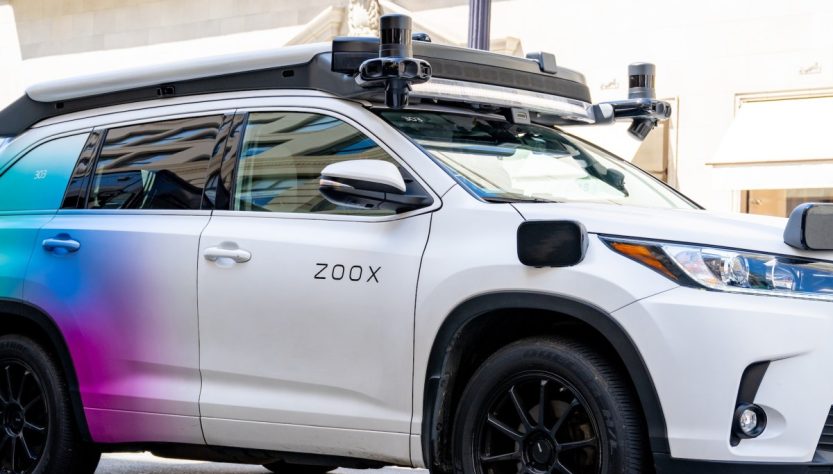
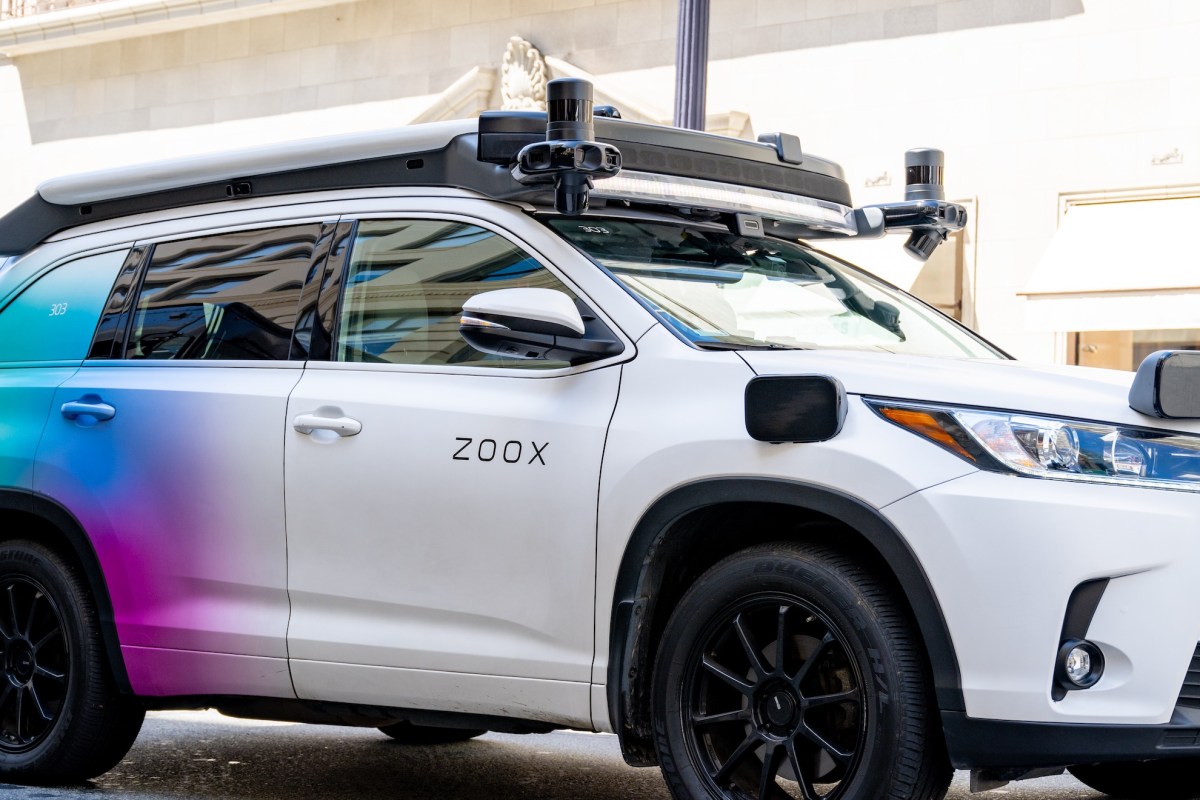
Zoox, the autonomous vehicle firm owned by Jeff Bezos’ Amazon, could pave the way for Tesla and its Cybercab. Zoox received an exemption from the National Highway Traffic Safety Administration permitting it to showcase its custom-designed robotaxis, which do not feature pedals or a steering wheel, on public streets. Zoox is currently undergoing a public process to have that exemption expanded to commercial activities.
Musk attempted to convince shareholders about the merits of the risk during the company’s earnings call in January.
“The vast majority of miles traveled will be autonomous in the future,” Musk stated at the time, adding that the Cybercab is highly optimized for the lowest cost per mile and also for a significantly higher usage rate. “I would estimate probably less than, I’m just hypothesizing, but probably less than 5% of miles driven will see someone actually driving the car themselves in the future, perhaps as low as 1%.”
On Thursday, the EU’s cybersecurity agency announced that a recent hacking incident and data breach affecting the EU’s executive arm was carried out by a cybercriminal organization identified as TeamPCP.
In a fresh report, CERT-EU disclosed that the attackers managed to steal approximately 92 gigabytes of compressed data from an Amazon Web Services (AWS) account utilized by the European Commission, which included sensitive information such as names, email addresses, and email content.
The breach impacted the cloud infrastructure of the Commission’s Europa.eu platform, a site leveraged by member states for hosting the websites and publications of various EU institutions and agencies.
CERT-EU indicated that the data of at least 29 other EU entities could be compromised, and numerous internal clients of the European Commission might also have had data extracted.
Subsequently, the stolen information was published online by another hacking entity, the infamous ShinyHunters.
While the scale of the data breach is indeed significant, it is uncommon for a cybersecurity agency to link two distinct hacking groups to the same event. A representative from ShinyHunters informed TechCrunch in a chat that they had secured some of the data initially taken by TeamPCP in preceding attacks, which they then leaked.
Attempts to contact TeamPCP for a statement were unsuccessful.
CERT-EU revealed that the breach began on March 19 when hackers obtained a confidential API key related to the European Commission’s AWS account, stemming from a prior hack on the open source security tool Trivy. The Commission unintentionally downloaded a version of the compromised Trivy tool after the project’s recent breach, allowing the hackers to access its secret API key, which enabled them to retrieve data stored in the Commission’s AWS account.
While the agency continues to analyze the data that was released online, nearly 52,000 files contain sent email messages. CERT-EU indicated that most of these emails are automated with minimal content, but emails that returned with an error “may contain the original user-submitted content, creating a risk of personal data exposure.”
CERT-EU stated it is already reaching out to the organizations impacted.
Contact Us
Do you possess further information regarding this breach? Or other cyber incursion? From a non-work device, you can securely reach out to Lorenzo Franceschi-Bicchierai on Signal at +1 917 257 1382, or contact via Telegram and Keybase @lorenzofb, or through email.
A representative for the European Commission informed TechCrunch that the agency is closed until next week and will provide a response to requests for comment then.
In addition to the Trivy breach, TeamPCP has been associated with ransomware assaults and cryptocurrency mining operations, according to Aqua Security, the developer of Trivy. Recently, the hackers have been linked to a systematic series of supply chain attacks compromising additional open source security initiatives, as reported by Palo Alto Networks Unit 42.
By targeting developers with keys that grant access to sensitive systems, the hackers “then have the capacity to extort compromised organizations for ransom, demanding payments,” wrote Unit 42.
This article was revised to encompass comments from a member of ShinyHunters.
Watching the immensely popular television series Love Story took me back to a strange week from my history. One afternoon in April of 1994, while I was working in a studio apartment that I had converted into an office, I received some devastating news from my wife: Cynthia Horner, a psychiatrist companion and co-tenant at the office, had passed away just before reaching her 30th year. Cynthia had recently relocated to live with her boyfriend, John Perry Barlow, a songwriter and a friend of mine. Barlow informed me that Cynthia had unexpectedly died on a plane due to a virus that had previously affected her heart. I rushed over to Barlow’s home, where he, another friend, and I spent hours in mourning. That friend, well-acquainted with tragedy, was John F. Kennedy Jr.
Barlow, who died in 2018 at the age of 70, was recognized for his contributions as a lyricist for the Grateful Dead, an advocate for the internet, and a co-founder of the Electronic Frontier Foundation. He was also a prominent figure during the early days of WIRED and was one of JFK Jr.’s closest pals, a detail he frequently discussed openly.
Their friendship began in 1977 when Jackie Kennedy asked Barlow, who was managing his family ranch in Wyoming, to welcome her 17-year-old son, JFK Jr., to experience ranch life. Barlow accepted, introducing Kennedy to ranch tasks enhanced by LSD, which resulted in a deep friendship.
Their connection endured for years. Barlow recounts a Prince concert he attended with Kennedy, both influenced once again, which energised the entire Radio City Music Hall to dance. Later, Barlow and Cynthia went on double dates with Kennedy and his then-girlfriend, Daryl Hannah, who played a key role in organizing Cynthia’s memorial. In 1994, Kennedy began dating Carolyn Bessette. Barlow grew close to Bessette and attended their wedding in 1996.
In his autobiography, Barlow speculates about the tragic plane crash involving Kennedy, proposing that Kennedy postponed his flight to draft a condolence email after Barlow’s mother’s passing. Barlow expresses regret that Kennedy didn’t follow his previous advice: “When you lose sight of the horizon don’t look for it. Just put your eyes on the instrument and believe it.”
When Brett Levenson departed Apple in 2019 to oversee business integrity at Facebook, the social media platform was amid the aftermath of the Cambridge Analytica scandal. Initially, he believed he could rectify Facebook’s content moderation issues through enhanced technology.
However, he soon discovered that the issue was more profound than just technology. Human reviewers were tasked with memorizing a 40-page policy document that had been translated into their native language by a machine, he explained. They then had approximately 30 seconds for each piece of flagged content to determine not only if it breached the rules but also what action to take: block it, ban the user, or limit its distribution. According to Levenson, those rapid decisions were only “slightly better than 50% accurate.”
“It was almost like flipping a coin to see if the human reviewers could correctly interpret the policies, and this was after several days of the harm already occurring,” Levenson stated to TechCrunch.
Such a delayed, reactive method is not viable in a landscape filled with agile and well-funded adversaries. The emergence of AI chatbots has only amplified the situation, as failures in content moderation have resulted in a series of notable incidents, including chatbots directing teens toward self-harm or AI-generated images bypassing safety filters.
Levenson’s dissatisfaction prompted the concept of “policy as code” — a method to convert static policy documents into actionable, updatable logic closely tied to enforcement. This insight led to the establishment of Moonbounce, which has disclosed a $12 million funding raise on Friday, as learned exclusively by TechCrunch. The funding round was co-led by Amplify Partners and StepStone Group.
Moonbounce collaborates with businesses to add an extra layer of safety wherever content is produced, whether by a human or by AI. The company has developed its own large language model to examine a client’s policy documents, assess content in real-time, provide a response in 300 milliseconds or less, and take appropriate action. Depending on the client’s preferences, this action might involve Moonbounce’s system delaying distribution while the content awaits a human review or could result in blocking high-risk content immediately.
Currently, Moonbounce caters to three primary sectors: platforms handling user-generated content such as dating applications; AI companies creating characters or companions; and AI image generation services.
Techcrunch event
San Francisco, CA | October 13-15, 2026
Moonbounce is facilitating over 40 million daily reviews and caters to more than 100 million daily active users on the platform, stated Levenson. Clients include AI companion startup Channel AI, image and video generation firm Civitai, and character roleplay platforms Dippy AI and Moescape.
“Safety can actually serve as a product advantage,” Levenson remarked to TechCrunch. “It has never been perceived this way before because it has always been an afterthought, not something that can be integrated into the product. We observe that our clients are discovering fascinating and innovative methods to leverage our technology to make safety a competitive edge and part of their product narrative.”
Tinder’s trust and safety lead recently discussed how the dating service utilizes these types of LLM-powered solutions to achieve a tenfold improvement in detection accuracy.
“Content moderation has always been a challenge for major online platforms, but with LLMs now central to every application, this challenge has become even more formidable,” commented Lenny Pruss, general partner at Amplify Partners, in a statement. “We chose to invest in Moonbounce because we envision a future where objective, real-time guardrails become the essential infrastructure of every AI-mediated application.”
AI enterprises are under increasing legal and reputational pressure after chatbots have been criticized for guiding teenagers and vulnerable users towards suicidal thoughts, with image generators like xAI’s Grok being used to create non-consensual nude images. Clearly, internal safety measures are failing, and it’s turning into a liability issue. Levenson mentioned that AI companies are progressively seeking assistance from external sources to enhance their safety frameworks.
“We act as a third party positioned between the user and the chatbot, which means our system isn’t overwhelmed with context in the same way the chat is,” Levenson explained. “The chatbot must remember, possibly, tens of thousands of tokens that have been exchanged previously…Our sole concern is enforcing the rules in real-time.”
Levenson co-manages the 12-person company with his former Apple associate Ash Bhardwaj, who previously developed large-scale cloud and AI infrastructure across Apple’s core products. Their upcoming focus is a feature known as “iterative steering,” created in response to incidents like the 2024 suicide of a 14-year-old boy from Florida who became fixated on a Character AI chatbot. Instead of an outright refusal when harmful subjects come up, the system would intervene in the conversation and reroute it, adjusting prompts in real time to steer the chatbot toward a more actively supportive response.
“We hope to incorporate into our action toolkit the capability to guide the chatbot in a more positive direction, effectively modifying the user’s prompt to compel the chatbot to be not only an empathetic listener but also a helpful listener in such situations,” Levenson stated.
When queried about whether his exit strategy involved an acquisition by a company such as Meta, completing his journey with content moderation, Levenson acknowledged how well Moonbounce would integrate into his former employer’s offerings, as well as his responsibilities to his investors as a CEO.
“My investors would be furious if they heard me say this, but I would despise seeing someone purchase us and then limit the technology,” he expressed. “Like, ‘Alright, this is ours now, and no one else can benefit from it.’”
Zoë Schiffer: Hold on, is the Pentagon Pizza thing a joke about the pizza foretelling the war?
Makena Kelly: Yep.
Zoë Schiffer: Oh, my gosh.
Makena Kelly: Because they had these Pentagon pizza trackers set up. When I returned the second night, most things were running. Some displays were still off, and I didn’t spot any real Bloomberg terminals. There were a few self-made monitors that looked like Bloomberg terminals, but there was no authentic $50,000 Bloomberg terminal around. The second night was again crowded with people eager to witness the event, though I did run into a couple of individuals who wagered on sites like Polymarket and Kalshi. One of them, William, claimed he was in the military but didn’t provide his full name. He began betting last year with all his tax refund on Oklahoma City sports wagering.
Makena Kelly, archival audio: So, you’ve used Kalshi?
William, archival audio: Yes.
Makena Kelly, archival audio: When did you first start using that service?
William, archival audio: Probably when I got my tax refund back.
Makena Kelly, archival audio: Got it.
William, archival audio: So, I filed my taxes early and thought, “Awesome, I got my tax refund. What should I do with it?” So, I chose to put it on Kalshi.
Makena Kelly: He noted he’s fluctuating by $100 but hasn’t scored any big wins. Unlike some tales of people making enormous insider bets and winning millions, he’s just in it for the enjoyment.
Brian Barrett: Kate, what’s your take on a pop-up like this and Polymarket’s intentions—is it a move to legitimize or just a promotional strategy? And how does it align with these companies’ rapid growth and their effort to attract a wide audience?
Kate Knibbs: This event clearly appears to be a strategic effort to appeal to journalists based in DC. One observation Makena made encapsulates the current situation—the individuals in the Palantir hoodies. The week this bar launched, Polymarket announced a collaboration with Palantir, who will assist them in ensuring the integrity of their sports market by identifying insider traders and market manipulators. I inquired with Polymarket last week if they had additional agreements with Palantir while investigating the Iran bets that are stirring up a lot of attention. They stated Palantir is only involved with sports, which seemed peculiar. It indicates how rapidly they’re growing, but in a chaotic, rushed manner that doesn’t seem coherent. If you’re engaging Palantir, why not use them for geopolitical issues instead of March Madness? Truly wild times.
Confidenţialitatea ta este importantă pentru noi. Vrem să fim transparenţi și să îţi oferim posibilitatea să accepţi cookie-urile în funcţie de preferinţele tale. De ce cookie-uri? Le utilizăm pentru a optimiza funcţionalitatea site-ului web, a îmbunătăţi experienţa de navigare, a se integra cu reţele de socializare şi a afişa reclame relevante pentru interesele tale. Prin clic pe butonul "DA, ACCEPT" accepţi utilizarea modulelor cookie. Îţi poţi totodată schimba preferinţele în orice moment privind modulele cookie.Cookie settingsACCEPT
Privacy & Cookies Policy
Privacy Overview
This website uses cookies to improve your experience while you navigate through the website. Out of these cookies, the cookies that are categorized as necessary are stored on your browser as they are essential for the working of basic functionalities of the website. We also use third-party cookies that help us analyze and understand how you use this website. These cookies will be stored in your browser only with your consent. You also have the option to opt-out of these cookies. But opting out of some of these cookies may have an effect on your browsing experience.
Necessary cookies are absolutely essential for the website to function properly. This category only includes cookies that ensures basic functionalities and security features of the website. These cookies do not store any personal information.
Any cookies that may not be particularly necessary for the website to function and is used specifically to collect user personal data via analytics, ads, other embedded contents are termed as non-necessary cookies. It is mandatory to procure user consent prior to running these cookies on your website.