
Are Teams That Kick First in Penalty Shootouts More Prone to Victory?

Are Teams That Kick First in Penalty Shootouts More Prone to Victory?

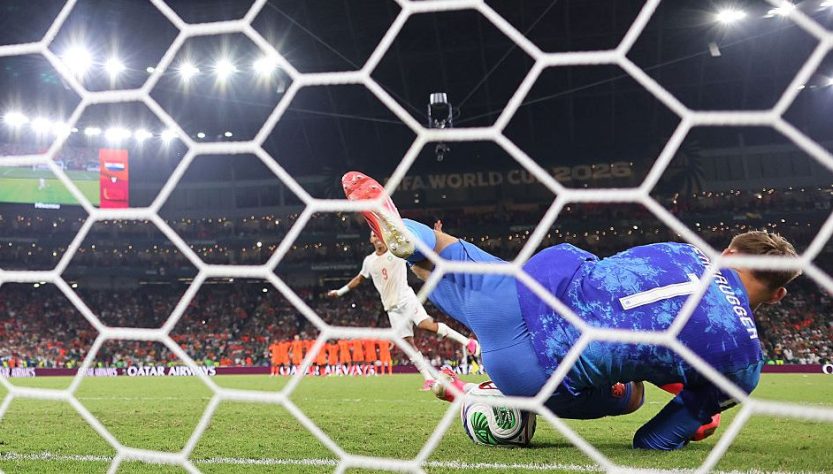
In a World Cup, pivotal matches often depend on a penalty shootout. At these times, captains strive to win the coin toss to determine the order of kicks. There exists a long-held belief: the team that shoots first often emerges victorious, irrespective of player competence. This is widely accepted in soccer, yet the rationale behind this advantage is the subject of ongoing scientific debate.

While tactics concentrate on the kicking sequence, psychological stresses also impact the outcome. In this World Cup, penalty shootouts determined the results of two of the initial four round-of-32 matches: Paraguay triumphed over Germany, and Morocco overcame the Netherlands.

Historically, the dominant explanation revolved around psychological factors. This theory posits that the first team experiences reduced pressure, while the second team is perpetually striving to catch up, influencing their performance. A study published in the 2010 American Economic Review became a significant reference point, claiming that first-kicking teams succeeded in almost 60% of shootouts, compared to 40% for those that kicked second.

However, with the emergence of more data and research, the assumed advantage has diminished. Scholars commonly agree that second-kicking teams are under psychological strain, but they question how this affects their chances of winning. Research conducted in 2012, 2019, 2023, 2024, and 2025 gradually lessened the perceived significance of this advantage. The most comprehensive analysis, encompassing nearly 7,000 shootouts and 74,000 kicks, revealed no definitive proof of a first-kick advantage, with any conceivable benefit being under 1.8 percentage points.

A new research collective proposes a change in viewpoint. A recent publication in Football Studies suggests focusing on the origins of the occasional benefit, particularly examining differences in pressure. Their hypothesis claims pressure remains crucial, yet not every high-pressure scenario is the same. The difference exists between penalties that can immediately eliminate a team if missed and those that guarantee a win.

The investigation indicates that current soccer regulations do not distribute pressure moments evenly. The second-kicking team frequently faces immediate elimination from unsuccessful penalties, while chances of scoring change as the shootout continues.

Results reveal that goals that ensure victory succeeded 89.1% of the time, while potential eliminations saw success plummet to 60.4%. Notably, when considering these penalties, kicking order did not significantly account for performance. The supposed advantage for the first team arises from the resultant psychological conditions, rather than the order of kicks.

The authors contend that these revelations could shape strategic approaches. Players who manage extreme pressure may be better utilized for crucial kicks rather than initiating the shootout.

FDA Greenlights Eli Lilly's GLP-1 Tablet

FDA Greenlights Eli Lilly’s GLP-1 Tablet

The US Food and Drug Administration granted approval on Wednesday for a new weight-loss medication named Foundayo, developed by Eli Lilly, the creator of the injection Zepbound for weight loss. This daily medication is categorized as GLP-1, alongside rivals Ozempic and Wegovy, which imitate a hormone responsible for regulating blood sugar, digestion, and satiety.

This authorization marks the second GLP-1 weight-loss pill to hit the market. Back in December, Novo Nordisk received FDA clearance for a pill formulation of Wegovy, which was initially a weekly injection. In contrast to the Wegovy pill, which requires consumption on an empty stomach, Foundayo does not have any timing or dietary constraints associated with its intake.

In response to the strong demand for injectable GLP-1s, pharmaceutical firms are creating weight-loss pills to meet patient preferences and broaden the GLP-1 market. Pills are also simpler to manufacture, which could lead to more reliable patient access, alleviating the shortages that occurred from late 2022 to early 2025.

“Aside from supply and cost issues, a significant barrier to adoption has been patients’ hesitance to use injections,” states Ken Custer, an executive at Eli Lilly. “This could be due to the fear of needles or the notion that using an injection signals a more serious condition than they recognize. A pill could serve as a more approachable initial step for individuals embarking on their weight management journey.”

Similar to injectable GLP-1s, Foundayo begins with a low dosage to reduce the risk of nausea, vomiting, and diarrhea, with a gradual uptick in amounts. Clinical trials revealed that the highest dosage of Foundayo resulted in an average weight decrease of 27 pounds, or 12.4% of total body weight, across 18 months. The placebo group experienced only a 2-pound loss. The active component, tirzepatide, which is present in Mounjaro and Zepbound injections, demonstrated more than a 20% weight reduction.

In the Wegovy pill study conducted by Novo Nordisk, participants achieved an average weight loss of 13.6% over a span of 16 months. Direct comparisons between Foundayo and the Wegovy pill have not been conducted. Eli Lilly’s research on patients transitioning from injectable GLP-1 medications to Foundayo indicated sustained weight loss. Those switching from the injectable Wegovy gained 2 pounds, while patients coming from Zepbound gained 11 pounds. The active ingredient, orforglipron, is also being explored for treating type 2 diabetes, sleep apnea, and various other conditions.

Foundayo is currently available via LillyDirect, with shipping commencing on April 6. It will soon be widely offered at pharmacies across the US and through telehealth services. The pill is part of a deal established in November 2025 with TrumpRx. The FDA evaluated Foundayo within 50 days under a pilot initiative aimed at speeding up the review of medications that align with national health priorities. Typically, the approval process spans six to ten months.