
FIFA Does Not Have a Strategy to Tackle Climate Change

FIFA Does Not Have a Strategy to Tackle Climate Change

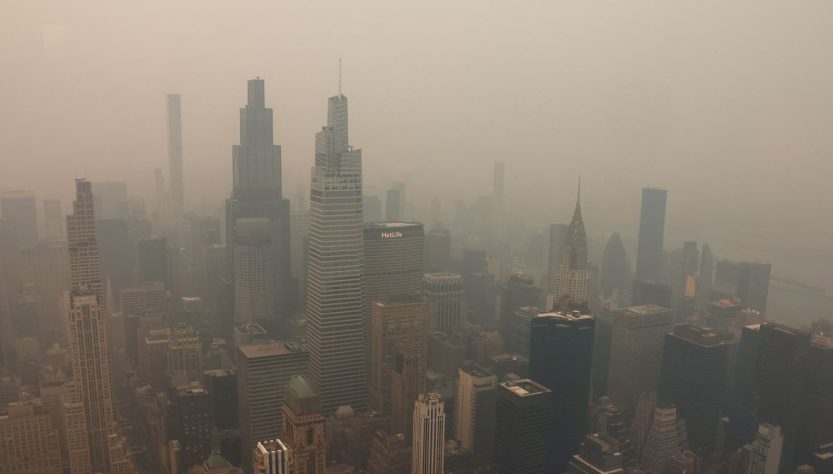
The final match of the World Cup between Argentina and Spain is set to take place on Sunday near New York City, yet wildfire smoke from Canada poses a new threat to the event. FIFA, the governing authority of the sport, currently has no solid strategy to safeguard players and fans. Recent smoke has impacted extensive areas of the Midwest and East Coast, considerably worsening air quality. New York recently recorded levels considered “unhealthy,” leading officials to suggest limiting outdoor activities. On Friday, air quality around the stadium remained subpar. While some improvement is anticipated, erratic smoke patterns may still bring challenges during the final. Without an enclosed venue, both participants and attendees could encounter health hazards, especially those with respiratory conditions. In spite of the lingering adverse circumstances, which included the Spanish team’s training in New Jersey amid poor air quality, FIFA has not implemented any protective measures or alterations due to wildfire smoke. In contrast to the National Women’s Soccer League, Major League Baseball, and Major League Soccer, which have established air quality protocols, FIFA’s current plans only address issues related to heat and hydration. As the World Cup reaches its concluding phase, FIFA has been fortunate with clearer skies thus far, but this situation has highlighted a lack of readiness for smoke-related interruptions. Even though some experts foresee better conditions for the final, uncertainty lingers. Critics are calling for more thorough initiatives from FIFA and other entities to tackle climate-related threats, pointing out inadequacies even in their policies concerning heat.
Are Teams That Kick First in Penalty Shootouts More Prone to Victory?

Are Teams That Kick First in Penalty Shootouts More Prone to Victory?

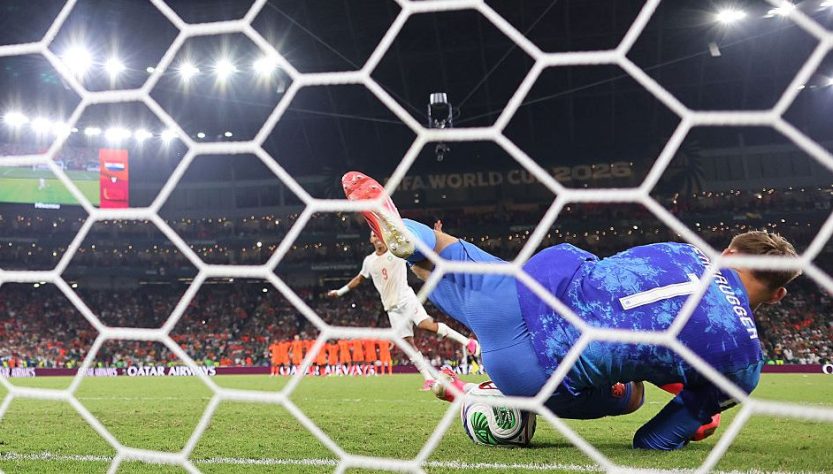
In a World Cup, pivotal matches often depend on a penalty shootout. At these times, captains strive to win the coin toss to determine the order of kicks. There exists a long-held belief: the team that shoots first often emerges victorious, irrespective of player competence. This is widely accepted in soccer, yet the rationale behind this advantage is the subject of ongoing scientific debate.

While tactics concentrate on the kicking sequence, psychological stresses also impact the outcome. In this World Cup, penalty shootouts determined the results of two of the initial four round-of-32 matches: Paraguay triumphed over Germany, and Morocco overcame the Netherlands.

Historically, the dominant explanation revolved around psychological factors. This theory posits that the first team experiences reduced pressure, while the second team is perpetually striving to catch up, influencing their performance. A study published in the 2010 American Economic Review became a significant reference point, claiming that first-kicking teams succeeded in almost 60% of shootouts, compared to 40% for those that kicked second.

However, with the emergence of more data and research, the assumed advantage has diminished. Scholars commonly agree that second-kicking teams are under psychological strain, but they question how this affects their chances of winning. Research conducted in 2012, 2019, 2023, 2024, and 2025 gradually lessened the perceived significance of this advantage. The most comprehensive analysis, encompassing nearly 7,000 shootouts and 74,000 kicks, revealed no definitive proof of a first-kick advantage, with any conceivable benefit being under 1.8 percentage points.

A new research collective proposes a change in viewpoint. A recent publication in Football Studies suggests focusing on the origins of the occasional benefit, particularly examining differences in pressure. Their hypothesis claims pressure remains crucial, yet not every high-pressure scenario is the same. The difference exists between penalties that can immediately eliminate a team if missed and those that guarantee a win.

The investigation indicates that current soccer regulations do not distribute pressure moments evenly. The second-kicking team frequently faces immediate elimination from unsuccessful penalties, while chances of scoring change as the shootout continues.

Results reveal that goals that ensure victory succeeded 89.1% of the time, while potential eliminations saw success plummet to 60.4%. Notably, when considering these penalties, kicking order did not significantly account for performance. The supposed advantage for the first team arises from the resultant psychological conditions, rather than the order of kicks.

The authors contend that these revelations could shape strategic approaches. Players who manage extreme pressure may be better utilized for crucial kicks rather than initiating the shootout.