Spotify Recognizes Streaming Fraud After Kalshi Trader's Allegation

Spotify Recognizes Streaming Fraud After Kalshi Trader’s Allegation

Caleb Davies, a well-known trader on Kalshi, often shares with the media how prediction markets play a role in his financial achievements. The IT expert from Minneapolis indicates that he has made roughly $1.2 million across different prediction platforms, with $414,000 coming from Kalshi’s culture markets. Davies is particularly focused on music charts, utilizing Spotify data to inform his betting strategies. “Every morning, I download the data and update my projections,” he tells WIRED.

Nonetheless, this summer, Davies has expressed concerns regarding what he sees as automated manipulation within Spotify-related markets. He has collected and disseminated evidence supporting these concerns and has contacted Spotify, Kalshi, and Polymarket to relay his apprehensions.

The situation escalated when Malcolm Todd’s song “Earrings” unexpectedly soared to the top of a Spotify chart. In a series of posts on X, Davies speculated about the presence of “botting,” where automated systems artificially boost streaming numbers. He proposed that traders in the prediction market were employing bots to modify event contracts. Todd’s surprising ascent wasn’t even represented on Polymarket, suggesting a statistical anomaly that Davies deemed questionable.

Spotify confirmed that it examined the manipulation incidents pointed out by Davies and detected fraudulent streaming activity. “All streaming services face continuous manipulation. Spotify deploys advanced detection measures and does not compensate for manipulated streams,” stated spokesperson Laura Batey. There was no formal statement regarding Davies’ theory on prediction markets manipulation.

After the inquiry, Spotify revised its charts, eliminating over 500,000 fraudulent streams, which resulted in Todd’s drop from first to fourth place. This adjustment arrived too late for Kalshi, which had already rewarded those who bet on Todd’s track.

Kalshi spokesperson Elisabeth Diana disclosed that they have been in ongoing discussions with Spotify. Consequently, Kalshi removed Spotify’s branding from relevant markets and specified that Spotify had not authenticated the chart outcomes.

When Davies raised his concerns with Kalshi, the company’s head of enforcement, Robert DeNault, indicated that only Spotify could validate botting activity. He also proposed alternative explanations for the surge.

Davies informed WIRED, “No one from Polymarket profited from the fraud. This contradicts Kalshi’s perspective as Malcolm Todd wasn’t an option there.”

Polymarket counters this assertion. “This assertion is impractical because we did not list Malcolm Todd in this Spotify market,” conveyed spokesperson Annabel Walsh. The platform is probing the larger issue of streaming manipulation, but has not identified any immediate problems.

The motives of those responsible for the manipulation remain unclear, as no direct communications have occurred. Todd has not made any remarks, and there is no evidence of his involvement.
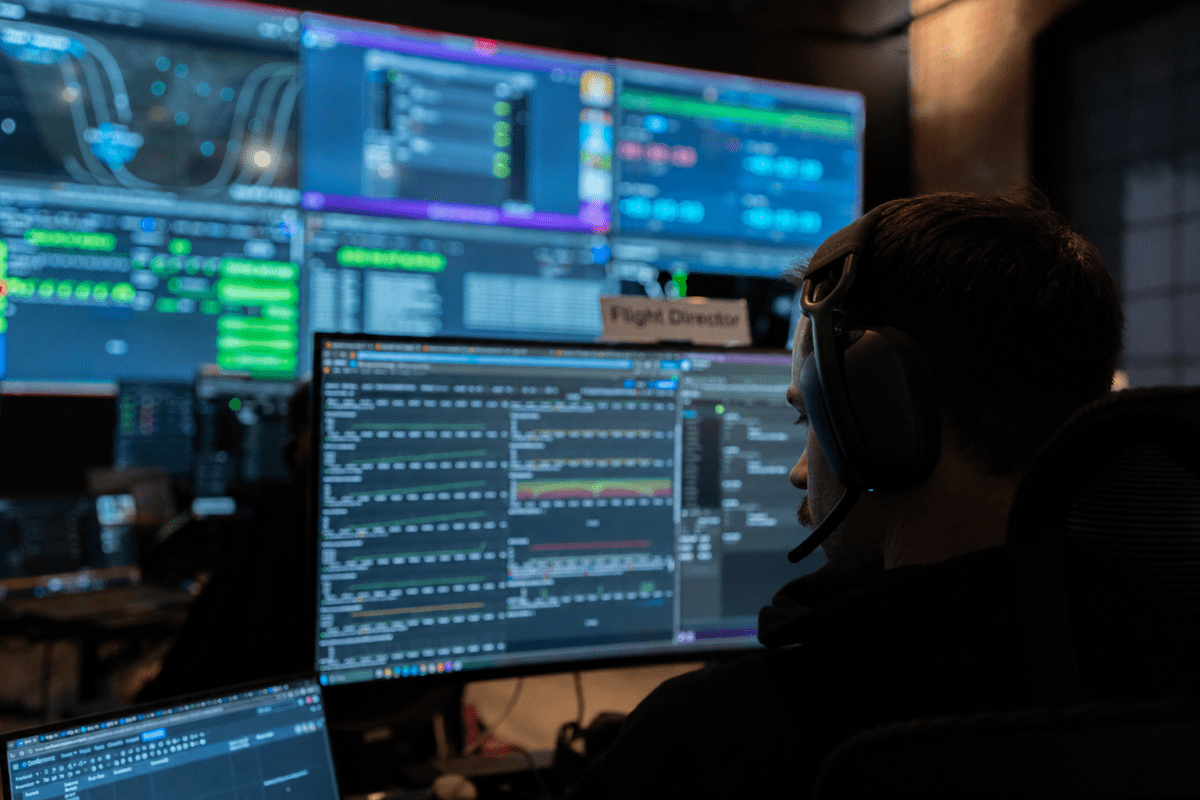
Private space aviators are conducting orbital missions for the US Space Force

Private space aviators are conducting orbital missions for the US Space Force

Militaries frequently deploy satellites to observe competing vehicles and evaluate their abilities, but expanding this type of reconnaissance is increasingly recognized by the U.S. military as a task better suited for the private sector.

This is why two space startups, True Anomaly and Rocket Lab, successfully executed a rendezvous mission for the U.S. Space Force last week so intricate, it felt reminiscent of “Top Gun.” Their two opposing satellites converged in orbit, positioned close enough for one to take images of the other.

The operation, labeled Victus Haze, illustrated the meticulous examination of a space vehicle immediately after it entered orbit, an essential requirement in a context where the U.S., Russia, and China are launching cutting-edge space weapons.

“China and Russia consistently deploy capabilities into space, and part of the Space Force’s responsibility is to comprehend what those capabilities entail,” stated True Anomaly CEO Even Rogers, who has experience in the U.S. military’s space endeavors, in an interview with TechCrunch. “At present, we have shortcomings in our collection abilities.”

During the June mission, Rocket Lab, a competitor to SpaceX and recently announcing its acquisition of Iridium, launched a spacecraft named Puma just 16 hours and 42 minutes after receiving the signal, a remarkable feat considering that most rocket launches are coordinated months beforehand.

A Jackal spacecraft from True Anomaly was positioned in orbit to intercept it. In the course of the exercise, the company was unaware of Puma’s arrival location in space but employed onboard sensors to locate and identify its target from 2,000 kilometers away. The Jackal then approached the target — the specifics of the proximity are classified — and orbited it, capturing images of various segments of the vehicle, before returning to its initial orbital position.

True Anomaly’s CEO remarked that, aside from NASA and Space Force manned space missions, “this is probably the most intricate rendezvous and proximity operation between two spacecraft in contemporary history.”

Bringing together two spacecraft in orbit, where both are traveling at speeds nearing 17,500 mph, is a formidable challenge. Prior private demonstrations, such as those by Northrop Grumman’s maintenance satellites or Astroscale’s orbital debris retrieval missions, function on significantly slower timelines.

And now the situation becomes intriguing: The two companies are set to execute new exercises in the upcoming weeks with escalating complexity, which may involve Rocket Lab’s Puma attempting to evade True Anomaly’s Jackal and conducting its own inspection maneuvers.

Established in 2022 by Rogers and a group of former military space specialists, True Anomaly’s objective has been to develop both the hardware and software necessary to carry out the new assignments given to the U.S. Space Force upon its inception in 2019. Following several years of developmental missions, last month’s demonstration has begun to fulfill that ambition.

“That’s the unique advantage of this company,” expressed Seth Winterroth, a partner at Eclipse Ventures who is on True Anomaly’s board. “It’s not a single spacecraft design or a solitary piece of software or specific payloads — it’s a profound understanding of how tactics and doctrine function in this arena.”

True Anomaly has secured just over $1 billion in funding, including a $650 million round in March. The company is now aiming to compete for various task orders, particularly within the Space Force’s $6.2 billion Andromeda program, which seeks support from the private sector for this exact type of dynamic reconnaissance.

“Flight heritage is crucial, and demonstrated capability is what resonates most with these opportunities,” Rogers stated.

When you click through links in our articles, we may earn a small commission. This doesn’t influence our editorial independence.

Thiel Capital’s Jack Selby secures investments in trending startups such as Etched via Arizona ties.

Thiel Capital’s Jack Selby secures investments in trending startups such as Etched via Arizona ties.

This week, Etched, a rival to Nvidia, revealed that TSMC produced its inaugural chip earlier this year. As the four-year-old startup, valued at $5 billion, prepares to deliver systems powered by this chip to clients later this summer, scaling up production could be difficult. Similar to other chip designers, Etched is vying for limited capacity at TSMC’s facilities in Taiwan.

Copper Sky Capital, an early backer of Etched, is optimistic that the chip manufacturer will overcome its production limitations by eventually creating chips at TSMC’s facility in Arizona. When the four-year-old VC firm invested in Etched’s $120 million Series A two years back, founder Jack Selby ensured an allocation in part by pledging to assist the startup in eventually relocating its chip production to Arizona.

Selby, a former executive at PayPal and longtime managing director for Peter Thiel’s family office, Thiel Capital, established Copper Sky, based in Phoenix, in 2021 (previously known as AZ-VC). The firm’s inaugural $115 million fund concentrated mainly on startups situated in Arizona and the Southwest. Selby believed that many coastal startups, especially those in California, Massachusetts, and New York, are excessively valued compared to enterprises emerging in his area. Nonetheless, Selby identified an opportunity to reverse this trend by assisting hardware startups from California in relocating their production to Arizona.

Selby attributes Copper Sky’s investment in Etched — an otherwise hard-to-access startup — to his significant influence in Arizona’s economy. As a board member of the Arizona Commerce Authority, Selby is actively engaged in attracting out-of-state businesses to establish manufacturing operations in the area.

“When Copper Sky invested in Etched, the company clearly recognized our connection to the Arizona semiconductor industry, particularly the local TSMC GIGAFAB,” Selby stated to TechCrunch.

Although Copper Sky has recently broadened its focus beyond the Southwest to embrace nontraditional venture hubs across the nation, Selby remarked that the firm is also interested in supporting hardware companies, including those in the defense sector, that can establish manufacturing in Arizona. 

The firm is anticipated to soon secure more capital to invest in those higher-priced coastal firms, as well as others throughout the United States. Copper Sky is currently in the process of raising a $300 million second fund, according to a regulatory filing.

When you purchase through links in our articles, we may earn a small commission. This doesn’t affect our editorial independence.

How Large Is 'Love Island USA'? Over 10 Million Users Have Already Joined Its App

How Large Is ‘Love Island USA’? Over 10 Million Users Have Already Joined Its App

String bikinis? Affirmative. Additional sunscreen? Affirmative. Walls of cameras so millions of Americans can observe your sizzling summer romances unfold in real-time? Affirmative. Love Island USA, where participants kiss, form couples, and engage in drama while relaxing in a vibrantly colored villa in swim attire, is currently approaching the “peak” of its eighth season. This summer’s most startling revelation? The Love Island USA app, where viewer engagement levels are so intense that it crashed during the initial voting period.

Fans of the live dating series relish having control over the happenings through their in-app votes, aiding in the decision-making of who pairs up and who gets eliminated. Fan votes occur approximately five times within each season. The votes allow users to select their preferred couple, which eliminated cast members they believe should return, and ultimately vote for which Islander pair should win the popularity contest of $100,000. Earlier this season, for instance, the pairs that garnered the fewest votes from viewers for “favorite couple” found themselves at risk of being removed from the show.

Though the primary function of the app is for voting, users can also browse an Instagram-style feed of video clips, photo shoots, and polls. Additionally, the Love Island USA app features shopping links so the most dedicated viewers can grab some merchandise.

According to the show’s producers, the Love Island USA app now boasts over 10 million unique users. Since the season premiere in June, it has achieved the top position in the iOS App Store’s Entertainment category nine times—a category shared with heavyweights like Netflix and TikTok—according to app analytics firm Apptopia.

Producers of Love Island USA regard the app as an essential element for maintaining fan engagement, whether through official votes or other polls. “More than anything, it highlights for us how passionate this fan base is and how enthusiastic they are to express their opinions,” states executive producer Bernie Schaeffer. “I mean, say what you will about this statistic, but we have more individuals voting on the Love Island USA app than we do in numerous political elections taking place across the nation.”

Love Island fans must stay glued to their television screens continuously if they wish to gather all the juicy details before submitting a vote that could influence their favorite couples since the main show airs five times a week, and voting windows are limited to just a few hours. “The show progresses quickly, and within hours of the public casting their votes, we’re already revealing and filming those results with the cast,” Schaeffer mentions.

The team formulates a roadmap before each season begins regarding fan voting moments. Nevertheless, they remain prepared to adapt and adjust that plan based on the unfolding drama and how fans are responding on social media.

IQM, the initial public quantum enterprise in Europe, acknowledges that the technology's future is unpredictable.

IQM, the initial public quantum enterprise in Europe, acknowledges that the technology’s future is unpredictable.

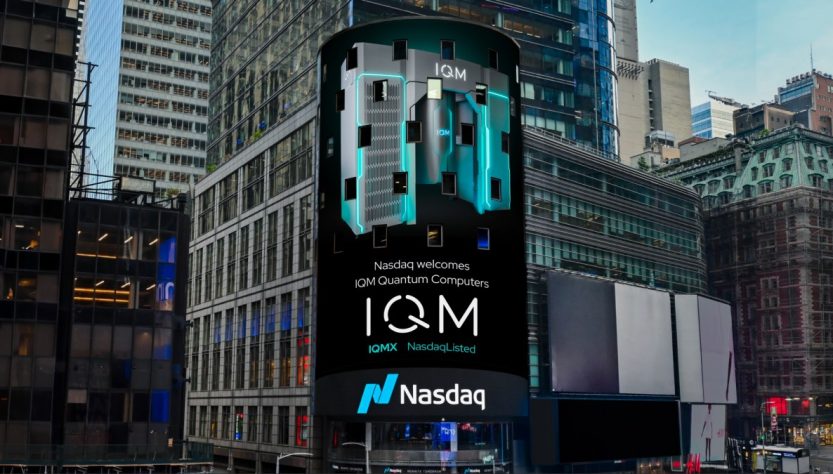
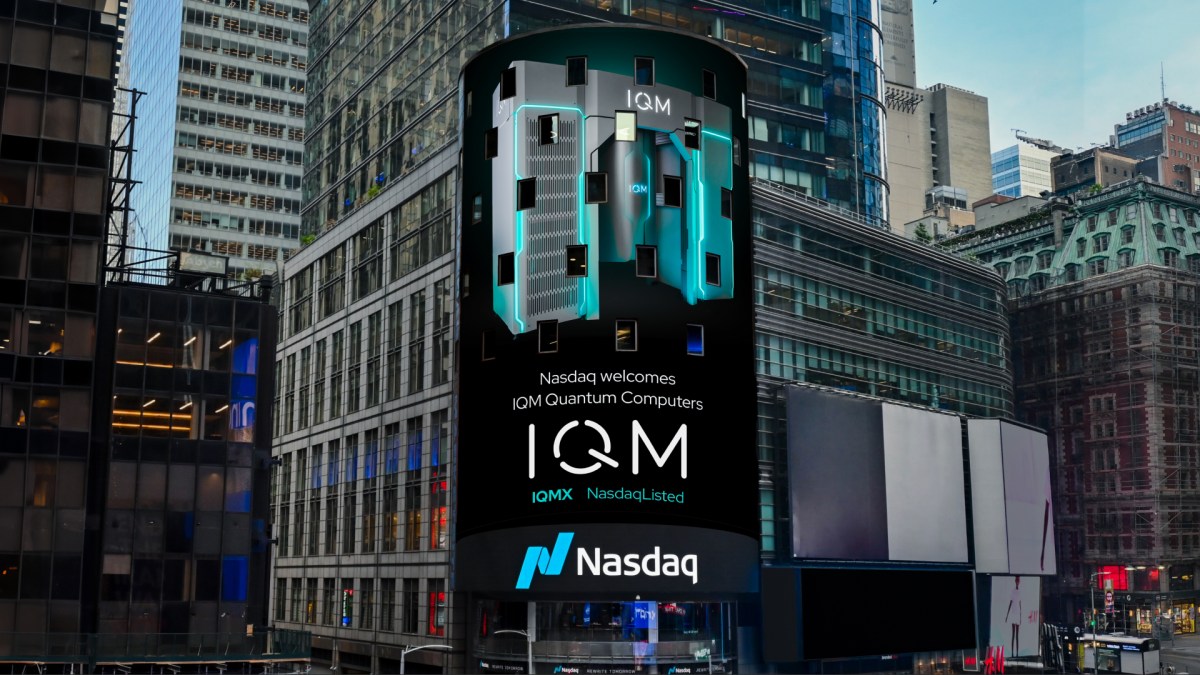
IQM, a comprehensive quantum firm based in Finland, debuted on the Nasdaq on Thursday through a SPAC merger, reaching a valuation of around $1.9 billion. However, the stock prices did not surge, remaining mostly under the IPO price — a tepid reception.

Nowadays, SPAC mergers frequently fail to grab the immediate interest of retail investors. However, this lackluster response was arguably spurred by IQM’s own statement in its prospectus that “there may never be large-scale commercial traction for quantum computing technology.”

In all fairness, this caution applies to all quantum enterprises. Nevertheless, it has not hindered the industry, including IQM, from securing clients who currently utilize the technology for tasks like simulations and optimizations. IQM, which provides actual physical computers along with a cloud service, counts clients such as VTT Technical Research Centre of Finland and Germany’s Leibniz Supercomputing Centre.

“We supply computers to advanced supercomputing centers and data centers, and also sell computing time through the cloud,” TechCrunch was informed by its CEO and co-founder Jan Goetz.

Having expanded from eight clients in 2024 to 22 in 2025 is certainly a reason to celebrate within IQM, particularly with two of the latest clients being from the private sector. This also implies that demand might not scale up until the “quantum advantage” — when quantum chips begin to exceed classical computers for a broader spectrum of complex and lengthy tasks, opening up applications across fields from biotech to fintech, all while potentially disrupting encryption.

Yet, no one, not even a business specializing in quantum computers, can predict when that will happen.

Despite this uncertainty, investors have continued to invest heavily in both public and private quantum firms, buoyed by President Trump’s recent executive orders to hasten the quantum timeline. In reaction, the U.S. Department of Energy (DOE) has pledged to launch “the world’s first fault-tolerant, scientifically relevant quantum computer” by 2028.

While this aligns with similar declarations from France, Germany, and the U.K., Trump’s orders hold particular significance for IQM, which has recently set up a quantum technology center in Maryland and installed a computer at Oak Ridge National Laboratory, part of the DOE. “We stand to gain directly from this,” Goetz remarked.

In contrast to other European unicorns, IQM isn’t relocating its core operations across the Atlantic. Alongside its IQMX ticker in the U.S., where many of its quantum counterparts are listed, it is set to launch tomorrow on Nasdaq Helsinki, expecting ongoing backing from supporters like Tesi, Finland’s sovereign wealth fund.

IQM’s narrative is inseparable from Finland. Established there in 2018 as a spinout from Aalto University in Espoo, a tech and quantum hub near Helsinki, two-thirds of its personnel still operate from there. However, another hundred of its 420-member team are located in Munich, with the rest dispersed across various sites to assist the company in its global expansion strategy.

In its prospectus, IQM highlighted that this dual presence appealed to RAAQ, the blank check company instrumental in IQM’s public entry via a SPAC. “With over €200 million in public backing for IQM, European sovereign states and corporations have endorsed IQM’s rise as a key player in quantum computing in Europe. IQM has also shown its capability to function outside of Europe,” stated the RAAQ board.

Despite its global aspirations, Goetz expressed his pride in IQM becoming the first European quantum company to list on the U.S. stock exchange — by the narrowest of margins, as French rival Pasqal also unveiled plans to go public via a SPAC. “It’s always gratifying to be first and to pioneer, but ultimately it circles back to long-term success,” Goetz conveyed.

The operation will create new liquidity for IQM — approximately €198 million post-expenses, or $226 million. Yet the company had already secured $300 million last September. “It’s a significant achievement raising funds so soon after the Series B,” Goetz stated. This also underscored IQM’s primary goal of establishing a stronger presence in a race still filled with uncertainties.

When you buy through links in our articles, we might earn a small commission. This does not influence our editorial integrity.

Jersey Mike’s initial public offering highlights the extent of the AI hype's deterioration.

Jersey Mike’s initial public offering highlights the extent of the AI hype’s deterioration.

I can’t pinpoint the precise moment when genuine enthusiasm for a novel technology shifts to inflated hype, reaching the point of oh-come-on — yet I’m convinced when a sandwich establishment featuring Danny DeVito as its spokesperson references AI in its IPO paperwork, we must be nearing that point.

Enter Jersey Mike’s.

Given the investor appetite for anything AI-related these days, it’s clear why tech firms feel compelled to spread AI allure throughout their presentations. This applies equally to non-AI startups seeking venture capital as it does to Bending Spoons’ market entry, a firm focused on acquiring outdated, “non-AI” tech companies to revamp.

For fun, I examined Jersey Mike’s IPO documents to gauge how far this trend might extend. Surely a sandwich shop wouldn’t need to reference AI in its S-1. But surprise!

The phrase artificial intelligence and its abbreviation “AI” appeared 22 times. In this situation, the company cannot allege it’s selling AI software. It offers submarine sandwiches. AI offerings are what investors are genuinely craving (terrible pun intended).

Still, it managed to incorporate AI into its investor risk disclosures. That might be even more amusing. It fails to clarify how AI could pose a threat to investors, other than a vague statement, “We are starting to utilize AI Technologies in our operations.”

To be fair, as a franchise operator, it indeed depends on software (mentioned 52 times) and data (112 mentions), as all enterprises do. Its AI risk warning was standard copy, potentially even required, since such failures have already occurred in other food sectors, like the poorly designed AI inventory system Starbucks deployed, which couldn’t count and was ultimately discarded.

Nevertheless, I’m going to venture a prediction that the likelihood of an AI-related catastrophe for a business that makes actual sandwiches, rather than AI nonsense, is roughly comparable to a franchise store being struck by lightning. That incident actually took place in Texas in 2021. Yet weather was only referenced five times in the S-1. And lightning? Not at all.

When you buy through links in our articles, we may earn a small commission. This doesn’t influence our editorial independence.

A cautionary message regarding the true price of AI, brought to you by Google and Amazon

A cautionary message regarding the true price of AI, brought to you by Google and Amazon

It’s well known that AI is a resource guzzler, utilizing energy and water unlike any digital technology prior. Now, the toll on the environment due to Big Tech’s AI ambitions is coming to light.

This week, both Google and Amazon released their sustainability reports, revealing troubling figures. Each company aims to achieve net-zero carbon emissions in the near future, yet the demands of AI are complicating those objectives. Google has seen its total carbon emissions rise by 25% from last year, while Amazon’s have increased by 16%.

A thorough examination of the reports indicates that both Amazon and Google will need to implement significant, and potentially expensive, changes to their operations in order to meet their net-zero ambitions.

Neither firm explicitly attributes rising emissions to AI, but there is substantial indirect evidence suggesting this link.

AI at the core

Both Amazon and Google acknowledge a substantial rise in their energy consumption over the past year, coinciding with increased AI adoption. They reference carbon intensity — essentially, the pollution produced per dollar of revenue — a metric that China has leveraged during climate negotiations amidst its soaring emissions. Moreover, both companies spend multiple pages highlighting the potential environmental benefits of AI, which could be seen as an overreaction to scrutiny.

The situation becomes clearer as you delve deeper into the details. Both companies are performing relatively well in terms of carbon pollution associated with energy procurement. Years of investing in renewable energy have prevented significant increases, although this may shift soon as tech firms, including Google, are now heavily investing in natural gas power plants to meet the demands of AI.

Most of the increasing carbon emissions for Amazon and Google stem from Scope 3 emissions — a broad category that includes pollution from activities outside a company’s direct control, such as the goods and services purchased or the products sold. For companies like Amazon and Google, Scope 3 encompasses GPU acquisitions and the usage of their products, like smartphones and tablets.

Google combines two types of Scope 3 emissions — capital goods and the use of sold products — even though it acknowledges that the latter is minor enough to be immaterial. (The majority of Google’s hardware products are compact devices that don’t consume substantial energy.) This likely positions data centers as the primary contributor. Last year, Google’s Scope 3 emissions rose by 2.1 million metric tons, meaning they have now doubled since 2019, which serves as the baseline year for assessing performance.

Amazon’s increasing Scope 3 emissions primarily arise from capital goods as well as fuel and energy. The former might include data centers and warehouses, providing insight into why Amazon’s Scope 3 emissions have surged more significantly than Google’s. Nevertheless, a considerable portion is likely also attributed to data centers. “To satisfy vigorous customer demand, in 2025 we expanded global data center capacity more than any other company, including over 1.2 gigawatts (GW) in Q4 alone,” Amazon stated in the report.

Hitting a barrier

Such expenditures shed light on why achieving decarbonization has suddenly become much more challenging. Previously, energy for offices and moderately sized data centers was the biggest contributor to their carbon footprints, which could have been offset by purchasing renewable power. 

AI has disrupted that paradigm. While tech companies could continue utilizing renewables alongside batteries to power their data centers, they are increasingly reverting to fossil fuels. This trend complicates the fulfillment of their net-zero commitments, although it is not irreversible.

The more troublesome emissions arise from constructing and equipping data centers. The steel and cement sectors are significant polluters, and while startups are exploring low-to-zero carbon solutions, they are not yet prepared to operate at the scale required by tech firms. 

Additionally, there are the GPUs and memory chips fueling the AI surge. Semiconductor fabrication requires immense energy, and many top-tier chip manufacturing plants are situated in Asia, where electricity grids largely rely on fossil fuels. Compounding the issue, many of the chemicals used in these factories are also potent greenhouse gases, capable of contributing to atmospheric warming at rates thousands of times greater than equivalent CO2 emissions. The surge in chip consumption has likely exacerbated both Amazon’s and Google’s carbon footprints.

However, none of these challenges are insurmountable; yet Amazon, Google, and their contemporaries face a significant undertaking. To fulfill their net-zero pledges, they will need to significantly increase their renewable energy acquisitions, invest substantially in advanced steel and cement production methods, and procure millions of tons of carbon removal credits. Achieving this remains feasible, but their commitment to AI hasn’t simplified matters.

When you purchase through links in our articles, we may earn a small commission. This doesn’t affect our editorial independence.

Meta discreetly debuts vibe-coded gaming application Pocket

Meta discreetly debuts vibe-coded gaming application Pocket

Meta is entering the gaming arena with the introduction of a new application named Pocket, enabling users to create compact, interactive applications and games utilizing AI prompts. This software, stemming from Meta’s acquisition of the team behind the vibe-coded gaming platform Gizmo earlier this year, refers to itself as “a creative platform for crafting and sharing gizmos,” the term used for these interactive experiences. It also features a scrollable feed where users can engage with gizmos created by others.

According to screenshots of the app available on Google Play, there are numerous parallels to Gizmo’s original application, which remains available. Similar to Pocket, Gizmo provides a method to harness written AI prompts for developing small, interactive experiences and offers a discovery feed.

Alessandro Paluzzi, a reverse engineer and frequent discoverer of new applications and features, was the first to notice the launch of the app this morning and shared a Play Store screenshot of the app on X. However, data from the app intelligence firm Appfigures indicates that Pocket was actually launched on June 29, 2026, on both the App Store and Google Play. (Due to its recent introduction, the firm cannot verify whether it has garnered any downloads yet.)

Other media outlets, including Business Insider and Investing.com, have also covered Paluzzi’s finding. Meta has not yet provided a comment on the matter.

Pocket exemplifies Meta’s ongoing efforts to popularize AI creation tools, building on previous initiatives that included AI-generated imagery via its Meta AI app and AI videos developed through its application known as Vibes. The company has additionally integrated AI features across its social networking platforms and into its video-editing application for creators, Edits.

Image Credits:Meta

Since Meta has not formally announced the arrival of Pocket, it is probable that Pocket remains in its initial testing phase.

In contrast, its counterpart Gizmo has achieved a total of 635,000 lifetime installs across both iOS and Google Play, as reported by Appfigures, which also highlighted its 98% positive sentiment.

When you purchase through links in our articles, we may earn a small commission. This doesn’t affect our editorial independence.

Travel application Hopper will disburse $35 million in a settlement with the FTC regarding the 'unfair' imposition of concealed charges.

Travel application Hopper will disburse $35 million in a settlement with the FTC regarding the ‘unfair’ imposition of concealed charges.

Hopper, the travel application recognized for its AI-based predictions on flight and hotel pricing, has consented to a settlement amounting to $35 million following a lawsuit filed by the U.S. Federal Trade Commission (FTC). The lawsuit charged the company with misleading customers by incorporating hidden fees and inaccurately representing the overall costs associated with Hopper’s services. 

This case exemplifies regulators’ focus on “dark patterns,” which refer to interface designs that manipulate users into making decisions they might not have made otherwise, including hiding costs, pre-selecting optional add-ons, or complicating the understanding of the actual service price. It follows other similar settlements by the FTC with companies such as Match, StubHub, neobank Dave, Fortnite, and more.

The FTC claimed that Hopper misled customers regarding the advantages of its “VIP Support” and “Price Freeze” offerings. Many users were misinformed into thinking these features would enhance their booking experience, only to encounter extra fees and limited customer support availability. 

The FTC further discovered that users were charged for “Tip” and VIP Support fees that were labeled as optional, yet were frequently pre-selected and obscured within the app’s design. Consequently, users faced charges they believed they had not agreed to, since these fees were usually only visible when users scrolled down the app interface.

The accusations also relate to the “Price Freeze” or “Hold the Room” option, which Hopper claimed would allow users to lock in their travel booking price for a specified duration. However, the FTC highlighted that the app did not adequately communicate the limitations related to this service. For example, the Price Freeze secures the rate only to a certain limit and only if the booking is still available. 

The settlement funds are designated for “consumer redress,” with Hopper now barred from misrepresenting any pricing frameworks, as per today’s announcement. Hopper must disclose all fees transparently, ensuring users are completely informed of the total amounts involved in any transactions prior to finalizing their bookings.

“We chose to settle because the claims in question are outdated and do not impact our business,” a spokesperson for the company stated in a release to TechCrunch. “Engaging in prolonged litigation over outdated, trivial matters would divert our focus from our existing customers and partners… The settlement figure does not indicate the validity of the claims. It represents our choice to move ahead.”

The spokesperson further mentioned that, following a review of millions of company records dating back to 2021, the FTC’s claims centered on “mainly outdated display practices implemented during the pandemic, confined to the Hopper app, and eliminated by Hopper in mid-2023, before the FTC began its investigation.”

Prior to Hopper, the FTC’s latest effort against “junk fees” involved StubHub, which agreed to reimburse $10 million to customers and amend its ticket pricing displays. Booking Holdings reached a settlement of $9.5 million after a lawsuit initiated by Texas Attorney General Ken Paxton, which accused it of misleading customers by advertising low room rates while concealing significant fees until the checkout.

Hopper debuted its travel app in 2014, surpassing 120 million total downloads globally by 2024.

This article was amended to include a statement from Hopper.

When you make a purchase via links in our articles, we may receive a small commission. This does not influence our editorial independence.

Anthropic is in talks with Samsung regarding a new bespoke chip.

Anthropic is in talks with Samsung regarding a new bespoke chip.

In April, Reuters unveiled that Anthropic was contemplating the production of its own AI chips to tackle chip shortages. It seems that the company is now taking this concept more seriously.

On Thursday, The Information disclosed that Anthropic had initiated discussions with Samsung to consider a partnership regarding the forthcoming chip. Nevertheless, the report states that Anthropic has not yet determined the chip’s intended use, its integration into servers, or its performance specifications.

When contacted for insights, Anthropic informed TechCrunch that a varied hardware infrastructure featuring chips from Google, Amazon, and Nvidia remains essential to its computing strategy. Regarding a possible collaboration with Samsung, the company indicated it had no additional comments.

Several AI firms have endeavored to create custom chips—both to establish specialized hardware for designated computational tasks and to reduce reliance on Nvidia, which retains its position as the uncontested frontrunner in the chip sector.

Anthropic’s revelation may also be a reaction to a recent announcement from its main rival, OpenAI, which has partnered with Broadcom to unveil its proprietary inference processor, known as “Jalapeño.” OpenAI claims this chip is more efficient, showcasing superior performance-per-watt compared to other competitor offerings. Both Amazon and Google provide custom-designed TPUs as part of their cloud services.

Samsung is already entrenched in the AI sector and serves as a significant ally of Nvidia, manufacturing chips essential for training or operating its AI systems. Conversely, Samsung utilizes Nvidia’s software to produce its chips. The two companies are collaborating on an AI chip manufacturing facility in South Korea. Samsung has also spoken about potentially partnering with Google on its chip production endeavors.

When you purchase through links in our articles, we may earn a small commission. This doesn’t affect our editorial independence.