
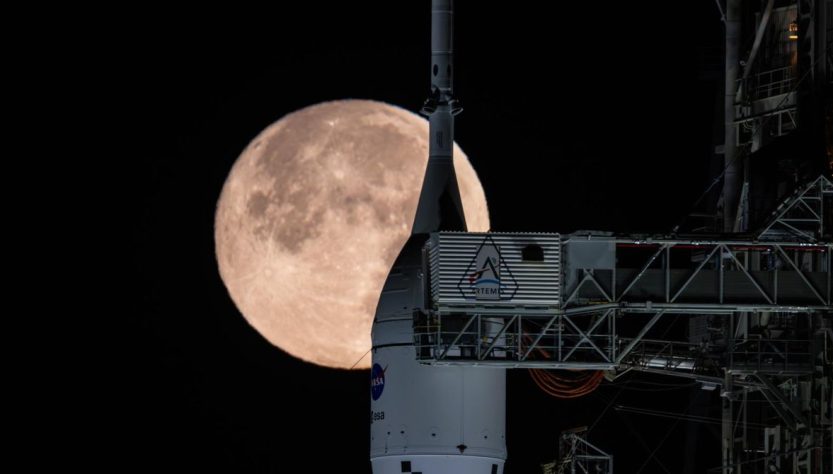
Artemis II Liftoff Countdown: Observation Information and Timetable

Artemis II Liftoff Countdown: Observation Information and Timetable

After a series of delays, rocket maintenance, and a program overhaul to resume lunar exploration, the Artemis II mission is poised for launch. If all goes as planned, four astronauts will kick off NASA’s new lunar program on Wednesday, more than 50 years after the Apollo era.

The Artemis II team won’t touchdown on the moon; that milestone will be reached with Artemis IV. Their spacecraft will traverse 6,000 to 9,000 kilometers above the moon’s far side, orbit it, and make the return journey. This mission intends to showcase NASA’s ability to safely transport humans to the moon.

Once this goal is achieved, NASA will gear up for upcoming lunar landings in the following years, with the objective of setting up initial lunar bases and ensuring a long-term human presence on the moon.

When and Where to Watch the Artemis II Launch:

The new launch window opens on Wednesday, April 1, at 6:24 pm EDT and remains open for two hours, permitting liftoff anytime from 6:24 pm to 8:24 pm EDT, contingent on conditions. Should there be any delays, NASA has an additional five days to make an attempt, with April 6 marking the final day of this launch window. If that fails, the next opportunity will be on April 30.

NASA will stream the event live on its YouTube channel, beginning at 7:45 am with coverage of tank operations, while the official broadcast will start at 12:50 pm and will continue through liftoff. A press briefing is scheduled to occur two hours after the launch.

Mission Details:

The astronauts will be launched on a NASA SLS rocket, traveling in the Orion spacecraft, comparable in size to a large van. They will spend two days orbiting Earth testing onboard systems before preparing to set course for the moon. By the fifth or sixth day, the capsule is expected to enter the moon’s gravitational influence and dock with its orbit.

The most critical phase will occur when the spacecraft is positioned “behind” the moon; during this period, the crew will lose contact with Earth for about 50 minutes due to the moon’s interference. They will need to capture images and data during this time, employing advanced technology that surpasses what was available in the Apollo era.

Upon their return, the capsule will utilize the Earth-moon gravity field to save fuel and make its way home. NASA anticipates that the crew will approach Earth by the tenth day.
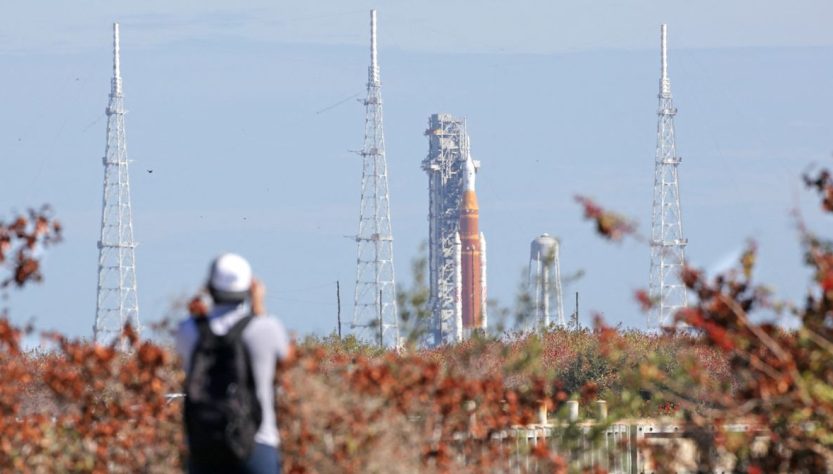
NASA Delays Artemis II Lunar Mission Launch Once More

NASA Delays Artemis II Lunar Mission Launch Once More

NASA has revealed yet another postponement for the launch of Artemis II, the crewed lunar flyby mission, now aiming for an April launch window. Originally scheduled for March 6, the agency cited a rocket-related issue as the cause for the delay. Administrator Jared Isaacman detailed the problem as a disruption in helium flow within the Space Launch System’s interim cryogenic propulsion stage, essential for engine purging and pressurizing fuel tanks. This system had functioned correctly during two previous dress rehearsals but encountered failures during normal operations.

As a result of this issue, repairs at the Vehicle Assembly Building are required, ruling out any possibility of a March launch. The rocket is being taken back to the hangar. “This setback is disappointing to many, especially our diligent NASA team,” Isaacman shared on X. “Similar to the 1960s, our journey is filled with challenges.”

Can Artemis II move forward in April? NASA is accelerating preparations to ensure this window remains feasible, contingent on further data and scheduling modifications.

Artemis II was initially set to launch between February 6 and 11, but minor hydrogen leaks and technical issues surfaced during its wet dress rehearsal, prompting a reassessment of astronaut safety and a subsequent launch delay. A successful second rehearsal on February 19 indicated no leaks, with 700,000 gallons of liquid propellant loaded and hydrogen levels managed, enhancing engineer confidence.

A follow-up press conference confirmed a tentative liftoff date of March 6, but on February 20, helium flow complications arose again, resembling issues from Artemis I. Isaacman proposed potential causes such as a faulty filter, valve, or connector.

Isaacman noted, “Expectations are high considering the resources utilized, and Artemis intends to exceed Apollo.” Once launched, Orion will achieve a distance record beyond any manned spacecraft, exceeding Apollo 13’s 400,171 kilometers mark on its tenth day, culminating with a landing in the Pacific Ocean.

Though Artemis II will not feature a lunar landing, unlike its successor Artemis III, its importance lies in demonstrating NASA’s technical capabilities for a moon return and ushering in a new era of space exploration.

This story originally appeared in WIRED en Español and was translated from Spanish.