
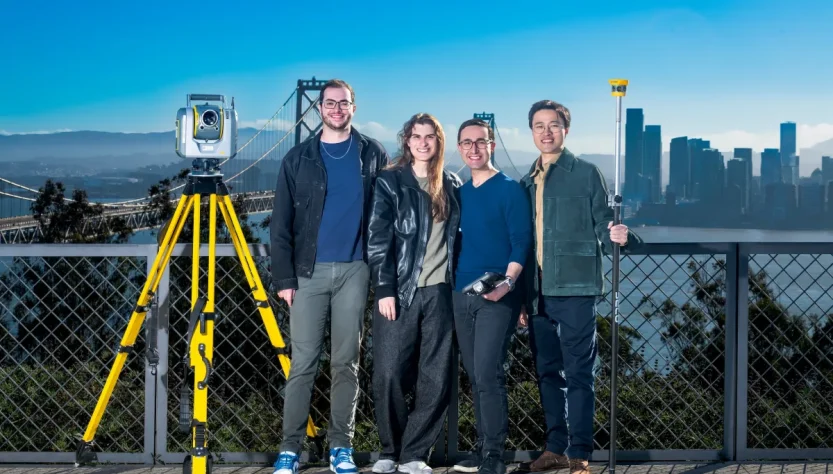
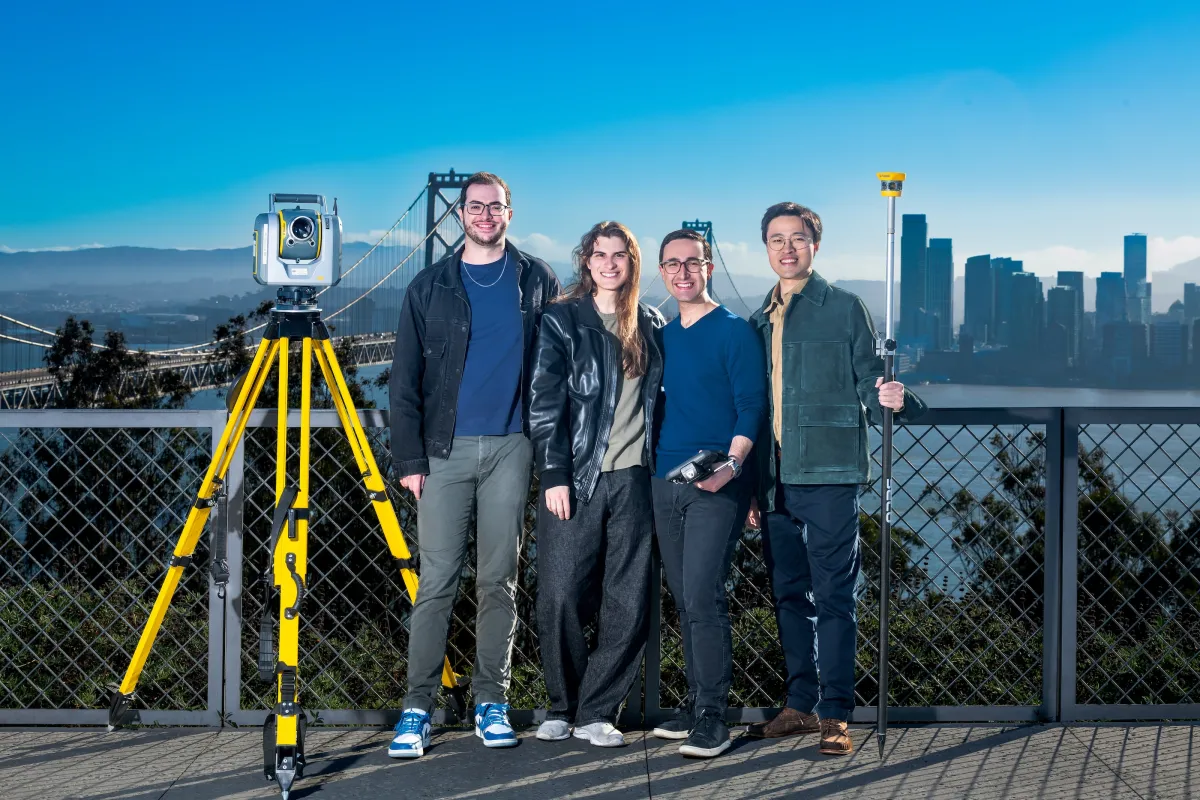
In 2021, when Alex Baikovitz co-established Mach9 Robotics, he aimed to create a more efficient, quick, and cost-effective method for civil engineers to conduct visual inspections. The company sought to streamline procedures and transform the slow, archaic methods that hinder construction in the United States.
After a few years, Mach9 Robotics had developed the necessary hardware, yet Baikovitz realized: the hardware wasn’t the main issue.
“We recognized how laborious it was for civil engineering firms to convert data from these remarkable laser scanners and image data capture devices into a functional survey,” he shared with TechCrunch during an interview, noting the detailed site maps engineers rely on for design purposes. “The true struggle lay in their workflows,” he remarked, emphasizing the challenge of transforming the vast volumes of data they gathered into . . .information that enables optimal design and asset management choices across the board.
Consequently, Baikovitz removed “Robotics” from the company’s name and shifted focus to creating AI-driven computer-aided design (CAD) software. This strategic move proved beneficial, as Mach9 has secured nearly 100 clients for the private beta phase of its software, which has been employed in over 2,500 projects so far.
That progress paved the way for new funding opportunities. On Wednesday, the startup revealed a $34 million Series A funding round co-led by First Round Capital and Bessemer Venture Partners. Additional contributors included Prudence, a New York-based early-stage firm that concentrates on investing in AI software applications for construction and real estate, along with Quiet Capital, a VC firm already involved in the funding.
Mach9 stands out among several startups racing to refresh the planning-to-building process for construction and infrastructure. In August, a startup known as CivilGrid amassed $26 million to expand its vision of the “Google Maps for the underground.” Concurrently, Blueprints AI, which leverages AI to generate code-compliant, permit-ready architectural blueprints in mere minutes, ranked among the top 200 companies in the Startup Battlefield competition at last week’s TechCrunch Disrupt.
Baikovitz mentioned that Mach9 is dedicated to transforming CAD software, as it represents one of the slowest and most labor-intensive components of the overall pipeline.
“It requires months to deliver a project, and it takes roughly a week per mile for someone to complete manually on traditional software created by the likes of Autodesk and Bentley Systems,” he noted.
Mach9 claims its software automates a significant portion of that labor, enhancing the process by a factor of 10 and substantially lowering costs. This empowers clients engaged in surveying and civil engineering to “broaden their capabilities, tackle larger projects, and extend the influence of reality-capture data on crucial infrastructure decisions,” stated Baikovitz.
Baikovitz indicated that Mach9 developed and fine-tuned its own in-house AI models to achieve the centimeter-accurate precision essential for construction and infrastructure tasks.
“That’s not a capacity offered by many off-the-shelf models,” he remarked. “A significant aspect of our development journey since 2024 has involved devising industry-leading models capable of converting imagery or these multimodal image and laser scan data sets into survey-grade geometries, like precisely outlining curbs and pavement striping, all according to our clients’ specifications at the accuracy the industry demands.”
Mach9’s AI CAD system processes survey data and generates an initial draft of a plan, which engineers can subsequently refine. The startup is “equipping them with all the necessary tools to draw, erase, modify vertices, evaluate the quality of the AI-generated model so they can confidently take ownership of the deliverable they are producing, given the extensive liability in our industry, which necessitates licensed professionals who understand the materials,” Baikovitz explained.
Regarding the funding, Baikovitz stated that the startup will allocate it across product enhancements, hiring industry professionals, and scaling “all facets of our organization to keep pace with market demands.”
Looking back, Baikovitz expressed gratitude for initially pursuing the hardware direction. It provided his startup with a tangible offering to present to prospective clients, and it was mainly those clients who informed him of their lack of need for improved data capture devices.
“I’m not interested in acquiring this cheaper, low-cost hardware,” he recalls one VP stating. However, superior software could “boost our efficiency in executing these extensive statewide transportation mapping projects,” he noted. He added that such initiatives help enhance states like Texas, where Mach9 has collaborated, making them “much safer [and] more effective.”
When you make purchases through links in our articles, we may receive a small commission. This does not impact our editorial independence.