
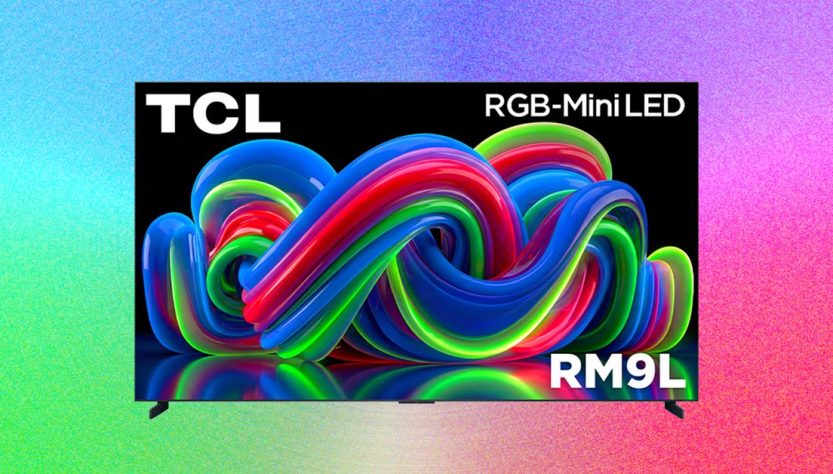

TCL’s RM9L RGB-Mini boasts an impressive array of four HDMI 2.1 ports, each supporting a 144Hz refresh rate ideal for low latency PC gaming and various other uses. One of the HDMI 2.1 ports is specifically allocated for eARC passthrough, enabling audio to be transmitted to powered speakers or a receiver.While testing, I connected an Xbox Series X and Google TV, along with Klipsch the Nines II speakers. Additionally, the TV is equipped with two USB ports (one coaxial), an Ethernet port for wired connectivity, and a digital optical port. It takes advantage of Wi-Fi 6 for speedy, compatible connections.
The remote is user-friendly and thoughtfully constructed, featuring brightness controls on the right for swift adjustments during nighttime gaming or in bright daylight conditions. Small notches assist in identifying volume and channel controls without needing a glance. However, the presence of buttons for free channels seemed superfluous, and the off-center Home button complicates its location. Thankfully, the remote is backlit.
Practical Testing Findings
I assessed Awake on Netflix and The Creator on Fandango at Home to gauge contrast and brightness levels. Both films have dimly lit sequences. During an Awake cycling scene featuring Gina Rodriguez, even certain OLEDs appeared washed out. It was only after switching to Vivid mode that the action became clearer. Mini RGB technology can be finicky, necessitating adjustments for optimal picture quality.
In The Creator, an ocean scene didn’t impress, lacking vibrancy and deep blacks, even in Vivid or Dolby Vision IQ modes, appearing somewhat gray.
The RM9L fell short against the LG Micro RGB Evo in skin tone evaluations, displaying less tonal variation, although it was more comparable to the mid-tier Sony Bravia 7 Mark II and Hisense UR9, which also employs Mini RGB technology.
In a demonstration reel test, a challenging scene with white mist over a snowy mountain was rendered distinctly on the Leica Cine Play 1 projector, although it was a tough comparison due to the projector’s superior lens. Green grass near a fence in winter was clearer than on the Hisense UR9, and both TVs exhibited similar performance in a scene showcasing buffalo in a field. The LG Micro RGB Evo exhibited richer colors in numerous scenes, such as a yellow flower, a red cactus, a purple butterfly, and dark trees at night.