
BenQ GV50 Evaluation: Highly Portable, with Certain Quality Trade-offs

BenQ GV50 Evaluation: Highly Portable, with Certain Quality Trade-offs

The projector can be vertically adjusted on its base to display images upward or downward on a wall or ceiling. For horizontal adjustments, the base’s two feet can be extended to slightly tilt the projector toward the ceiling. It is easily movable yet remains stable in any direction.

The projector features a single HDMI port for ARC 5.1 audio passthrough or for connecting devices like gaming consoles. Additionally, there are USB-A and USB-C ports available for drives or charging devices, along with a 3.5-mm port. It does not include an Ethernet port and operates on Wi-Fi 5, which isn’t as fast or compatible as newer versions such as Wi-Fi 6E or 7. I faced connection issues with my Google Nest mesh network where it was unable to connect.

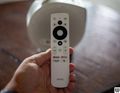
The setup process was straightforward apart from a 45-minute system update, primarily involving the Google Home app to scan a QR code and install applications. The GV50’s auto-keystoning functioned effectively on my screen, wall, and ceiling, requiring minimal manual adjustments. The GV50 remote features a user-friendly layout from BenQ with a central Home button, a setup button, and shortcuts for Netflix, YouTube, and Prime.

The GV50 can operate on battery power and includes energy-saving settings, such as an automatic power-down after a specified time. While I primarily used it plugged into a wall outlet at home, the battery option adds portability for use in areas with limited outlets. It can run on battery power alone for several hours, although the brightness dims to conserve energy.

**Picture Quality and More**

The GV50 is not intended to be a cinematic powerhouse and did not excel in my standard Spears & Muncil benchmark tests. The skin tone evaluations were average for this midrange device, offering limited tonal variety. During demo reel evaluations, the 1080p resolution and lack of contrast and brightness became apparent; colors such as a red cactus and yellow flower appeared muted, and trees blended into the dark background. Butterflies looked dull and lifeless.

Streaming from my iPhone 17 Pro and iPad 12.9-inch revealed the GV50’s sluggish processing speeds. While Google Cast and Apple AirPlay worked, the playback was inconsistent. Trying to fast-forward often led to pauses or failures due to the limited 2 GB RAM and 1.5-GHz processor.
TCL RM9L RGB-Mini LED (2026) Evaluation

TCL RM9L RGB-Mini LED (2026) Evaluation

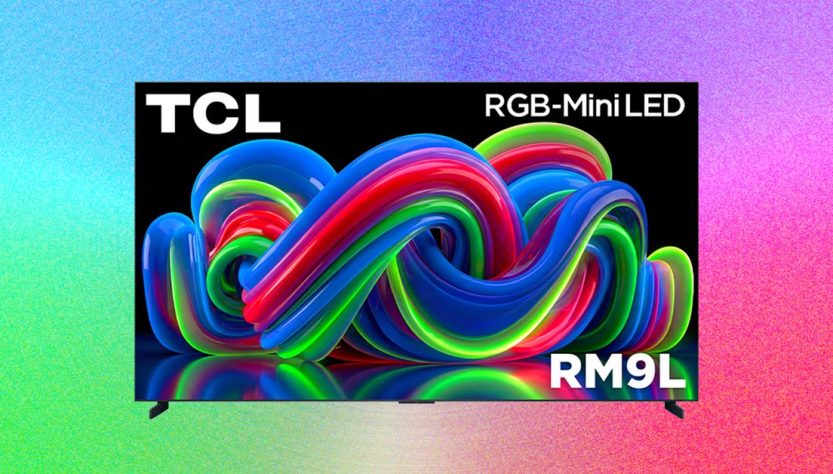
TCL’s RM9L RGB-Mini boasts an impressive array of four HDMI 2.1 ports, each supporting a 144Hz refresh rate ideal for low latency PC gaming and various other uses. One of the HDMI 2.1 ports is specifically allocated for eARC passthrough, enabling audio to be transmitted to powered speakers or a receiver.While testing, I connected an Xbox Series X and Google TV, along with Klipsch the Nines II speakers. Additionally, the TV is equipped with two USB ports (one coaxial), an Ethernet port for wired connectivity, and a digital optical port. It takes advantage of Wi-Fi 6 for speedy, compatible connections.

The remote is user-friendly and thoughtfully constructed, featuring brightness controls on the right for swift adjustments during nighttime gaming or in bright daylight conditions. Small notches assist in identifying volume and channel controls without needing a glance. However, the presence of buttons for free channels seemed superfluous, and the off-center Home button complicates its location. Thankfully, the remote is backlit.

Practical Testing Findings

I assessed Awake on Netflix and The Creator on Fandango at Home to gauge contrast and brightness levels. Both films have dimly lit sequences. During an Awake cycling scene featuring Gina Rodriguez, even certain OLEDs appeared washed out. It was only after switching to Vivid mode that the action became clearer. Mini RGB technology can be finicky, necessitating adjustments for optimal picture quality.

In The Creator, an ocean scene didn’t impress, lacking vibrancy and deep blacks, even in Vivid or Dolby Vision IQ modes, appearing somewhat gray.

The RM9L fell short against the LG Micro RGB Evo in skin tone evaluations, displaying less tonal variation, although it was more comparable to the mid-tier Sony Bravia 7 Mark II and Hisense UR9, which also employs Mini RGB technology.

In a demonstration reel test, a challenging scene with white mist over a snowy mountain was rendered distinctly on the Leica Cine Play 1 projector, although it was a tough comparison due to the projector’s superior lens. Green grass near a fence in winter was clearer than on the Hisense UR9, and both TVs exhibited similar performance in a scene showcasing buffalo in a field. The LG Micro RGB Evo exhibited richer colors in numerous scenes, such as a yellow flower, a red cactus, a purple butterfly, and dark trees at night.