
On Wednesday, Spotify revealed that it is introducing parent-controlled accounts for children in its free tier. Families in the U.S., U.K., Australia, France, Germany, and the Netherlands can now establish a “Managed Account” for their child, a feature that was previously accessible only to paying users.
“Managed Accounts,” which debuted in 2024, is a shared account functionality that enables parents to oversee their children’s music selections.
Since these accounts are distinct, children’s music preferences will not affect their parents’ algorithms or appear in their yearly Spotify Wrapped summary. Kids can save songs to their favorites, curate their own playlists, and receive personalized song recommendations.
The rollout of Managed Accounts for free users showcases the increasing initiatives by major tech firms to provide parents enhanced oversight regarding their children’s use of online services and the features accessible to them, in light of regulatory pressures.
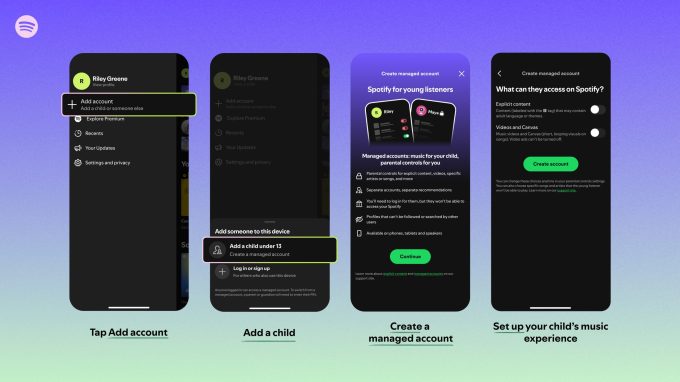
With Managed Accounts, parents are able to oversee and limit the playback of certain artists and tracks. By default, children are unable to stream music marked as explicit, and video playback is also deactivated by default. Interactive features are restricted on managed accounts as well, meaning kids do not have access to age-restricted features like Messages.
Managed Accounts provide parents with more detailed control over the music their children can enjoy, without the necessity of utilizing the more restrictive Spotify Kids application.
To establish the managed account, holders of a Family Plan must proceed to their account sections within the app, select the “Add a Member” option, and click on the “Add a listener aged under 13 (or the market equivalent)” choice. Following that, parents will be directed through several steps to set up their child’s account, including selecting a display name and configuring content preferences. Parents can make changes at any point.
Spotify mentions it intends to expand Managed Accounts to additional countries shortly.
When you buy through the links in our articles, we might receive a small commission. This does not influence our editorial independence.