At the HumanX conference, all discussions revolved around Claude

At the HumanX conference, all discussions revolved around Claude

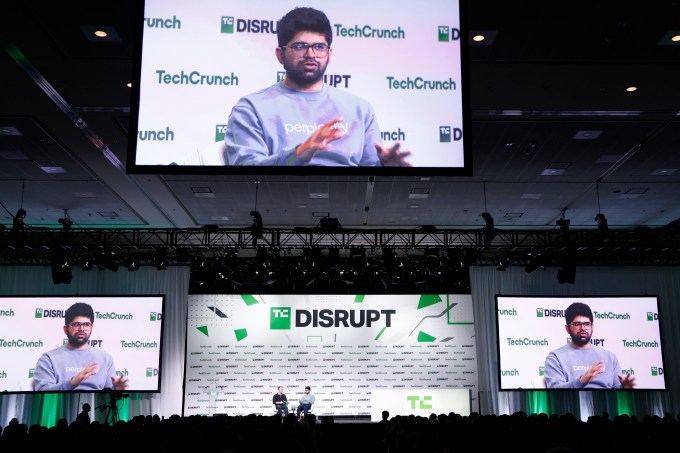
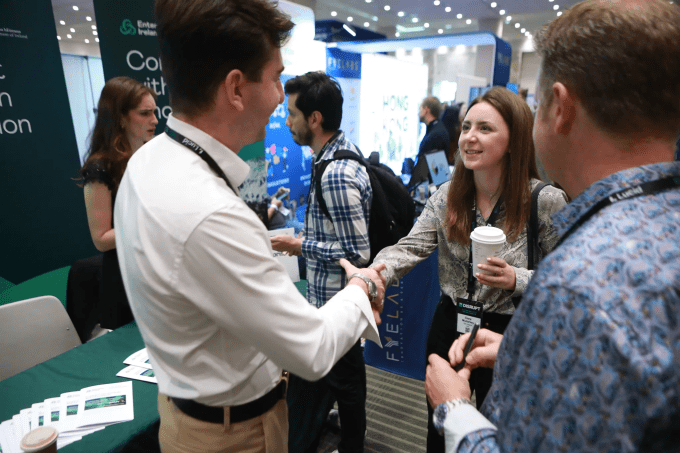
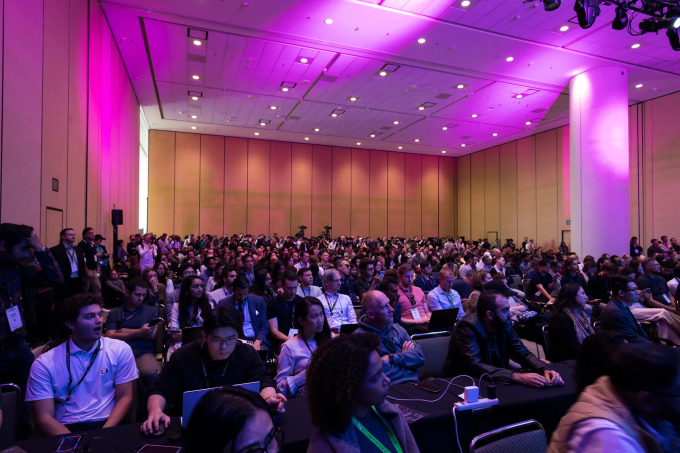
At the HumanX AI conference taking place in San Francisco this week, thousands of tech enthusiasts gathered at the Moscone Center, where the focus was on how agentic AI is transforming business practices. Agents that streamline business and programming tasks are now being implemented across various sectors — primarily through chatbots aimed at both enterprises and consumers.

Naturally, I inquired about which chatbot was leading in popularity, and I repeatedly heard the same name: Claude.

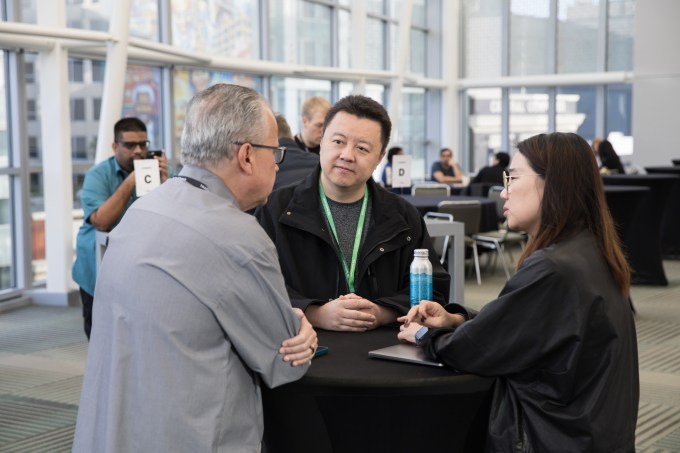
Anthropic received mention in numerous panels throughout the week, and it was also a topic during my conversations with vendors while exploring the exhibition floor. The chatbot that didn’t come up frequently? ChatGPT. One vendor emphasized that he and his team relied heavily on Claude, expressing his sentiment that ChatGPT and OpenAI had seen a decline — or, as commonly phrased online, “fell off.”

Recently, this doesn’t seem to be an uncommon viewpoint. In fact, it remains uncertain what could change the belief that, despite a recent $122 billion funding influx and its impending IPO, OpenAI may have lost its edge—or at least, appears increasingly uncertain about its next steps.

Part of the issue could be a belief that the company lacks a clear direction. Last month, OpenAI discontinued several long-standing side projects (including its AI video generator Sora and a controversial plan to introduce a “sexy” version of ChatGPT), instead concentrating on business and coding solutions. Meanwhile, various developments, including a recent New Yorker article questioning the trustworthiness of the company’s CEO, Sam Altman, have sparked some negative attention surrounding the firm. The organization’s affiliations with the Trump administration haven’t garnered favor either, nor has its decision to incorporate advertising into ChatGPT.

During one of HumanX’s discussions, Sierra co-founder and CEO Bret Taylor (who also serves as the chairman of OpenAI’s board) defended Altman when questioned by Alex Heath about the New Yorker article. “I believe Sam is one of the most prominent leaders and executives globally,” Taylor remarked. “If you seek out critics of him, you will find them, and they will be quite vocal,” he continued, adding: “I find Sam to be outstanding. I consider him an exceptional AI leader, and I greatly trust his character as a person who has collaborated with him.”

The controversies and shifts may make OpenAI appear reactive rather than proactive, as if it is merely reacting to circumstances rather than influencing them. However, in terms of visibility and revenue, OpenAI and Anthropic seem to be closely matched — or at least, that’s the impression, with some data indicating that Anthropic is gaining traction among business clients. The Wall Street Journal recently assessed their financials, revealing that the two firms were “the fastest-growing enterprises in tech history.” In that light, perhaps “falling off” for OpenAI simply indicates it’s no longer the undisputed leader. It now faces competition — which is standard in most sectors.

Techcrunch event

San Francisco, CA
|
October 13-15, 2026

If anything, it remains evident that OpenAI is committed to maintaining its dominance. This week, the company revealed a new $100 subscription plan for ChatGPT that offers considerably more access to Codex, its coding utility. This initiative clearly appears aimed at enhancing the widespread use of the tool while hopefully attracting users away from Claude Code.

During a HumanX discussion with Bloomberg’s reporter Rachel Metz, OpenAI CTO of B2B applications Srinivas Narayanan highlighted how rapidly the technological landscape has been evolving.

“We are in a remarkable moment in technology, where each month, and sometimes daily, we all anticipate something new,” Narayanan stated. Highlighting agentic coding as an example, he added, “We knew AI would influence software engineering; people have been using assistive coding for the past year, but even in just the last few months, the entire field has shifted dramatically.”

Agentic achievements seem to be a focal point for the tech community at present since other AI applications (such as creative uses) have yet to fully materialize. Nevertheless, the extent of tasks that companies have started to delegate to their new automated assistants is somewhat astonishing—and, as Narayanan noted in his comments, all of this has occurred in a relatively brief time frame. In such an unpredictable landscape, the future remains open-ended.

Slate Auto: All you should understand regarding the Bezos-supported EV startup

Slate Auto: All you should understand regarding the Bezos-supported EV startup

In April 2025, a new venture named Slate Auto emerged from secrecy, making waves in the automotive sector. This startup aimed to develop an affordable, highly customizable electric pickup truck, backed by Jeff Bezos, while secretly operating for three years in Troy, Michigan—the domain of significant automakers like Ford and General Motors.

TechCrunch was the first to report on this revelation, sharing details in early April regarding the company’s existence, its connections with the Amazon founder, and its intriguing business model. The period between our initial report and Slate’s official unveiling in late April was filled with activity, as prototypes of the startup’s truck started appearing across California.

Slate represents a deviation in the U.S. electric vehicle landscape, where failures, bankrupted companies, and product revisions have become prevalent. Although its current investors, leadership team, initial offering, and business plan present a persuasive future, the path ahead is still fraught with possible challenges as production aims for a late 2026 rollout. 

Here is a timeline detailing everything essential about Slate Auto, from its inception and financial backers to its product offerings, business strategy, and production goals.

Inside the EV startup secretly backed by Jeff Bezos

April 8 – Following a year-long investigation, TechCrunch published an article disclosing that a clandestine EV startup, Slate Auto, had been functioning for three years with the financial support of Jeff Bezos and LA Dodgers owner Mark Walter. 

In contrast to other electric vehicle startups, Slate focused on creating a remarkably low-cost electric pickup truck priced around $25,000. This vehicle would offer significant customization, utilizing the expertise of numerous former employees from Harley-Davidson and Chrysler, both of which have considerable accessory and aftermarket parts segments.

Slate Auto’s pickup truck spotted in the wild

April 10 – The following day, an image of an unremarkable electric truck began circulating on the r/whatisthiscar subreddit, with Reddit users speculating it could potentially be Slate’s secret EV. 

Techcrunch event

San Francisco, CA
|
October 13-15, 2026

TechCrunch confirmed that the image depicted a prototype of Slate’s truck parked outside the company’s design center in Long Beach, California.

An EV that can change like a ‘Transformer’

April 21 – Slate began showcasing conceptual versions of their EV on public roads to create marketing excitement prior to its anticipated launch event on April 24. Interestingly, some models seemed to resemble SUVs or hatchbacks, rather than solely pickup trucks. 

TechCrunch confirmed that the company designed the EV to possess “Transformer-like” modular features, and that this initiative served as a promotional tease of such customization.

The analog EV pickup truck that is decidedly anti-Tesla

April 24 – Slate officially introduced its customizable electric pickup truck at a launch event in Long Beach, California. During this event, it was also disclosed that the truck would be priced below $20,000 when factoring in the $7,500 federal EV tax rebate. 

The entry-level model of the truck was disclosed to be quite basic, featuring just 150 miles of range, no power windows, a lack of a central infotainment display, and even no paint. Slate pledged that virtually every aspect of the truck would be customizable, including the seating arrangement and overall design.

A former Indiana printing plant eyed for EV truck production

April 25 – TechCrunch reported that Slate had pinpointed a former printing facility in Warsaw, Indiana as the site for its truck manufacturing. The 1.4 million-square-foot plant was constructed in 1958 and had remained inactive for approximately two years. 

Slate Auto crosses 100,000 refundable reservations in two weeks

May 12 – Slate informed TechCrunch that it had surpassed 100,000 refundable $50 reservations for its budget-friendly EV truck. This indicated that the company’s concept resonated with a broad audience, despite most people being unaware of Slate just two months earlier. 

Slate Auto drops ‘under $20,000’ pricing after Trump administration ends federal EV tax credit

July 3 – The Trump administration pushed through significant tax legislation that, among other changes, established a September expiration for the $7,500 federal EV tax rebate. Consequently, Slate’s truck would no longer be able to utilize that rebate to achieve the “under $20,000” pricing that the startup had been promoting. Thus, Slate removed that phrasing from its website before the legislation was officially signed.

Why this LA-based VC firm was an early investor in Slate Auto

July 8 – Slate’s 2023 funding round included at least 16 investors, with Bezos among them. While most of these investors remain unnamed, Los Angeles-based Slauson & Co. discussed with TechCrunch the reasons behind their early investment in the EV startup during that initial funding stage, as well as Slate’s Series B.

Slate Auto appears on the TechCrunch Disrupt main stage

October 30 – Slate Auto’s CEO Chris Barman participated in an interview on the main stage at TechCrunch Disrupt 2025, addressing Jeff Bezos’ involvement, the obstacles of establishing a new automaker, and how the company intends to create a marketplace for customization.  

Slate passes 150,000 reservations

December 16 – While the growth of EVs has slowed in the U.S., Slate Auto has reached 150,000 refundable reservations for its truck and SUV, demonstrating substantial interest in the vehicle in spite of the loss of the federal tax incentive. Furthermore, with fewer EVs anticipated to enter the U.S. market, it seems that the startup will face limited competition at the lower end of the segment. 

2026 

A surprise CEO swap

 March 9 – Slate executed an unexpected move, appointing a new CEO: former Amazon Marketplace VP Peter Faricy. Chris Barman, the former CEO and Slate’s first employee, will remain with the company, transitioning to a “President of Vehicles” position. Slate selected Faricy to prepare the startup for its year-end commercial launch, beginning with the conversion of the reservation list into as many completed orders as feasible. 

Flipkart, owned by Walmart, and Amazon are putting pressure on India's rapid commerce startups.

Flipkart, owned by Walmart, and Amazon are putting pressure on India’s rapid commerce startups.

India’s rapid commerce sector is experiencing significant growth, with demand more than doubling for certain participants. However, the aggressive delivery initiatives by Flipkart and Amazon are increasing competition in an already saturated market where profitability is still a challenge.

Flipkart, a major player in India’s e-commerce landscape, entered the quick commerce arena later than local competitors like Blinkit, Swiggy, and Zepto. Yet, it has surpassed 800 dark stores (online shopping distribution centers) this week, according to information obtained by TechCrunch, and aims to double that figure by the close of 2026, as per UBS.

This expansion aligns with the intensified competitive phase of India’s quick commerce sector. Noteworthy recent events include the resignation of a co-founder at Swiggy this week. Companies in the sector are also reassessing their strategies in light of increasing competition and costs.

The Walmart-owned business made its quick commerce debut with Flipkart Minutes in August 2024, providing delivery services across various categories in as little as 10 minutes. Since then, the sector has grown quickly. More than 6,000 dark stores are now operational, resulting in considerable overlap among competitors in major urban areas and heightening competition, according to a Bernstein report released earlier this week.

Beyond major cities

Flipkart’s footprint in India is still smaller than that of market leader Blinkit, which boasts over 2,200 dark stores, according to Bernstein. Nonetheless, Flipkart is focusing on expanding beyond major cities to stimulate growth. This contrasts with Blinkit’s plan to scale to 3,000 dark stores by 2027 while concentrating on its leading 10 cities.

“Flipkart embodies the Walmart ethos,” stated Satish Meena, founder of Gurugram-based consumer insights firm Datum Intelligence. “Walmart’s approach is always about enlarging the overall market potential to dominate by expanding the market.”

Flipkart is already observing traction outside major urban centers, with sources informing TechCrunch that 25–30% of its quick commerce orders are now originating from smaller towns. Orders per dark store have also increased by approximately 25% month-over-month, the source revealed.

Techcrunch event

San Francisco, CA
|
October 13-15, 2026

However, the expansion in quick commerce remains predominantly centered in larger cities. According to Bernstein, most demand still stems from major urban areas, where denser populations foster quicker deliveries and better utilization of dark stores, even as growth into smaller towns accelerates.

This dynamic is also crucial for profitability. The eight largest cities in India account for over 3,800 dark stores managed by the top five players, with around 3,600 of them having the capability to be profitable, as reported by Bernstein.

“Metro areas clearly offer superior return ratios and profitability due to enhanced throughput,” remarked Karan Taurani, executive vice president at Elara Capital, a London-based investment bank and brokerage. “This business thrives on higher throughput, and for the moment, that largely comes from metro regions.”

Nonetheless, some analysts perceive a long-term opportunity beyond metropolitan areas. “Non-metros (smaller towns) can provide a boost if businesses broaden their offerings beyond groceries and present a wider selection of products at quicker speeds,” stated Datum’s Satish Meena. “Flipkart is placing its bets on that.”

Nonetheless, scaling up outside urban hubs will require time. Currently, quick commerce is feasible in roughly 125 cities, with dark stores typically needing six to twelve months to achieve maturity and profitability, as mentioned by Aditya Soman, a senior research analyst at CLSA, a Hong Kong-based brokerage. Many of the newer stores in smaller towns are still in a ramp-up phase, he emphasized.

Amazon, which entered India’s quick commerce sector in late 2024 shortly after Flipkart’s launch, is also accelerating its footprint. The e-commerce giant has established around 450–500 dark stores to date, with between 330–370 currently operational, according to UBS, as it seeks to capitalize on the growing demand for quicker deliveries.

Pressure mounting on incumbents

Flipkart is not solely dependent on dark-store expansion to stay competitive but is also implementing aggressive pricing strategies. The company is providing some of the most substantial discounts in the sector — about 23–24% across various categories, based on an analyzed sample basket by Jefferies last month — as it aims to draw customers in a market where pricing and convenience are key demand factors.

The impact of such strategies appears to be effective. The brokerage firm JM Financial recently cautioned that Swiggy’s quick commerce operation is trapped in a “growth-versus-profitability predicament” and risks undermining shareholder value, suggesting that a takeover by a larger, well-capitalized entity may be the optimal resolution for investors.

Eternal, the parent company of Blinkit, has seen its shares drop by about 15% this year, while Swiggy’s shares have declined over 29%, even as Zepto gears up for an IPO on Indian stock exchanges later this year.

The arrival and growth of major players like Flipkart and Amazon are transforming the competitive environment. “Quick commerce has transitioned out of a startup phase — it has evolved into a game for major players,” commented Ankur Bisen, a senior partner at retail consultancy Technopak Advisors.

He added that the sector’s financial dynamics and limited differentiation may eventually lead to consolidation, as companies vie for the same customer base in a heavily discount-driven market.

Requests for comments from Amazon, Flipkart, and Swiggy went unanswered. Eternal opted not to provide a statement, while Zepto indicated it could not comment due to a silent period following its IPO application.

Kalshi secures a brief halt in Arizona criminal matter

Kalshi secures a brief halt in Arizona criminal matter

The legal challenge posed by Arizona Attorney General Kris Mayes against the prediction market Kalshi seems to be facing an obstacle.

On Friday, the Commodity Futures Trading Commission revealed that it has secured a temporary restraining order that halts the state’s criminal case against Kalshi (whose CEO Tarek Mansour is featured above).

“Arizona’s choice to leverage state criminal laws against compliant companies under federal law creates a troubling precedent, and today’s court ruling clearly indicates that coercion is not a permissible strategy to bypass federal regulations,” stated CFTC Chairman Michael S. Selig.

While the CFTC typically comprises five commissioners, Selig presently stands as the sole member following his confirmation in December and the exit of former acting chairperson Caroline Pham (who transitioned to crypto firm MoonPay).

Arizona has charged Kalshi, alleging that the company has been running an unlicensed gambling operation in the state. The announcement regarding the restraining order follows just days after a federal judge permitted Arizona’s case to proceed, as reported by Bloomberg.

Additionally, the CFTC has initiated lawsuits aiming to block similar actions from advancing in Connecticut and Illinois.

AMC will broadcast the premiere of ‘The Audacity’ in 21 segments on TikTok.

AMC will broadcast the premiere of ‘The Audacity’ in 21 segments on TikTok.

Though it’s commonplace for networks to publicize new programs by posting full episodes on YouTube, AMC is taking a unique approach for its comedy “The Audacity,” centered around Silicon Valley.

The debut of the show will be accessible on TikTok, beginning Sunday morning. It will be divided into 21 segments, each approximately three minutes long, as reported by Deadline. The segments will be numbered, giving viewers the option to watch the premiere in its entirety if they wish.

This may be a clever method to generate excitement among younger audiences for a series that AMC’s chief marketing officer has labeled the network’s most significant launch of the year. Alternatively, it could just be an unusual effort to mimic Quibi.

Produced by Jonathan Glatzer and featuring Billy Magnussen and Sarah Goldberg, “The Audacity” does not portray real firms or executives, but aims to deliver a darkly humorous perspective on various challenges posed by modern technology.

For those not interested in watching in three-minute chunks, the complete premiere will be available on AMC and its streaming platform AMC+. It will also be streamed simultaneously on Samsung’s free service, Samsung TV Plus.

Sam Altman replies to 'provocative' New Yorker piece following assault on his residence

Sam Altman replies to ‘provocative’ New Yorker piece following assault on his residence

OpenAI’s CEO, Sam Altman, released a blog entry on Friday night addressing both an apparent assault on his residence and an extensive New Yorker profile that questioned his reliability.

In the early hours of Friday, an individual reportedly launched a Molotov cocktail at Altman’s home in San Francisco. Luckily, no injuries occurred, and a suspect was subsequently apprehended at OpenAI’s headquarters, where he was allegedly threatening to set the building ablaze, as stated by the SF Police Department.

Though the police have not publicly named the suspect, Altman remarked that the attack followed shortly after “a provocative article” was published about him. He pointed out that someone had indicated that the timing of the article’s release “during a period of significant anxiety over AI” might increase the danger for him.

“I dismissed it,” Altman shared. “Now, I find myself awake in the dead of night, frustrated, and realizing that I underestimated the impact of language and the narratives surrounding it.”

The article in question was a detailed investigative piece authored by Ronan Farrow (who received a Pulitzer for exposing various sexual abuse allegations surrounding Harvey Weinstein) and Andrew Marantz (who has extensively covered technology and politics).

Farrow and Marantz noted that during their discussions with over 100 individuals familiar with Altman’s business practices, most characterized him as a person with “an unyielding desire for power that, even among industrialists involved in space travel, distinguishes him.” 

In line with other journalists who have reported on Altman, Farrow and Marantz suggested that numerous sources expressed doubts regarding his trustworthiness, with one unnamed board member stating he possesses “a strong urge to gain approval, to be liked in any given interaction,” coupled with “a sociopathic indifference to the repercussions that may arise from deceiving someone.”

Techcrunch event

San Francisco, CA
|
October 13-15, 2026

In addressing these issues, Altman reflected that he can see “numerous things I take pride in and several errors as well.”

Among his missteps, he mentioned his inclination towards “avoiding conflict,” which he felt has “caused considerable distress for both myself and OpenAI.”

“I regret my poor handling of a conflict with our previous board that resulted in a significant mess for the organization,” Altman stated, presumably alluding to his ousting and quick reinstatement as OpenAI CEO in 2023. “I have encountered numerous other mistakes throughout OpenAI’s tumultuous journey; I acknowledge being an imperfect individual amidst a remarkably complex scenario, striving to improve each year, and consistently focused on our mission.”

He continued, “I apologize to those I’ve harmed and wish I had acquired understanding more swiftly.”

Altman also recognized that there appears to be “a great deal of Shakespearean drama among the companies within our sector,” which he linked to a “‘ring of power’ dynamic” that “causes individuals to engage in irrational behavior.”

Naturally, the appropriate response to the ring of power is to eliminate it, hence Altman stated, “I don’t imply that [artificial general intelligence] is the ring itself, but rather the encompassing philosophy of ‘being the one to govern AGI.’” He advocates “a shift towards widely sharing the technology, ensuring that no one possesses the ring.”

Altman concluded by expressing his openness to “constructive criticism and discourse,” while reiterating his conviction that “technological advancements can lead to an extraordinarily positive future for both your family and mine.”

“During our discussions, we ought to reduce the escalation of rhetoric and tactics and aim for fewer confrontations in fewer homes, both figuratively and literally,” he remarked.